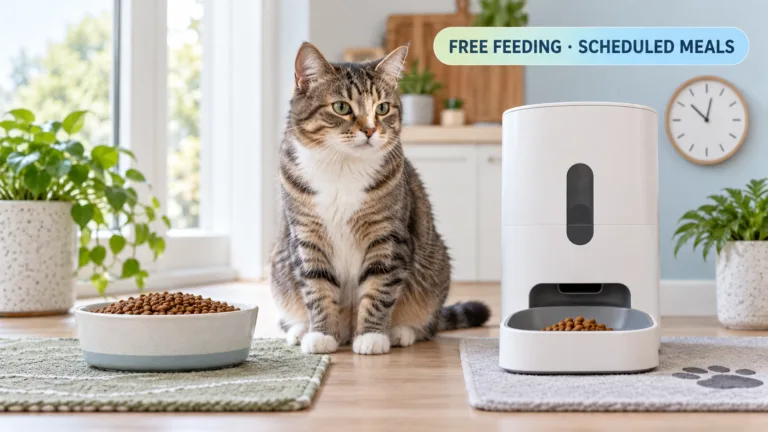
Cat proof smart pet feeder hacks should not mean taping the machine shut, blocking sensors, overriding safety parts, or turning the feeder into a puzzle your cat can break. The real goal is safer feeding control: stop pawing, tipping, food stealing, lid attacks, cable chewing, chute fishing, and manual overfeeding without damaging the feeder or stressing the cat.
For most homes, a smart automatic pet feeder with app control gives the best starting point because timing and portions can be managed from the app. The cat proof smart pet feeder hacks below focus on the station around the feeder: placement, stability, access, cleaning, power, and behavior.
Direct Answer: Cat Proof Smart Pet Feeder Hacks
The best cat proof smart pet feeder hacks are to place the feeder against a stable wall, use a non-slip mat, secure the cable, choose a feeder with a tight lid and protected chute, keep the food path clean, calibrate portions, remove spilled kibble immediately, block access to the hopper, avoid rewarding feeder attacks, and use camera or microchip-style access only when the problem is stealing or verification.
The wrong approach is force. Do not glue moving parts, tape over vents, jam the lid, block the dispenser, overload the hopper, or use harsh deterrents around food. Safe cat proof smart pet feeder hacks make the correct feeding routine easier and make feeder manipulation unrewarding.
Why Cats Attack Smart Feeders
Cats attack smart feeders because the machine is predictable. It contains food, makes sounds before meals, drops kibble through a chute, and may smell like stored dry food all day. A motivated cat quickly learns where the lid, chute, bowl, cable, buttons, and weak points are.
The Cornell Feline Health Center’s feeding your cat guidance emphasizes that feeding should match the cat’s needs and routine. That matters because feeder attacks often come from routine design, not only from the cat being “bad.”
A hungry, bored, overweight, anxious, or food-obsessed cat may test the feeder more often. Multi-cat homes add another pressure: one cat may learn to manipulate the feeder while another waits for the spill.
What To Do First
Start with observation. Watch how the cat attacks the feeder. Does it paw the chute, lift the lid, push the base, chew the cable, press buttons, steal from another cat, or wait for crumbs? Each problem needs a different fix.
Next, remove easy rewards. Clean spilled kibble. Stop leaving food dust under the feeder. Do not press manual feed to distract the cat after it attacks the machine. That teaches the cat that feeder pressure creates food.
Use smart feeder placement before changing hardware. Many cat proof smart pet feeder hacks fail because the feeder is in a bad location: too exposed, too easy to push, too close to other pets, too close to furniture, or too near a food-stealing route.
The Feeding Loop Behind Feeder Attacks
The loop starts when the cat paws the chute and gets one piece of kibble. That one piece matters. The cat tries again. The owner hears noise and comes over. The cat receives attention. Sometimes the owner presses manual feed to stop the behavior. Now the feeder attack has paid twice.
The next day, the cat tests harder. It pushes the feeder, scratches the lid, knocks the bowl, or waits near the chute before mealtime. The owner calls the cat stubborn, but the behavior has been reinforced.
Effective cat proof smart pet feeder hacks break the reward chain. No loose kibble. No dramatic reaction. No manual feed after feeder attacks. The cat should learn that attacking the feeder produces nothing useful.
The Emotional Trigger Owners Miss
The emotional trigger is frustration. Owners buy a smart feeder to reduce feeding stress, then feel defeated when the cat outsmarts it. That frustration often leads to unsafe shortcuts: heavy tape, blocked openings, improvised weights, or moving the feeder somewhere inconvenient.
Feeder proofing should be boring and systematic. Stabilize the base. Protect the cord. Clean the chute. Control food smell. Verify portions. Remove access to weak points. Do not turn the feeder into a battle object.
For multi-cat feeding pressure, use how to stop one cat from eating the other’s food. Cat-proofing is harder when the real issue is food competition.
The Addiction Mechanism
The addiction mechanism is variable reward. A feeder does not need to release food every time to keep a cat interested. If pawing the chute works once every twenty tries, the cat may keep trying because the reward is unpredictable.
This is the same reason cats keep checking cabinets, counters, and treat drawers. One success teaches persistence. That is why small spills matter. A single loose kibble can keep the behavior alive.
Good cat proof smart pet feeder hacks remove variable rewards. The chute should not leak. The lid should not lift. The floor should not hold crumbs. The cat should not receive food after attacking the feeder.
Hack 1: Put the Feeder Where It Cannot Be Pushed Around
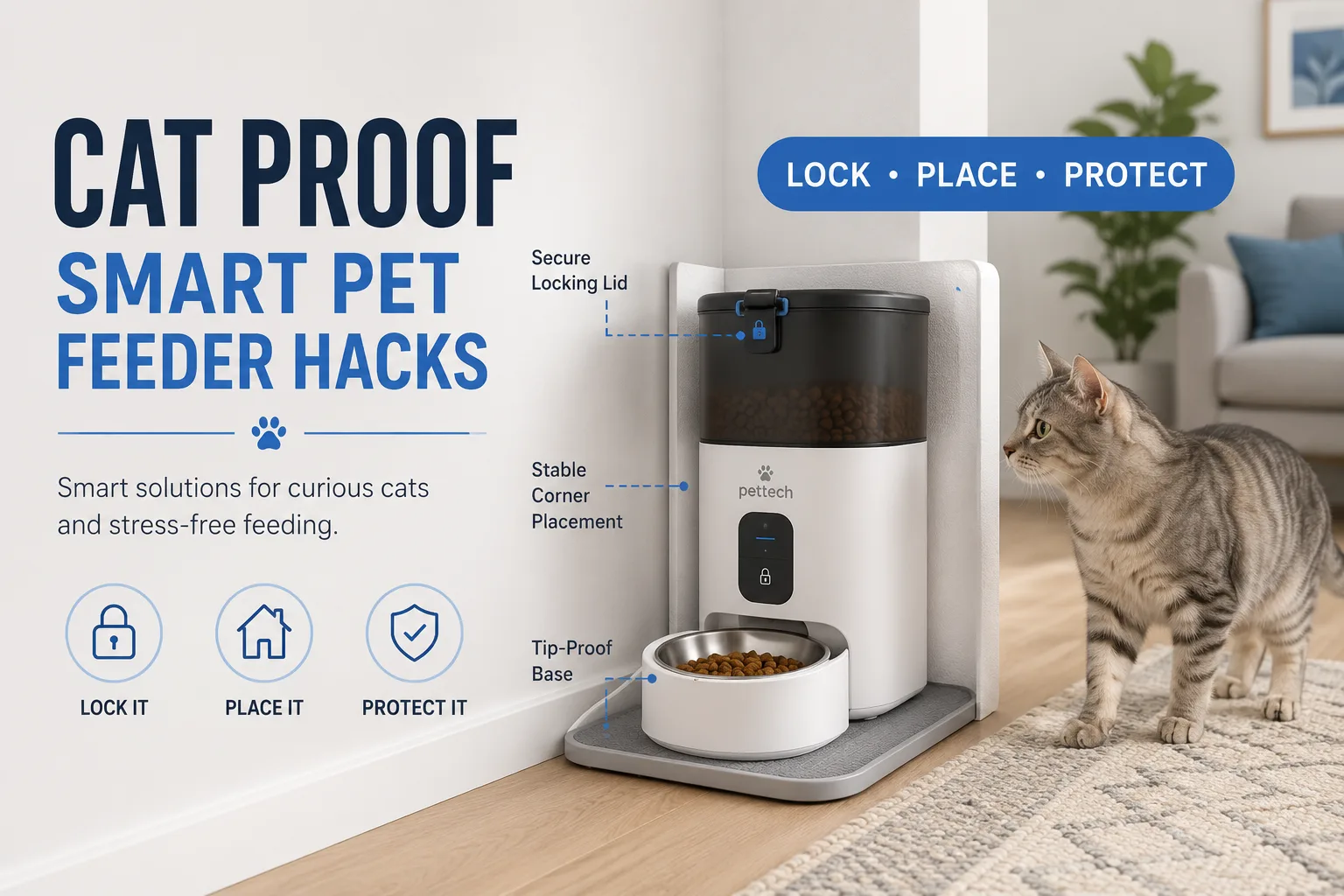
Place the feeder against a wall or in a stable corner with enough room for comfortable eating. Avoid placing it in the middle of a slippery floor where the cat can shove it, spin it, or tip it during repeated pawing.
Use a washable non-slip mat under the feeder. The mat should keep the base stable without trapping moisture or old food. Avoid soft thick mats that hide crumbs or make the feeder sit unevenly.
A stable feeding station is one of the simplest cat proof smart pet feeder hacks. If the feeder does not slide, the cat loses one major attack method.
Hack 2: Protect the Lid and Hopper
Many cats target the lid because it smells like food storage. Choose a feeder with a secure lid and keep the hopper clean so food oil and kibble dust do not build up around the opening. Do not overfill the tank until food presses against the lid.
If the cat can reach the lid from a shelf, chair, or counter, move the feeder. Cats use furniture as leverage. A feeder that is secure on the floor may become easy to attack when placed beside a climbable object.
Do not tape the lid shut in a way that blocks ventilation, sensors, hinges, or cleaning access. Safe cat proof smart pet feeder hacks preserve normal feeder operation.
Hack 3: Stop Chute Fishing
Chute fishing happens when a cat inserts a paw into the food outlet to pull extra kibble. This is common when the chute leaves crumbs, the food path is loose, or the cat has learned that pawing sometimes releases pieces.
Clean the chute and rotor area. Check for trapped kibble. Confirm that the feeder is not over-dispensing or leaking after each meal. If the chute design is too open for your cat’s behavior, move to a feeder with a more protected outlet.
Use pet feeder jammed and clean pet feeder rotor assembly. A dirty food path can create the loose pieces that teach chute fishing.
Hack 4: Secure the Power Cable
A cable is a weak point. Some cats chew cords. Others pull them during play. A loose cable can unplug the feeder and create offline alerts, missed meals, or unsafe chewing risk.
Route the cable behind furniture or along a protected wall path. Keep extra cable length bundled safely out of reach. Use only safe cable-management methods that do not overheat, pinch, or damage the cord.
The Electrical Safety Foundation International’s extension cord safety tips warn against unsafe cord use and treating temporary cords as permanent wiring. For feeders, cable safety is part of cat-proofing, not decoration.
Use chew proof pet feeder cable. A complete cat proof smart pet feeder hacks plan protects food and power together.
Hack 5: Use the App Without Creating a Begging Button
App control is useful, but it can create problems when the owner sends manual food every time the cat sits near the feeder. The cat learns that feeder presence plus owner attention equals food.
Keep manual feed rare and measured. If a meal failed, replace only the missed amount. If the cat is begging, check the schedule instead of tapping the app. The feeder should support routine discipline, not instant emotional feeding.
Use app controlled pet feeder benefits. The app is one of the best cat proof smart pet feeder hacks only when it prevents overfeeding instead of making overfeeding easier.
Hack 6: Calibrate Portions So Hunger Is Not Guesswork
Some feeder attacks happen because the cat is receiving too little food. Others happen because the cat has learned to beg despite receiving enough. Calibration helps separate those two problems.
Use a digital kitchen scale. Run several test portions. Calculate the actual gram output. Build the schedule from measured food, not the app’s portion label alone.
Use pet feeder calibration. Strong cat proof smart pet feeder hacks are easier when the owner knows the cat’s real daily intake.
Hack 7: Clean Food Dust Before It Becomes a Training Reward
Kibble dust and crumbs attract cats back to the machine. If the area under the feeder smells like food, the cat has a reason to keep investigating. This increases pawing, licking, pushing, and bowl guarding.
The FDA’s tips for safe handling pet food and treats emphasize clean food-contact surfaces, bowls, and utensils. A smart feeder station should follow the same hygiene standard because it stores and dispenses food repeatedly.
Use clean smart pet feeder and pet feeder maintenance. Cleanliness is one of the most underrated cat proof smart pet feeder hacks.
Hack 8: Use Camera Verification for Sneaky Cats
If the cat attacks the feeder when no one is watching, a camera feeder can reveal the real behavior. The owner can see whether the cat is pawing the chute, pushing the feeder, stealing another pet’s food, or guarding the station.
Camera use should verify behavior, not trigger extra feeding. Do not send food through the app every time the cat appears on screen. That turns the camera into a reward system.
A smart WiFi pet feeder with camera can support monitoring when the problem happens out of sight. Use WiFi pet feeder with camera for setup discipline.
Hack 9: Separate Access Problems From Timer Problems
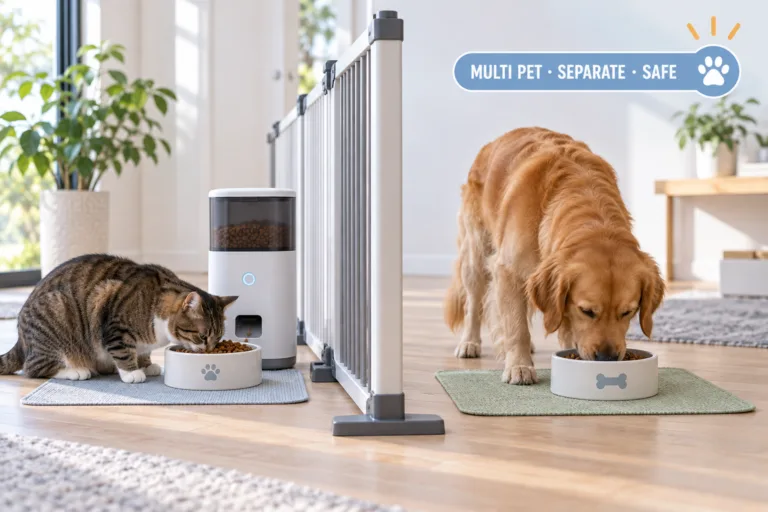
If one cat steals food from another, cat-proofing the feeder may not be enough. The issue is access control. A timed feeder can drop meals correctly while the wrong cat still eats them.
In multi-cat homes, use distance, supervision, separate rooms, camera checks, or selective feeding tools. Do not assume one smart feeder in a shared area can solve every food-stealing problem.
Use microchip pet feeder review. Some cat proof smart pet feeder hacks need identity-based access, not a stronger lid.
Hack 10: Protect the Feeder From Furniture-Assisted Attacks
Cats use the environment. A feeder near a chair, low shelf, storage box, or counter edge gives the cat a platform to attack from above. That makes lid lifting and hopper pushing easier.
Keep the feeder away from climbable objects that give leverage. The cat should approach from the eating position, not from the top, back, or side. A narrow feeding nook can help, but it should not trap the cat or make cleaning difficult.
This is one of the cheapest cat proof smart pet feeder hacks: remove the launch points around the feeder.
Hack 11: Add Enrichment Away From the Feeder
A bored cat may attack the feeder because it is the most interesting object in the room. Feeding equipment should not be the only puzzle. Add play sessions, scratching areas, climbing spots, window watching, and safe food puzzles away from the feeder when appropriate.
Do not use the smart feeder as the main entertainment device. It should deliver meals. It should not become the cat’s daily mechanical opponent.
When enrichment improves, many feeder attacks drop because the cat has other outlets. Cat-proofing is partly hardware and partly routine design.
Hack 12: Use Backup Power Without Leaving Weak Points
Battery backup can protect meal schedules during short power interruptions, but batteries and cable paths still need inspection. A feeder that loses power may look like a WiFi problem or app problem.
Check the power setup weekly. Confirm the adapter is secure, backup batteries are fresh if used, and the feeder reconnects after a short outage. Power reliability is part of cat-proofing because a hungry cat will test the machine harder when meals become inconsistent.
Use pet feeder with battery backup and emergency backup pet feeder. Safe cat proof smart pet feeder hacks include a plan for when the device cannot run normally.
Common Failure Pattern
The most common failure pattern is trying to physically overpower the cat after the cat has already learned the feeder pays. The owner adds tape, weights, boxes, or furniture barriers, but the cat keeps testing because it has succeeded before.
The second failure is ignoring crumbs. A tiny amount of spilled food can keep the cat returning to the machine. Clean floors and clean chutes matter.
The third failure is using manual feed as a distraction. If attacking the feeder produces an app-fed snack, the owner has trained the exact behavior they want to stop.
Real-World Impact
The real-world impact of good cat proof smart pet feeder hacks is calmer feeding. The cat stops treating the feeder like prey. Portions stay controlled. The owner stops reacting to every paw swipe. Multi-cat food conflict becomes easier to identify. Cleaning becomes part of reliability.
The impact of poor hacks is worse: broken lids, damaged cables, jammed chutes, blocked sensors, missed meals, double feeding, and a cat that becomes more determined because the feeder sometimes pays.
For product selection, start with the cat feeders collection. Choose based on lid security, chute design, bowl access, cleaning, app control, camera need, and stability.
Can This Be Fixed?
Yes, most smart feeder cat-proofing problems can be fixed with a full station reset. Move the feeder to a stable location. Add a non-slip mat. Clean crumbs. Secure the cable. Calibrate portions. Stop manual feed rewards. Check lid and chute access. Use camera verification if behavior happens when no one is present.
Run a seven-day cat-proofing log. Record pawing, tipping, lid attacks, chute fishing, cable chewing, spilled kibble, manual feeds, meal times, and whether the cat receives any reward after attacking the feeder. If the behavior drops when rewards disappear, the plan is working.
For broader feeder choices, compare the smart feeders collection. The best feeder is not the most complicated one. It is the one your cat cannot exploit and you can still clean, refill, and verify.
Who Should Walk Away and Who Should Use This
Walk away from unsafe hacks: taping moving parts shut, blocking sensors, exposing cables, using harsh sprays near food, adding unstable weights, or sealing the feeder so it cannot be cleaned. Also walk away from punishing the cat after the feeder already paid out food.
Use these cat proof smart pet feeder hacks if your cat paws the chute, lifts the lid, knocks the feeder over, steals from another pet, chews the cable, waits for crumbs, presses buttons, or attacks the feeder before scheduled meals. They are especially useful for food-motivated cats, multi-cat homes, early-morning beggars, and weight-control routines.
For routine control, the 2L smart pet feeder for regular feeding fits many homes that need measured, scheduled meals. Cat-proofing still depends on station design and owner discipline.
Mini FAQ
What are the safest cat proof smart pet feeder hacks?
The safest cat proof smart pet feeder hacks are stable placement, non-slip mats, secure cable routing, clean chutes, tight lids, portion calibration, no manual-feed rewards, and camera checks for hidden behavior.
How do I stop my cat pawing food out of the feeder?
Stop chute pawing by cleaning the food path, removing loose crumbs, checking for leaks, using a protected chute design, and avoiding manual feeding after the cat paws the dispenser.
How do I stop my cat tipping the smart feeder?
Stop tipping by placing the feeder against a wall, using a washable non-slip mat, removing nearby climbable leverage points, and choosing a feeder with a stable base.
Should I tape the feeder lid shut?
No, do not tape the feeder in a way that blocks vents, hinges, sensors, cleaning access, or normal operation. Use a feeder with a secure lid and place it where the cat cannot attack from above.
Can a camera feeder help with cat-proofing?
A camera feeder can help by showing how the cat manipulates the feeder when no one is watching. It should be used for verification, not for sending extra food whenever the cat appears.
What if one cat steals from another feeder?
If one cat steals from another feeder, the issue is access control, not only feeder strength. Use separate feeding zones, supervision, camera checks, or selective feeding tools when the wrong cat keeps eating the food.
The best answer to cat proof smart pet feeder hacks is not brute force. It is controlled design: stable placement, clean food paths, secure power, measured portions, blocked rewards, and no unsafe modifications. When the feeder stops paying out for manipulation, the cat has less reason to keep treating it like a food puzzle.