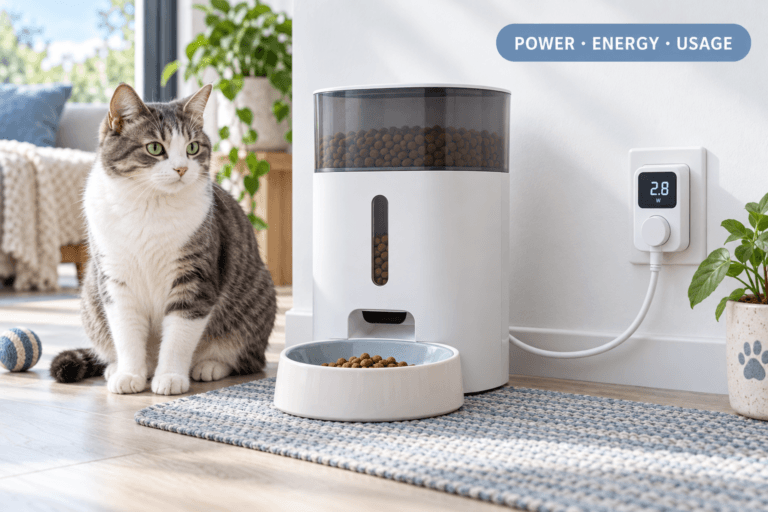

A chew proof pet feeder cable is not just a tougher wire. It is a safer power setup that keeps a smart feeder running while reducing the chance that a dog, puppy, cat, or kitten reaches the cord and treats it like a toy. If the cable is exposed, dangling, or routed across the floor, the feeder may work perfectly until one bite creates a power failure, a damaged cord, or a serious electrical hazard.
For scheduled dry-food meals, a smart automatic pet feeder with app control needs stable power and safe placement. The feeder can manage time and portion, but the chew proof pet feeder cable setup decides whether the power line stays protected in a real pet household.
Direct Answer: Chew Proof Pet Feeder Cable
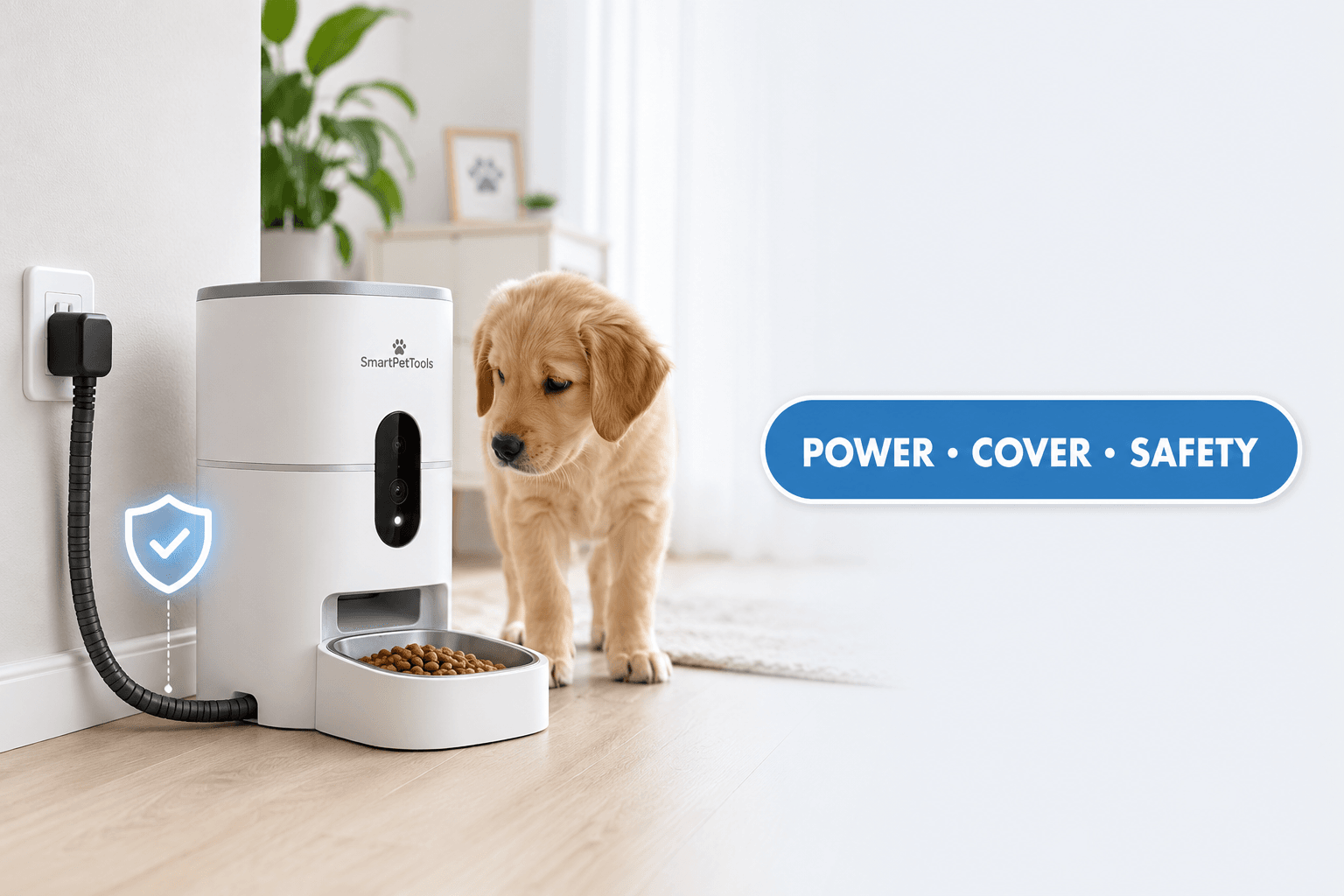
A chew proof pet feeder cable setup uses cord covers, hidden routing, wall-side placement, secured slack, battery backup, and daily inspection to keep the feeder powered while blocking pet access to the cable. The goal is not to trust the cable material alone. The goal is to make the cord hard to reach, hard to pull, hard to chew, and easy for the owner to inspect.
No cable should be treated as completely chew-proof in a home with determined pets. A strong chew proof pet feeder cable strategy combines prevention layers: choose a safer cord design, cover the cord, shorten exposed length, anchor the cable, avoid wet areas, keep the feeder near the outlet, and remove chewing triggers from the feeding zone.
Why Pet Feeder Cables Become a Problem
Pet feeder cables become a problem because they sit at pet height. A feeder is usually placed on the floor, which means its cable often runs along the baseboard, behind the bowl, under a cabinet edge, or across a pet-accessible corner. Puppies and kittens explore with their mouths. Bored dogs may chew exposed cords. Cats may paw or bite dangling wires when the cable moves.
The AVMA’s household hazards guidance warns that plugged-in electrical cords can cause burns or electrocution when pets chew them. That makes cable protection part of feeder safety, not just neat cable management.
A chew proof pet feeder cable also protects the feeding routine. If the cord is damaged, the feeder can lose power, go offline, miss scheduled meals, or stop camera and app functions. Owners often treat this as a device failure, but the real problem is a poorly protected power path.
What To Do First
Start with placement. Put the feeder close to a wall outlet so the cable does not stretch across open floor. Route the cord behind furniture only when the area remains dry, ventilated, and inspectable. Do not trap the cord under heavy furniture legs or rugs. Do not let slack hang behind the feeder where a pet can pull it forward.
A practical chew proof pet feeder cable setup needs five controls: short cable exposure, physical cover, secure routing, dry placement, and backup feeding protection. Short exposure reduces opportunity. A cover blocks teeth. Routing keeps the cord out of the pet’s normal path. Dry placement reduces electrical risk. Backup protection prevents missed meals if power is interrupted.
Before locking the setup, use smart feeder placement. A feeder location should support pet comfort, cleaning, WiFi signal, power access, and cord safety at the same time.
The Cable Loop Behind Feeding Failures
The cable loop starts when the owner places the feeder where it looks convenient. The cord runs across the floor or hangs behind the device. The pet notices the cable during play, boredom, teething, or food excitement. The owner sees the feeder working and does not inspect the cable until connection or power problems appear.
Then the feeder goes offline or stops dispensing. The owner adds manual food because the pet might have missed a meal. Later, the feeder powers back on or the schedule is rebuilt incorrectly. Now the pet receives inconsistent meals because cable safety was not part of the setup.
A proper chew proof pet feeder cable breaks this loop by making the cord protected from day one. The feeder is not considered installed until the cable is routed, covered, secured, and checked after the pet has used the feeding station.
The Emotional Trigger Owners Miss
The emotional trigger is device trust. Owners buy a smart feeder because they want reliable meals. The app works, the bowl fills, and the schedule looks stable. That trust makes the power cable feel like a minor detail.
The cable is not minor. It is the feeder’s power source. If a pet can reach it, chew it, pull it, or drag the feeder by it, the entire feeding routine has a weak point. A chew proof pet feeder cable setup treats the cord as part of the product, not as an afterthought.
For power reliability, use pet feeder with battery backup. Battery support does not make chewing safe, but it protects meal timing when a power problem appears.
The Addiction Mechanism
The addiction mechanism is attention reward. If a pet chews or pulls the cable and the owner rushes over, talks loudly, moves the feeder, or gives food to distract the pet, the cable can become an attention trigger. The pet learns that cable behavior changes the room.
This is especially common with puppies, kittens, bored indoor cats, and high-energy dogs. The cable is not attractive only because of texture. It becomes interesting because it produces owner reaction.
A strong chew proof pet feeder cable plan removes access instead of repeatedly correcting the pet. Cover the cord, hide the route, shorten slack, and keep toys or enrichment away from the feeder area. The feeding station should not become a play zone.
Best Cable Protection Options
The best cable protection starts with a rigid or semi-rigid cord cover. A split cable sleeve can organize the cord, but a determined chewer may still damage soft material. A harder wall-mounted raceway, baseboard channel, or heavy-duty cord protector usually gives better protection than a loose fabric wrap.
A chew proof pet feeder cable should also be anchored. Use cable clips, raceways, or furniture-side routing to remove dangling loops. The cable should travel from outlet to feeder with the shortest practical exposed route. Avoid loose coils because they invite pawing, pulling, and chewing.
Do not create a heat or fire problem while trying to solve a chewing problem. The ESFI’s extension cord safety tips warn against overloading extension cords, running them through water, and using them as permanent wiring. For pet feeders, the better setup is usually a nearby outlet, protected cord route, and backup battery rather than a long extension cord across the room.
Extension Cord Rules
Extension cords are a weak solution for pet feeder power. They increase exposed cable length, create more chewing targets, and can introduce tripping, moisture, and overload problems. If an extension cord is used temporarily, it should be rated for the use, kept dry, inspected often, and removed once a safer outlet setup is available.
The CPSC’s household extension cord fire safety information explains that extension cords can overheat and cause fires when used improperly. A smart feeder is not a high-watt appliance like a heater, but the cord still needs safe routing, good condition, and protection from chewing.
A safer chew proof pet feeder cable plan uses the original adapter when possible, avoids daisy-chained cords, keeps connections off the floor, and prevents pets from reaching plug joints. The more joints and extra cords you add, the more inspection points you create.
Placement Rules for Cats
Cats often target cables that move, hang, or sit beside narrow hiding areas. A feeder pushed into a corner can leave the cord visible behind it. A kitten may crawl into the gap and chew the cable where the owner cannot see it.
For cats, a chew proof pet feeder cable should run through a covered path along the wall, not behind a loose feeder that can be nudged. Keep the feeder away from curtains, dangling cords, litter tracking zones, and playful climbing routes. The cat should approach the bowl, not the cable.
Cat owners can start with the cat feeders collection when the feeding station needs smaller portions, quiet placement, and safer access.
Placement Rules for Dogs
Dogs create a different cable problem. A large dog can push the feeder, step on the cord, chew the adapter, or drag the feeder if the cable catches under a paw. Puppies can chew cords during teething, especially when the cord lies at mouth level.
For dogs, a chew proof pet feeder cable should be routed behind a protected wall-side channel and kept away from the dog’s normal standing area. Use a stable feeder location so the device does not slide and expose more cord during meals.
Dog owners can use the dog feeders collection when bowl size, feeder stability, portion volume, and cable protection all need to work together.
Camera Feeder Cable Safety
A camera feeder depends on stable power and stable WiFi. If the cable is damaged, the owner can lose both feeding control and video confirmation. This is more serious when the owner uses the camera to verify meals during work, travel, or night shifts.
A chew proof pet feeder cable for a camera feeder should be routed so it does not block the camera angle, create shadows, or sit within the pet’s reach while eating. The camera should see the bowl, and the cable should disappear from the pet’s path.
For camera-based feeding, use WiFi pet feeder with camera. Camera value drops quickly if power is unreliable or the feeder placement exposes the cord.
Outdoor and Semi-Outdoor Cable Problems
Outdoor feeder cables require stricter rules. Moisture, rain, sun, insects, chewing, lawn equipment, and wildlife can all damage cables. A standard indoor cord should not be treated as outdoor-safe unless the product is designed and rated for that environment.
A semi-outdoor chew proof pet feeder cable setup on a porch, patio, garage, catio, or kennel area should keep connections dry, elevated, covered, and away from chewing access. The feeder itself should sit under shelter, and the cable path should not cross wet floors, door thresholds, or animal traffic routes.
For the full outdoor setup, use outdoor automatic pet feeder. Outdoor feeding requires weather protection, pest control, power planning, and daily inspection.
Offline and WiFi Problems Caused by Cables
A feeder can show offline because of power interruption, not only WiFi failure. A loose adapter, chewed cable, damaged plug, or weak outlet can make the feeder disappear from the app. Owners often restart the router first, but the real failure may be on the floor behind the feeder.
When the app shows offline, inspect the power path before resetting the device. Check the outlet, plug, adapter, cable, feeder port, battery status, and whether the cord has tooth marks or bends. A chew proof pet feeder cable inspection should be part of every offline troubleshooting checklist.
Use smart pet feeder offline and pet feeder WiFi connection when the app disconnects. Power and network checks should happen before random resets.
Common Failure Pattern
The most common failure pattern is placing the feeder near an outlet but leaving the cord looped behind the bowl. The pet finds the loop, chews or pulls it, and the feeder loses power. The owner adds food manually, reconnects the feeder, and never changes the cord route. The same risk remains.
The second failure is using soft cable wrap as the only protection for a strong chewer. Soft sleeves can organize cords, but they are not enough for every pet. A real chew proof pet feeder cable setup should use harder barriers, shorter exposure, and placement control.
The third failure is hiding the cord so well that the owner stops inspecting it. Covered cords still need checks. Look for bite marks, heat, looseness, dust, moisture, bent plugs, and damaged insulation during feeder cleaning.
Real-World Impact
The real-world impact of a weak cable setup is missed meals, offline alerts, damaged adapters, electrical hazards, owner panic, and manual overfeeding. The feeding routine becomes less reliable because one small cable was left exposed.
A strong chew proof pet feeder cable gives the owner better confidence. The feeder stays powered. The app stays connected. The pet cannot easily access the cord. Manual backup feeding becomes rare and measured instead of panic-driven.
For broader connected-device safety, use smart device security. Cable safety, app security, WiFi reliability, and backup power all protect the same feeding system.
Can This Be Fixed?
Yes, pet feeder cable risks can be fixed with a full cable reset. Unplug the feeder. Inspect the cable for bite marks, exposed wire, bent plugs, loose adapter joints, heat damage, and cracked insulation. Replace damaged parts instead of taping over them. Move the feeder closer to the outlet. Route the cord through a cover. Secure slack. Test the feeder after setup.
Run a seven-day check. Watch whether the pet approaches the cable, paws behind the feeder, pulls the cord, nudges the device, or chews nearby objects. If interest remains, improve the barrier and move the feeding station. Do not rely on correction alone.
For product selection, start with the smart feeders collection. Choose based on portion control, power plan, cable route, feeder stability, app reliability, and whether the station can be protected from chewing.
Who Should Walk Away and Who Should Use This
Walk away from exposed cords across floors, loose cable loops, long extension cords, damaged adapters, wet plug areas, and feeder locations where a pet can reach the cable from behind. Also walk away from using tape as the only fix for a chewed power cord.
Use a chew proof pet feeder cable system if the home has puppies, kittens, heavy chewers, curious cats, large dogs, outdoor feeding areas, camera feeders, WiFi feeders, or pets that push the feeder during meals. Cable protection is especially important when scheduled feeding depends on power every day.
A 2L smart pet feeder for regular feeding works best when the cable path is protected before the schedule is trusted. The final rule is direct: a chew proof pet feeder cable should be covered, shortened, secured, inspected, and backed up before the feeder becomes the pet’s main meal source.
Mini FAQ
What is a chew proof pet feeder cable?
A chew proof pet feeder cable is a protected power setup that reduces pet access to the feeder cord. It usually combines a covered cable, short exposed length, safe routing, secure placement, and inspection. The setup matters more than the cable label alone.
How do I stop my pet from chewing a feeder cable?
Stop cable chewing by moving the feeder close to the outlet, covering the cord with a hard protector, securing loose slack, blocking access behind the feeder, and removing play triggers from the feeding area. Do not leave dangling cable loops.
Is a metal cable cover good for pet feeders?
A rigid cable cover can help protect a feeder cable when it is installed safely and kept away from water, heat, and pinch points. The cover should not damage the cord, trap heat, or make inspection impossible.
Can I use an extension cord for a pet feeder?
Use an extension cord only as a temporary solution and only when it is properly rated, dry, undamaged, and protected from chewing. A nearby outlet with a short protected cable is a safer long-term setup.
Should I replace a chewed pet feeder cable?
Yes, replace a chewed pet feeder cable or adapter instead of taping over damage. Bite marks, exposed wire, cracked insulation, heat damage, and loose plug joints are warning signs that the power path is no longer safe.
Can battery backup replace cable protection?
Battery backup protects meals during power interruption, but it does not replace cable protection. The cord still needs to be routed, covered, secured, and inspected because chewing can create safety risks even when backup power exists.
The best cable setup is one the pet cannot easily notice, reach, pull, or chew. When power, placement, protection, and backup all work together, the chew proof pet feeder cable becomes part of a safer feeding routine instead of the weakest point in the system.