
Smart feeder placement decides whether an automatic pet feeder becomes a reliable routine tool or another source of mess, stress, and missed meals. Owners often focus on app features, portion settings, and camera quality, but the feeder’s physical location controls how the pet approaches food, how clean the station stays, and whether the device works consistently.
For a simple dry-food routine, a 2L smart pet feeder for regular feeding works best when it is placed in a calm, accessible, easy-clean area. The device can manage time and portion, but the location decides whether the pet accepts the system without conflict.
Direct Answer: Smart Feeder Placement
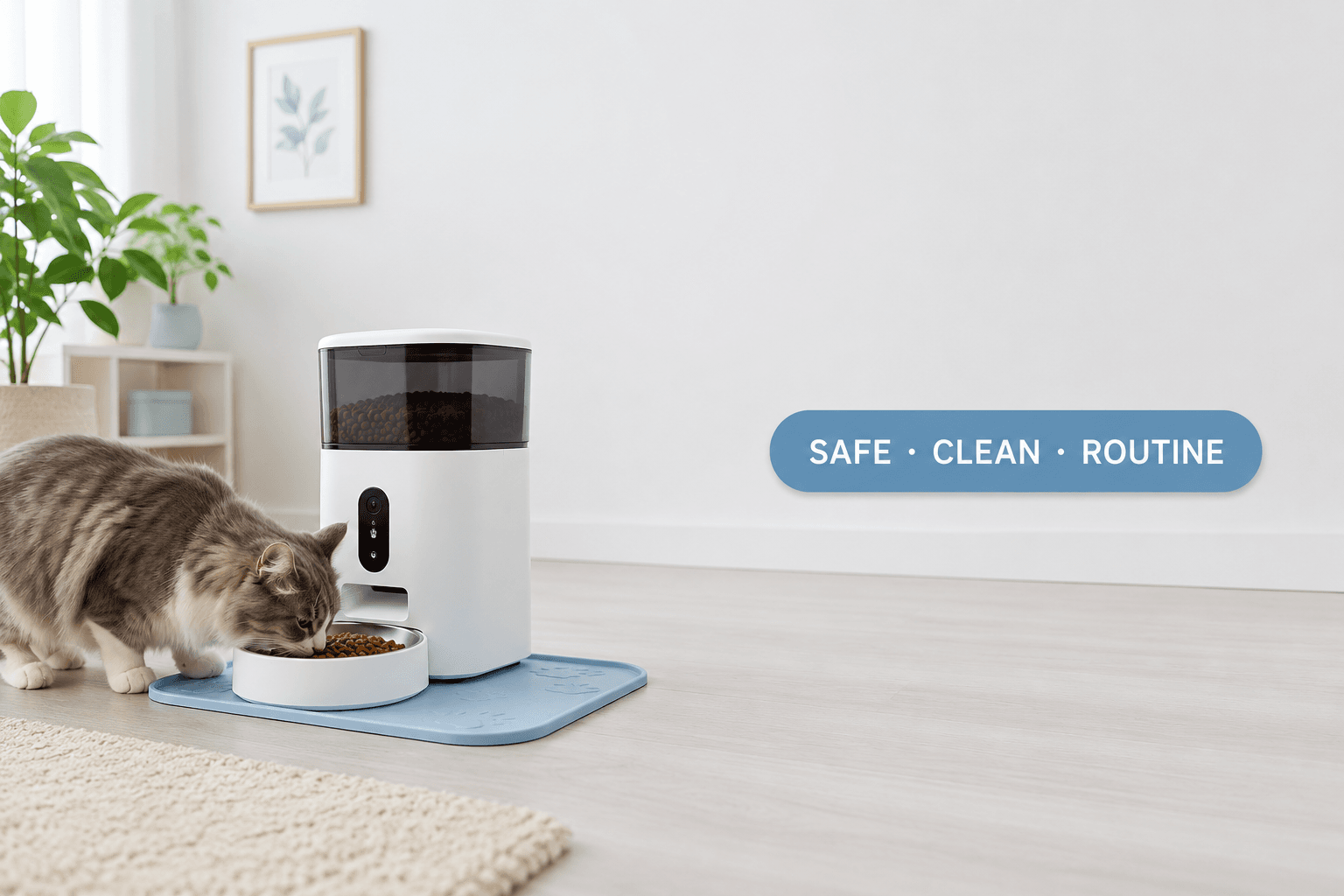
The best smart feeder placement is a quiet, dry, level, easy-clean location with stable WiFi, nearby power, enough pet access, and distance from litter boxes, trash cans, direct heat, and high-traffic doorways. A smart feeder should sit where the pet can eat calmly and where the owner can refill, clean, inspect, and troubleshoot without moving the device every day.
The wrong location creates avoidable problems. A feeder near a door makes nervous pets startle during meals. A feeder near a litter box creates hygiene conflict. A feeder in a narrow hallway creates competition in multi-pet homes. A feeder with weak WiFi creates missed app checks. Strong smart feeder placement protects routine first and convenience second.
Why This Happens
Pets treat feeding areas as predictable territory. A cat wants safety, escape space, and low competition. A dog wants access, clarity, and fewer distractions. When the feeder appears in a stressful place, the pet does not judge it as a useful device. The pet judges it as a risky food station.
The AVMA pet nutrition guidance reinforces that feeding is part of overall pet care, and feeding quality includes more than the food itself. A smart feeder supports care only when the location makes meals predictable, clean, and observable.
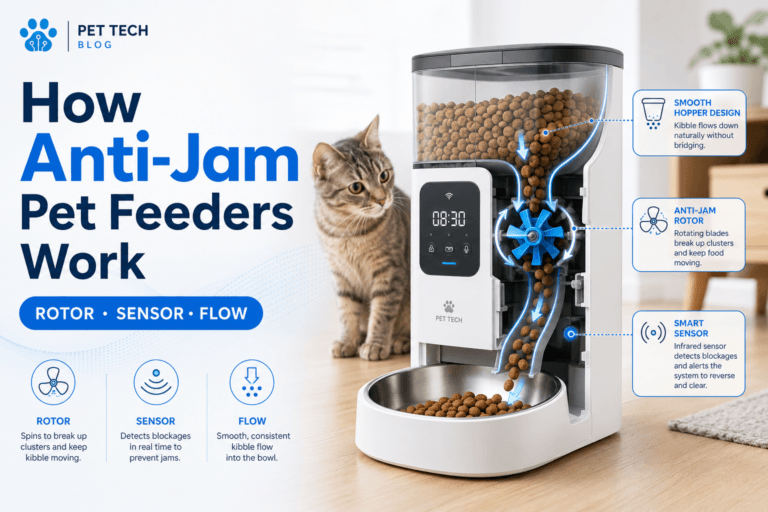
Smart feeder placement also affects device performance. WiFi feeders need a stable signal. Camera feeders need a clear angle. Timed feeders need a level surface so kibble dispenses correctly. A beautiful corner is not useful if the feeder tips, jams, loses signal, or forces the pet to eat with its back trapped against a wall.
What To Do
Start with the pet’s behavior, not the room’s appearance. Choose a place where the pet already feels safe. The station should have a wall behind the feeder or bowl area, open space for approach, and enough room for the pet to step away. Avoid putting the feeder between a pet and a busy walkway.
A strong smart feeder placement setup needs five physical conditions: level floor, dry surface, stable power, strong WiFi, and easy owner access. If the owner has to crawl behind furniture to refill food or reset the device, the feeder will not stay properly maintained. If the pet has to squeeze between boxes to eat, the routine will not stay calm.
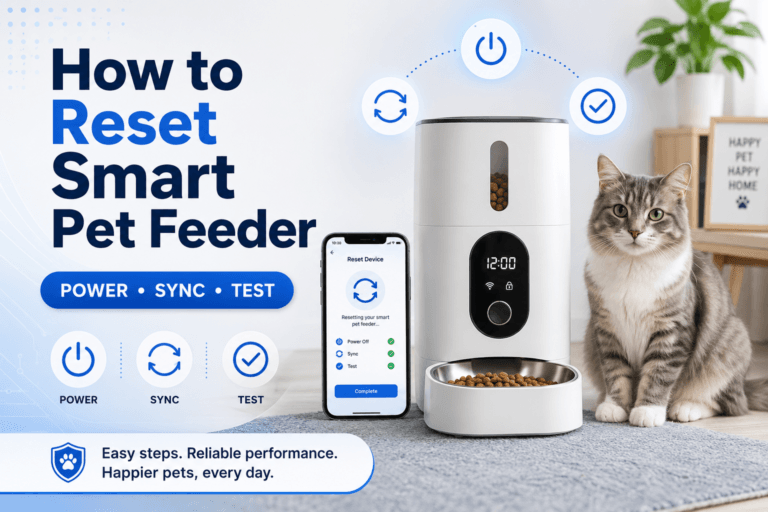
Before programming meals, use the smart pet feeder setup guide to confirm the feeding schedule, app controls, portion testing, and cleaning routine. Placement and setup should be solved together, not treated as separate tasks.
The Placement Loop Behind This Problem
The placement loop starts when the feeder goes wherever the owner has an outlet. The pet approaches, hears hallway noise, sees another animal nearby, or feels trapped. The pet eats quickly, avoids the feeder, or waits until the room is empty. The owner reads the behavior as pickiness instead of location stress.
Then the owner compensates. They add treats, move food by hand, top off the bowl, or feed manually beside the device. That turns the smart feeder into a backup object instead of the main routine. The pet learns that hesitation near the feeder produces owner intervention.
Better smart feeder placement breaks that loop. The pet gets a stable, quiet station. Food appears predictably. The owner stops rescuing the routine with manual feeding. The device becomes part of the home’s structure instead of a gadget the pet distrusts.
The Emotional Trigger Owners Miss
The emotional trigger is convenience guilt. Owners buy a smart feeder to reduce missed meals, but they worry that automation feels impersonal. When the pet hesitates, the owner immediately adds manual feeding, extra treats, or attention. That reaction weakens the system.
The better response is not more emotional feeding. It is better station design. Put the feeder where the pet feels secure, keep meal timing steady, and use affection outside the bowl. A smart feeder should remove human inconsistency from the base meal, not remove human care from the relationship.
For owners building the timing layer, the scientific pet feeding schedule gives the structure behind the location: measured meals, fixed windows, and clear observation.
The Addiction Mechanism
The addiction mechanism is manual rescue. If the pet ignores the feeder and the owner immediately hand-feeds, the pet learns that feeder refusal creates a better result. This is especially common when the feeder is placed poorly and the owner tries to solve discomfort with food upgrades.
A noisy or crowded feeder location creates the first resistance. Owner rescue creates the second habit. After that, the pet is no longer reacting only to the feeder location. The pet is also testing whether refusal still produces manual service.
Correct smart feeder placement removes the physical trigger first. Then the owner keeps the schedule firm. Food comes from the feeder. Attention, play, brushing, and walks happen separately. This separation keeps feeding predictable and prevents the device from becoming a negotiation point.
Best Places for a Smart Feeder
The best place is usually a quiet kitchen corner, utility-room edge, dining-room side wall, mudroom feeding zone, office corner, or low-traffic pet room. The exact room matters less than the conditions. The floor must be level. The area must stay dry. The pet must have space to approach and leave.
For cats, avoid placing the feeder beside the litter box. Food and elimination zones should stay separate. Cats also dislike being cornered while eating, so leave an escape path. For dogs, avoid high-excitement areas such as entry doors, garage doors, and busy hallways where people step over the feeding station.
Camera feeders need extra placement discipline. A smart WiFi pet feeder with camera needs a clear view of the bowl, stable lighting, and a location where the pet’s head does not block every useful angle. Camera value drops when the feeder faces a wall too closely or sits in a dark corner.
Places To Avoid
Avoid bathrooms, laundry areas with frequent vibration, wet floors, direct sunlight, heater vents, litter box zones, trash areas, balconies, garages with temperature swings, and narrow walkways. These locations create hygiene, comfort, or reliability problems.
The FDA safe handling guidance for pet food and treats emphasizes clean handling and storage practices. This supports a basic placement rule: keep food stations away from contamination sources, moisture, and dirty surfaces. A smart feeder still holds edible food, so its location must support food hygiene.
Do not place the feeder where children can press buttons, dogs can knock the tank loose, or another pet can block access. Good smart feeder placement protects the programmed portion from the entire household, not only from the intended pet.
Multi-Pet Placement
Multi-pet homes need stricter placement. If one pet steals food, a single feeder in a shared hallway becomes a conflict point. The dominant pet waits near the machine. The slower pet avoids meals. The owner then assumes the feeder is inaccurate when the real problem is station control.
Use separate feeding zones when pets have different diets, sizes, speeds, or medical feeding needs. Place the feeder where the intended pet can access it without being crowded. For households with food stealing, the guide on how to stop one cat from eating the other’s food gives a better control path than leaving one open feeder in a shared area.
For product selection, the multi-pet feeders collection is the better starting point when placement alone cannot prevent stealing, crowding, or uneven intake.
Common Failure Pattern
The common failure pattern is placing the feeder in the kitchen walkway because it is easy for the owner. The pet eats while people pass, cabinet doors open, and another animal approaches. The pet starts eating fast or skipping meals. The owner then increases portions because the pet seems unsettled.
The fix is not a larger portion. The fix is moving the feeder to a quieter edge zone, testing the WiFi, locking the schedule, and observing the pet for one week. When the station becomes calmer, intake often becomes easier to interpret.
Another failure pattern is placing a feeder too close to the water bowl when the pet splashes or drools. Dry food absorbs moisture, residue builds up, and the bowl area becomes dirty. Keep water accessible but not positioned where spills reach the food outlet or kibble tray.
Real-World Impact
The real-world impact of poor smart feeder placement appears as food refusal, fast eating, feeder guarding, scattered kibble, repeated jams, WiFi disconnection, camera blind spots, and owner mistrust. Many of these problems are blamed on the feeder when the placement is the real cause.
Weight control is also affected. If the feeder is placed where one pet steals from another, the owner loses accurate portion control. If the feeder is placed where the pet feels unsafe, the pet may avoid meals and then beg later. Poor placement makes the feeding data unreliable.
For cats already struggling with bowl comfort, the whisker fatigue cat feeder guide explains why bowl shape and access matter. Placement and bowl design work together: a quiet station still fails if the eating surface is uncomfortable.
Can This Be Fixed?
Yes, smart feeder placement can be fixed with a seven-day reset. Move the feeder once, not every day. Choose a quiet, dry, level location with strong signal and good access. Program the meal schedule. Test portions. Watch the pet from a distance. Do not keep changing the station because of one hesitant meal.
During the reset, record meal completion, leftover food, begging behavior, feeder errors, food stealing, and cleaning needs. If the pet eats better in the new location, keep it stable. If the feeder jams, check kibble size, tank alignment, and bowl placement before blaming the schedule.
For owners comparing WiFi and simpler timed models, WiFi vs Bluetooth pet feeder helps match device type to the home. Strong smart feeder placement includes signal planning, especially when the feeder depends on app control.
Who Should Walk Away and Who Should Use This
Walk away from placing a smart feeder wherever there is empty floor space. Empty space is not a feeding plan. Also walk away from placing feeders next to litter boxes, trash cans, unstable mats, hot appliances, sliding doors, and busy entryways.
Use this smart feeder placement system if your pet eats too fast, skips feeder meals, wakes you for food, guards the bowl, shares the home with other pets, or depends on app-controlled meals. Placement becomes even more important for camera feeders, WiFi feeders, large-dog feeders, and multi-pet feeding stations.
For broader selection, start with the smart feeders collection. Choose the device after deciding where it will live. A feeder that does not fit the station will not protect the routine.
Mini FAQ
Where is the best smart feeder placement?
The best smart feeder placement is a quiet, dry, level area with stable WiFi, nearby power, and enough room for the pet to eat without being crowded. Avoid litter boxes, trash cans, direct heat, wet floors, and busy doorways.
Should a smart feeder be near the water bowl?
A smart feeder can be near water, but not close enough for spills to reach the food outlet or dry kibble tray. Keep water accessible while protecting the feeder from moisture, residue, and splashing.
Can I put a smart feeder in the kitchen?
A kitchen works when the feeder sits in a quiet edge zone instead of a walkway. Avoid cabinet traffic, trash cans, heat sources, and places where people step over the pet during meals.
Where should I place a smart feeder for cats?
Place a cat smart feeder away from the litter box, away from loud appliances, and in a spot with an escape path. Cats eat better when they do not feel trapped or watched by other pets.
Where should I place a smart feeder for dogs?
Place a dog smart feeder on a stable, easy-clean surface away from doors, shoes, trash, and heavy foot traffic. Large dogs need enough bowl space and a setup that prevents tipping or pushing the feeder.
Why does my pet avoid the smart feeder?
Pets avoid smart feeders when the location feels unsafe, noisy, crowded, or uncomfortable. Move the feeder to a calmer zone, keep the schedule stable, and stop adding manual food every time the pet hesitates.
A timed slow feed automatic feeder is useful when placement is correct but eating speed still needs control. The final rule is clear: smart feeder placement should protect safety, signal, hygiene, comfort, and routine before the first scheduled meal ever runs.