
Moving with pets tips only work when they protect the pet’s routine before, during, and after the move. Most owners focus on boxes, trucks, keys, cleaners, and paperwork. Pets focus on one thing: their normal world is disappearing. Food bowls move, beds vanish, strangers enter the home, doors stay open, and travel starts before the animal understands what is happening.
For feeding stability during the move, a regular smart feeder for measured pet meals can keep dry-food timing consistent when packing days become chaotic. A feeder does not replace supervision, but it prevents missed meals from becoming another stress trigger.
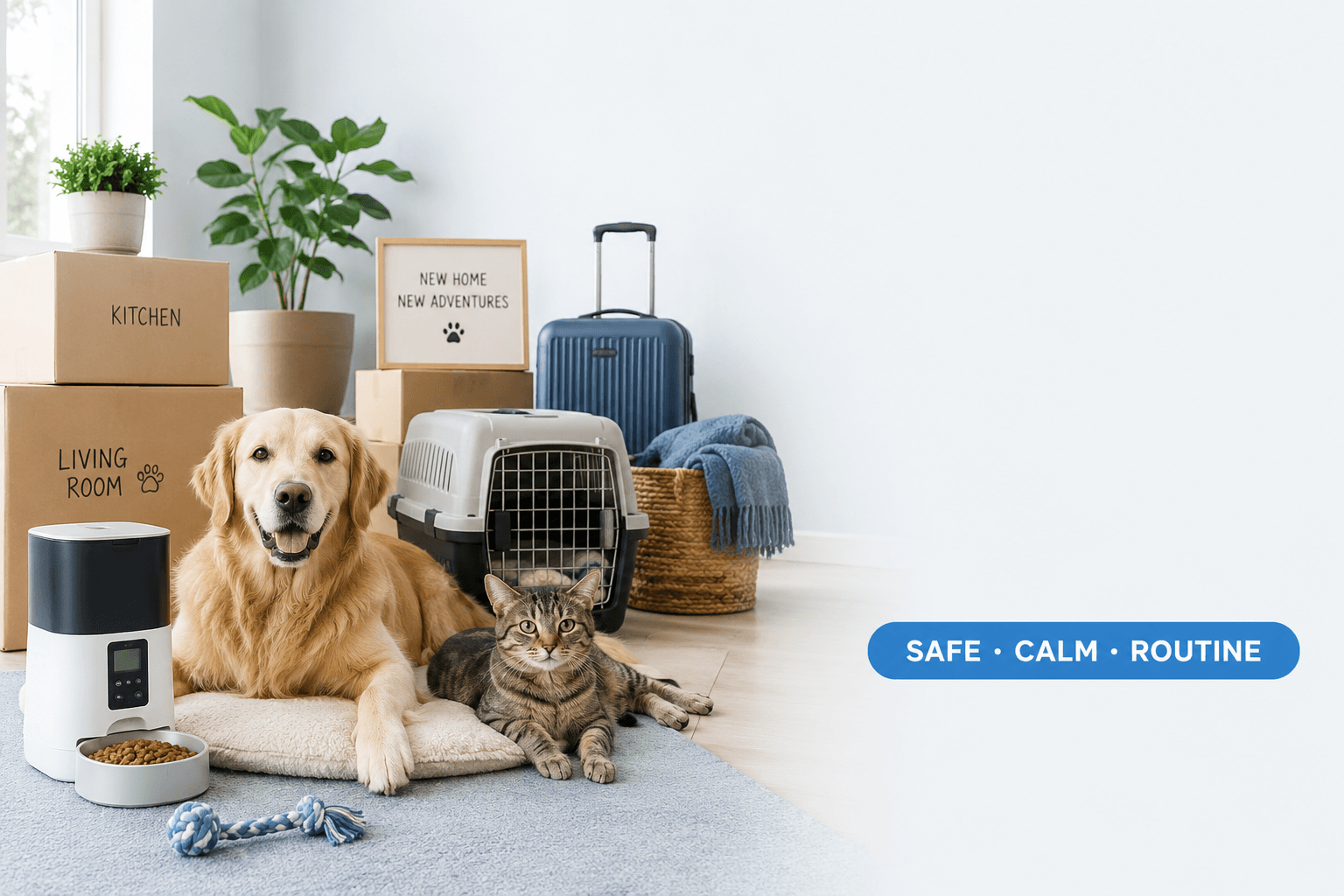
Direct Answer: Moving With Pets Tips
The best moving with pets tips are to prepare the carrier early, keep feeding and water predictable, create a safe room on moving day, secure pets during transport, update identification, and rebuild the routine immediately in the new home. A successful move is not about one perfect moving day. It is about reducing sudden changes before the move and controlling the first days after arrival.
The biggest mistake is treating the pet as an item to move at the end. Pets need a staged transition. The carrier should be familiar before travel. The food routine should stay stable. The pet should not roam while doors are open. The new home should not be introduced all at once. Good moving with pets tips create controlled exposure instead of sensory overload.
Why This Happens
Pets depend on pattern. Cats map territory through scent, hiding spots, food stations, litter boxes, and quiet routes. Dogs depend on owner cues, walk timing, feeding rhythm, sleep areas, and familiar boundaries. Moving breaks those signals in a compressed window.
The ASPCA’s moving with your pet guidance recommends preparing pets by gradually acclimating them to crates before the move. That matters because a carrier becomes frightening when it appears only on stressful days. It becomes safer when the pet has already eaten, rested, and received rewards around it.
Strong moving with pets tips reduce surprise. The pet should see the carrier before moving day. Food should remain predictable. The bed, blanket, litter box, leash, harness, medication, and water bowl should stay available until the last practical moment. Familiar objects become anchors when the rest of the environment changes.
What To Do
Start with a three-zone plan: old home, travel, and new home. In the old home, keep one calm pet area while packing happens elsewhere. During travel, secure the pet in a carrier, crate, harness system, or approved restraint. In the new home, open with one controlled room before full-house access.
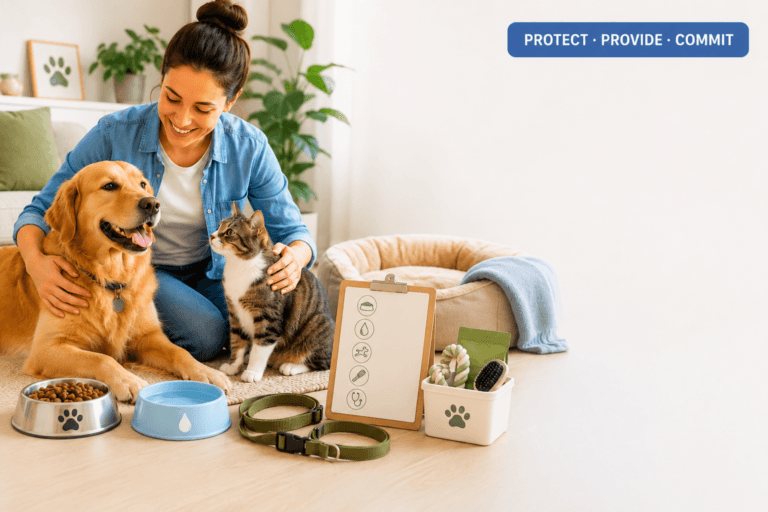
Use a written checklist. Pack food, water, bowls, medications, waste bags, litter, litter scoop, leash, harness, bedding, towels, vaccination records, carrier, cleaning supplies, and recent pet photos in a separate pet bag. Do not put these items deep inside the moving truck. They are first-day tools.
For feeding continuity, follow the scientific pet feeding schedule model: keep meal times stable, measure portions, and avoid emotional overfeeding during stressful days. Good moving with pets tips prevent owners from using random treats as the main calming strategy.
Water also needs a plan. Travel, heat, panting, and stress can change drinking behavior. Use the setup habits in pet hydration tips so water stays visible, clean, and easy to reach throughout the move.
The Moving Loop Behind This Problem
The moving loop starts when the home becomes noisy. The pet hides, refuses food, meows, barks, paces, or follows the owner. The owner feels guilty and responds with snacks, access, or attention at the wrong moment. Then the pet learns that anxious behavior controls the environment.
On moving day, the loop gets stronger. Doors open. Movers enter. The pet tries to escape or retreat. The owner keeps interrupting packing to manage the pet. The pet becomes more unsettled because the owner is unsettled. Without a safe-room plan, the household becomes reactive.
Controlled moving with pets tips break that loop. Put the pet in a closed room before movers arrive. Add water, bedding, litter or pee pads, and familiar scent items. Place a clear sign on the door. Feed on schedule. Move the pet last, after the main disruption is finished.
The Emotional Trigger Owners Miss
The emotional trigger is guilt. Owners know the move is stressful, so they try to compensate with extra treats, free roaming, constant reassurance, or letting the pet “say goodbye” to every room. These choices feel kind, but they often create more stimulation.
A nervous cat does not need full-house access while furniture is being removed. A nervous dog does not need to greet every mover. A pet in transition needs fewer choices, safer boundaries, and familiar routines. Calm structure is more useful than emotional improvisation.
Good moving with pets tips separate comfort from chaos. Comfort means familiar bedding, measured food, water, quiet space, and predictable handling. Chaos means open doors, loose pets, last-minute carrier battles, and feeding changes because the owner feels bad.
The Addiction Mechanism
The addiction mechanism is stress-reward pairing. If the pet receives high-value treats, special food, or constant attention every time it vocalizes or panics, the behavior can become reinforced. The pet still feels stress, but the routine also teaches that louder signals produce stronger rewards.
This matters during the first weeks in the new home. If every nighttime cry, door scratch, or food demand produces an upgrade, the pet learns the new home through negotiation. The owner then mistakes trained demand behavior for permanent moving stress.
The correction is structured comfort. Feed on time. Offer quiet. Use predictable play and walks. Reward calm behavior. Keep the food routine steady with tools such as the automatic feeder for shift workers routine if the move also disrupts work hours.
Before Moving Day
The best moving with pets tips start before the truck arrives. Place the carrier in the home early. Put treats or meals near it. Let the pet enter without force. For dogs, practice short car rides before a long relocation drive. For cats, make the carrier a normal object instead of a sudden trap.
Update identification before the move. Check collar tags, microchip registration, phone number, address, and emergency contact details. AVMA’s traveling with your animal guidance recommends packing vaccination proof and relevant medical records for travel. That paperwork belongs in the pet bag, not in a sealed box.
If the move crosses state lines, uses an airline, or enters another country, travel rules become part of the plan. USDA APHIS provides pet travel information for domestic and international travel, and those requirements should be checked before departure dates are locked.
Moving Day Rules
On moving day, create one safe room before anyone starts carrying boxes. Put the pet inside with bedding, water, a familiar toy, and necessary litter or pads. Feed only the planned amount. Do not let the pet roam through open doors, garages, elevators, loading areas, or driveways.
Transport pets securely. Cats should travel in carriers. Dogs should travel in crates, carriers, or appropriate restraints. Loose pets in vehicles create risk for the animal and the driver. CDC’s pet travel safety guidance emphasizes planning, vaccination checks, and travel health preparation before departure.
Do not feed a large meal during active vehicle movement. Keep water available at safe stops, use small planned snacks only when appropriate, and avoid turning the car into a feeding area. These moving with pets tips protect digestion, cleanliness, and travel control at the same time.
First 72 Hours in the New Home
The first 72 hours should be small, quiet, and predictable. Set up one room first. Add food, water, bedding, litter box or dog rest area, familiar toys, and the carrier. Let the pet observe. Do not force full-home exploration immediately.
For cats, keep the litter box close and obvious. For dogs, establish the walking route, bathroom timing, sleeping spot, and feeding station quickly. Keep old blankets and beds unwashed at first because familiar scent helps the new space feel less foreign.
Use moving with pets tips that rebuild routine before freedom. Feed on schedule. Walk on schedule. Keep bedtime calm. Open new rooms gradually. If the pet hides, give space and keep the routine stable. Chasing, pulling, or forcing contact slows adjustment.
Common Failure Pattern
The most common failure pattern is giving the pet too much access too quickly. A cat is released into the full house, hides behind appliances, and refuses food. A dog is allowed to inspect every room while workers still enter and leave, then barks at every sound for the next week.
The second failure is changing the feeding setup at the same time as the home. New food, new bowls, new schedule, new room, and new smells create too much change at once. Keep the food and bowl setup familiar while the pet adjusts to the new space.
For households that rely on dry-food timing, the smart feeders collection is useful when the owner needs a repeatable meal station after the move. Cat owners can also start from the cat feeders collection when the new home needs a dedicated feline feeding zone.
Real-World Impact
The real-world impact of a poor move shows up as hiding, escape attempts, appetite changes, early waking, barking, litter box problems, food guarding, or clingy behavior. These problems often come from too much change without enough structure.
The first priority is safety. Secure doors and windows. Check screens. Block gaps behind appliances. Confirm fences and gates before letting a dog outside. Keep cats indoors during the early adjustment period. A new neighborhood has unfamiliar traffic, animals, scents, and escape routes.
The second priority is routine recovery. A pet that eats, drinks, eliminates, rests, and responds to familiar cues is rebuilding stability. Good moving with pets tips measure progress by these basics, not by how quickly the pet explores every room.
Can This Be Fixed?
Yes, moving stress can be reduced when the owner controls exposure, feeding, travel, and the first-week routine. The fix is not more treats or louder reassurance. The fix is a quieter system: familiar items, stable meals, secure transport, one-room introduction, and gradual expansion.
If the pet has already had a chaotic moving day, reset the environment. Reduce access. Put food and water in one predictable place. Keep walks and litter access consistent. Stop changing food unless there is a clear reason. Use calm repetition until the pet learns the new home has rules and safety.
For feeding setup after relocation, how to use a smart pet feeder gives a practical routine for scheduled meals. The feeder should make the new home more predictable, not become another uncontrolled source of snacks.
Who Should Walk Away and Who Should Use This
Walk away from loose-pet moving days, open-door packing, last-minute carrier use, untracked treats, and full-house release on arrival. These shortcuts make the move easier for the owner for one hour and harder for the pet for one week.
Use these moving with pets tips if the pet is nervous, old, newly adopted, indoor-only, food-sensitive, reactive, or attached to a strict routine. Use them if the move includes elevators, movers, long drives, flights, hotels, temporary housing, or multiple household members handling the pet.
For dogs, rebuild outdoor routine first. For cats, rebuild safe territory first. For both, rebuild feeding rhythm immediately. A pet that knows where food, water, rest, and elimination happen has a stronger base for adjusting to the rest of the home.
Mini FAQ
What are the most important moving with pets tips?
The most important moving with pets tips are carrier preparation, a safe room, secure transport, updated ID, stable feeding, and gradual access to the new home. These steps reduce escape risk and keep the pet’s routine from collapsing.
How do I move with a cat safely?
Move a cat in a secure carrier and introduce the new home one room at a time. Keep the litter box, food, water, and bedding close. Do not release the cat into the full house immediately after arrival.
How do I move with a dog safely?
Move a dog with secure restraint, predictable walks, and clear boundaries in the new home. Check fences, gates, doors, and windows before outdoor access. Keep feeding and bathroom timing as close to normal as possible.
Should I change pet food before moving?
Do not change pet food right before moving unless there is a clear feeding reason. The home, scent, travel, and routine are already changing. Keep the diet stable so appetite and digestion are easier to monitor.
How long does it take pets to adjust after moving?
Pets adjust faster when the first days are controlled and predictable. Some pets settle quickly, while nervous pets need a slower room-by-room transition. Watch eating, drinking, elimination, sleep, and calm behavior instead of forcing exploration.
Can an automatic feeder help after moving?
An automatic feeder helps after moving when it restores meal timing and portion control. It is useful for pets that become demanding, wake owners early, or struggle with irregular schedules. The owner still needs to check water, appetite, and behavior daily.
A camera pet feeder for monitored routines can help owners check feeding visits while unpacking or working from another room. The final rule is simple: moving with pets tips work when they preserve safety, feeding rhythm, familiar scent, and controlled access before the pet is asked to adapt to everything else.