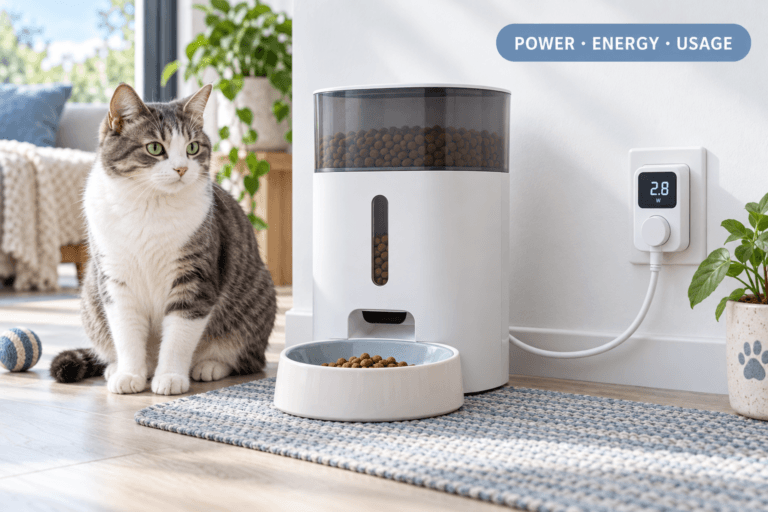

A whisker fatigue cat feeder is not a luxury bowl upgrade. It is a feeding control tool for cats that avoid deep bowls, drag food onto the floor, leave kibble near the edges, or act hungry after an uncomfortable meal. The goal is simple: reduce face pressure, keep food reachable, and stop bowl discomfort from turning into messy feeding behavior.
For homes using dry food and scheduled meals, a regular smart feeder for measured cat meals works best when the feeding area stays shallow, wide, and easy for the cat to access. The feeder should support routine control, not force the cat into a deep tray that creates the same problem again.
Direct Answer: Whisker Fatigue Cat Feeder
A good whisker fatigue cat feeder is shallow, wide, stable, and easy to clean. It reduces repeated whisker contact with narrow bowl walls, keeps food visible, and helps the cat eat without pushing kibble out of the dish. The wrong feeder makes the cat work for every bite, and that discomfort can create messy eating, food refusal, and owner overfeeding.
The important point is control. A whisker fatigue cat feeder should not only feel more comfortable. It should also protect the feeding routine. If the owner keeps adding food, hand-feeding, or changing meals every time the cat hesitates, the cat learns that bowl resistance produces a better reward.
Why This Happens
Cats use their whiskers as sensitive contact sensors. When a bowl is narrow or deep, the whiskers touch the sides repeatedly while the cat tries to reach food. In most home-feeding cases, the visible problem is not “picky eating.” The real issue is a poor food interface that makes the meal physically irritating or hard to access.
This is why a deep bowl can fail even when the food is high quality. The cat eats from the center, leaves food near the rim, pulls kibble onto the floor, or waits until the owner shakes the bowl. The owner sees unfinished food and assumes the cat wants something else. The system then becomes loose, reactive, and easy to manipulate.
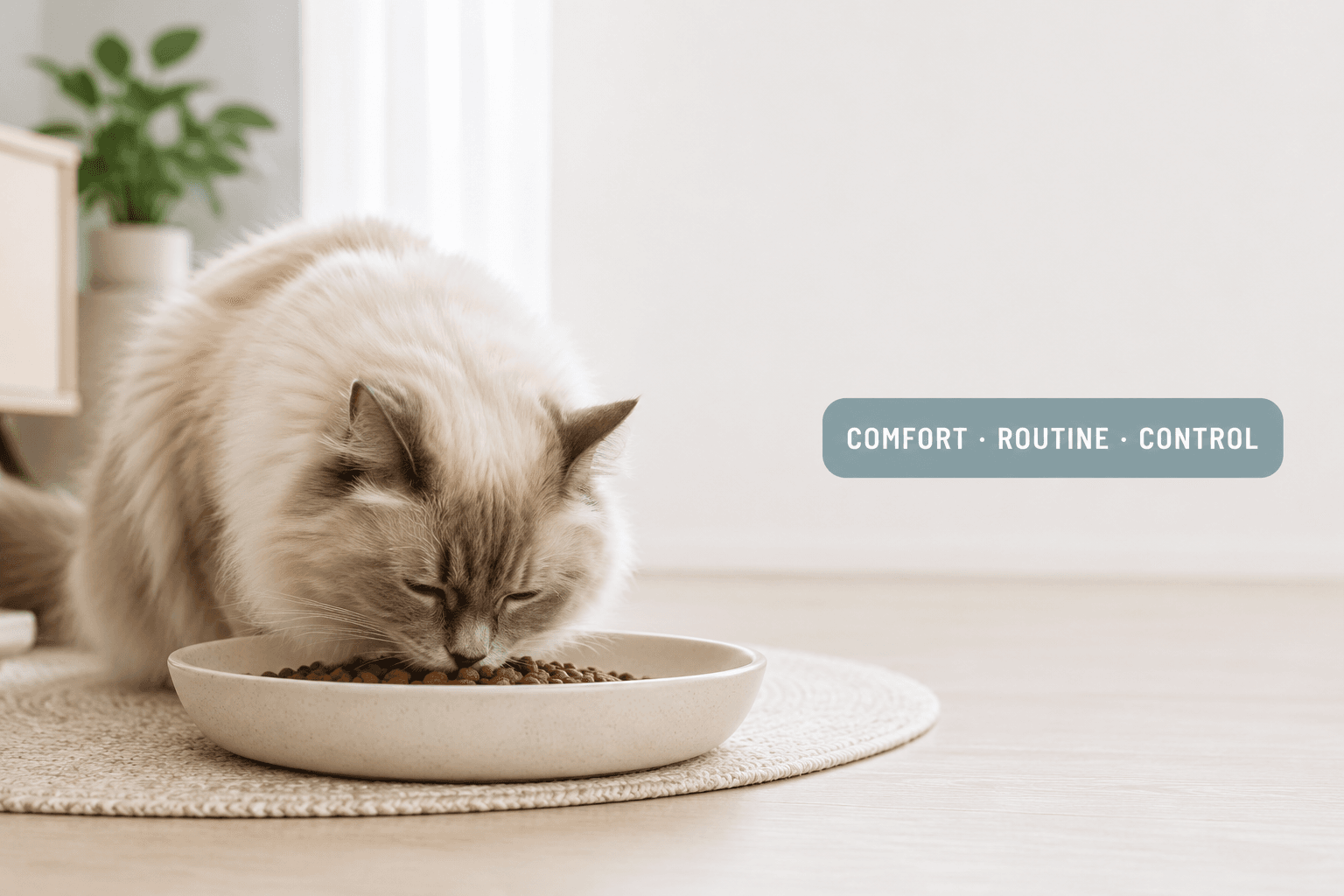
A whisker fatigue cat feeder changes the mechanics. A shallow surface keeps the food easier to reach. A wide bowl reduces side pressure. A stable base prevents sliding. A smooth, washable surface reduces residue buildup. These design details are small, but they change how the cat experiences every meal.
What To Do
Choose a feeder with a low rim and a broad eating surface. Avoid narrow pockets, deep trays, steep inner walls, and corners that trap kibble. If you use an automatic feeder, the dispensing area should drop food into a reachable bowl zone instead of forcing the cat to dig into a small cavity.
Use measured feeding, not emotional refilling. The scientific pet feeding schedule approach works because it separates comfort from extra calories. The cat receives food at predictable times, and the owner stops using refills to compensate for bowl design problems.
For cleaning and hygiene, a smooth bowl matters. A whisker fatigue cat feeder should be easy to wash because leftover oils, wet food residue, and scattered kibble weaken the feeding area quickly. For owners comparing materials, the guide on stainless steel cat feeder bowl benefits explains why easy-clean surfaces fit daily cat feeding better than many rough or scratched plastic surfaces.
The Feeding Loop Behind This Problem
The feeding loop starts with friction. The cat approaches the bowl, feels repeated whisker contact, eats only the easy center portion, and leaves food behind. The owner interprets the leftover food as hunger, boredom, or food rejection.
Then the owner adds a topper, changes the food, refills the bowl, or hand-feeds. That action gives the cat a stronger reward than simply eating from the feeder. After several repetitions, the cat learns a clear pattern: hesitate near the bowl, and the human improves the meal.
A whisker fatigue cat feeder breaks that loop by removing the physical trigger first. Once access is easier, the owner can enforce measured feeding without feeling guilty. Comfort comes from the bowl shape. Boundaries come from the schedule.
The Emotional Trigger Owners Miss
The emotional trigger is guilt. Owners see a cat pawing near the bowl, dragging food to the floor, or staring at unfinished kibble. The immediate reaction is to “fix” the moment with more food or more attention.
That reaction feels kind, but it creates a weak routine. The cat learns that refusal produces attention. The owner learns that structure feels harsh. The result is a feeding area controlled by behavior pressure instead of a stable system.
The better response is precise: improve access, then keep the routine firm. A whisker fatigue cat feeder handles the comfort side. A timed schedule handles the behavior side. Owners dealing with constant begging should also compare the behavior pattern in why a cat is always hungry after eating, because repeated food demands are often reinforced by owner response.
The Addiction Mechanism
The addiction mechanism is the reward loop around meal upgrades. When a cat refuses a bowl and receives better food, extra food, or direct attention, the refusal becomes useful. The cat is not calculating like a person, but the behavior is being reinforced.
This is why bowl discomfort can turn into a routine problem. At first, the cat avoids the feeder because the design is irritating. Later, the cat avoids the feeder because avoidance has produced rewards before. The original physical issue becomes a learned feeding strategy.
A whisker fatigue cat feeder helps reset that pattern because it removes the strongest excuse for avoidance. After that, the owner must stop negotiating with every pause. Food appears by schedule. Portions stay measured. Attention does not always arrive through the bowl.
Micro Case
A common household pattern is simple. A cat eats from a deep ceramic bowl, leaves food around the edges, then meows at the kitchen door thirty minutes later. The owner shakes the bowl, adds a few fresh pieces, and the cat eats again because the center is reachable.
The problem was not the food. The problem was access plus reinforcement. Switching to a whisker fatigue cat feeder with a wide surface removes the edge problem, while scheduled portions prevent the owner from turning every complaint into another serving.
Real-World Impact
The real-world impact is bigger than a messy floor. Poor bowl design can create inconsistent intake, scattered kibble, repeated refills, and weak portion control. Over time, the owner loses track of how much the cat actually eats because the meal is split between bowl leftovers, floor pieces, and emotional top-ups.
This matters for long-term feeding management. The AVMA’s pet nutrition guidance emphasizes that feeding decisions affect overall health, and AAFCO’s pet food consumer resources explain why owners need to understand food labels and feeding directions. A feeder cannot replace good food decisions, but it can make the daily routine measurable.
Weight drift is the other consequence. When owners repeatedly refill because the cat looks unsatisfied, calories increase without a clear plan. For cats already gaining weight, the best cat feeder for weight loss explains why portion control matters more than bowl sympathy.
Can This Be Fixed?
Yes, this can be fixed when bowl access and feeding boundaries change together. Replacing the bowl without changing the refill habit solves only half the problem. Enforcing a schedule without improving the bowl creates resistance. The fix requires both comfort and control.
Start with the feeder shape. Use a low-rim, wide, stable bowl. Then set meal times. Then measure portions. Then stop upgrading the meal every time the cat hesitates. Under stable routine conditions, this creates a cleaner and calmer feeding pattern.
A whisker fatigue cat feeder is especially useful for cats with broad faces, sensitive whiskers, flat-faced breeds, older cats that dislike deep reach, and indoor cats that already have strong food-demand habits. Owners with Persian cats or other flat-faced cats can also use the best feeder for Persian cats as a more breed-specific next step.
Who Should Walk Away and Who Should Use This
Walk away from narrow bowls, high-sided dishes, deep automatic feeder trays, unstable stands, and decorative bowls that look clean but trap food in corners. These products hold food, but they do not create comfortable access. If the cat must scrape, reach, or pull food out, the feeder is doing the wrong job.
Use a whisker fatigue cat feeder if your cat leaves food near the bowl edge, drags food onto the floor, eats only from the center, paws at the dish, or begs after an unfinished meal. Use a timed feeder only when the bowl area stays wide enough for normal eating.
For owners comparing automatic options, the cat feeders collection is the right category to start with. For households with multiple cats, separate feeding stations are cleaner than shared bowl competition, and the multi-pet feeders collection helps reduce stealing, crowding, and uneven intake.
Mini FAQ
What is a whisker fatigue cat feeder?
A whisker fatigue cat feeder is a shallow, wide feeding setup that reduces repeated whisker contact. Narrow bowls create pressure and awkward access. Use a low-rim bowl or feeder tray that lets the cat reach food without pushing its face into the sides.
Does a whisker fatigue cat feeder stop messy eating?
It stops messy eating when the mess comes from poor bowl access. Cats often drag food out when the bowl is too deep or narrow. Switch to a wider surface and keep food portions measured so the cat does not scatter extra kibble.
Can automatic feeders cause whisker fatigue?
Automatic feeders can create whisker discomfort when the tray is narrow or deep. The timer is useful, but the eating surface still matters. Choose an automatic feeder that dispenses into a shallow, reachable bowl area.
Is stainless steel good for a whisker fatigue cat feeder?
Stainless steel is a strong choice when the bowl shape is also shallow and wide. The material is easy to clean, but shape controls comfort. Use stainless steel with a low rim instead of a deep dish.
Why does my cat leave food around the bowl edge?
Food left around the edge usually means the cat can reach the center more easily than the sides. A deep or narrow bowl makes edge food uncomfortable to access. Use a flat, wide feeder and avoid refilling until the scheduled next meal.
Should I use a whisker fatigue cat feeder for wet food?
Yes, wet food works well on a shallow, easy-clean surface. Deep bowls smear food along the sides and make cleanup harder. Use a broad dish, remove residue quickly, and keep wet meals on a controlled schedule.
For owners who want scheduled dry-food control, a smart automatic pet feeder with app control can support consistent meal timing when paired with a comfortable bowl surface. The final rule is direct: a whisker fatigue cat feeder should reduce bowl pressure, protect portion control, and stop feeding discomfort from becoming a daily behavior loop.