
The best feeder for persian cats is not the deepest bowl, the tallest stand, or the most complicated smart device. It is a feeder system that gives a flat-faced cat easy food access, controlled portions, and a calm feeding routine without forcing the face, whiskers, or jaw into an awkward position.
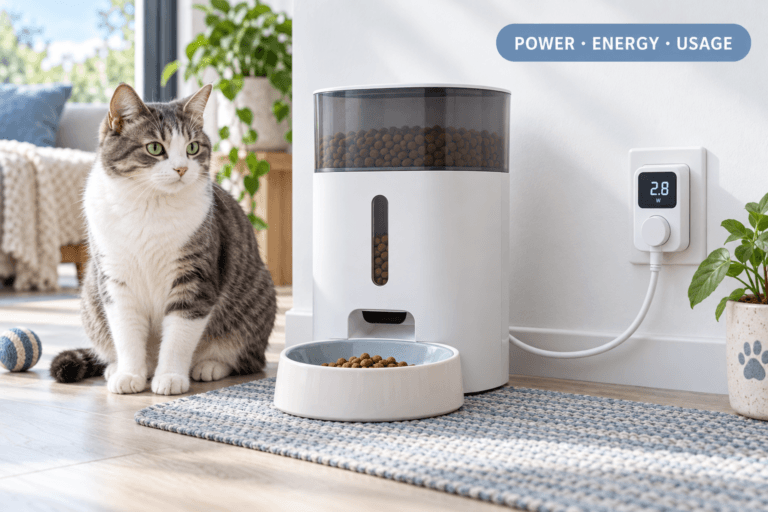
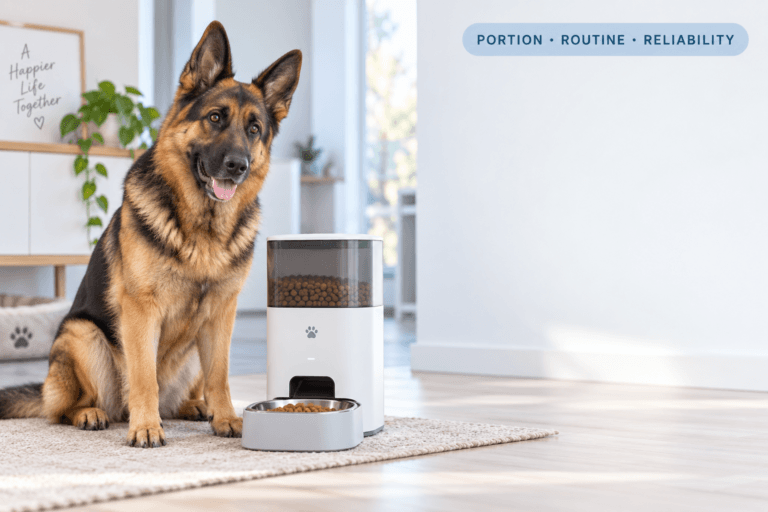
For homes that already use dry food and need measured meals, a regular smart feeder for measured cat meals can help only when the bowl area is easy for a Persian cat to reach. The device should support the routine; it should not create a new eating struggle.
Direct Answer: Best Feeder for Persian Cats
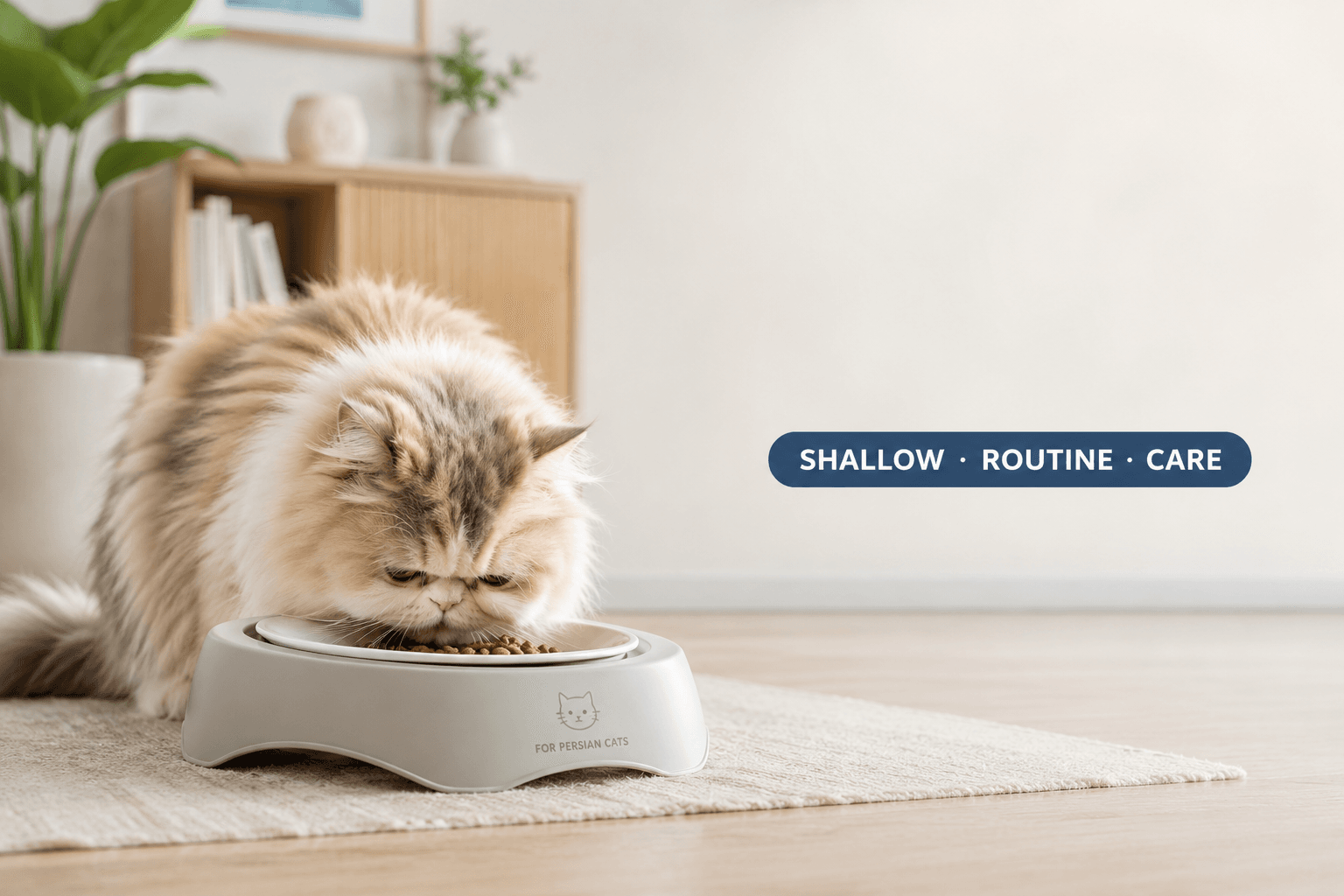
The best feeder for persian cats is a shallow, wide, easy-clean feeder with reliable portion control. Persian cats have a flat-faced structure, so deep bowls and narrow food wells create face pressure, whisker contact, and food pushing. A good feeder reduces mess, keeps meals predictable, and prevents owners from solving every feeding problem by adding more food.
The wrong feeder creates a repeated failure loop. The cat approaches the bowl, struggles to reach the food cleanly, leaves pieces behind, and the owner reads the mess as hunger or fussiness. Then more food is added. The result is not better eating. The result is a loose feeding system with poor portion control.
Why This Happens
Persian cats are built differently from ordinary domestic short-haired cats. Their brachycephalic, flat-faced shape changes how they approach food. Research from the Royal Veterinary College links Persian flat-faced anatomy with higher levels of dental and eye problems, which makes feeding comfort more than a cosmetic issue. A useful feeder should respect that structure instead of forcing the cat to dig into a deep container.
The best feeder for persian cats must solve three problems at the same time: access, portion, and routine. Access means the cat can reach food without scraping the face against the bowl edge. Portion means the owner controls meal size instead of free-filling the bowl. Routine means food appears at stable times, not whenever the cat complains.
This is why a standard deep bowl fails. It holds food, but it does not support the eating mechanics of a flat-faced cat. The cat pushes kibble into the corners, drops food outside the dish, or eats only the center. The owner then cleans the mess and assumes the cat is picky. In most home-feeding cases, the feeder design is part of the behavior problem.
What To Do
Choose a feeder with a low rim, a broad eating surface, and a stable base. If you use an automatic feeder, the dispensing area should not force the cat to chase kibble into a narrow pocket. For flat-faced cats, food should land where the cat can reach it cleanly.
Use measured feeding instead of open access. Cornell Feline Health Center emphasizes that the right food, amount, and timing matter for cat health, and that principle fits Persian cats especially well. Their calm indoor lifestyle makes uncontrolled snacking a poor default. A clear scientific pet feeding schedule gives the feeder a job: deliver structure, not just store food.
The best feeder for persian cats should also be easy to clean. Long facial hair, wet food residue, and scattered kibble create hygiene problems around the feeding area. If the feeder bowl traps food in corners, the system becomes harder to maintain. A smooth stainless steel or easy-wash bowl surface is a better match, especially when paired with the cleaning logic explained in stainless steel cat feeder bowl benefits.
The Feeding Loop Behind This Problem
The feeding loop starts with discomfort. The Persian cat reaches toward the bowl, struggles with the rim, drops food, and walks away before finishing. The owner sees unfinished food and reacts by changing food brands, topping the meal, or adding extra portions.
That reaction trains the wrong pattern. The cat learns that hesitation near the bowl produces a better reward. The owner learns that feeding more feels safer than enforcing structure. Over time, the bowl becomes a negotiation point instead of a routine.
The best feeder for persian cats breaks this loop by making access easier and the portion non-negotiable. The cat receives food in a reachable format. The owner stops improvising. The routine becomes calmer because the system no longer rewards bowl drama.
The Emotional Trigger Owners Miss
The emotional trigger is guilt. Persian cats often look uncomfortable when eating from a poor bowl shape. Their flat face, long coat, and quiet personality make owners interpret every pause as distress. That feeling pushes owners to overcorrect.
Overcorrection usually means extra food, softer treats, hand feeding, or repeated bowl changes without a real system. These actions feel caring, but they weaken the routine. If a cat learns that refusal produces better food or attention, the behavior becomes stronger.
A better response is physical comfort plus feeding boundaries. Use a shallow feeder, remove hard-to-reach food corners, and keep the meal schedule stable. For design-specific bowl comfort, the guide on whisker fatigue cat feeder benefits gives a useful next step for owners dealing with face and whisker sensitivity.
The Addiction Mechanism
The addiction mechanism is not addiction to the feeder itself. It is dependency on unpredictable reward. When food appears after meowing, staring, pawing, or refusing the bowl, the cat learns that pressure works.
This reinforcement loop becomes strong because food is a direct reward. The more inconsistent the owner becomes, the louder the cat’s demand behavior becomes. The issue is not hunger alone. The issue is a reward system with no boundary.
The best feeder for persian cats reduces that dependency by separating affection from food delivery. Meals arrive by schedule. Portions stay measured. Comfort comes from the feeder shape, not from extra calories. That is how a feeder becomes a behavior tool instead of a storage container.
Common Failure Pattern
A common failure pattern starts with buying a deep automatic feeder because it looks clean and modern. The Persian cat eats from the top layer, leaves food near the edges, and starts waiting for the owner to shake the bowl. The owner then treats the device as unreliable, even though the real failure is the bowl geometry.
The consequence is messy feeding and inconsistent intake. The correction is simple: use a feeder setup that releases measured food into a shallow, reachable area. If the automatic feeder cannot provide comfortable access, pair scheduled feeding with a separate wide bowl or choose a cat-specific feeder from the cat feeders collection.
Real-World Impact
The real-world impact shows up as mess, weight creep, and owner frustration. A Persian cat that struggles with bowl access leaves scattered food around the feeding area. The owner compensates with extra servings. The cat then receives more calories than the routine requires.
For indoor cats, this matters. The AVMA’s healthy pet weight guidance connects weight control with long-term health, and VCA’s cat weight reduction plan reinforces the need for controlled feeding rather than casual portion guessing.
The best feeder for persian cats protects against that drift. It does not make the cat healthier by itself. It creates a structure where the owner can measure food, observe intake, and stop using refills as emotional reassurance. For owners already managing weight risk, the best cat feeder for weight loss explains how feeder design connects to portion discipline.
Can This Be Fixed?
Yes, this can be fixed when the feeding system changes. The fix is not another random bowl or another flavor of food. The fix is matching the feeder to the Persian cat’s face structure and then enforcing a stable meal rhythm.
Start with the physical interface. Choose shallow, wide, easy-clean access. Then set feeding times. Then measure the portion. Then stop rewarding refusal with upgrades. That sequence matters because comfort without boundaries creates mess, and boundaries without comfort create resistance.
The best feeder for persian cats is effective because it solves both sides. It gives the cat a reachable eating surface and gives the owner a repeatable control system. Owners who need a broader setup guide can use how to use a smart pet feeder before changing the full routine.
Who Should Walk Away and Who Should Use This
Walk away from deep bowls, narrow food wells, unstable stands, and complicated feeders that are hard to clean. Also walk away from any feeder that makes the cat push food into corners. That design turns every meal into work.
Use a shallow feeder system if your Persian cat drops kibble, leaves food around the edges, eats slowly because of access problems, or demands refills after unfinished meals. Use an automatic feeder only when it supports portion control and sends food into a reachable bowl area.
For multi-cat homes, do not let a Persian cat compete at a shared bowl. Competition creates rushing, stealing, and uneven intake. A separate station or a dedicated option from multi-pet feeders is the cleaner path when another cat crowds the feeding zone.
Mini FAQ
What is the best feeder for persian cats?
The best feeder for persian cats is shallow, wide, stable, and portion-controlled. Persian cats need easier face access than cats with longer muzzles. Choose a low-rim feeder and keep meals measured on a fixed schedule.
Are elevated feeders good for Persian cats?
Elevated feeders are useful only when the bowl shape is still shallow. Height alone does not solve face pressure or narrow food access. Use elevation for posture support, but keep the eating surface broad and easy to reach.
Should Persian cats use automatic feeders?
Automatic feeders work for Persian cats when the food lands in a reachable bowl area. The timer helps portion control, but a deep dispensing tray creates the same old problem. Choose a feeder that supports measured meals without forcing the face into a narrow pocket.
Why does my Persian cat make a mess while eating?
Messy eating is often a design problem, not bad behavior. A flat-faced cat pushes food outward when the bowl is too deep or narrow. Switch to a shallow feeder and reduce the need for the cat to dig, drag, or chase food.
Is stainless steel better for Persian cat feeders?
Stainless steel is a strong choice for Persian cat feeders. It is easier to clean than many plastic surfaces and works well for daily hygiene. Use stainless steel with a low, wide bowl shape instead of a deep dish.
How do I stop overfeeding a Persian cat?
Stop overfeeding by separating comfort from calories. A Persian cat needs easier access, not endless refills. Use measured portions, scheduled meals, and a feeder that prevents bowl discomfort from turning into extra food.
For owners who want a controlled dry-food routine, a smart automatic pet feeder with app control can help create consistent meals when paired with a comfortable eating surface. The final rule is clear: the best feeder for persian cats is the one that combines shallow access, clean portion control, and a routine the owner does not keep breaking.