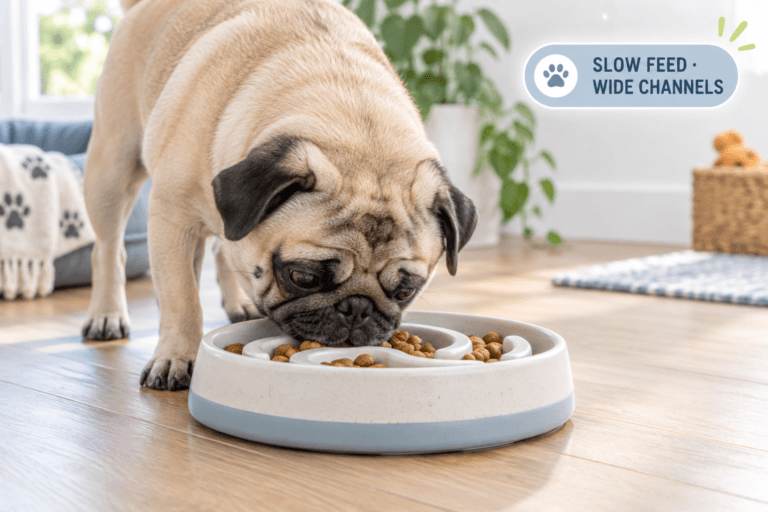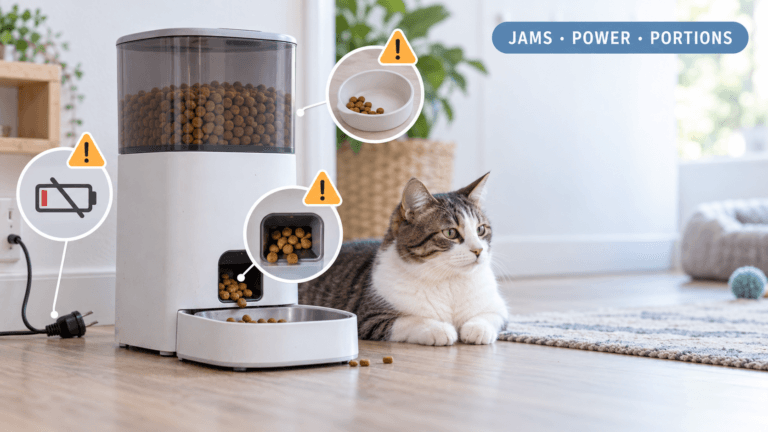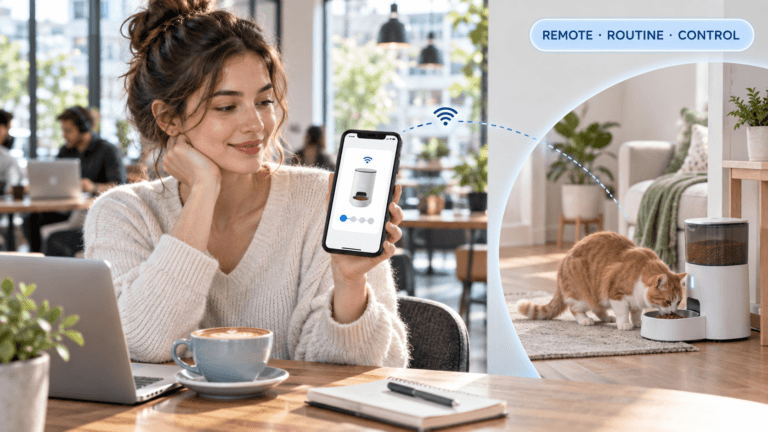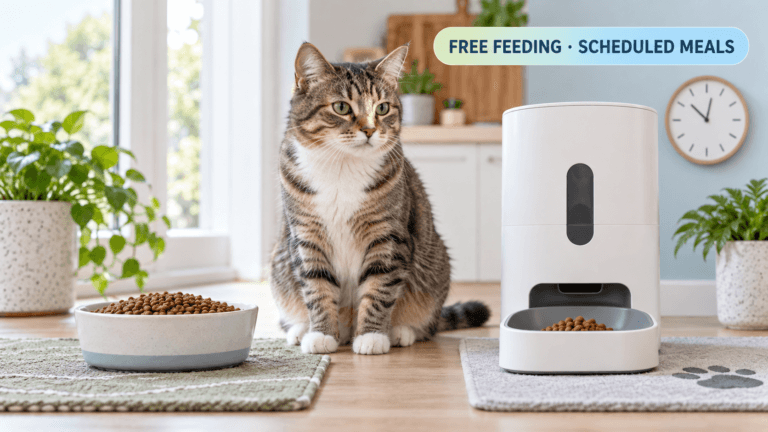

A feeder for food aggressive pets should reduce competition and give each animal a protected place to eat. An automatic dispenser can make meal timing predictable, but it does not treat resource guarding or make it safe to approach a pet that is growling, snapping, or lunging over food.
A feeder is useful only when it supports physical separation and calm access. For a pet that eats alone behind a closed door or barrier, a regular automatic pet feeder for scheduled meals can help maintain a consistent routine without requiring someone to approach the bowl at every meal.
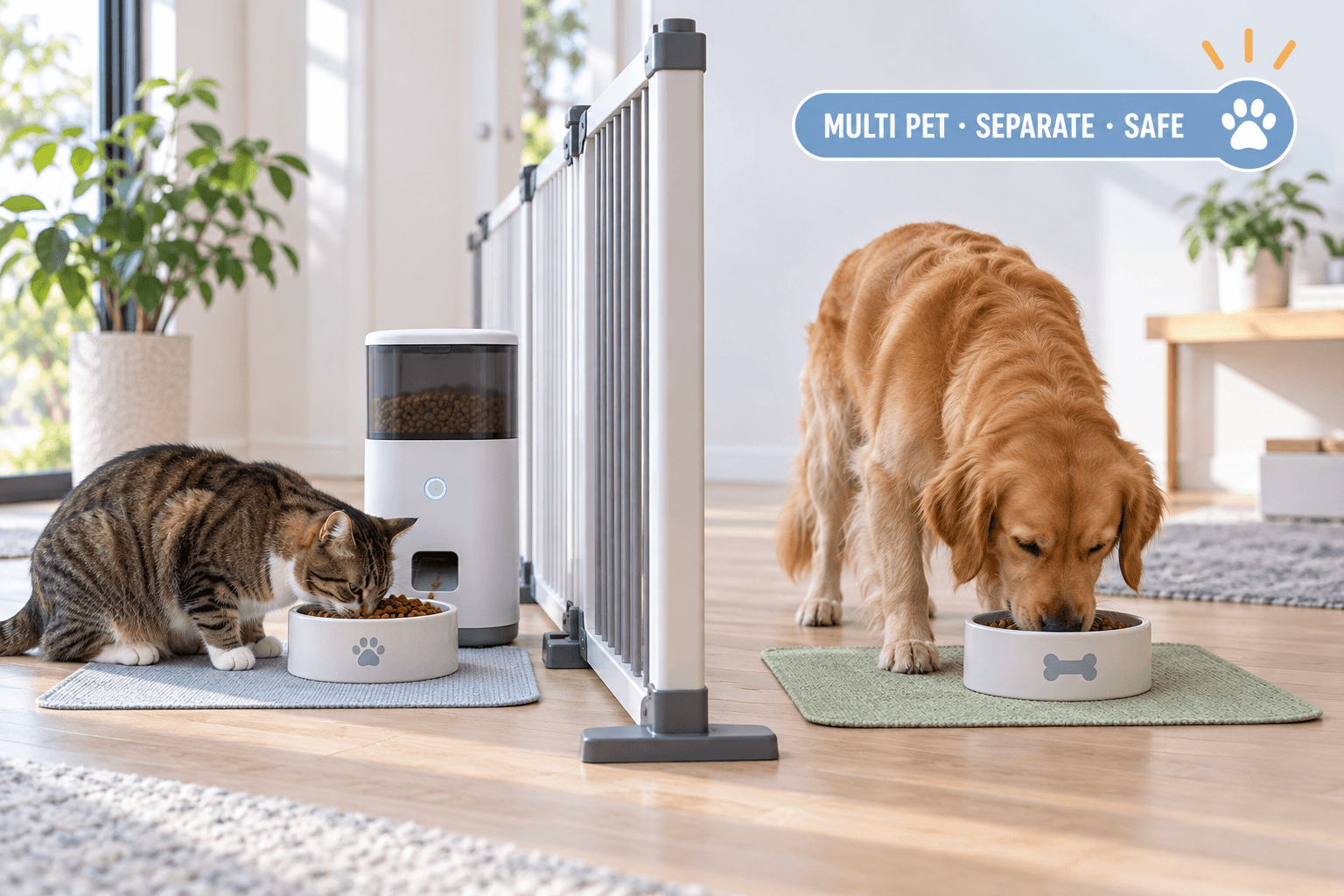
Direct Answer: Feeder for Food Aggressive Pets
A feeder for food aggressive pets can support safe meal management, but separation—not the feeder itself—is the primary safety measure. Feed the guarding pet in a quiet, low-traffic area where people and other animals cannot approach. Use a closed door, secure gate, crate if the pet is already comfortable with it, or another reliable barrier. Never reach for the bowl or test whether the pet is “serious” while it is eating.
Why This Happens
Food guarding is behavior around a valued resource. Warning signs can begin subtly: a pet eats faster when someone approaches, freezes over the bowl, lowers its head, watches the approaching person, or stops eating. Growling, showing teeth, snapping, and lunging are more urgent signals that the animal needs space.
These behaviors are not solved by making the pet tolerate interruptions. Reaching into the bowl, taking food away, crowding the pet, or forcing another animal to eat nearby can increase perceived competition. The VCA guidance on food-bowl aggression in dogs recommends designated meals and feeding in an area separated from people and other pets.
In multi-cat homes, the conflict may be quieter but still consequential. One cat may block access, stare, chase another away, or eat both portions. The Feline Veterinary Medical Association’s feeding guidance recommends separate feeding stations with distance and visual separation where needed.
A food dispenser can add predictability, but it can also concentrate animals around one location. If two pets compete for the same feeder or bowl, adding automation without changing access may preserve the conflict—or make the competition more predictable.
What To Do
Give the guarding pet a separate feeding area
Feed the pet behind a closed door or a secure barrier that prevents other animals and children from entering. Choose a quiet location where the pet can eat without being watched, cornered, or approached. Remove the bowl after the pet has left the area, not while it is eating.
Choose the feeder for the management setup
For a pet that eats alone, a timed feeder can help keep meals consistent. Prioritize a stable base, a secure lid, simple cleaning, and controls that cannot be repeatedly triggered by pawing. If the problem is one pet stealing another’s food, look at access control rather than app features alone.
The guide to separate feeders in multi-pet homes can help determine whether animals need separate stations. When one pet must be restricted from another’s food, compare identification-based options in the microchip versus RFID feeder guide.
Keep people away during meals
Do not pet, touch, move, or take food from a guarding animal while it is eating. Children should never approach the feeding area. If you need to retrieve a bowl, wait until the pet has left and the area is clear.
Measure meals and keep the schedule predictable
Measure the pet’s daily ration before dividing it into meals. Use designated meal times instead of leaving food out unpredictably when that creates competition. The pet feeding schedule guide can help establish predictable portions and timing.
Get qualified behavior help for serious guarding
If the pet growls, snaps, lunges, or has bitten someone near food, do not begin bowl exercises on your own. Maintain separation and arrange help from a board-certified veterinary behaviorist or a qualified behavior professional who uses humane, evidence-based methods. The American Veterinary Society of Animal Behavior’s food-guarding guidance explains why repeatedly taking food away can teach defensive guarding.
Micro Case: The Feeder Was in the Wrong Room
A family placed an automatic feeder in the kitchen so both pets could reach it. One dog began hovering over the bowl, and the cat started rushing meals or waiting until the dog left. The feeder dispensed on time, but it did not create safe access. Moving the cat’s feeder behind a gate with visual separation restored individual access without asking either animal to share the feeding space.
The Feeding Loop Behind This Problem
The feeding loop starts when an animal expects competition. It may eat faster, guard the bowl, or block another pet. If the other animal retreats, the guarding behavior has achieved its immediate purpose. If a person reaches in and the pet growls, the person may back away—which can also reinforce the growl as an effective warning.
A feeder for food aggressive pets should interrupt the competition loop by separating access, not by forcing animals to eat beside each other. The feeder can make meal times predictable, while a door, gate, separate room, or controlled-access bowl prevents unwanted approaches.
Keep the routine consistent. Feed each pet in its assigned location, allow it to finish undisturbed, and clean up only after the eating area is empty. Do not turn the dispenser into a shared resource if sharing is what triggers the conflict.
The Emotional Trigger Owners Miss
Owners may feel pressure to prove they can touch the bowl or “show the pet who is in charge.” That response is risky and does not teach the animal that people near food are safe. A growl is information that the pet needs more distance; punishing the warning can remove a useful signal without changing the underlying discomfort.
Another common trigger is guilt about feeding pets separately. Separate meals are not a failure of the household. They are a practical way to prevent conflict and ensure each pet can eat its own portion without pressure.
The Reinforcement Mechanism
Food guarding is not an addiction. It is a learned protective response around a valuable resource, and repeated experiences can strengthen it. If another animal repeatedly steals food, or a person repeatedly reaches into the bowl, the pet may become more vigilant at future meals.
Do not deliberately provoke the behavior to see whether it has improved. Build safety through management first. Any behavior-change work should be planned with qualified help when the pet has shown threatening behavior.
Real-World Impact
Unmanaged food conflict can lead to bites, scratches, interrupted meals, rapid eating, food theft, and chronic stress. A quieter pet may eat less because it cannot approach the bowl safely. A more assertive pet may consume multiple portions and gain weight.
Separate stations should be positioned so each pet can reach food without being cornered or forced past another animal. The smart feeder placement guide can help plan a protected, low-traffic feeding area.
For dogs, the VCA overview of possessive aggression advises leaving the area when a dog is growling, snarling, snapping, or lunging over a valued item. Do not attempt to take the food away during an active guarding episode.
For cats, use separate stations and visual barriers when another cat’s presence affects access or comfort. The guide to stopping one cat from eating another’s food covers access control for households where portions or diets differ.
Can This Be Fixed?
Meal conflict can often be managed safely, but a feeder alone does not cure food guarding. A reliable setup gives each pet protected access, removes competition, and prevents people from approaching the bowl during eating.
Start with physical separation and a predictable schedule. Observe from a safe distance to confirm that each pet eats its own portion. If guarding continues toward people, escalates, or includes snapping or biting, keep the barrier in place and work with a qualified behavior professional.
Who Should Walk Away and Who Should Use This
Do not rely on a standard open-bowl automatic feeder when one pet can reach another’s meal, when a dog can knock over or open the feeder, or when people must approach the guarding pet to operate it. A shared feeder is the wrong setup when the animals compete over food.
A feeder can be useful when the pet eats alone, tolerates the device, and has a secure feeding space. For households that need predictable meals without approaching the bowl, a regular automatic feeder for scheduled portions may support the routine. Keep the feeder inside the protected area and do not use it to bring animals closer together.
Mini FAQ
Can an automatic feeder stop food aggression?
No, an automatic feeder does not treat food aggression by itself. Guarding is driven by perceived competition or threat, not only by meal timing. Use separate feeding areas and seek qualified behavior help when the pet threatens or bites.
Where should I place a feeder for a food-guarding dog?
Place it in a quiet area where other pets and people cannot approach during the meal. Traffic near the bowl can increase guarding pressure. Use a closed door or secure barrier and retrieve the bowl only after the dog has left.
Should I take my dog’s bowl away to prevent guarding?
No, do not take food away while the dog is eating. Reaching for the bowl can increase the dog’s expectation that food will be removed. Give the dog space, prevent other pets from approaching, and use professional guidance for behavior change.
Can a microchip feeder help with food aggression between cats?
It can restrict access to one cat’s food, but it does not resolve every source of conflict. A cat may still be stressed by another animal nearby or blocked from reaching the device. Pair access control with separate, visually protected feeding stations.
What should I do if my pet growls over food?
Stop approaching and give the pet space. Growling is a warning that the animal is uncomfortable, and challenging it can increase bite risk. Maintain separation and arrange help from a qualified veterinary behavior professional.
A feeder for food aggressive pets should make meals safer by controlling access and reducing competition—not by forcing contact or testing the animal’s tolerance. Feed each pet separately, keep people away from the bowl, and use automation only as one part of a protected routine. When guarding includes growling, snapping, lunging, or biting, prioritize separation and qualified behavior support over feeder features.