
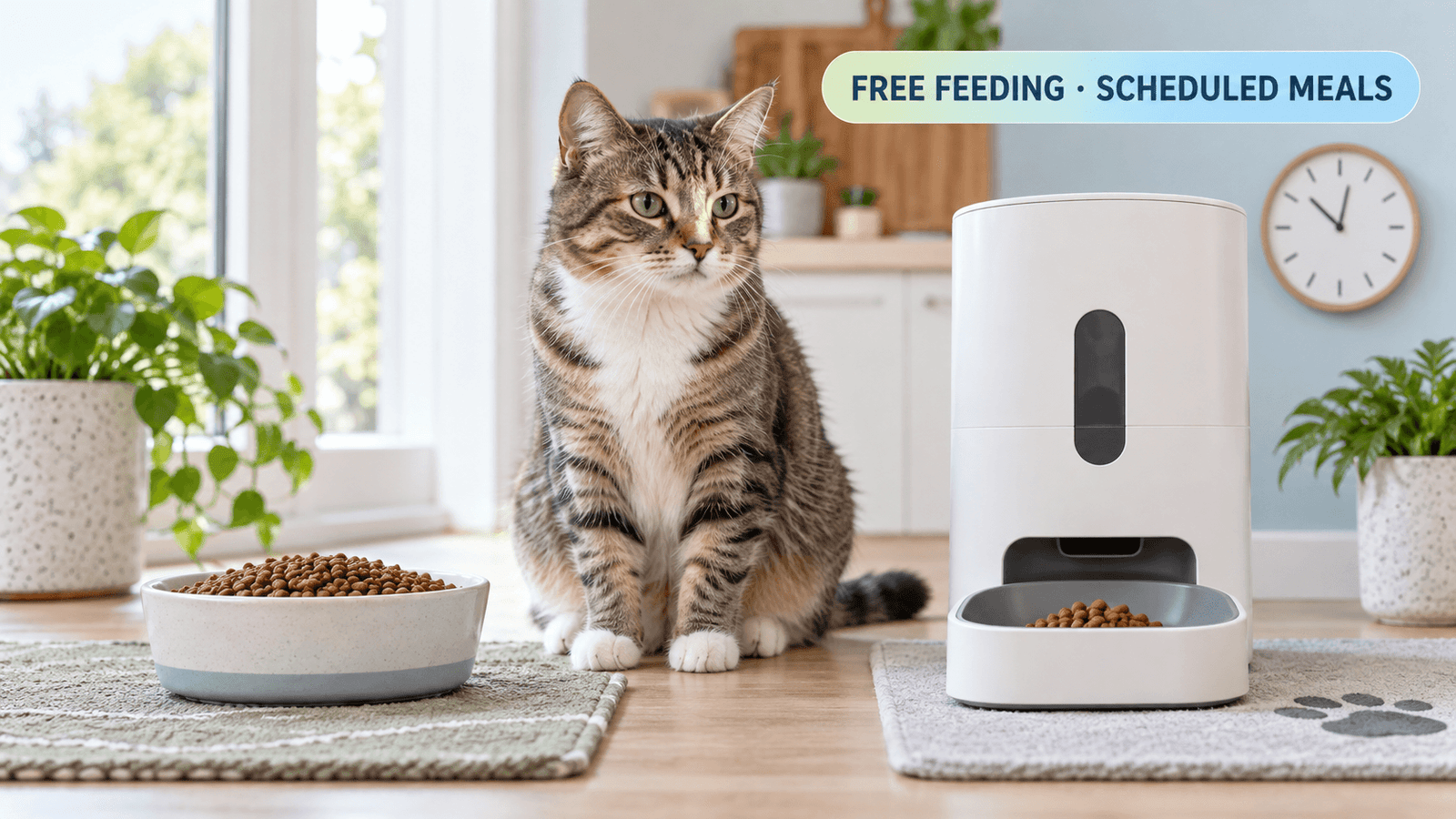
Free feeding vs scheduled feeding is a choice between open access and controlled timing. Free feeding means food remains available for the pet to eat throughout the day, while scheduled feeding delivers measured meals at planned times. Neither system works automatically for every household, but scheduled feeding provides stronger control over portions, appetite changes, begging, and multi-pet food access.
When owners compare free feeding vs scheduled feeding, the real question is not which method sounds easier. The useful question is whether the pet can regulate intake, whether the owner can measure the entire daily ration, and whether the household needs to notice changes in eating behavior quickly.
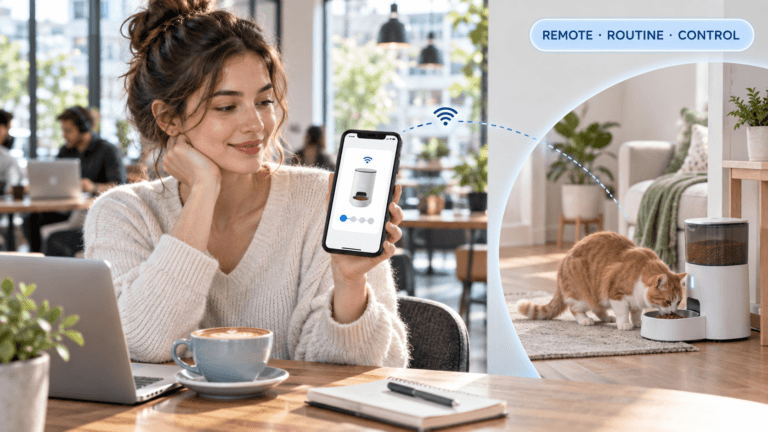
For owners who want predictable portions without hand-feeding every meal, a regular automatic pet feeder for scheduled meals can create a clear routine. The feeder does not choose the right calories, but it can deliver the plan consistently.
Direct Answer: Free Feeding vs Scheduled Feeding
Scheduled feeding is the stronger default for most dogs, overweight pets, multi-pet homes, and animals that need close appetite monitoring. Free feeding can work for a healthy pet that regulates intake, receives a measured daily ration, and has no competition from other animals. Unlimited refilling is not controlled free feeding; it is unrestricted access, and it makes portion tracking unreliable.
Why This Happens
Free feeding appears convenient because the owner fills the bowl once and avoids repeated meal reminders. The problem begins when the bowl is topped up without measuring what remains. The owner sees food in the bowl but cannot tell how much the pet ate, how much was spilled, or how much another pet consumed.
Cats often prefer eating small amounts throughout the day. That preference does not require an always-full bowl. A measured daily ration can be divided into several small servings through a timed feeder or multiple feeding stations. The VCA cat feeding guidelines explain why free feeding becomes harder to measure when multiple cats share one dish.
Dogs generally benefit from predictable meals because routine supports house training, appetite observation, and household structure. Puppies are especially vulnerable to overeating when food is offered without limits. The VCA dog feeding guidance connects regular meal timing with predictable daily care.
The choice also changes when the pet has a health condition, receives medication with food, or needs a weight-management plan. A scheduled routine makes it easier to confirm whether the pet finished a meal and whether appetite changed from the normal pattern.
What To Do
Define what free feeding actually means
Controlled free feeding means measuring the entire daily ration in the morning and allowing the pet to eat from that amount during the day. It does not mean filling the bowl whenever it looks empty. If the pet finishes the measured amount early, do not add more food without a clear reason.
This approach works only when one person measures the food, records additional treats, and checks what remains at the end of the day. It becomes unreliable when several family members refill the bowl independently.
Use scheduled feeding for portion control
Scheduled feeding divides the daily ration into meals delivered at fixed times. Start with a routine the household can maintain, such as morning and evening meals for an adult dog or several smaller meals for a cat that eats rapidly.
The schedule should fit the pet’s needs and the family’s actual day. A complicated plan that nobody checks is weaker than a simple plan that runs consistently. The scientific pet feeding schedule guide can help organize meal timing without increasing the total daily amount.
Measure the entire day before dividing it
Calculate the daily food amount first, then split it across meals. Do not increase the daily ration simply because the pet receives more frequent servings. Smaller meals change timing, not calorie needs.
Count treats, dental chews, training rewards, toppers, and food used with medication. The pet nutrition guide can help owners distinguish a complete diet from optional extras.
Watch the pet’s response
Track body condition, appetite, stool quality, begging, activity, and leftover food. A feeding system is working when the pet receives the planned amount and the owner can recognize a meaningful change.
Separate pets when access is unequal
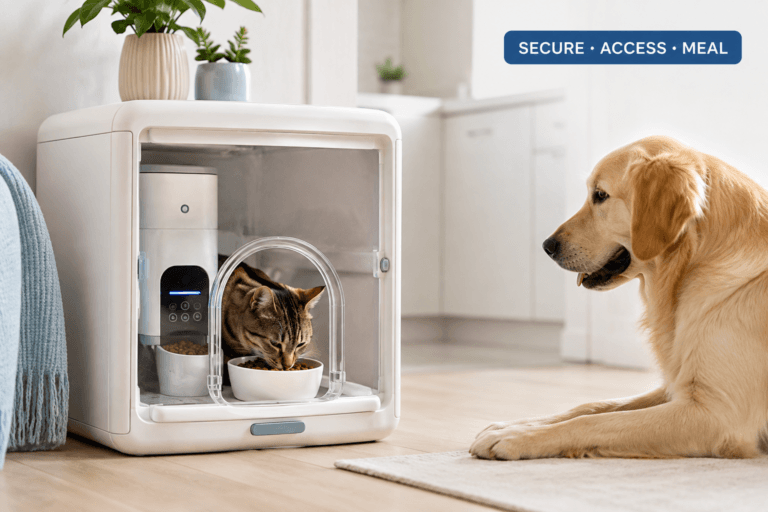
In a multi-pet home, free feeding often allows the fastest or most assertive animal to control the bowl. Scheduled feeding helps only when each pet can reach its own portion. Use separate rooms, elevated stations, gates, or identification-based feeders when food theft continues.
Micro Case: The Bowl That Never Looked Empty
A family allowed two cats to free-feed from one large bowl and added kibble whenever the level dropped. One cat gained weight while the other became difficult to monitor because nobody knew how much it ate. The solution was to measure the daily ration, divide it into scheduled meals, and use separate feeding locations so each cat’s intake became visible.
The Feeding Loop Behind This Problem
The feeding loop begins when a pet approaches an empty bowl. The pet vocalizes, paws at the owner, or follows the owner into the kitchen. If food appears immediately, the behavior becomes stronger. The owner then receives more demands before the next planned meal.
Free feeding can create a different loop. The pet eats small amounts whenever it wants, the owner sees the bowl level change, and the owner keeps adding food to prevent an empty bowl. Over time, the owner loses the daily calorie record and the pet learns that food is always available.
Scheduled feeding moves the reward from owner response to a predictable time. A feeder can release the meal without the owner standing beside the bowl. This weakens begging directed at people and creates a clearer feeding boundary.
The Emotional Trigger Owners Miss
Owners often choose free feeding because an empty bowl feels unfair. They worry that the pet is hungry, especially when the animal waits near the feeding area or looks for food after finishing a meal. Adding food relieves the owner’s concern for a moment, but it can reward overeating and persistent begging.
Scheduled feeding requires owners to tolerate short periods of waiting. The pet may test the new routine by vocalizing more intensely or waking the owner earlier. The correct response is to confirm that the daily ration is appropriate, keep the schedule stable, and use play or attention instead of unplanned food.
The Addiction Mechanism
There is no clinical addiction involved in free feeding, but inconsistent food access can create strong reward dependency. A pet that sometimes receives an extra meal after begging will keep trying, even when the normal schedule is adequate.
Intermittent reinforcement makes the behavior persistent. If the owner refuses ten requests but gives food on the eleventh, the pet learns that persistence can work. The same principle applies when a pet refuses normal food and receives a tastier replacement.
Break the pattern by keeping the total ration fixed, rewarding calm behavior, and making meal delivery predictable. A scheduled feeder can help because it becomes the source of food rather than the owner’s emotional reaction.
Real-World Impact
The choice between free feeding vs scheduled feeding affects weight, behavior, and health monitoring. Unmeasured access can contribute to overeating, especially in indoor cats, low-activity dogs, and pets that share food with another animal.
Scheduled feeding also makes appetite changes easier to detect. When a pet normally finishes a measured meal, leaving food behind becomes useful information. When food is always available, a gradual decline can remain hidden for days.
For overweight pets, a structured routine is usually more useful than an always-full bowl. Review the pet obesity prevention guide and the VCA weight-management guidance when portion control is the main goal.
Food access also affects activity and stress. Cats that compete for a single bowl can avoid eating, rush through meals, or guard the feeding area. The cat and dog exercise guide can support a broader daily routine that includes movement, feeding, and rest.
Can This Be Fixed?
Yes, most free-feeding problems can be improved by measuring the daily ration and moving toward a predictable schedule. The transition should match the pet’s current habits. A cat that has grazed all day can struggle with an abrupt change to one large meal, while a dog that overeats needs firm portion boundaries from the beginning.
Start by measuring the food offered in one full day. Then divide that amount into smaller scheduled servings. Keep the total unchanged during the first transition so the owner can evaluate timing separately from calorie changes.
Do not respond to early begging by increasing the ration. Check the feeder, water supply, meal record, and food quality first. If the pet shows a sudden appetite change, repeated vomiting, severe diarrhea, unusual weakness, or other concerning symptoms, arrange professional assessment.
Who Should Walk Away and Who Should Use This
Owners should walk away from unrestricted free feeding when the pet is overweight, eats rapidly, steals another pet’s food, receives frequent untracked treats, or has a condition that requires predictable meals. Free feeding is also a poor choice when several people refill the bowl without coordination.
Measured free feeding can suit a healthy pet that eats slowly, maintains a stable body condition, and has its own food station. Even then, weigh the daily ration and record top-ups. The method is controlled only when the amount is known.
Scheduled feeding suits most multi-pet homes, growing puppies, food-driven dogs, overweight cats, and owners who need clear appetite information. For busy households, an automatic feeder for work schedules can deliver the planned meal without turning an owner’s absence into an excuse for uncontrolled access.
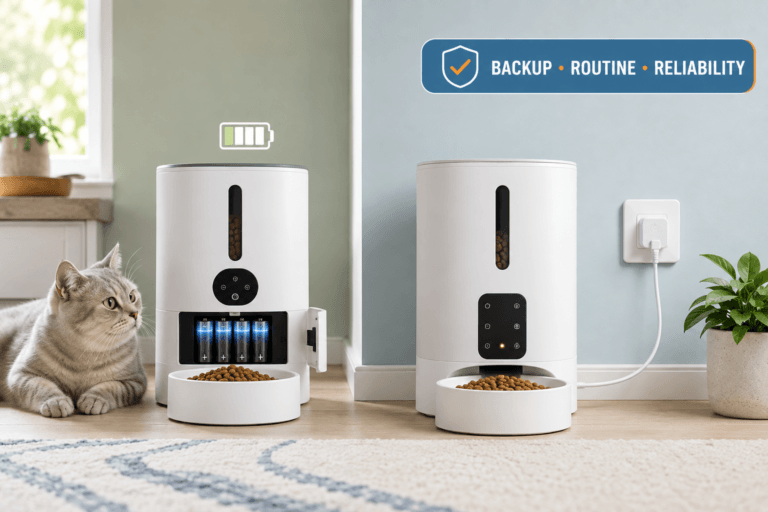
For owners who prefer scheduled feeding, a regular automatic feeder with measured meal timing can support the routine, provided the device is calibrated and checked regularly.
Mini FAQ
Which is healthier, free feeding vs scheduled feeding?
Scheduled feeding is healthier for most pets that overeat or need close monitoring. It makes portions and appetite visible, while unrestricted access hides the amount consumed. Measure the daily ration and divide it into meals that fit the pet’s routine.
Is free feeding bad for cats?
Free feeding is not automatically harmful when the daily amount is measured and the cat regulates intake. The risk rises when food is constantly topped up or shared between cats. Weigh the full daily ration, use separate stations, and track leftovers.
Should dogs be free-fed?
Most dogs do better with scheduled meals because predictable timing supports portion control and daily routine. Free access can encourage overeating and makes appetite changes harder to notice. Feed measured portions at consistent times.
Can scheduled feeding stop begging?
Scheduled feeding can reduce begging when owners stop rewarding demands with extra food. Begging continues when it produces an occasional meal. Keep the ration fixed, let the feeder deliver food at planned times, and reward calm behavior without adding calories.
How do I switch from free feeding to scheduled feeding?
Transition by measuring the current daily amount and dividing it into several scheduled servings. An abrupt single-meal change can create excessive hunger and frustration. Reduce the number of feeding windows gradually while keeping the total daily ration controlled.
Free feeding vs scheduled feeding is ultimately a question of visibility and control. Measured free feeding can work for a self-regulating pet in a single-pet home, but scheduled feeding is the stronger choice when weight, begging, multi-pet access, or appetite monitoring matters. Measure the daily ration, choose realistic meal times, and use an automatic feeder only as part of a complete feeding routine.