
British shorthair cat feeding can be easy to misjudge. The breed’s round face, dense coat, and broad, muscular frame can make extra body fat hard to notice. Set portions by calories, life stage, activity, and body condition rather than appearance alone. A measured daily ration gives you a clearer way to spot gradual weight changes before they become difficult to reverse.
A regular-feeding smart pet feeder can help divide measured dry food into consistent meals. It supports the routine; your cat’s food label and body condition guide the portion.
British Shorthair Cat Feeding Starts With Measured Portions
Feed a complete and balanced diet in measured portions that suit your cat’s life stage and body condition. Use the package’s feeding range as a starting point, then watch your cat’s weight, ribs, waist, and activity. A food label describes an average cat; an indoor cat with modest activity can need less than the suggested amount.
VCA describes British Shorthairs as muscular cats with moderate activity levels. They can take several years to reach physical maturity, but that does not mean they need unrestricted kitten food or a constantly full bowl. A broad frame and thick coat can hide gradual fat gain.
The VCA British Shorthair breed profile recommends measuring food portions to help prevent excess weight. Choose food with a nutritional adequacy statement showing it is complete and balanced for your cat’s life stage. Breed-specific packaging is less important than appropriate nutrition and portion control.
Match the Food and Meal Routine to Life Stage
Kittens, adults, and seniors do not have identical nutritional needs. This schedule is a practical starting point, not a fixed portion chart:
- Kittens under six months: Offer three measured meals each day. Kittens need more food per pound than adults, but portions still need to be controlled.
- Kittens from six to twelve months: Two meals often work well. Track growth and body condition as activity changes.
- Adult cats: One or two scheduled meals suit many British Shorthairs. Two smaller meals can help keep the routine predictable.
- Senior cats: Keep a steady schedule while watching appetite, weight, muscle, thirst, and chewing comfort.
For kittens, choose food labeled complete and balanced for growth or all life stages. For adults, choose an adult maintenance diet unless a veterinary team recommends a different formula. Transition gradually when changing food, and follow the package guidance for the relevant life stage.
The Cornell guide to feeding cats explains why the nutritional adequacy statement matters. Supplements are not automatically helpful when a cat already eats a balanced commercial diet.
Wet Food and Dry Food Both Need a Calorie Budget
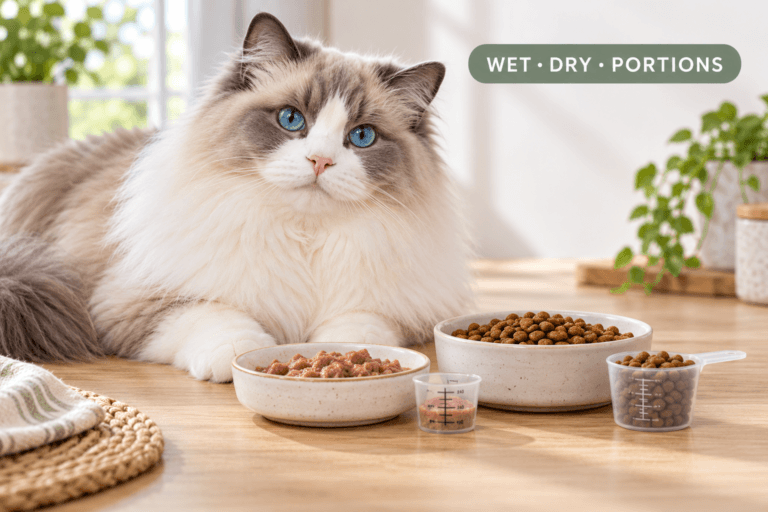
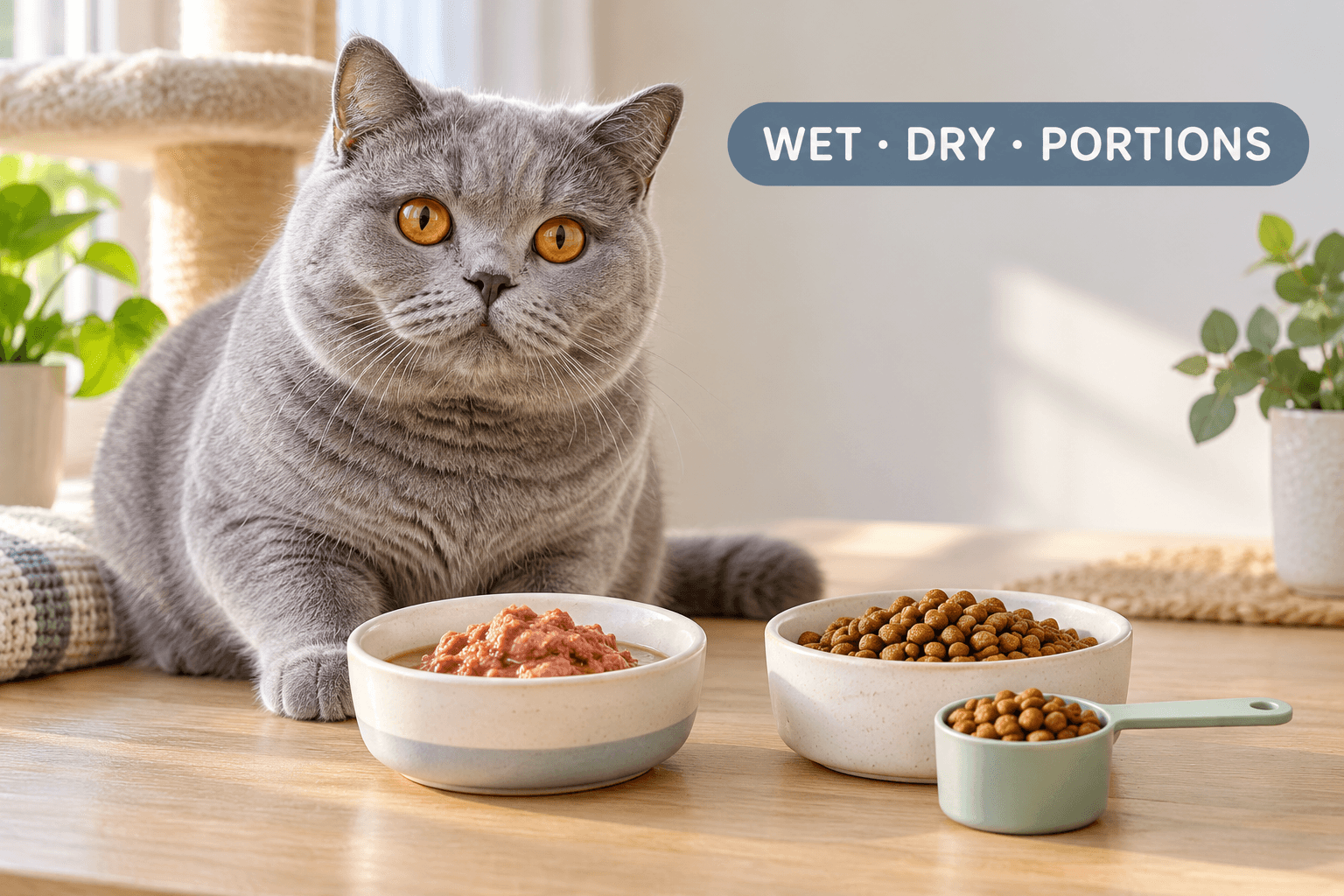
Wet food contains more moisture, while dry food is convenient to store and portion. Either can fit into British shorthair cat feeding when it is complete and balanced for the cat’s life stage. A mixed diet can work too, as long as you count calories from both foods in the same daily total.
A common portion mistake is adding a full serving of wet food to a full serving of kibble without adjusting either amount. Food volume can mislead: a small scoop of calorie-dense dry food can contain more energy than a larger serving of wet food. Check the label for calories per can, pouch, cup, or kilogram.
Weigh dry food with a kitchen scale instead of estimating with a cup. Cup measurements vary depending on kibble size, shape, and how tightly the food settles. If the package does not list calorie information clearly, contact the manufacturer before calculating a precise daily amount.
Use Body Condition to Check Whether the Portion Works
The scale is useful, but your hands and regular observations add important context. You should be able to feel the ribs under a light layer of fat. From above, look for some narrowing behind the ribs; from the side, check that the abdomen does not hang heavily.
A dense coat can make visual checks unreliable. Feel along the ribs and waist rather than judging the cat by its silhouette. Weigh your cat every few weeks under similar conditions and keep a record. A gradual upward trend deserves attention even if the cat still looks round and well-groomed.
The Cornell feline obesity guide describes rib, side-profile, and overhead checks for body condition. If your cat is clearly overweight, ask a veterinary professional to help set a safe plan; sudden food restriction can cause serious health problems in cats.
Why Free Feeding Can Hide the Problem
Leaving dry food out all day makes it difficult to know how much a cat eats. Several family members might top up the bowl or give treats, and each addition seems small. Over time, the total can exceed what the cat needs.
The pattern can reinforce itself: a cat visits the bowl, finds food, and returns whenever bored or mildly hungry. Owners can read those visits as a sign that the cat needs more. Scheduled meals make the daily amount visible and help distinguish food-seeking from an actual change in appetite.
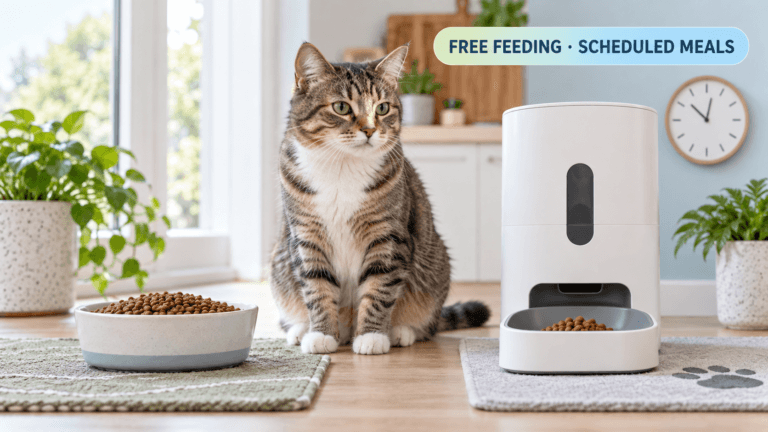
Measure the full daily ration, divide it into meals, and avoid topping up the bowl just because your cat asks. A structured pet feeding schedule can help you keep portions consistent and notice changes in eating habits.
After Neutering, Recheck the Daily Amount
After neutering, a cat’s calorie needs or activity can change. Continuing to serve the previous amount without checking weight and body condition can lead to gradual gain. Review portions as part of routine follow-up care instead of waiting until the change is obvious.
Treats count toward the daily total. Cornell advises keeping them to roughly 10 to 15 percent of daily calories. Set aside part of the regular kibble for grooming rewards or play rather than adding snacks on top of meals.
Use an Automatic Feeder to Keep Portions Consistent
An automatic feeder can help when the main challenge is inconsistent serving. It can dispense measured dry food on schedule and reduce the chance that different family members accidentally serve duplicate meals.
Calibrate it with the kibble you actually use. Weigh several dispensed portions and compare the average with your feeding plan; an app’s portion setting does not necessarily equal a standard cup or a fixed number of calories. The pet feeder calibration guide explains how to check serving amounts.
Clean the bowl and food pathway regularly. For wet food, use equipment designed for it and follow its storage limits. An automatic feeder helps maintain a routine, but it does not replace weight and body-condition checks.
Mini FAQ
How much should I feed my British Shorthair?
Start with the calorie guidance for a complete food. Measure the daily amount and adjust it based on life stage, activity, body condition, and weight trend.
How many times a day should a British Shorthair eat?
Many adults do well with one or two scheduled meals, while kittens need more frequent meals. Divide the daily ration across those meals rather than adding a full portion each time.
Are British Shorthairs prone to weight gain?
They can gain excess weight when modest activity combines with oversized portions or free feeding. Measure food, encourage daily play, and check the ribs beneath the coat.
Is wet food better than dry food?
Neither format is automatically best for every cat. Wet food provides more moisture, while dry food is convenient to portion; choose complete food and count the calories either way.
Can British Shorthairs eat food made for other breeds?
Yes, when the food is complete and balanced for the correct life stage. Check nutritional adequacy and calorie content instead of relying on breed-specific marketing alone.
Should I leave food out all day?
Scheduled meals are a clearer choice when your cat gains weight or does not self-regulate. Measuring meals makes daily intake easier to track and gradual changes easier to catch.
Good British shorthair cat feeding comes down to complete nutrition, measured portions, a predictable meal routine, and regular body-condition checks. The round face and solid frame can make excess weight less obvious, so check beneath the coat and track changes over time. A smart automatic feeder with app control can help keep meals consistent while you continue monitoring your cat’s needs.