
Can I feed my dog table food? Yes, but only in small, controlled amounts and only when the ingredients are safe for dogs. Table food should remain an occasional add-on, not a replacement for a complete, measured dog diet.
When owners ask, can I feed my dog table food, the real issue is rarely one bite of plain chicken. The bigger problem is repeated feeding, oversized portions, rich ingredients, and a dog learning that begging works better than waiting for a scheduled meal.
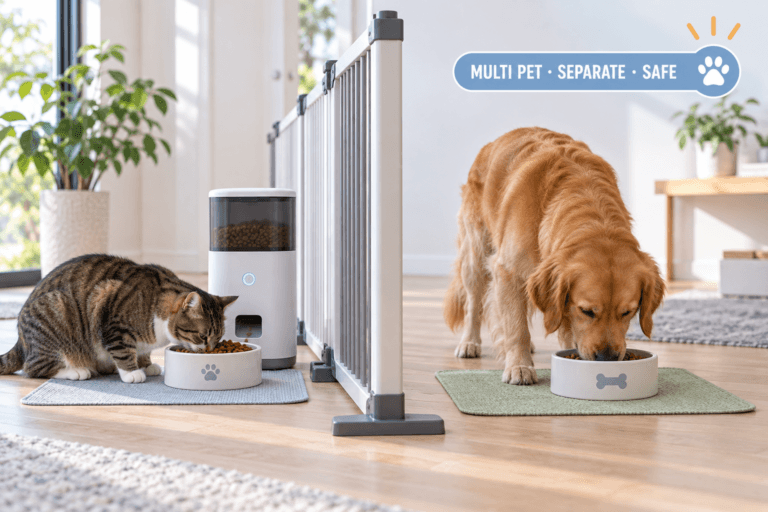
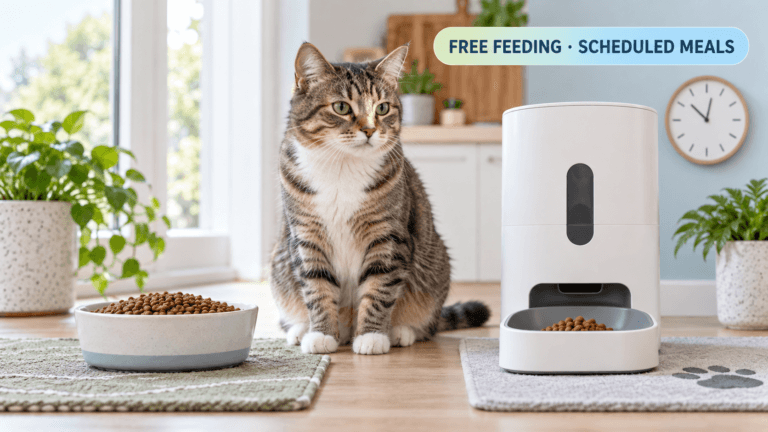
A consistent feeding system, such as a regular automatic dog feeder for scheduled meals, helps separate your dog’s daily nutrition from whatever happens to be on the family table.
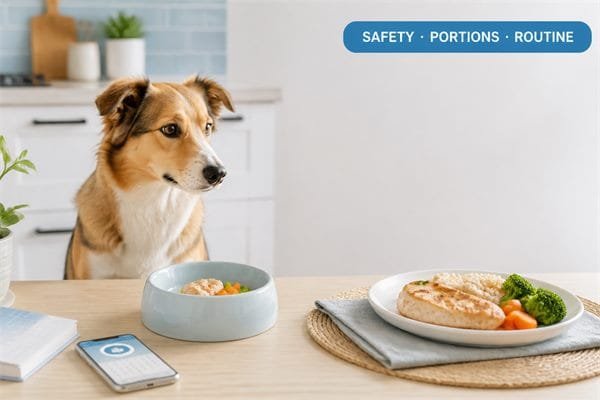
Direct Answer: Can I Feed My Dog Table Food?
Can I feed my dog table food? Yes, but only safe ingredients in small portions and under a clear feeding rule. Plain cooked meat, some vegetables, and certain fruits can fit into a dog’s diet. Fatty meat, seasoned sauces, cooked bones, chocolate, grapes, raisins, onions, garlic, and foods containing xylitol do not belong in a dog’s bowl. The solution is to treat table food as a measured treat, subtract it from the day’s calories, and never use it to reward persistent begging.
Why This Happens
Table food becomes a feeding problem through repetition, not through one isolated snack. A dog watches people eat, approaches the table, receives a small piece, and immediately learns that human meals create an opportunity. The behavior becomes stronger because the reward arrives at the exact moment the dog begs.
The ingredient risk is only one part of the issue. A safe food can still become unhealthy when it is greasy, heavily seasoned, served in a large amount, or added on top of a full daily ration. A small dog can exceed a reasonable treat allowance with just a few bites of cheese, sausage, bacon, or leftovers covered in sauce.
Owners who want a broader foundation should review these practical pet nutrition tips and compare them with the consumer guidance provided by AAFCO’s pet food information. The useful distinction is simple: a complete dog food supplies the nutritional base, while table food remains optional.
What To Do
When people ask, can I feed my dog table food, the best answer starts with a household rule. Choose a short list of dog-safe foods, decide the maximum portion before dinner begins, and feed the approved portion in the dog’s bowl rather than from a plate or serving dish.
Use plain, cooked ingredients without onion, garlic, spicy seasoning, sugary sauces, alcohol, or excessive fat. Suitable examples include small pieces of lean chicken, turkey, or beef; plain cooked pumpkin; green beans; carrots; and limited portions of apple without seeds. Introduce one food at a time so digestive reactions are easy to identify.
Keep table food below a controlled share of the dog’s daily intake. The exact amount depends on the dog’s size, current weight, activity level, and main diet, so the safe action is to reduce the regular meal when a meaningful treat is added. Follow a measured routine with this smart guide to feeding your dog instead of estimating by eye.
Most importantly, never reward begging while the dog is actively demanding food. Wait for calm behavior, place the approved portion in the dog’s own bowl, and remove the bowl after the planned eating period. This teaches the dog that calm waiting controls access, not barking, pawing, staring, or hovering.
Micro Case: The Sunday Roast Problem
A family gives a dog scraps from Sunday roast because the meat appears harmless. The dog soon begins waiting beside the table, receives fatty pieces and gravy, and starts refusing its normal food because the next human meal is more rewarding. The fix is to stop feeding from the table, reserve a small plain portion before seasoning, and serve it at a scheduled time in the dog’s bowl.
The Feeding Loop Behind This Problem
The feeding loop has four steps: the dog notices food, the dog performs a demanding behavior, a person gives food, and the behavior becomes more likely during the next meal. A delayed reward still reinforces the sequence because the dog connects persistence with success.
This loop becomes harder to break when different family members follow different rules. One person refuses, another gives “just one bite,” and the dog keeps trying because the reward is unpredictable. That unpredictability is powerful. The dog does not need to beg every time; it only needs to continue long enough to find the person who gives in.
A fixed feeding schedule removes the negotiation. The dog receives a measured meal at a known time, and the family stops acting as an uncontrolled food dispenser. A scientific pet feeding schedule can help establish predictable meal boundaries.
The Emotional Trigger Owners Miss
Many owners feed table food because refusing feels unkind. The dog looks hopeful, places its head near a knee, or reacts excitedly to a familiar smell. The owner interprets the behavior as hunger, but the behavior often represents expectation and learned access rather than a nutritional emergency.
Giving food to reduce guilt creates a short emotional reward for the owner and a strong behavioral reward for the dog. The dog becomes more persistent, and the owner feels more pressure during the next meal. The solution is to replace emotional feeding with a planned reward: calm praise, a measured dog-safe treat, or a portion served after the family has finished eating.
The Addiction Mechanism
Table food does not create clinical addiction in the same way as a substance disorder, but it can create a powerful reward dependency. Rich smells, high-fat textures, and occasional access produce a reinforcement pattern that makes ordinary food feel less exciting by comparison.
The most important mechanism is intermittent reinforcement. If begging succeeds once every few meals, the dog keeps trying because the next success remains possible. This is why random feeding often produces louder behavior than a consistent rule. The dog is not confused; the dog is testing a reward system that has worked before.
Break the dependency by making rewards predictable and earned through calm behavior. Keep the main diet stable, stop feeding from human plates, and use approved treats only within a daily portion plan. A routine works because it changes the dog’s expectation before it tries to change the dog’s appetite.
Real-World Impact
Uncontrolled table food can lead to weight gain, digestive upset, loose stools, vomiting, pancreatitis risk from rich foods, and refusal of balanced meals. It can also hide the true amount a dog eats because several family members add small portions that no one records.
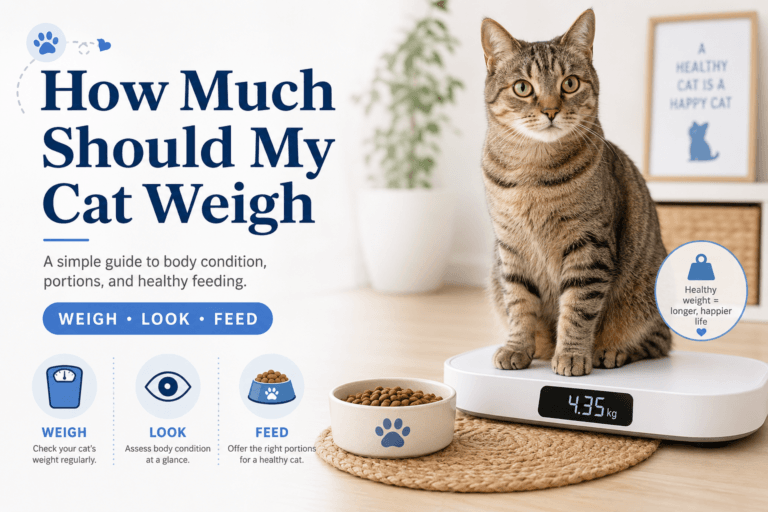
Weight gain is not merely cosmetic. Extra body weight increases physical strain and makes daily movement less comfortable. Owners should use a measured feeding plan and review resources such as how to keep your pet at a healthy weight alongside the AVMA’s pet nutrition guidance.
Exercise supports the plan, but exercise does not cancel unlimited treats. A dog that receives more calories than it uses will still gain weight. Combine measured meals, controlled extras, and regular activity with this cat and dog exercise guide.
If a dog eats chocolate, grapes, raisins, onions, garlic, xylitol, alcohol, or cooked bones, treat the situation as urgent and contact an emergency veterinary service immediately. Do not wait for severe symptoms before taking action.
Can This Be Fixed?
Yes, table-food begging can be fixed when every household member follows the same rule. The first few meals often produce stronger begging because the dog is testing whether the old reward system still works. Stay consistent, reward calm behavior away from the table, and keep all extras measured.
Do not solve the problem by suddenly removing food while leaving the dog’s normal meals inconsistent. The dog needs a dependable alternative: a complete diet, a reliable schedule, fresh water, and a clear place to eat. If the dog shows repeated vomiting, severe diarrhea, collapse, unusual weakness, or signs of pain after eating table food, urgent veterinary assessment is the correct action.
Who Should Walk Away and Who Should Use This
Owners should walk away from table feeding when the dog is overweight, has a history of digestive reactions, steals food aggressively, refuses balanced meals, or receives scraps from several people without tracking. In these homes, casual feeding creates too much nutritional and behavioral uncertainty.
Controlled table food can work for owners who can identify safe ingredients, measure portions, record extras, and enforce one household rule. It is especially important to keep the main diet complete and consistent. For families with changing work schedules, an automatic pet feeder for work schedules can protect the dog’s regular meals from being replaced by unpredictable human feeding.
Mini FAQ
Can I feed my dog table food every day?
No, daily table food should not become an uncontrolled habit. Repeated extras can raise calorie intake and strengthen begging. If a safe food is used daily, measure it as part of the dog’s planned diet and serve it in the dog’s bowl.
What table foods are safe for dogs?
Plain lean meat, carrots, green beans, pumpkin, and limited seedless apple are common safe choices. Seasonings, sauces, high-fat portions, and toxic ingredients create avoidable risks. Prepare a small plain portion before seasoning and remove unsafe scraps.
Can I feed my dog table food if the dog refuses its normal meal?
No, replacing the normal meal with richer food rewards food refusal. The dog learns that skipping balanced food produces a tastier alternative. Keep meals scheduled, remove uneaten food after the planned period, and use a consistent diet.
How do I stop my dog from begging at the table?
Stop rewarding begging and reinforce calm behavior away from the table. Begging continues because it has produced food before. Feed the dog before or after the family meal, send the dog to a defined resting place, and reward quiet waiting with an approved portion.
Can I feed my dog table food during holidays?
Holiday table food requires stricter control, not relaxed rules. Holiday meals contain more bones, sauces, fat, chocolate, alcohol, onions, garlic, and sweeteners. Set aside a small plain portion before cooking and keep dangerous foods inaccessible.
Can I feed my dog table food? Yes, but only as a measured, safe, occasional addition that never replaces a complete diet or scheduled meal. Use a regular automatic feeder for consistent dog meals when the household schedule is busy, and keep the final rule clear: safe ingredients, small portions, calm behavior, and no feeding directly from the table.