Styptic powder dog owners keep at home is mainly for minor bleeding from a cut nail quick. It can help stop a small nail bleed after trimming, but it is not a universal treatment for deep wounds, punctures, burns, or uncontrolled bleeding. The correct action depends on where the blood is coming from and how quickly the bleeding responds to pressure.
When owners search for styptic powder dog advice, they are usually dealing with a stressful grooming accident. Stay calm, restrain the paw gently, apply the product only to the affected nail tip, and watch the result. A predictable care routine matters after the incident, and a regular automatic pet feeder for scheduled dog meals can help keep feeding times stable while the dog settles.
Direct Answer: Styptic Powder Dog
Styptic powder for dogs is appropriate for minor bleeding from a clipped or broken nail, especially when the quick has been nicked. Press a small amount onto the nail tip and hold gentle pressure for several seconds. Do not put it into a deep wound, inside the mouth, near the eyes, or on a large damaged area unless the product label specifically permits that use. If bleeding continues despite firm pressure, or if the injury is more than a small nail-tip cut, contact an emergency veterinary service.
Why This Happens
A dog’s nail contains a living inner structure called the quick. The quick contains blood vessels and nerves, so cutting into it causes brief pain and visible bleeding. Dark nails make the quick harder to see, which increases the chance of trimming too far. Long nails also allow the quick to extend farther toward the nail tip, making a short trim more difficult.
The phrase styptic powder dog describes a first-aid product, not a substitute for careful nail handling. The product helps with surface clotting at the nail tip, but it does not repair a torn nail, remove a foreign object, or control bleeding from a damaged paw pad. The American Kennel Club’s dog grooming guidance also places styptic powder in the context of accidentally cutting the quick during nail care.
Bleeding can also come from a cracked nail, a torn dewclaw, glass in the paw, or a cut pad. These injuries look similar when the dog is frightened, but they need different handling. Identify the source before applying anything. If a sharp object is deeply embedded, leave it in place and seek veterinary care rather than digging into the paw.
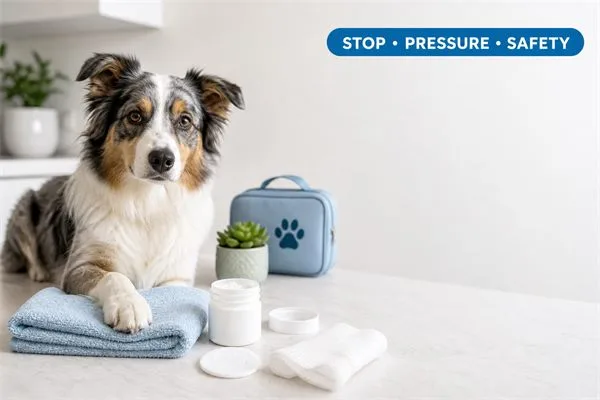
What To Do
If you need styptic powder dog first aid after a nail trim, follow a short sequence:
1. Secure the paw without forcing it
Have another person hold the dog calmly if possible. Use a towel around the body for a nervous small dog, but keep the injured paw accessible. Avoid wrestling, shouting, or repeatedly grabbing the foot because panic increases struggling and can reopen the nail.
2. Locate the bleeding point
Look at the nail tip under bright light. A small, steady bead of blood at the end of the nail usually points to a quick cut. Blood from the side of the nail, the skin between the toes, or the paw pad needs closer inspection and should not automatically be treated with nail powder.
3. Apply a small amount
Touch a small amount of styptic powder directly to the bleeding nail tip. Use a clean cotton swab, gauze, or the applicator supplied with the product. Press gently for several seconds. If the dog pulls away and removes the powder, reapply once the paw is calm.
4. Keep the dog still
Do not allow running, jumping, or licking immediately after application. Movement can disturb the early clot. Offer calm praise or a measured reward away from the grooming area. The dog handling and training principles used for bite prevention also help owners build safer cooperation during paw care.
5. Recheck the nail
After several minutes, inspect the nail. If the bleeding has stopped, keep the dog’s activity gentle for the rest of the day. If the bleeding continues after repeated firm pressure, the nail is split, or the dog will not place weight on the paw, the situation needs professional assessment.
When styptic powder is unavailable, VCA notes that cornstarch, baking powder, or flour can serve as temporary options for a bleeding nail while the owner arranges further care. Read the full VCA first-aid guidance for bleeding dogs for the distinction between a broken nail and other bleeding injuries.
Micro Case: The Dark-Nail Trim
A terrier with dark nails jerks its paw during trimming, and the owner sees blood on the clipper. The owner keeps cutting to “even out” the nail, which enlarges the injury and increases the dog’s fear of future trims. The correct action is to stop trimming, apply styptic powder to the bleeding nail tip, keep the paw quiet, and restart future trims with shorter sessions and better lighting.
The Feeding Loop Behind This Problem
The feeding loop often appears during stressful grooming. The dog pulls away, the owner offers several treats, the dog becomes more excited, and the owner gives more food to regain control. Food is not the problem; the timing is. When treats arrive during frantic paw-pulling, the dog can learn that panic produces a reward.
Use feeding as a calm reinforcement system instead. Touch the paw briefly, pause, and reward stillness. Present the clipper without cutting, reward relaxed behavior, and end the session before the dog reaches panic. A controlled dog nutrition and treat plan prevents grooming rewards from becoming an untracked source of extra calories.
The Emotional Trigger Owners Miss
Owners often rush after seeing blood because they feel guilty. That urgency transfers through the leash, voice, and handling. The dog reads the sudden tension as proof that nail care is dangerous, then resists more strongly the next time.
The better response is deliberate and quiet. Stop the trim, control the paw, apply the product, and observe. A brief accidental quick cut does not require a dramatic reaction, but it does require a clear safety boundary. End the session after the nail is stable and give the dog a calm recovery period.
The Addiction Mechanism
There is no clinical addiction involved in styptic powder use, but dogs can develop a strong reward dependency around grooming. If every paw touch produces a high-value treat, frantic movement, or an immediate escape, the grooming routine becomes emotionally charged.
The reinforcement mechanism works in both directions. Calm behavior followed by a reward makes cooperation stronger. Scratching, biting, and pulling followed by immediate release can make resistance stronger. The solution is gradual desensitization: handle one paw, reward stillness, pause, and stop before the dog loses control.
Real-World Impact
Using styptic powder on the wrong injury can delay appropriate care. It is not the right answer for a deep cut, a large skin wound, a puncture, an embedded object, a badly torn nail, or bleeding that does not respond to pressure. It should also stay away from the dog’s eyes, mouth, and other sensitive areas.
Seek urgent veterinary help when blood is flowing heavily, the dog is weak, the gums look pale, the paw is severely swollen, the nail is torn near its base, or the dog cannot stand normally. The ASPCA emergency care guidance emphasizes immediate professional care for serious bleeding and trauma.
Routine paw checks reduce risk. Inspect nails after walks, keep trimming sessions short, and use a gradual schedule for dogs that dislike foot handling. Regular movement also supports overall paw function, so owners can combine nail care with this practical dog exercise guide.
Can This Be Fixed?
Yes, most minor nail-bleeding incidents can be managed safely when the bleeding source is the nail tip and the dog responds to pressure and styptic powder. Future accidents become less common when owners trim small amounts, use bright light, keep the powder ready, and stop as soon as the quick is nicked.
Fear around nail care can also improve, but it requires a routine rather than one long training session. Begin with paw handling, then show the clipper, then touch the nail, and only later remove a tiny amount. The goal is not to finish every nail in one sitting. The goal is to make each session predictable enough that the dog can remain calm.
Who Should Walk Away and Who Should Use This
Owners should stop home treatment and seek professional care when the injury is deep, the nail is hanging, bleeding repeatedly returns, or the dog has signs of shock or severe pain. Owners should also stop trimming at home when the dog bites, thrashes, or cannot be safely restrained.
Home use is appropriate for a prepared owner handling a small nail-tip bleed with a product labeled for that purpose. Keep styptic powder in a first-aid kit, use clean tools, and know the location of the nearest emergency veterinary service. A scheduled household routine, supported by a regular automatic dog feeder, can also prevent meals and recovery care from becoming chaotic after a grooming accident.
Mini FAQ
Can I use styptic powder on a dog’s open wound?
Do not use ordinary nail styptic powder on a deep or open body wound. The product is intended primarily for minor nail bleeding, while deeper injuries require cleaning, examination, and professional treatment. Apply gentle pressure with clean gauze and seek veterinary care for anything beyond a superficial scrape.
How long does styptic powder take to stop dog nail bleeding?
A minor quick cut should respond within several seconds to firm, gentle pressure. Continued bleeding indicates that the clot has not formed or the injury is more serious than a small nail-tip cut. Reapply once, keep the dog still, and obtain urgent care if bleeding persists.
Can I use styptic powder dog products on every dog?
Use only a product labeled for dogs or approved for the intended animal and location. Formulations and instructions differ, and sensitive areas require extra caution. Follow the label, keep the powder away from the eyes and mouth, and stop using it if the skin reacts.
What should I do if my dog licks styptic powder?
Prevent repeated licking and monitor the dog closely. Licking can remove the clot and irritate the mouth or stomach, while a large swallowed amount creates a separate concern. Wipe away loose powder, offer water, and contact a veterinary service if the dog swallowed a significant amount or develops symptoms.
How can I prevent cutting my dog’s quick?
Trim tiny amounts in bright light and stop before the nail approaches the quick. Dark nails require extra caution because the quick is harder to see. Short, frequent sessions with calm rewards create better control than one aggressive trim, and a professional groomer can handle dogs that cannot remain safely still.
Styptic powder dog owners keep available is a useful tool for a small bleeding nail, not a cure for every paw injury. Apply it directly to the nail tip, use pressure, keep the dog calm, and escalate care when bleeding continues or the injury is deep. The safest routine combines prepared first aid, gradual nail training, clean tools, and a firm boundary around injuries that require professional treatment.