
Are dryer sheets toxic to dogs? Yes. Unused dryer sheets can expose a dog to cationic detergents that irritate or chemically burn the mouth, throat, esophagus, and stomach. Both new and used sheets can also become a foreign object that blocks the stomach or intestines after swallowing. Remove the remaining product, prevent further licking, and contact a veterinarian or animal poison-control service promptly.
A fixed feeding area built around a simple regular-feeding pet feeder can give a scavenging dog a clearer food routine away from the laundry room. It does not treat dryer-sheet exposure. The protective control is secure storage, a closed laundry area, and immediate action after contact.
Direct Answer: Are Dryer Sheets Toxic to Dogs?
Dryer sheets are dangerous to dogs when they are licked, chewed, or swallowed. Many unused sheets contain cationic detergents, a class of chemicals capable of causing corrosive injury. The physical sheet creates a second danger because it does not break down like food and can lodge in the digestive tract.
The ASPCA household-product safety guidance states that dryer-sheet detergents can cause severe burns and ulcers in the mouth, esophagus, and stomach. It also identifies stomach or intestinal obstruction as a medical emergency. A used sheet is not automatically safe simply because it has passed through the dryer.
Why Dryer Sheets Can Injure a Dog
When owners ask, “are dryer sheets toxic to dogs,” they often focus only on whether the sheet contains a poisonous ingredient. The real risk has two separate parts: chemical exposure and physical obstruction.
Cationic detergents act as local corrosive agents. Contact can damage the lips, tongue, gums, throat, eyes, skin, and digestive tissues. According to the Merck Veterinary Manual guidance on cationic detergents, oral signs include excessive drooling, mouth inflammation, tongue swelling, vomiting, abdominal discomfort, depression, and increased breathing noise. Serious exposures can also affect blood pressure, the nervous system, and the lungs.
The sheet itself can remain inside the stomach or move into the intestines. A blockage prevents food, fluid, and gas from passing normally. Repeated vomiting, abdominal pain, loss of appetite, weakness, straining, or failure to pass stool after ingestion requires urgent evaluation. Symptoms do not need to appear immediately for the exposure to be important.
What To Do If Your Dog Licked, Chewed, or Swallowed One
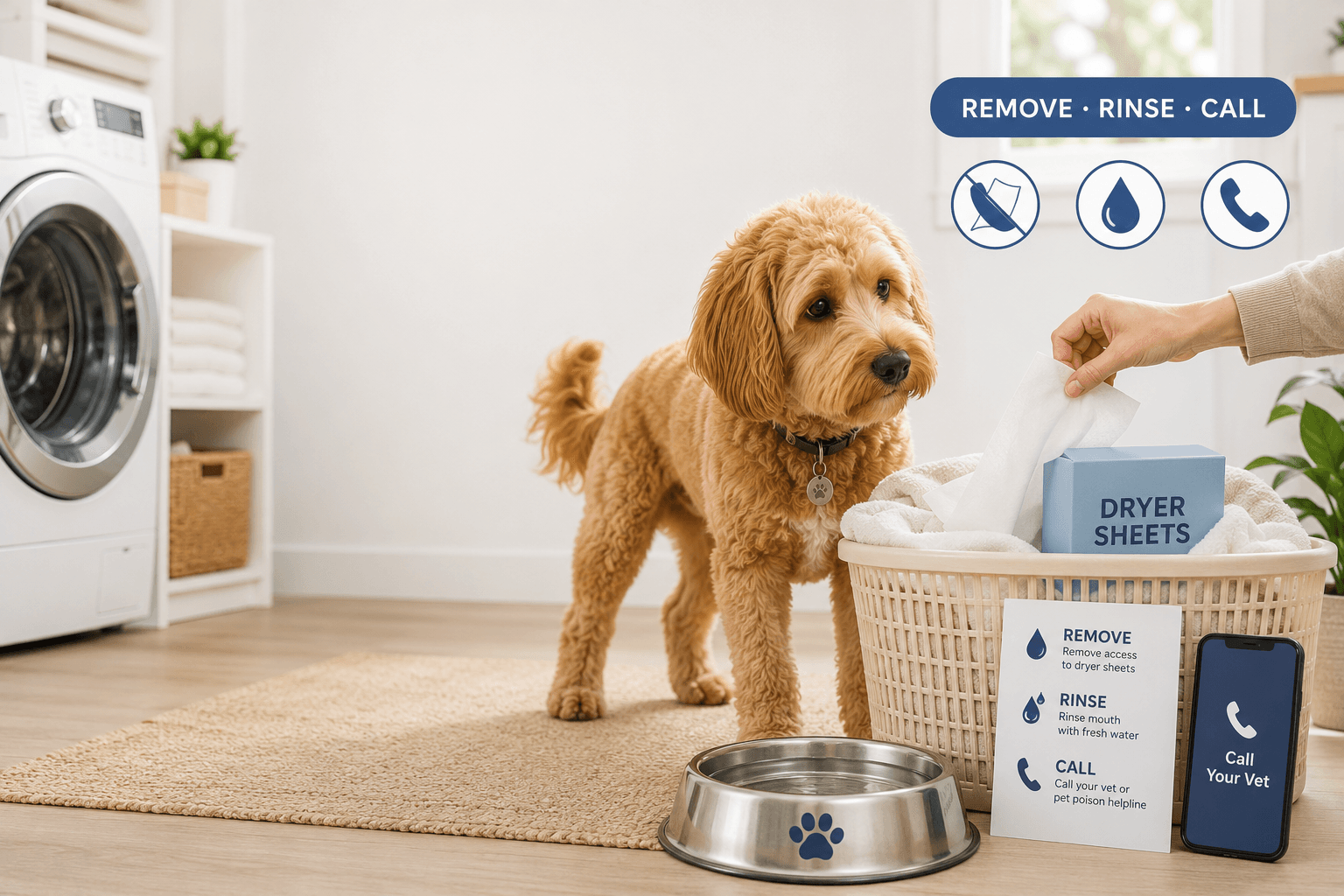
First, remove every remaining piece without putting your fingers near a dog that is panicking or guarding the object. Check whether the sheet was unused or used, estimate how much is missing, save the package, and record the approximate exposure time. This information helps a veterinary professional assess both detergent concentration and blockage risk.
Do not induce vomiting. Bringing a corrosive product back through the esophagus can create additional tissue exposure, and a sheet can become lodged during vomiting. Do not give activated charcoal because it does not bind corrosive detergents effectively. Do not attempt to neutralize the product with vinegar, baking soda, or another household chemical.
For a recent mouth exposure, gently rinse the mouth with water only when the dog remains calm, can keep its head pointed downward, and can swallow normally. Do not spray water forcefully into the throat. A dog that is coughing, choking, struggling to breathe, collapsing, seizing, or unable to swallow needs immediate emergency transport rather than home rinsing.
If the product touched the eyes or coat, flush the affected area with plenty of lukewarm water. Prevent the dog from rubbing its eyes or licking contaminated fur. Then call a veterinarian or animal poison-control service for case-specific instructions, even when the dog currently looks normal.
The Scavenging Loop Behind Laundry-Room Exposure
The answer to “are dryer sheets toxic to dogs” also explains why prevention cannot rely on verbal correction. Dogs investigate lightweight scented objects because the sheets carry household odors, move easily, and are often dropped at floor level. A puppy grabs one, the owner chases, and the object immediately becomes valuable.
The loop is simple: the dog enters the laundry area, finds an accessible sheet, receives attention, and learns that stealing laundry starts an exciting interaction. Repeating “leave it” after access has already occurred does not remove the reward. The solution is a closed container, a lidded trash bin, a secured cabinet, and restricted access to the entire room.
Dogs that repeatedly consume non-food items need a broader scavenging-management plan. The same environmental controls used to address a puppy eating unsafe objects outdoors apply indoors: block access, reward disengagement, supervise transitions, and prevent rehearsals of the unwanted behavior.
The Emotional Trigger Owners Miss
Panic causes owners to choose actions that feel immediate but increase risk. They force open the dog’s mouth, pour liquids toward the throat, induce vomiting, or wait for symptoms because the sheet was already used. None of these reactions controls both the chemical and obstruction hazards.
Calm action is faster than frantic action. Separate the dog, identify the product, check how much is missing, avoid unapproved remedies, and make the call. Owners who already manage dog anxiety and stress-driven behavior should use the same low-conflict handling approach during a household exposure.
The Reinforcement Mechanism That Makes Stealing Repeat
This is not chemical addiction. It is reinforcement through access, scent, movement, and owner attention. The dog grabs the sheet, people shout, several family members chase, and the dog runs with a novel object. Even when the sheet is eventually removed, the chase has rewarded the theft.
Repeated access also builds routine dependency. The dog begins checking the dryer, laundry basket, and waste bin whenever someone handles clothes. Breaking that pattern requires changing the environment before trying to change behavior. Put sheets directly into a secured bin, check the dryer drum and floor after every load, and keep the door closed between uses.
Common Failure Pattern: Assuming a Used Sheet Is Harmless
A dog pulls a used sheet from an open laundry basket and swallows it before the owner reacts. The owner assumes the chemicals disappeared in the drying cycle and waits because the dog seems comfortable. Hours later, vomiting and refusal to eat begin. The failure was treating “used” as “digestible.” The corrective action is to call when ingestion is discovered, because new and used sheets can both obstruct the digestive tract.
Real-World Impact of Dryer-Sheet Exposure
Are dryer sheets toxic to dogs in every exposure? The risk level changes with the product, whether it was new or used, the amount contacted or swallowed, the dog’s size, and the symptoms present. The response should still begin with prompt professional assessment rather than a home guess.
Chemical injury can lead to painful mouth ulcers, refusal to drink, swallowing difficulty, vomiting, and deeper esophageal damage. Physical obstruction can lead to dehydration, intestinal injury, loss of blood supply to affected tissue, perforation, and surgery. The Pet Poison Helpline laundry-room safety guidance warns that injury from laundry products is not always immediately visible and that dryer sheets can cause gastrointestinal obstruction.
A safer home plan should cover more than one product. Use a room-by-room check that includes laundry supplies, medications, trash, batteries, foods, and plants. SmartPetTools guides covering houseplants safe for dogs and cats and whether spider plants are toxic to dogs can help owners apply the same access-control logic to other household items.
Can This Problem Be Prevented?
Yes, because dryer-sheet exposure is primarily an access problem. Store unused sheets in a latched cabinet. Move used sheets directly into a closed bin. Keep laundry baskets off the floor, inspect bedding before placing it in a dog bed, and check that no sheet remains attached to clothing.
Do not place dryer sheets in dog beds, crates, vents, food-storage areas, or places where a dog can lick them. Keep feeding bowls and pet food outside the laundry room. A clear pet nutrition and feeding routine also reduces random food searching, although routine alone cannot protect a dog when hazardous objects remain accessible.
Teach “leave it” and “drop it” with safe training objects and high-value rewards. Do not practice by allowing access to real laundry chemicals. Training is the backup layer; physical prevention remains the first layer.
Who Needs Immediate Care and Who Can Follow Home Monitoring?
Immediate veterinary assessment is necessary after swallowing a whole sheet, swallowing an unknown amount, chewing an unused sheet, or developing any abnormal symptom. Emergency signs include difficulty breathing, repeated vomiting, collapse, seizures, pronounced weakness, tongue swelling, severe drooling, trouble swallowing, intense abdominal pain, or blood in vomit.
A brief lick with no swallowed material and no symptoms still requires a call for product-specific guidance. Home monitoring should occur only after a veterinary professional or poison-control specialist has reviewed the product, exposure, dog, and timing. The absence of visible mouth burns does not prove that the esophagus is unharmed.
Mini FAQ
Are unused dryer sheets more dangerous than used ones?
Unused sheets generally carry greater chemical-exposure risk. They contain more active fabric-softening residue. Used sheets can still irritate tissues and can cause a stomach or intestinal blockage, so neither type should be accessible.
Should I make my dog vomit after swallowing a dryer sheet?
No. Vomiting can re-expose the esophagus to corrosive chemicals and can cause the sheet to lodge during its return. Contact a veterinarian or animal poison-control service for the correct removal and monitoring plan.
What symptoms appear after a dog chews a dryer sheet?
Watch for drooling, mouth pain, tongue swelling, vomiting, reduced appetite, swallowing difficulty, weakness, abdominal discomfort, coughing, or noisy breathing. These signs reflect chemical injury or obstruction and require urgent assessment.
Can a dog pass a dryer sheet naturally?
Some material passes, but waiting for that outcome is unsafe without professional assessment. Sheets can remain in the stomach or obstruct the intestines. A veterinarian can determine whether examination, imaging, observation, endoscopic removal, or surgery is appropriate.
Are dryer sheets toxic to dogs after they come out of the dryer?
Used dryer sheets remain hazardous. Chemical residue can remain, and the non-digestible sheet can cause a foreign-body obstruction. Place every used sheet directly into a secured waste container.
What should I do when dryer-sheet liquid gets in my dog’s eye?
Flush the eye gently with lukewarm water or sterile saline and seek immediate guidance. Prevent rubbing because detergent contact can inflame the eye and damage the cornea.
Keep the dog’s normal meals in a separate, controlled area, where a simple regular-feeding pet feeder can reinforce the boundary between food and household storage. Are dryer sheets toxic to dogs? Yes, and swallowing creates an additional blockage risk. Remove access, avoid induced vomiting, rinse only when it can be done safely, save the packaging, and obtain professional guidance without waiting for symptoms.