
How to stop puppy eating poop starts with speed, supervision, and routine control. Puppies explore with their mouths, and feces can become interesting when the yard is dirty, the puppy is bored, the owner reacts loudly, meals are poorly timed, or the puppy has learned that poop creates attention. The first fix is not punishment. The first fix is removing access before the habit becomes rewarding.
For puppies that also need steadier meal timing, a timed slow feed automatic feeder can support structured dry-food meals when the puppy is old enough and the food type fits the device. Feeding rhythm matters because a chaotic routine can make scavenging, stool interest, and owner overreaction harder to control.
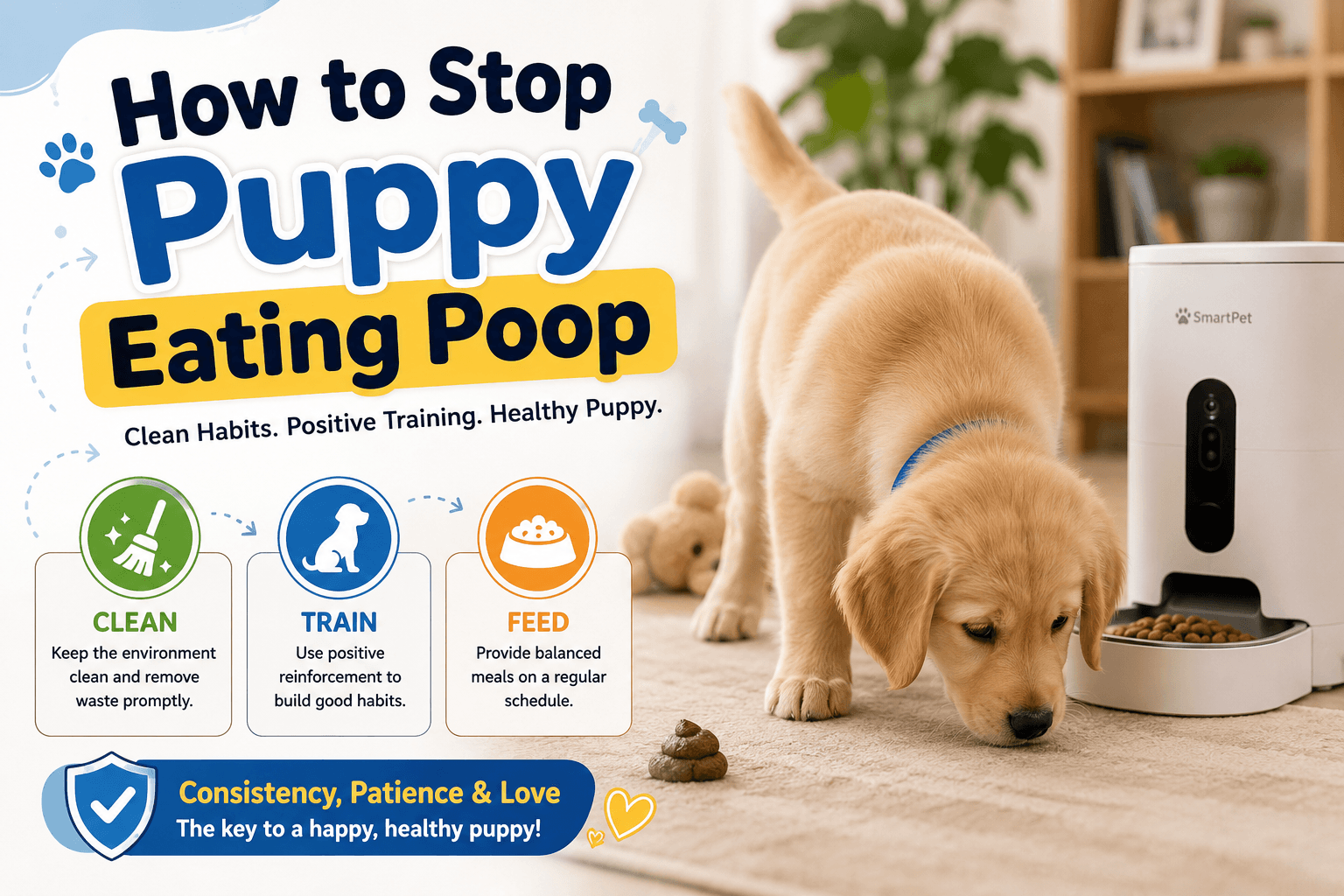
Direct Answer: How to Stop Puppy Eating Poop
How to stop puppy eating poop is to remove stool immediately, supervise potty breaks, use a leash in the yard, teach “leave it,” reward the puppy for returning to you, feed a complete puppy diet on a predictable schedule, add age-appropriate exercise and enrichment, block access to litter boxes or other pets’ feces, and book a veterinary check if the behavior is sudden, intense, or paired with diarrhea, vomiting, weight loss, poor growth, or appetite changes.
The biggest mistake is chasing, shouting, or grabbing poop from the puppy’s mouth every time. That reaction can make the stool more valuable. A better plan is boring and fast: prevent access, redirect early, reward the correct choice, clean the environment, and manage feeding so the puppy is not practicing scavenging every day.
Why This Happens
Puppy stool eating is called coprophagia. VCA Hospitals’ coprophagia guidance explains that the behavior is common in some puppies and can improve with proper nutrition, supervision, and direction. Puppies may investigate feces because it is new, smelly, available, and sometimes reinforced by owner attention.
Some puppies eat their own stool. Some target other dogs’ stool. Some raid cat litter boxes. Some eat poop only in the yard. Some do it only when unsupervised. The pattern matters because how to stop puppy eating poop depends on where the puppy gets access.
Medical causes must also stay on the list. Parasites, digestive problems, poor nutrient absorption, hunger from inadequate feeding, or certain illnesses can increase abnormal eating behavior. The Merck Veterinary Manual’s dog behavior problems overview includes coprophagia under abnormal ingestive behaviors. That is why persistent or sudden stool eating should not be treated as only a bad habit.
What To Do First
Start with access control. Pick up stool immediately after every potty break. If the puppy eats feces in the yard, take the puppy out on leash instead of opening the door and hoping. Stand close enough to interrupt before the puppy reaches the stool.
Next, train a replacement behavior. After the puppy eliminates, use a happy recall, move away from the stool, and reward with a food treat or toy before the puppy turns back. The reward should come for leaving the area, not for wrestling over poop.
Use scientific pet feeding schedule to stabilize daily meals. A predictable feeding schedule makes potty timing easier to forecast, which makes how to stop puppy eating poop much more practical.
The Feeding Loop Behind This Problem
The feeding loop often starts with irregular meals. The puppy eats at random times, poops at random times, and the owner is not ready to clean up quickly. The puppy discovers stool during unsupervised yard time. The owner runs over, yells, and grabs. Now the puppy has a game.
Then the puppy starts racing to stool faster. The owner reacts harder. The behavior becomes more urgent because the puppy learns that poop creates movement, attention, chase, and sometimes a chance to swallow before the owner arrives.
A better how to stop puppy eating poop loop starts with schedule control. Meal time predicts potty time. Potty time happens on leash. Stool is removed immediately. The puppy is rewarded for leaving. The owner never gives the behavior enough time to become a hobby.
The Emotional Trigger Owners Miss
The emotional trigger is disgust. Owners naturally react strongly when a puppy eats poop. That reaction can become the reward. From the puppy’s view, the owner suddenly becomes loud, fast, focused, and exciting.
Disgust also makes owners inconsistent. One day they supervise. The next day they let the puppy out alone because they are busy. One day they reward “leave it.” The next day they chase. Inconsistent access and dramatic reactions keep the habit alive.
The correct emotional rule is direct: stay boring. Remove access. Clean fast. Train early. Reward the puppy for moving away. Do not turn feces into a high-value object.
The Addiction Mechanism
The addiction mechanism is scavenging reward. If the puppy gets to eat stool, the behavior pays immediately. If the owner chases, the behavior pays with attention. If the puppy swallows before the owner reaches it, the puppy wins again.
Breaking this requires prevention before correction. Once feces is in the puppy’s mouth, the owner is already late. The highest-value training moment happens right after elimination, before the puppy turns back.
A strong how to stop puppy eating poop plan removes the reward chain. The puppy poops, hears the recall cue, moves away, gets rewarded, and the stool disappears. Repetition makes leaving the stool more rewarding than investigating it.
Step 1: Clean the Yard Like a Training Tool
Yard hygiene is not only cleanliness. It is behavior management. Every old pile of stool is another training failure waiting to happen. If the puppy practices eating poop ten times a week, one training session cannot compete.
Pick up feces immediately during active training. Walk the yard before letting the puppy out. In multi-dog homes, clean after adult dogs before the puppy gets access. If the puppy eats frozen stool, clean more often in cold weather because frozen feces can become more interesting to some dogs.
The FDA’s safe handling tips for pet food and treats focus on clean handling around pet food, bowls, and utensils. The same hygiene mindset belongs in the puppy’s feeding and potty area: clean surfaces, clean bowls, clean yard, and no accessible waste.
Step 2: Use Leash Control During Potty Breaks
Leash control removes the puppy’s ability to sprint from elimination to eating. Take the puppy to the potty area on leash. After the puppy finishes, guide the puppy away immediately and reward. Then clean the stool while the puppy cannot reach it.
This is not punishment. It is management. Puppies cannot rehearse habits they cannot access. The leash gives the owner timing, and timing is the core of how to stop puppy eating poop.
Do not wait until the puppy has already turned around. Watch the body language. Many puppies finish, sniff, circle back, and investigate within seconds. Interrupt before the nose reaches the stool.
Step 3: Train “Leave It” Without Using Poop First
Do not teach “leave it” for the first time with feces. Start indoors with low-value items. Reward the puppy for backing away from a closed hand. Then practice with kibble on the floor, toys, and outdoor distractions.
When the puppy understands the cue, use it near the potty area before the puppy reaches stool. Reward heavily for turning away. The goal is not to test the puppy at full difficulty. The goal is to make the right choice easy.
A good how to stop puppy eating poop plan trains “leave it” as a daily skill, not as a desperate shout after the puppy already grabbed the stool.
Step 4: Fix the Feeding Schedule
Puppies need age-appropriate meals on a steady schedule. Random feeding makes potty timing harder to predict. If the owner does not know when the puppy will poop, cleanup becomes reactive instead of planned.
Use measured meals rather than constant random refills. Track when the puppy eats and when the puppy eliminates. Within several days, many owners can identify the puppy’s usual post-meal potty window.
For structured dry-food routines, a 2L smart pet feeder for regular feeding can help some households keep mealtimes consistent. The feeder should support the plan; it should not replace supervision during potty training.
Step 5: Check Diet Quality and Hunger
A puppy on an incomplete diet, poorly matched portion amount, or irregular feeding routine may scavenge more. That does not mean every poop-eating puppy is nutritionally deficient. It means food quality and meal amount should be checked instead of ignored.
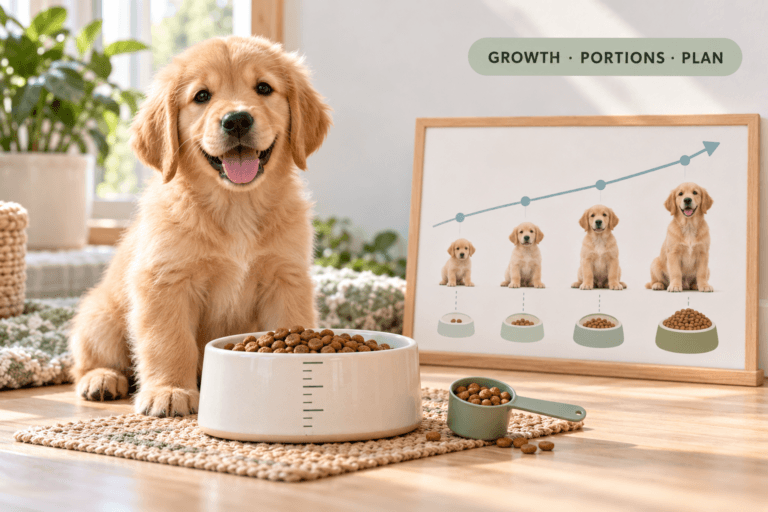
Use a complete puppy food appropriate for growth. Measure portions. Keep treats counted. If the puppy seems constantly hungry, is underweight, has poor coat quality, has diarrhea, or fails to grow normally, bring that information to the veterinarian.
Use pet nutrition tips for general feeding structure. A correct how to stop puppy eating poop plan pairs training with adequate nutrition.
Step 6: Add Enrichment Before the Puppy Gets Bored
Bored puppies create their own activities. If the yard is empty except for stool, the stool becomes an object to sniff, carry, shred, or eat. More exercise alone is not enough. Puppies need structured play, chewing, training, sniffing, and rest.
Use short training sessions before and after potty breaks. Offer safe chew items. Use food puzzles when appropriate. Reward calm behavior. Do not leave a young puppy alone in a dirty yard and expect good choices.
For puppies that eat too fast or treat food like a race, use how to stop my dog from inhaling his food. Fast, frantic eating and scavenging habits often need the same owner skill: slow the routine down and remove panic from feeding.
Step 7: Block Cat Litter and Other Pet Waste
Many puppies prefer cat feces because it can smell like food. If the puppy has litter-box access, yard cleanup alone will not fix the problem. Use baby gates, raised litter stations, covered access that the puppy cannot enter, or separate rooms.
In multi-dog homes, the puppy may eat another dog’s stool instead of its own. Clean immediately after all dogs. Supervise group potty time. Do not let adult dogs create a buffet for the puppy.
This is one of the simplest but most ignored parts of how to stop puppy eating poop: block the source. Training cannot succeed while the puppy has daily unsupervised access to feces.
Step 8: Use Additives Carefully
Some owners try stool-deterrent supplements or food additives that are supposed to make feces less appealing. These can help some dogs, but they are not the foundation of the plan. If the yard is dirty and the puppy is unsupervised, additives usually fail.
Never rely on random internet remedies without checking safety. Puppies are still growing, and their diet should not be changed casually. Avoid harsh, spicy, or unsafe substances. The training plan should work through access control, cleanup, nutrition, and rewards first.
Use additives only as a support layer when the veterinarian says they fit the puppy’s health and diet.
When to Call the Veterinarian
Schedule a veterinary check when poop eating is sudden, intense, persistent, or paired with diarrhea, vomiting, weight loss, poor growth, pot-bellied appearance, excessive hunger, dull coat, low energy, or changes in thirst or urination. Bring a fresh stool sample when requested.
Veterinary Partner’s feces eating overview explains that coprophagia can occur in young animals and may have behavioral or medical components. A veterinary exam helps separate a training habit from a health issue that needs treatment.
Do not wait months while the puppy practices the behavior every day. The earlier the owner acts, the easier how to stop puppy eating poop becomes.
Cleaning Food and Feeding Equipment
Puppy stool eating can make owners focus only on the yard while ignoring bowls, feeders, mats, and food storage. A dirty feeding station can add odor, crumbs, pests, and inconsistent food cues to the environment.
Clean bowls daily. Wash mats. Keep dry food sealed. Do not let old food sit in the bowl. If using an automatic feeder, clean the chute, bowl, and tray so food residue does not create smell or attract pests.
Use clean smart pet feeder and pet feeder maintenance. A clean food routine supports a clean potty routine.
Common Failure Pattern
The common failure pattern is reacting after the puppy already has poop. The owner yells, runs, chases, and pulls. The puppy learns to grab faster and swallow sooner. The owner thinks the puppy is stubborn. The puppy is actually practicing a rewarded behavior.
The second failure is cleaning only once per day. For a puppy learning this habit, once-per-day yard cleaning may be too slow. The puppy needs the stool removed immediately during the training phase.
The third failure is ignoring schedule. If meals, potty breaks, training, and cleanup are random, how to stop puppy eating poop becomes much harder than it needs to be.
Real-World Impact
The real-world impact of a good plan is fast improvement. The puppy has fewer chances to practice the behavior. The owner stops creating chase games. Potty timing becomes predictable. The yard stays cleaner. Health issues are checked instead of guessed.
The impact of a weak plan is the opposite: more stool eating, more owner frustration, more unsafe scavenging, more parasite exposure risk, and a puppy that learns to hide the behavior.
For dog-specific feeding setups, compare the dog feeders collection. Feeder choice will not solve stool eating alone, but stable meal timing can make potty training and cleanup easier.
Can This Be Fixed?
Yes, most puppy poop-eating habits can be improved or stopped with immediate cleanup, leash supervision, “leave it” training, reward-based redirection, better feeding structure, enrichment, and veterinary checks when warning signs appear. The key is stopping rehearsal. Every time the puppy eats stool, the habit gets another reward.
Run a fourteen-day reset. Feed on schedule. Take the puppy out on leash. Reward after elimination. Remove stool immediately. Block litter boxes. Clean the yard twice daily minimum, and immediately during supervised potty breaks. Track accidents, stool eating attempts, diet, treats, and training wins.
Use smart feeder placement if the food station, water station, crate, and potty route are poorly arranged. A puppy routine works best when eating, resting, playing, and eliminating are organized instead of chaotic.
Who Should Walk Away and Who Should Use This
Walk away from punishment, chasing, rubbing the puppy’s nose in accidents, yelling after the puppy has already eaten stool, or using unsafe home remedies. These methods do not teach the puppy what to do instead and can make the behavior more secretive.
Use this how to stop puppy eating poop plan if your puppy eats its own stool, eats another dog’s stool, raids the litter box, grabs poop during walks, or races back to the potty spot after eliminating. It is especially useful during potty training, multi-pet homes, yard training, crate-training transitions, and early puppy adolescence.
For broader feeding support, start with the smart feeders collection. The right feeder can support routine timing, but the owner still has to manage cleanup, supervision, and training.
Mini FAQ
Why is my puppy eating poop?
Your puppy may eat poop because of curiosity, scavenging, boredom, attention-seeking, dirty yard access, litter-box access, poor supervision, hunger, diet issues, parasites, or digestive problems. The pattern and health signs decide the next step.
How do I stop my puppy eating poop fast?
Stop access first: supervise potty breaks on leash, clean stool immediately, reward the puppy for moving away, and block litter boxes or other pet waste. Then build “leave it” training and a predictable feeding schedule.
Should I punish my puppy for eating poop?
No, punishment usually makes poop eating worse or more secretive. Chasing and yelling can turn stool into a high-value object. Prevention, redirection, and rewards work better.
Can puppy food cause poop eating?
Poor diet, inadequate portions, digestive issues, or parasites can contribute to stool eating in some puppies. Feed a complete puppy diet and ask a veterinarian if the puppy also has diarrhea, weight loss, poor growth, or constant hunger.
Will my puppy grow out of eating poop?
Some puppies improve with age, but owners should not rely on waiting alone. Immediate cleanup, supervision, training, and health checks prevent the habit from becoming stronger.
What command helps stop puppy poop eating?
“Leave it” and recall are the most useful commands, but they must be trained before the puppy reaches the stool. Reward the puppy for turning away and coming back to you.
The cleanest answer to how to stop puppy eating poop is not a magic additive. It is a controlled system: predictable meals, supervised potty breaks, instant cleanup, calm redirection, strong rewards, clean feeding equipment, blocked waste access, and a veterinary check when the behavior looks medical. Remove the reward, and the habit loses power.