
Are spider plants toxic to dogs? The direct answer is reassuring: true spider plants are generally listed as non-toxic to dogs. That does not mean a dog should be allowed to chew the plant freely. Eating leaves, potting soil, fertilizer residue, or treated plant material can still cause vomiting, diarrhea, drooling, or stomach upset, especially in puppies and dogs that swallow a lot at once.
For owners trying to control plant chewing and scavenging behavior, a 2L smart pet feeder for regular feeding can support predictable meals. Feeding routine will not make a houseplant invisible, but it helps separate hunger-driven chewing from boredom, curiosity, and attention-seeking.
Direct Answer: Are Spider Plants Toxic to Dogs?
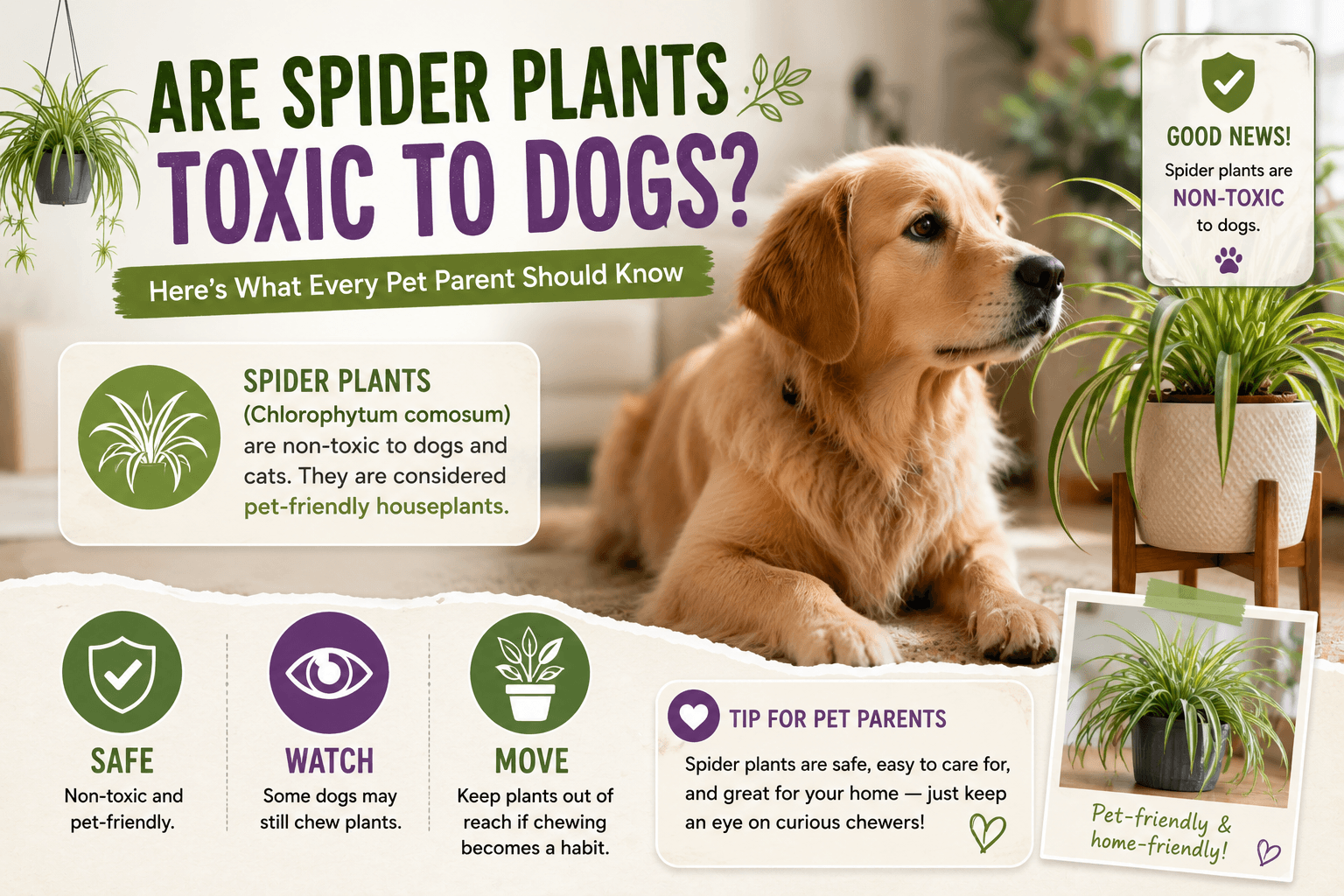
Are spider plants toxic to dogs? No, the ASPCA lists spider plant, also called ribbon plant or spider ivy, as non-toxic to dogs and cats. However, a dog that eats enough spider plant leaves may still get mild digestive upset because plant fiber is not dog food. If your dog ate a small amount and acts normal, monitor closely. If vomiting, diarrhea, lethargy, choking, repeated drooling, swelling, tremors, or breathing trouble appears, contact a veterinarian or animal poison control immediately.
The safest rule is simple: non-toxic does not mean edible. A spider plant is safer than many toxic houseplants, but it should still be moved out of reach if your dog treats it like a snack bar.
Why This Happens
Dogs chew houseplants for many reasons: curiosity, boredom, texture, smell, teething, hunger timing, attention, anxiety, or simple access. A spider plant has long arching leaves that move easily, which can make it more interesting to dogs than a stiff plant. Puppies may be especially attracted because they explore with their mouths.
The ASPCA’s spider plant toxicity listing identifies Chlorophytum comosum as non-toxic to dogs and cats. The broader ASPCA toxic and non-toxic plant list for dogs is also useful because many plants sold near spider plants are not equally safe.
This is why are spider plants toxic to dogs is only the first question. The second question is whether your dog is chewing plants because the environment, feeding rhythm, or enrichment routine is too easy to exploit.
What To Do First
First, confirm the plant is actually a spider plant. Many houseplants have long leaves, variegated stripes, or similar common names. Do not rely on a store label alone if your dog ate a large amount or is showing symptoms.
Second, remove the plant from reach. Place it on a high shelf, hanging basket, closed room, or dog-free window area. Pick up fallen leaves and spilled soil. Check whether the dog swallowed plastic tags, decorative moss, fertilizer pellets, or broken pot material.
Third, monitor the dog. Watch appetite, stool, vomiting, drooling, energy, breathing, and whether the dog tries to keep chewing more plants. If symptoms appear, call your veterinarian or the ASPCA Animal Poison Control Center.
The Feeding Loop Behind Plant Chewing
The plant-chewing loop often starts with access. The dog finds a dangling spider plant leaf, chews it, and gets a reaction. The owner rushes over, speaks sharply, grabs the leaf, or offers a treat to distract the dog. Now the plant has become part of an attention routine.
The next time the dog wants engagement, it goes back to the plant. The owner reacts again. The behavior becomes stronger, even though the original reason may have been curiosity.
A better answer to are spider plants toxic to dogs includes behavior control: remove access, redirect before chewing starts, reward the dog for leaving the plant, and avoid turning the plant into a chase game.
The Emotional Trigger Owners Miss
The emotional trigger is panic. Owners see a dog chewing a plant and assume poisoning. That panic is understandable because many houseplants are dangerous. But once the plant is confirmed as a true spider plant, the response should become controlled rather than dramatic.
Clean the area. Move the plant. Watch the dog. Record how much was eaten. Check for vomiting or diarrhea. Avoid repeatedly feeding treats every time the dog approaches the plant, because that can accidentally reward the behavior.
Use why do dogs eat grass if your dog also chews outdoor grass, leaves, or weeds. Plant chewing often belongs to a larger pattern of grazing and oral exploration.
The Addiction Mechanism
The addiction mechanism is variable reward. Sometimes chewing the spider plant gives the dog texture. Sometimes it gets attention. Sometimes it causes the owner to offer food. Sometimes the dog knocks soil onto the floor and finds that interesting too.
Because the reward changes, the dog may keep trying. This is especially common in bored dogs, puppies, and dogs that have learned that forbidden objects make people move quickly.
A strong are spider plants toxic to dogs safety plan removes the reward. The plant goes out of reach. Fallen leaves disappear. The dog gets appropriate chew items, structured walks, measured meals, and calm redirection.
What If My Dog Ate a Spider Plant?
If your dog ate a small piece of a confirmed spider plant and is acting normal, remove the plant, offer normal water access, and monitor. Do not force vomiting unless a veterinarian or poison-control professional specifically instructs you to do so.
If your dog ate a large amount, ate soil or fertilizer, chewed the pot, or shows symptoms, contact a professional. Give the plant name, photo, approximate amount eaten, your dog’s weight, time of ingestion, and symptoms.
The question are spider plants toxic to dogs has a mostly reassuring answer, but symptoms still matter. Non-toxic plant material can still irritate the stomach when eaten in enough quantity.
Signs to Watch After Plant Chewing
Watch for vomiting, diarrhea, drooling, gagging, coughing, appetite loss, lethargy, abdominal discomfort, repeated swallowing, or unusual behavior. Mild one-time stomach upset can happen after a dog eats plant material, but repeated or severe signs should not be ignored.
More urgent signs include breathing trouble, collapse, tremors, severe weakness, facial swelling, repeated vomiting, blood in vomit or stool, or suspected ingestion of a different plant. Treat those as emergency signals.
If your dog is a puppy, tiny breed, senior, pregnant, chronically ill, or already has digestive disease, be more cautious. A small amount of plant material can affect sensitive dogs more noticeably.
Spider Plant vs Other Houseplants
Spider plants are often considered pet-friendly, but many common houseplants are not. Sago palm, lilies, oleander, azalea, philodendron, pothos, dieffenbachia, and some other indoor plants can create serious risk. Dogs do not know the difference between a safe plant and a dangerous one.
That is why owners should not stop at are spider plants toxic to dogs. Every plant in the home should be identified. One safe plant on a shelf does not protect the dog from a toxic plant on the floor.
Use plant labels, nursery records, and veterinary poison-control databases. If you cannot identify a plant confidently, keep it out of reach until you can.
Potting Soil, Fertilizer, and Pesticides
Sometimes the spider plant is not the main problem. Potting soil can contain fertilizer pellets, moisture crystals, mold, compost material, or additives. Decorative moss and stones can also attract chewing. Some dogs dig in the pot and eat soil instead of leaves.
The EPA’s safe pest control product guidance emphasizes using pesticide products according to label directions and storing them safely. For dog owners, the practical rule is clear: keep dogs away from treated plants, treated soil, and any plant product that has not been verified as pet-safe.
When owners ask are spider plants toxic to dogs, they often forget to check what was sprayed, sprinkled, or mixed into the pot. The plant may be non-toxic while the treatment around it is not appropriate for chewing.
Why Puppies Chew Spider Plants
Puppies chew spider plants because puppies chew almost everything. The leaves move, the pot smells earthy, and the owner reacts when the puppy grabs a strand. That combination is enough to build a habit.
Use leash control indoors if needed. Block the plant room. Offer puppy-safe chew items. Teach “leave it” with low-value items before expecting success around plants. Reward the puppy for turning away before the mouth reaches the leaves.
If your puppy eats plants, stool, mulch, grass, and random objects, use how to stop puppy eating poop. The same prevention principle applies: control access before the puppy rehearses the behavior.
Feeding Routine and Plant Chewing
Some dogs chew plants more before meals or during long gaps between meals. That does not mean the spider plant is fulfilling a nutritional need. It may mean the dog is restless, expecting food, or looking for oral activity.
Use measured meals on a predictable schedule. Avoid random topping up, emotional snacks, and untracked treats. If your dog acts hungry all day, review daily food amount, body condition, exercise, and treat intake.
Use scientific pet feeding schedule and pet nutrition tips. A clear feeding rhythm makes it easier to tell whether plant chewing is hunger-linked or behavior-linked.
Boredom and Enrichment
A dog with too little enrichment will find projects. Spider plants are convenient projects. The leaves dangle, sway, and shred. The pot can be pushed. Soil can be dug. The whole setup becomes interactive.
Add daily walking, sniffing, training, safe chew time, food puzzles when appropriate, and calm rest. The goal is not to exhaust the dog. The goal is to give the dog better outlets than houseplants.
If the plant chewing happens when the dog is alone, use barriers first. Training cannot work while the dog has unsupervised access to the reward.
How to Stop Your Dog Chewing Spider Plants
Move the plant out of reach first. Then teach the dog what to do instead. Practice “leave it,” recall, and mat settling away from the plant. Reward early disengagement. Do not wait until the dog has a mouthful of leaves.
Use bitter sprays only with caution and only on products labeled safe for pets and plants. Some dogs ignore bitter taste. Some become more interested. Sprays should never replace access control.
A practical are spider plants toxic to dogs prevention plan is physical first, behavioral second: move the plant, clean fallen leaves, block soil access, train leave-it, add enrichment, and stabilize meals.
Where to Put Spider Plants in a Dog Home
Hanging baskets often work well because spider plants naturally trail. Keep them high enough that the dog cannot jump, stand on furniture, or pull the leaves down. Avoid placing them on low plant stands, coffee tables, window ledges within reach, or shelves beside climbable furniture.
Check falling plantlets. Spider plants produce small offshoots that may hang lower than the main plant. A dog may ignore the pot but grab the dangling plantlets.
Use smart feeder placement for the same environmental logic. Good placement prevents behavior before correction is needed.
Water Bowls, Feeding Stations, and Plant Access
Do not place spider plants beside food or water stations. A dog that goes to drink may notice the plant every time. Soil, dropped leaves, and spilled water can also create a messy area that attracts more investigation.
Keep the feeding station clean and separate from plants. Food crumbs and plant debris should not mix. Dogs should not have to navigate a plant shelf to reach meals or water.
Use pet hydration tips and clean smart pet feeder. A clean feeding area reduces avoidable chewing and scavenging triggers.
Common Failure Pattern
The most common failure pattern is hearing “non-toxic” and leaving the plant within reach. The dog keeps chewing, gets mild stomach upset, and the owner repeats the same worry every week.
The second failure is punishing after the dog already grabbed the plant. This can make the dog chew faster or hide the behavior. Prevention works better than conflict.
The third failure is checking only the spider plant and ignoring other houseplants. A dog that learns to chew one plant may test another. Not every plant is as forgiving as a spider plant.
Real-World Impact
The real-world impact of answering are spider plants toxic to dogs correctly is calmer decision-making. Owners can stop panicking over a small confirmed spider plant nibble while still controlling access, watching symptoms, and removing higher-risk plants.
The impact of guessing is poor control: unnecessary panic, repeated plant chewing, possible soil or fertilizer ingestion, missed toxic-plant risks, and a dog that learns plants are rewarding objects.
For dog households building cleaner feeding and routine control, compare the dog feeders collection. A stable routine helps reduce scavenging, but plant safety still requires environmental management.
Can This Be Fixed?
Yes, spider plant chewing can usually be reduced with better placement, access control, training, enrichment, and feeding structure. Confirm the plant identity, move it out of reach, clean fallen leaves, block the potting soil, teach “leave it,” and stop rewarding plant contact with dramatic attention or food.
Run a seven-day plant safety reset. Record when the dog approaches the plant, whether it happens before meals, during boredom, after walks, or when left alone. Adjust the environment first. If the dog keeps seeking plants, expand enrichment and review the feeding schedule.
For broader routine support, start with the smart feeders collection. The feeder controls meal timing; the owner controls plant access.
Who Should Walk Away and Who Should Use This
Walk away from assuming every striped houseplant is a spider plant, letting dogs chew “non-toxic” plants freely, ignoring potting soil and fertilizer, or using punishment after the dog already has leaves in its mouth. Also walk away from keeping unknown plants at dog level.
Use this are spider plants toxic to dogs guide if your dog ate a spider plant, keeps chewing houseplants, digs in pots, vomits after plant material, or lives in a home with mixed indoor plants. It is especially useful for puppies, bored dogs, plant-heavy homes, apartment dogs, and owners who want pet-safe houseplants without creating chewing habits.
For routine feeding, a timed slow feed automatic feeder can help some dogs stay on a steadier meal rhythm. It should be paired with safe plant placement, clean water, supervision, and proper chew outlets.
Mini FAQ
Are spider plants toxic to dogs?
No, true spider plants are listed as non-toxic to dogs by the ASPCA. Still, eating a lot of leaves can cause stomach upset, and soil or plant treatments may create separate risk.
What happens if my dog eats a spider plant?
If your dog eats a small amount of a confirmed spider plant and acts normal, monitor closely. If vomiting, diarrhea, drooling, lethargy, choking, or unusual signs appear, contact a veterinarian or animal poison control.
Can spider plants make dogs vomit?
Yes, spider plants can still make dogs vomit if the dog eats enough plant material. That does not mean the plant is classified as toxic; it means fibrous plant material can irritate the stomach.
Are spider plant babies safe for dogs?
Spider plant babies are part of the same non-toxic plant, but dogs still should not chew them freely. Dangling plantlets are easy for dogs to grab and may encourage repeated chewing.
Should I move my spider plant away from my dog?
Yes, move the spider plant away if your dog chews it, digs in the pot, pulls plantlets, or eats fallen leaves. Non-toxic plants should still be protected from repeated chewing.
What houseplant danger should dog owners check first?
Dog owners should first confirm the exact plant identity and check whether soil, fertilizer, pesticide, decorative moss, or nearby plants are unsafe. The spider plant may be safe while another plant in the same room is not.
The clean answer to are spider plants toxic to dogs is reassuring but not careless: spider plants are generally non-toxic to dogs, but they are not dog food. Confirm the plant, move it out of reach, watch for digestive signs, control soil and fertilizer access, and treat plant chewing as a behavior-and-environment problem before it becomes a habit.