
An emergency backup pet feeder is not only a second device. It is a feeding safety plan for the moments when the normal routine fails: power outage, WiFi loss, app error, travel delay, feeder jam, evacuation, illness, blocked roads, or a household member forgetting who already fed the pet. A backup feeder system protects meal timing without turning every problem into panic feeding.
For daily feeding, a smart automatic pet feeder with app control can handle scheduled dry-food meals. The emergency backup pet feeder layer exists for the day the main system cannot be trusted without verification.
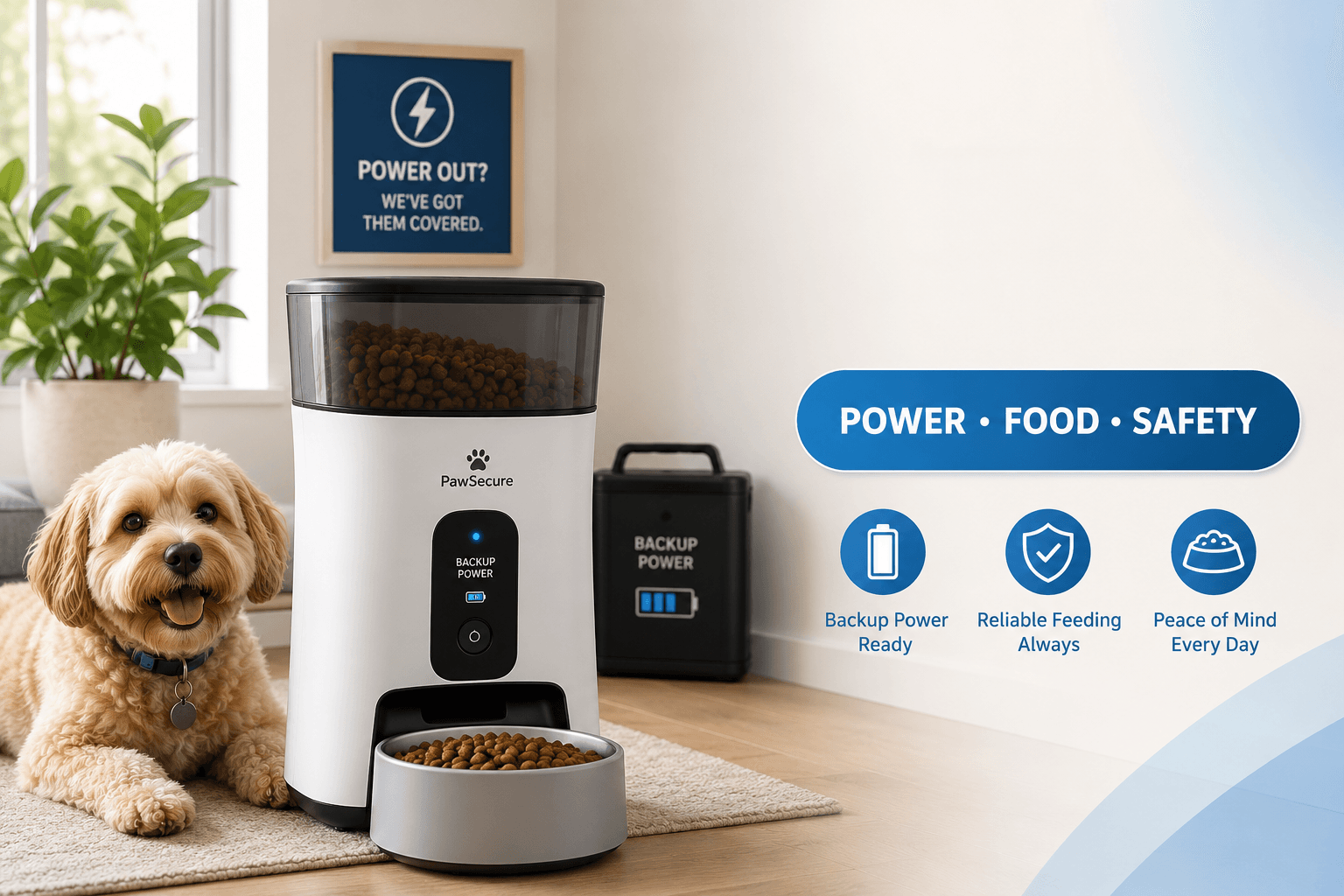
Direct Answer: Emergency Backup Pet Feeder
An emergency backup pet feeder is a planned secondary feeding system that keeps pets fed when the main feeder, owner schedule, power, WiFi, app, food supply, or travel plan fails. The best backup setup includes battery support, measured emergency portions, a manual feeding rule, spare dry food, clean bowls, water access, feeder maintenance, and a written instruction card for anyone who may step in.
The safest emergency backup pet feeder plan does not rely on one magic product. It uses layers: the main feeder, power backup, manual portion packs, emergency food storage, water plan, trusted helper, app alerts, and clear feeding records. If one layer fails, the pet still receives the correct meal without duplicate portions.
Why This Happens
Pet feeding fails during emergencies because the household usually has only one routine. One person knows the schedule. One app controls the feeder. One power outlet runs the device. One bag of food sits in one cabinet. That looks efficient until something breaks.
Ready.gov’s pet disaster preparedness guidance tells owners to think about basics such as food and water and to prepare both a larger shelter-in-place kit and a lighter evacuation kit. That same logic applies to an emergency backup pet feeder: home backup and travel backup are not always the same thing.
Automatic feeding reduces daily friction, but it also creates dependency. If the feeder goes offline, jams, loses power, or runs out of food, the owner may not notice until the next app check. A backup system keeps the feeding routine from depending on perfect conditions.
What To Do First
Start by listing the most likely failure points in your home. Power outage. Router failure. WiFi password change. App logout. Feeder jam. Empty tank. Chewed cable. Delayed flight. Late work shift. Pet sitter confusion. Evacuation. Each failure needs a different control.
A practical emergency backup pet feeder system has six parts: battery or alternate power, measured backup meals, spare food storage, clean manual bowl, water access, and written instructions. The backup meal should be measured in grams or clearly labeled portions, not described as “one scoop” unless every person uses the exact same scoop.
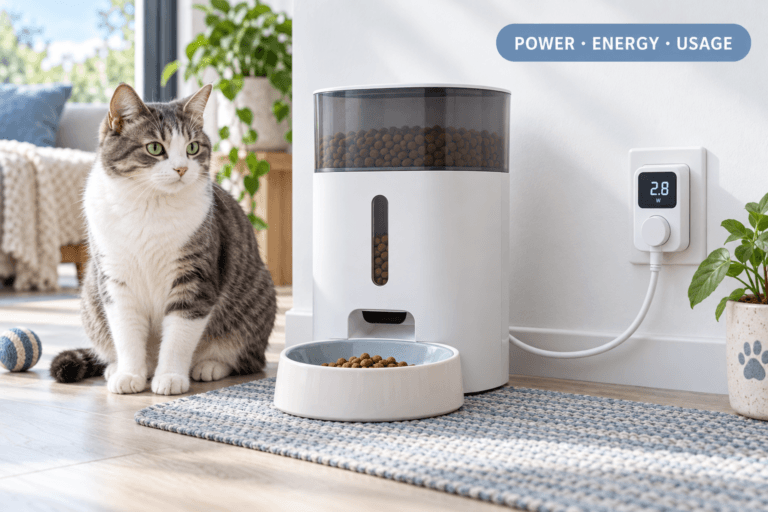
Use pet feeder with battery backup as the power layer. A battery-backed feeder cannot solve every emergency, but it protects the routine when electricity is the first point of failure.
The Feeding Loop Behind Emergency Failures
The emergency feeding loop starts with uncertainty. The owner is not sure whether the pet already ate. The app is offline. The bowl looks empty. Another family member might have fed manually. The owner adds food “just in case.” Later, the feeder runs again or another person feeds again. The pet receives a double meal.
That loop is common because emergency stress makes owners choose reassurance over measurement. The pet may not be underfed. The pet may be overfed because no one confirmed the last meal.
A controlled emergency backup pet feeder breaks the loop with records. Write down backup feeding time, amount, and person responsible. If the feeder fails and a manual meal is given, subtract that food from the daily total. Backup feeding should replace a missed meal, not stack on top of a scheduled one.
The Emotional Trigger Owners Miss
The emotional trigger is guilt. A missed meal possibility feels serious, so owners feed extra quickly. That reaction is understandable, but it weakens portion control and can train pets to expect bonus food during owner stress.
The better emotional rule is direct: verify first, feed measured second, record third. The pet needs reliability, not panic portions. An emergency backup pet feeder gives the owner a written response before guilt takes over.
Use scientific pet feeding schedule to define the normal daily amount. Emergency feeding only works when the household already knows what the normal total should be.
The Addiction Mechanism
The addiction mechanism is stress-reward pairing. If power goes out, the owner gives extra food. If the app fails, the owner gives extra food. If the pet waits near the feeder, the owner gives extra food. The pet learns that unusual household stress can produce bonus meals.
This turns backup feeding into a behavior problem. Cats may hover near the feeder. Dogs may crowd the bowl. Owners may interpret this as hunger and add more food.
A strong emergency backup pet feeder routine prevents that pattern. Backup meals should be measured, boring, and tied to the missed schedule only. The pet should not learn that emergencies produce better food, more food, or extra attention around the bowl.
Power Outage Backup
Power outage is the simplest failure to plan for. If the feeder loses electricity, it may stop dispensing, lose app connection, or rely on internal memory depending on the model. Do not assume the feeder will work during an outage unless the device has been tested.
Use fresh batteries or a supported backup power system when the feeder design allows it. Check battery status during routine maintenance. Keep the power cable protected and inspect it for damage. A chewed cable can create the same result as a power outage.
For cord safety, use chew proof pet feeder cable. A reliable emergency backup pet feeder system protects the power path before the outage happens.
WiFi and App Failure Backup
WiFi failure does not always mean feeding failure. Some smart feeders continue stored schedules without internet. Others lose remote control but still dispense. Some require reconnection for full function. The owner needs to know the feeder’s offline behavior before trusting it during work or travel.
Test the feeder. Turn off the app or disconnect WiFi under controlled conditions if the product instructions allow safe testing. Confirm whether scheduled meals still run. Record the result on the backup instruction card.
Use smart pet feeder offline and pet feeder WiFi connection. An emergency backup pet feeder plan should not confuse app uncertainty with confirmed missed meals.
Feeder Jam Backup
A feeder jam can make the device look active while food does not reach the bowl. The motor may run. The app may log a meal. The pet may still miss food because kibble is stuck in the tank outlet, chute, rotor, or bowl opening.
The backup rule is not to keep pressing manual feed. Stop the schedule if needed, empty the tank, clear the path, clean the chute, dry all parts, refill with compatible kibble, and run a test dispense. If a replacement meal is needed, measure it separately.
Use pet feeder jammed and pet feeder maintenance. A good emergency backup pet feeder plan includes prevention, not only reaction.
Emergency Food Storage
Backup feeding depends on stored food. Keep a clearly labeled emergency amount of the pet’s normal food. Rotate it before it becomes stale. Do not use emergency storage as a random overflow bag that no one checks.
The FDA’s tips for safe handling of pet food and treats emphasize clean hands, washing bowls and utensils, and using a clean scoop instead of the pet’s bowl as the measuring tool. For emergency feeding, that means stored food, bowls, and scoops still need hygiene discipline.
A proper emergency backup pet feeder kit should include dry food in a sealed container, measured portion bags, a clean scoop, a backup bowl, feeding instructions, water plan, and the pet’s normal schedule. Do not wait until a storm, outage, or travel delay to organize it.
Water Backup Is Part of Feeding
Food backup without water backup is incomplete. Dry-food pets need reliable water access, especially when the owner is away longer than expected. A power outage, evacuation, broken dispenser, or household disruption can affect water just as easily as food.
The AVMA’s pets and disasters guidance recommends preparing a pet evacuation kit before an emergency and storing it where it can be accessed quickly. Food and water planning belong together inside that kit.
Use automatic water dispenser for pets and pet hydration tips. An emergency backup pet feeder plan should always include how the pet will drink, not only how the pet will eat.
Travel Delay Backup
Travel delays are a common reason owners need backup feeding. A flight delay, train delay, traffic shutdown, late meeting, or family emergency can extend time away from home. A smart feeder helps, but only when the feeder has food, power, signal, and a tested schedule.
Before leaving, check the tank level, power, WiFi status, schedule, bowl cleanliness, water supply, and backup contact. Do not fill the feeder with unfamiliar food right before travel. Do not assume a camera view replaces a local person if the trip is long enough to require physical inspection.
For remote meal verification, a smart WiFi pet feeder with camera can help the owner see whether food reached the bowl. The emergency backup pet feeder rule remains the same: camera confirmation supports care, but it does not refill food, clean bowls, or solve a power outage alone.
Evacuation Backup
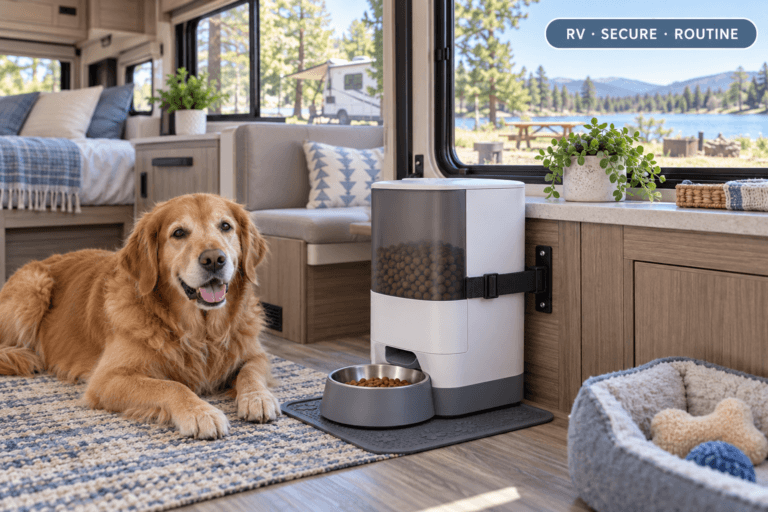
Evacuation feeding is different from home backup feeding. A wall-powered feeder is not useful if the household has to leave quickly. Evacuation backup needs portable food, a simple bowl, water, documents, medication instructions when relevant, and feeding notes.
The American Red Cross pet disaster preparedness guidance emphasizes including pets in emergency plans and preparing for evacuation. For feeding, that means the pet’s emergency food should be easy to carry and easy for another person to understand.
An emergency backup pet feeder plan should separate home backup from evacuation backup. At home, a battery-backed automatic feeder can help. During evacuation, the backup is measured food, portable bowls, water, and written instructions.
Written Instructions for Helpers
A backup plan fails when only one person understands it. Write a simple feeding card and keep it near the feeder or inside the emergency kit. Include pet name, food brand, normal meal times, exact meal amount, manual backup amount, feeder app status notes, water instructions, emergency contact, and where extra food is stored.
Use plain language. Do not write “feed a little.” Write “feed 30 grams at 7:00 p.m. only if the feeder did not dispense dinner.” This prevents duplicate feeding.
For irregular work routines, use automatic feeder for shift workers. A strong emergency backup pet feeder plan should work even when another person has to follow it under stress.
Calibration and Portion Packs
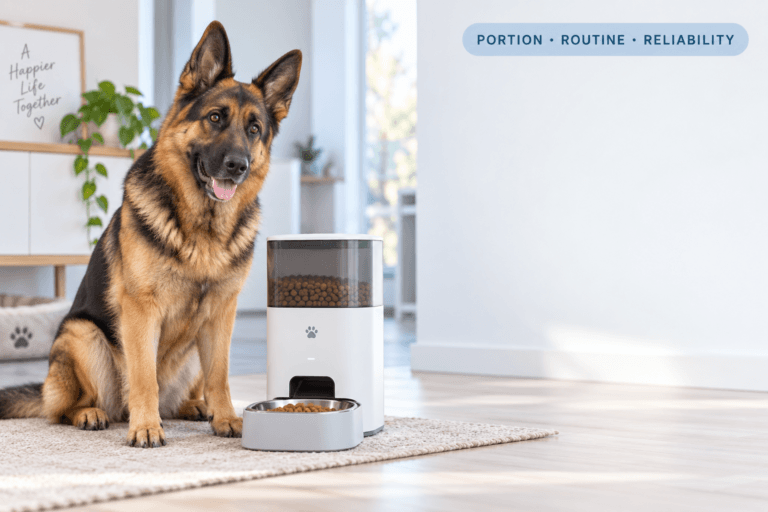
Emergency backup meals must match the real food amount. If the feeder normally dispenses portions, weigh those portions and convert them into labeled backup packs. This prevents helpers from guessing.
Use a digital kitchen scale. Prepare sealed meal packs marked by pet name, date, and amount. Rotate them with normal food use so they do not sit too long. Keep emergency packs away from heat, moisture, insects, and direct sun.
Use pet feeder calibration. An emergency backup pet feeder is only accurate when the backup amount is measured, not estimated.
Cleaning Before an Emergency
A dirty feeder is more likely to fail when the owner is away. Kibble dust, oil residue, old crumbs, moisture, and stale food can create odor, ants, clumps, and jams. Emergency reliability starts with routine hygiene.
Clean the bowl, tray, chute, tank, lid, and floor area on a fixed schedule. Dry everything fully before refilling. Replace desiccant when required. Do not top fresh food over old food again and again.
Use clean smart pet feeder and pet feeder desiccant replacement. A clean feeder gives the emergency backup pet feeder plan a stronger starting point.
Common Failure Pattern
The most common failure pattern is buying a smart feeder and calling that the backup. A smart feeder is the main tool, not the full emergency plan. If it loses power, jams, runs out of food, or disconnects, the household still needs a secondary process.
The second failure is duplicate feeding. One person sees an offline alert and feeds manually. Another person sees the feeder reconnect and trusts the schedule. The pet receives two meals because the household had no written rule.
The third failure is emergency food that is stale, unlabeled, or unsuitable for the feeder. Backup food should be the pet’s normal food when possible, stored properly, rotated, and measured.
Real-World Impact
The real-world impact of a strong emergency backup pet feeder plan is calm continuity. A power outage does not automatically mean a missed meal. A WiFi alert does not automatically create panic feeding. A travel delay does not leave the pet dependent on luck. A helper can step in without guessing.
The impact of a weak plan is uncertainty: missed meals, double portions, stale emergency food, empty water, offline apps, jammed feeders, and owner stress. The pet experiences that uncertainty as unstable feeding.
For full connected-feeder reliability, use smart device security and smart feeder firmware update. Emergency backup depends on secure, updated, stable devices before the emergency arrives.
Can This Be Fixed?
Yes, weak emergency feeding plans can be fixed with a full backup reset. Test the main feeder. Add battery support if the model allows it. Prepare measured backup meals. Store spare food safely. Write instructions. Confirm water access. Give a trusted helper access to the plan. Test one manual backup scenario before relying on it.
Run a seven-day backup check. Record power status, WiFi status, tank level, scheduled meals, manual feeds, bowl checks, water checks, app alerts, and who is responsible for backup action. If any step depends on memory, write it down.
For feeder selection, start with the smart feeders collection. Choose based on schedule reliability, battery support, cleaning access, food capacity, app stability, portion control, and whether the household can maintain the feeder before emergencies happen.
Who Should Walk Away and Who Should Use This
Walk away from any plan that relies on a single device, single app, single person, or single power source. Also walk away from unlabeled emergency food, vague instructions, untested batteries, and manual feeding that is not measured.
Use an emergency backup pet feeder plan if your pet depends on timed meals, app-controlled feeding, weight management, early-morning feeding, shift-worker routines, travel coverage, or multi-pet feeding. It is especially important for cats, small dogs, senior pets, pets with strict meal timing, and households where more than one person may feed.
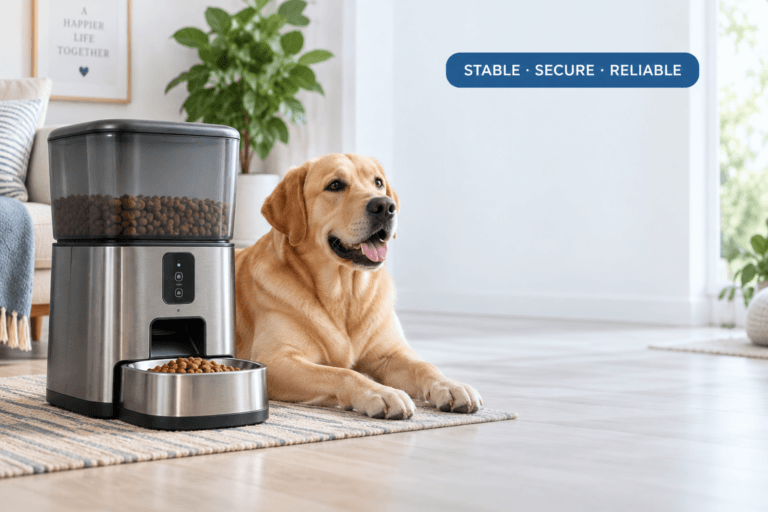
Cat owners can compare the cat feeders collection for smaller measured meals. Dog owners can use the dog feeders collection when feeder stability, food volume, and backup portions need stronger control.
Mini FAQ
What is an emergency backup pet feeder?
An emergency backup pet feeder is a secondary feeding plan that keeps pets fed when the main feeder, power, WiFi, app, travel plan, or owner schedule fails. It can include battery backup, measured food packs, clean bowls, written instructions, and a helper plan.
Do I need a backup feeder if I already have a smart feeder?
Yes, a smart feeder still needs a backup plan because power, WiFi, app access, food supply, jams, and travel delays can fail. The smart feeder is one layer. Emergency feeding requires more than one layer.
What should be in a pet feeding emergency kit?
A pet feeding emergency kit should include measured food, clean bowls, water plan, scoop, feeding instructions, emergency contact, spare batteries if compatible, and the pet’s normal schedule. Store it where another person can find it quickly.
Can battery backup prevent missed meals?
Battery backup can prevent missed meals during short power interruptions when the feeder supports battery operation. It does not fix empty tanks, feeder jams, app errors, WiFi problems, or stale emergency food.
How do I stop duplicate feeding during emergencies?
Stop duplicate feeding with a written log: time, amount, person, and reason for manual feeding. Feed manually only after confirming that the scheduled meal failed, and subtract backup food from the daily total.
What is the safest backup for travel delays?
The safest backup for travel delays is a tested smart feeder, enough normal food, stable power, water access, camera or bowl verification when available, and a trusted local helper who can enter if the delay becomes serious.
The best emergency system is not dramatic. It is boring, written, measured, and tested. An emergency backup pet feeder should keep the pet’s food routine stable when power, WiFi, travel, or human memory fails. That is how backup feeding protects the pet without creating missed meals, double meals, or panic portions.