
A pet feeder jammed warning should not be treated as a random machine failure. Most jams start inside the food path: oversized kibble, broken crumbs, food dust, moisture, stale oil, a dirty chute, poor calibration, or a tank that was topped up too many times without being emptied. The app may show the problem, but the cause is usually physical.
For scheduled dry-food feeding, a smart automatic pet feeder with app control works best when the food path stays clean, dry, and tested. The feeder controls time, but a jam-free routine depends on kibble flow, maintenance, and owner checks.
Direct Answer: Pet Feeder Jammed
A pet feeder jammed problem usually means dry food is stuck in the tank outlet, chute, rotor, dispenser wheel, or bowl opening because of kibble size, dust, moisture, old food, dirty parts, poor drying after cleaning, or incorrect feeder setup. The correct fix is to stop the schedule, empty the tank, clear the food path, clean and fully dry removable parts, refill with compatible kibble, run a test dispense, and recalibrate portions before trusting the next meal.
The biggest mistake is shaking the feeder, adding more food, or repeatedly pressing manual feed without clearing the blockage. That can pack the jam tighter, create double portions after the jam releases, and teach the owner to solve every equipment problem with extra food. A pet feeder jammed event needs controlled troubleshooting, not panic feeding.
Why This Happens
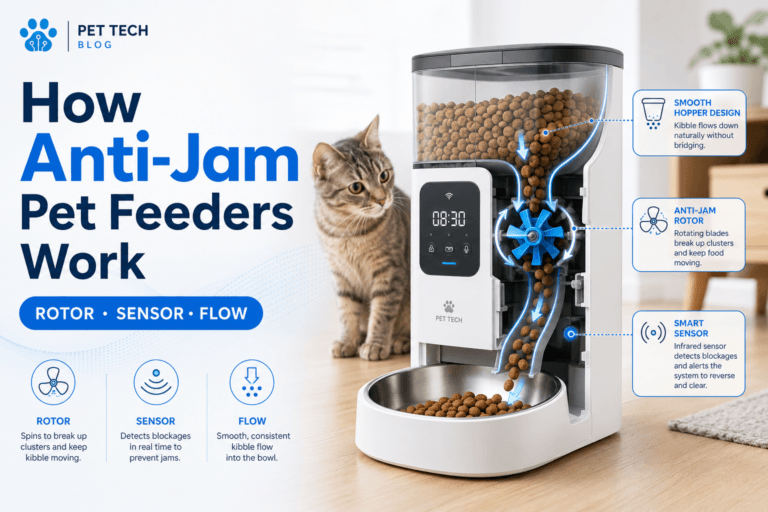
Automatic feeders dispense mechanically. They do not evaluate food texture the way an owner does. If kibble is too large, too flat, too sticky, too dusty, or too irregular, it can bridge over the outlet or wedge inside the chute. If the tank has moisture or oil residue, food pieces can cling to surfaces instead of flowing cleanly.
The FDA’s safe handling guidance for pet food and treats emphasizes clean handling and safe storage around pet food. That matters directly because an automatic feeder is not only a bowl. It is also a storage container and dispensing path.
A pet feeder jammed problem also happens after normal owner behavior. The owner refills the tank without emptying old kibble. The feeder sits near a water bowl. The chute is wiped but not dried. A new food formula is introduced. The portion size is changed. Any of these can change how food moves through the machine.
What To Do First
First, protect the meal routine. Check whether the pet actually missed a meal before adding food manually. Look at the bowl, the app log if available, and the last scheduled meal time. If manual feeding is needed, measure the replacement portion and subtract it from the daily total.
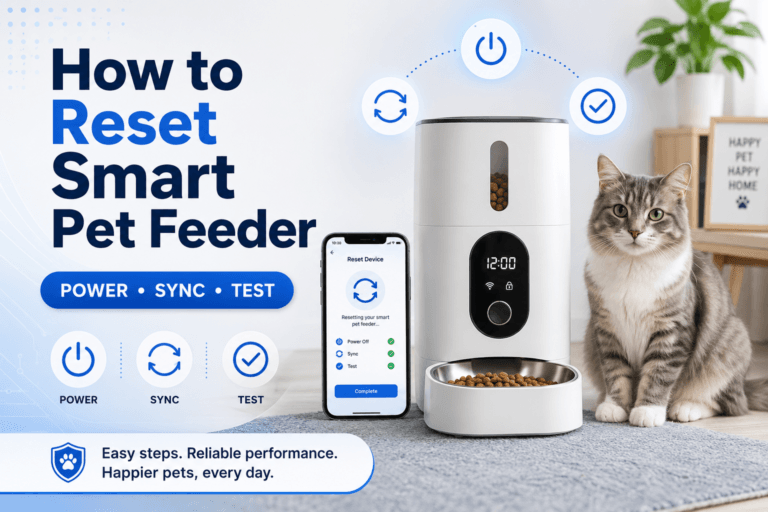
Then unplug or turn off the feeder according to the product instructions. Empty the food tank. Remove loose kibble. Inspect the outlet, chute, rotor, bowl, and tray. Clear visible blockages gently. Do not use sharp tools that can damage the dispenser parts.
After clearing the blockage, use clean smart pet feeder to wash and dry the food-contact parts correctly. A pet feeder jammed fix is incomplete if crumbs, oil, dampness, or old food remain inside the feeder.
The Feeding Loop Behind This Problem
The feeding loop starts when the feeder skips or under-dispenses a meal. The owner worries that the pet is hungry and adds food by hand. Later, the jam loosens, and the feeder releases food again. Now the pet has received both the manual replacement and the scheduled meal.
That loop creates weight drift and owner distrust. The owner starts treating the feeder as unreliable. The pet starts receiving extra food during equipment uncertainty. The original jam may have been simple, but the response turns it into a feeding-control problem.
A better pet feeder jammed response is measured. Confirm the missed amount. Feed manually only when needed. Clear the food path. Test the feeder. Rebuild confidence with one controlled dispense, not a full tank and a hope.
The Emotional Trigger Owners Miss
The emotional trigger is guilt. A jam makes owners feel that the pet may have been left hungry. That guilt pushes fast actions: extra scoops, treat compensation, repeated manual feed taps, or changing the whole schedule immediately.
Fast action often makes the routine worse. The pet does not need a bonus meal every time the device has an error. The pet needs the correct daily food amount and a feeder that is clean enough to deliver it.
Use the scientific pet feeding schedule to keep the daily total clear. When a pet feeder jammed event happens, the schedule should tell the owner how much food is actually missing.
The Addiction Mechanism
The addiction mechanism is accidental reward. If every jam produces extra food, the pet learns that owner stress near the feeder can lead to more calories. Cats may hover around the machine. Dogs may crowd the station. Owners may interpret this as hunger and add still more food.
This turns a mechanical fault into a behavior loop. The feeder becomes associated with owner anxiety, extra attention, and bonus feeding. The pet is not diagnosing a jam. The pet is responding to a pattern that pays.
A controlled pet feeder jammed routine keeps rewards out of troubleshooting. Clear the feeder first. Measure food second. Return to the schedule third. Do not let a jam become a snack ritual.
Kibble Size Is the First Suspect
Kibble size and shape are often the real cause. Large, flat, sticky, soft, or irregular pieces can bridge inside the outlet. Small broken crumbs can collect at the bottom of the tank and compact into dust. Lightweight food may dispense differently from dense food.
The AAFCO consumer resources help owners understand pet food labels and feeding directions, but label directions still have to match the feeder’s mechanical output. If the kibble does not flow through the device, the nutrition plan cannot reach the bowl correctly.
After a pet feeder jammed event, compare the food with the feeder’s recommended kibble size. Do not assume every dry food works in every dispenser. A food that works in a normal bowl can still fail inside an automatic feeder.
Moisture and Desiccant Problems
Moisture makes dry food behave badly. Kibble can soften, swell, stick, or clump. This is common when the feeder sits near a water dispenser, humid kitchen, bathroom, laundry area, patio door, garage, or outdoor space.
If the feeder has a desiccant holder, inspect it. An expired or saturated desiccant pack cannot protect the tank. A missing pack can allow humidity to build faster. A torn packet should be removed immediately and replaced with the correct sealed replacement.
Use pet feeder desiccant replacement when moisture or clumping appears. A pet feeder jammed problem that repeats after cleaning usually points to storage, humidity, or placement.
Cleaning and Drying Mistakes
Cleaning can cause jams when parts are reassembled damp. Water inside the chute, bowl joint, tank outlet, or dispenser wheel can make dry food stick. Even small damp areas can create clumps during the next scheduled meal.
Wash removable food-contact parts, rinse thoroughly, and dry completely. Do not soak electronic parts unless the product instructions clearly allow it. Do not spray cleaner into motors, buttons, ports, speakers, or cameras.
The AVMA’s pet nutrition guidance connects feeding with routine health care. Clean equipment supports that routine because stale residue and inconsistent dispensing make intake harder to manage.
Calibration After a Jam
A jam can change the owner’s confidence in portion output. After clearing the feeder, do not immediately restart the old schedule without testing. Run several small dispense cycles into an empty bowl. Weigh the food. Confirm that the feeder is dropping a consistent amount.
Use a digital kitchen scale. Tare the bowl to zero. Run one portion. Record the weight. Repeat five to ten times. If the output varies widely, inspect the chute again, check kibble size, and confirm that all parts are dry and seated correctly.
Use pet feeder calibration before trusting the schedule again. A pet feeder jammed fix should end with measured output, not guesswork.
Placement Can Cause Jams
Placement affects food flow more than many owners expect. A feeder on an uneven floor can angle the food path. A feeder beside a water station can collect splashes. A feeder in direct sun can warm stored food. A feeder near a litter box, trash can, or door can collect dust and debris.
The feeder should sit on a dry, level, washable surface with enough room for the pet to eat without pushing the machine. If the pet nudges, paws, or tips the feeder, kibble can shift in the tank and block the outlet.
Use smart feeder placement to correct the station. A pet feeder jammed problem is sometimes a location problem before it is a device problem.
App, WiFi, and Offline Confusion
Not every missed meal is a jam. A feeder may fail to dispense because of power loss, app schedule changes, WiFi problems, offline status, or firmware behavior. Before assuming the chute is blocked, check whether the feeder was powered, connected, and scheduled correctly.
If the feeder shows offline, inspect the power cable and outlet first. A loose plug can make the feeder disappear from the app. A router issue can block remote control even when stored schedules still run.
Use smart pet feeder offline and pet feeder WiFi connection when the app is part of the problem. A true pet feeder jammed event needs physical clearing; a connection failure needs network troubleshooting.
Common Failure Pattern
The most common failure pattern is topping up the tank without emptying it. Fresh food sits over old food. Dust and broken pieces collect at the bottom. The oldest kibble reaches the outlet first and creates the highest jam risk.
The second failure is switching food without testing. A new formula may be larger, flatter, dustier, softer, or more oily. The old schedule may still look correct in the app, but the new food does not move the same way through the feeder.
The third failure is clearing only the visible bowl. A pet feeder jammed problem can start above the bowl, inside the tank outlet or chute. If the owner cleans only the eating surface, the feeder may jam again during the next scheduled meal.
Real-World Impact
The real-world impact of a jam is more than one missed meal. It can cause duplicate feeding, weight drift, owner panic, app distrust, food waste, ants, stale odor, and a pet that begins pressuring the feeding station.
For weight-control routines, a jam followed by bonus feeding can erase the benefit of automatic portions. For shift workers or travelers, a jam can create real uncertainty when no one is home to check the bowl. For multi-pet homes, a jam can cause one pet to miss food while another receives manual replacement later.
A timed slow feed automatic feeder can support measured meals when eating speed and portion timing both matter, but it still needs compatible kibble, cleaning, and testing to avoid jams.
Can This Be Fixed?
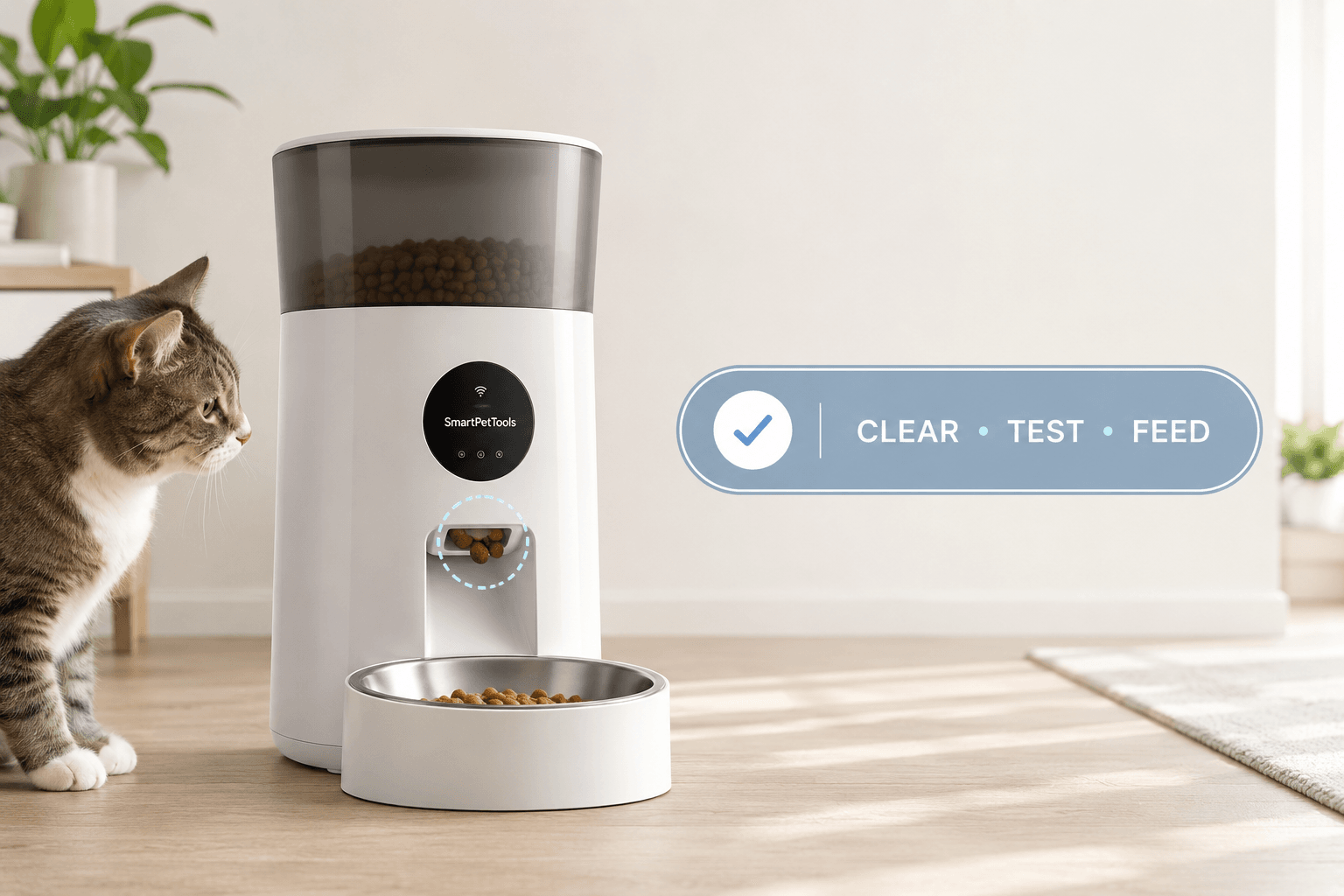
Yes, most pet feeder jammed problems can be fixed with a full food-path reset. Stop the schedule. Empty the tank. Remove stuck food. Clean removable parts. Dry everything fully. Replace stale or damp kibble. Check desiccant. Refill with compatible food. Run test portions. Calibrate the output. Restart the schedule only after the feeder dispenses consistently.
Then run a seven-day jam check. Record meal time, portion output, leftovers, kibble dust, moisture, odor, app alerts, manual feeding, and whether the pet pushes the feeder. If the jam repeats, the cause is usually kibble fit, moisture, cleaning, placement, or a damaged dispenser part.
For routine care, use pet feeder maintenance. A feeder should be cleaned, dried, calibrated, connected, powered, and tested before the owner depends on it during work, sleep, or travel.
Who Should Walk Away and Who Should Use This
Walk away from forcing incompatible kibble through the feeder. Also walk away from damp locations, random food mixing, old kibble topping, loose tank lids, and repeated manual feed taps when the dispenser is blocked. Those habits make a pet feeder jammed problem more likely to return.
Use this troubleshooting system if your automatic feeder skips meals, drops tiny portions, makes motor noise without food, leaves food stuck in the chute, shows jam alerts, or begins failing after a food change. It is especially useful for dry-food feeders, smart feeders, camera feeders, cat feeders, dog feeders, and weight-control routines.
For feeder selection, start with the smart feeders collection. Cat owners can compare the cat feeders collection, while dog owners should use the dog feeders collection when kibble size, bowl volume, and feeder stability need stronger control.
Mini FAQ
Why is my pet feeder jammed?
Your pet feeder jammed because food is likely stuck in the tank outlet, chute, rotor, or bowl opening. Common causes include oversized kibble, food dust, moisture, stale food, damp parts, poor cleaning, or a new food that does not flow well.
How do I fix an automatic pet feeder that is jammed?
Fix a jammed automatic pet feeder by turning it off, emptying the tank, clearing the food path, cleaning removable parts, drying everything fully, refilling with compatible kibble, and running several test portions.
Can kibble size cause a feeder jam?
Kibble size can cause a feeder jam when pieces are too large, flat, sticky, irregular, or dusty for the dispenser path. Check the feeder’s food-size guidance and recalibrate after changing food.
Can moisture make a pet feeder jam?
Moisture can make a pet feeder jam by causing kibble to soften, clump, stick, or swell inside the tank and chute. Keep the feeder dry, separate it from water splashes, and replace desiccant when needed.
Should I press manual feed when the feeder is jammed?
Do not repeatedly press manual feed when the feeder is jammed. Repeated attempts can pack food tighter or release extra portions later. Clear the blockage first, then test one small dispense.
How do I stop my pet feeder from jamming again?
Stop repeat jams by using compatible kibble, emptying old food before refilling, cleaning and drying the chute, replacing desiccant, keeping the feeder level and dry, and calibrating portions after maintenance.
The best jam fix is not force. It is food-path control. A pet feeder jammed problem becomes manageable when the owner clears the chute, controls moisture, tests kibble fit, measures output, and keeps manual feeding separate from panic. That is how an automatic feeder stays reliable instead of becoming another source of feeding uncertainty.