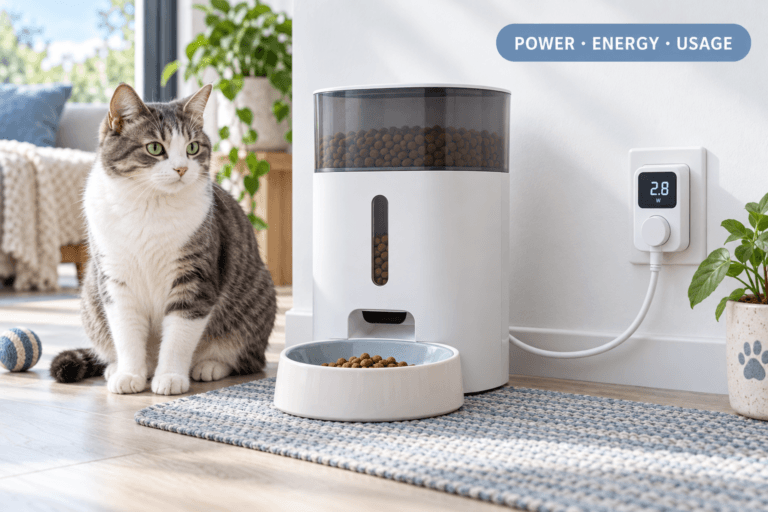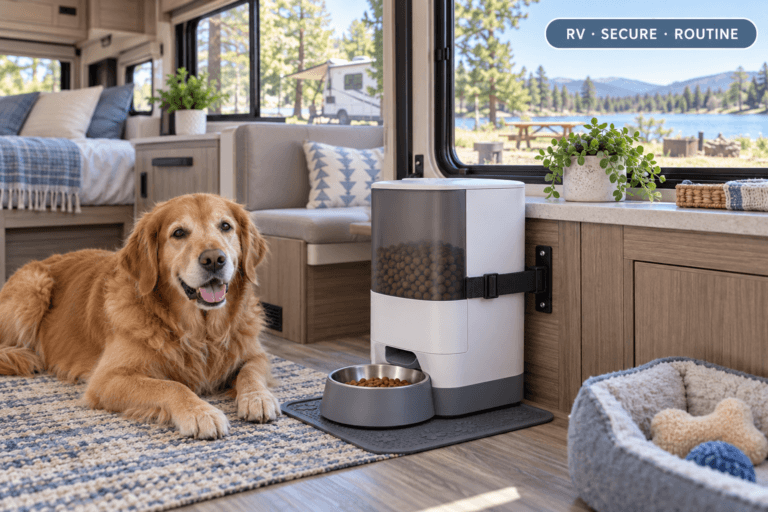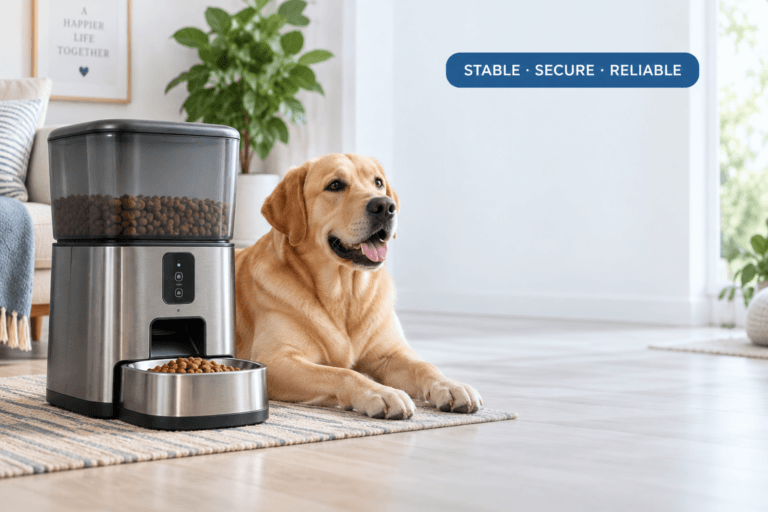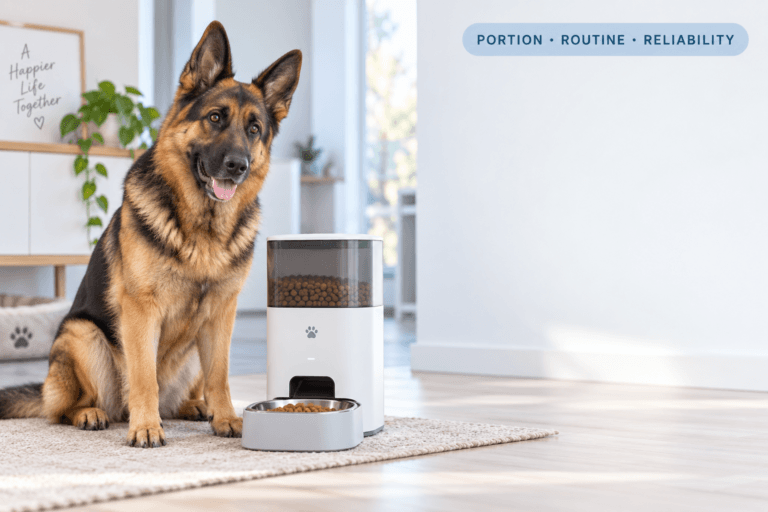

App controlled pet feeder benefits are easy to exaggerate if the discussion stays at the feature level. The real value is not that a phone can drop kibble. The real value is that meal timing, portion control, remote checks, feeding logs, and owner consistency can become less dependent on memory, sleep, work hours, traffic, or a cat yelling at 6 a.m.
For owners who want a practical daily system, a smart automatic pet feeder with app control can support scheduled dry-food meals without turning every feeding decision into a manual bowl refill. The strongest app controlled pet feeder benefits appear when the feeder is cleaned, calibrated, connected, and used with a clear feeding schedule.
Direct Answer: App Controlled Pet Feeder Benefits
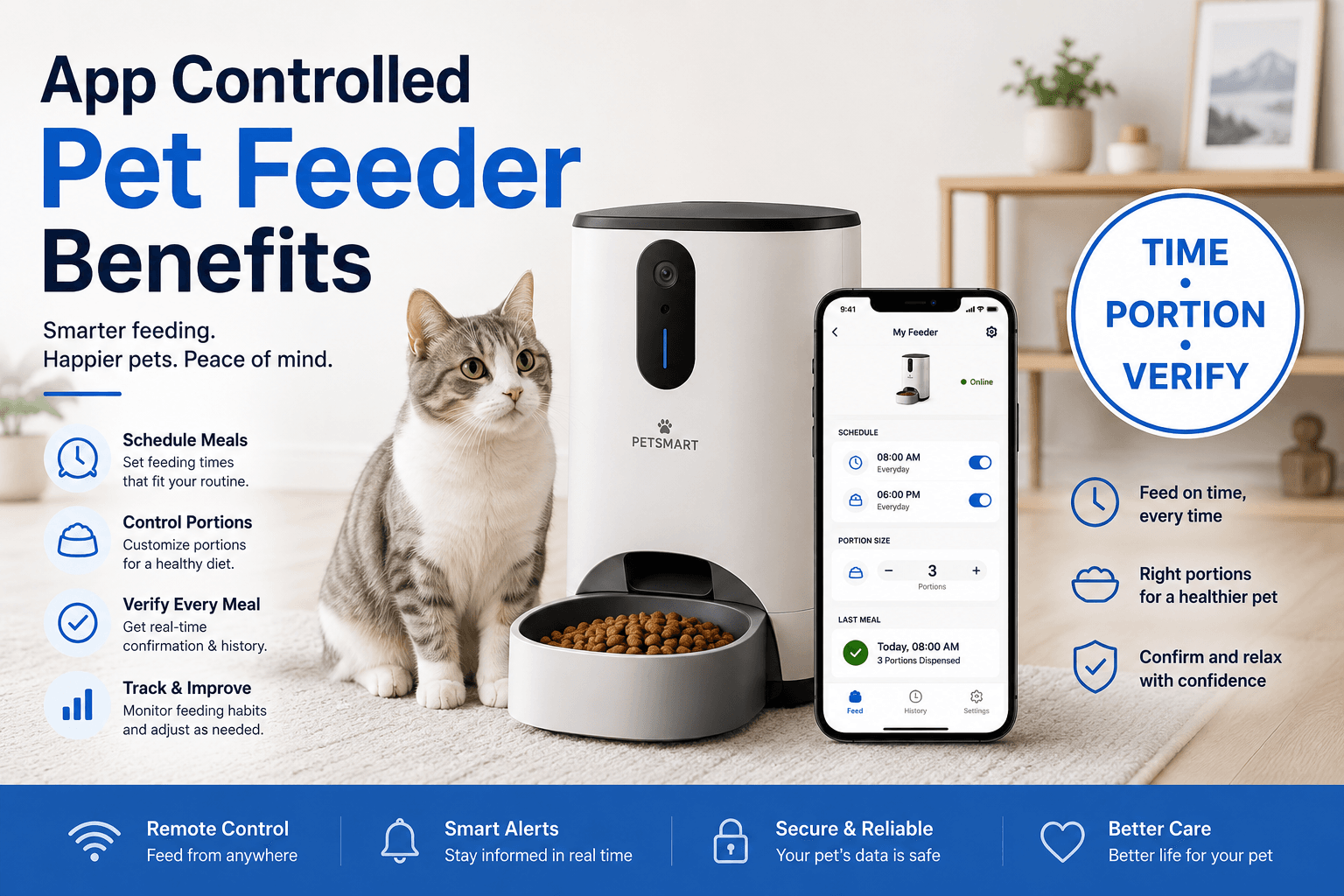
App controlled pet feeder benefits include scheduled feeding, portion consistency, remote meal checks, easier routine management, fewer early-morning wakeups, better support for shift workers, feeding logs, camera verification on some models, and faster alerts when the feeder is offline or needs attention. The best benefit is routine control: the pet receives measured meals at planned times without depending only on the owner’s immediate availability.
An app-controlled feeder is not automatically better for every household. It is useful when the owner has a real routine problem: missed meals, irregular work hours, travel delays, early begging, weight control, multi-person feeding confusion, or uncertainty about whether food was delivered. The main app controlled pet feeder benefits come from solving those problems, not from adding technology for its own sake.
Why This Happens
Pet feeding fails most often because human routines are inconsistent. Owners sleep late, work shifts, travel, attend meetings, forget who fed the pet, give extra food out of guilt, or respond to begging instead of following the measured daily plan. A basic bowl cannot correct those habits.
The AVMA’s pet nutrition guidance treats feeding as part of routine pet care. That matters because feeding is not only about what food goes into the bowl. Timing, amount, access, and owner behavior all affect the final routine.
App controlled pet feeder benefits matter because the app adds a management layer. The owner can set meal times, adjust portions, check schedule status, and sometimes verify meals remotely. This is useful when the feeding problem is not the food brand, but the household system around the food.
What To Do First
Start with the feeding goal. Do not buy an app-controlled feeder just because it looks modern. Decide whether the goal is early-morning feeding, weight control, shift-work support, remote meal checks, travel backup, portion consistency, multi-pet monitoring, or reducing manual feeding mistakes.
A practical app feeder setup needs five checks: correct schedule, measured portions, stable WiFi, clean food path, and backup plan. Without these, the app can create false confidence. The owner may see a polished interface while the feeder is dirty, offline, incorrectly calibrated, or dispensing at the wrong time.
Use how to use a smart pet feeder before judging the app controlled pet feeder benefits. Setup quality decides whether the benefits become real or stay theoretical.
The Feeding Loop Behind the Benefit
The old feeding loop is simple: pet asks, owner feeds, pet asks earlier tomorrow. This is common with cats that wake owners before breakfast, dogs that crowd the bowl before dinner, and pets that learn which household member gives in fastest.
An app-controlled feeder can break that loop by separating the owner from the food moment. The pet learns that meals come from the schedule, not from meowing, barking, pawing, or staring at the owner.
This is one of the most practical app controlled pet feeder benefits. The feeder becomes the consistent meal trigger. The owner becomes the planner, not the direct target of every food demand.
The Emotional Trigger Owners Miss
The emotional trigger is guilt. Owners feed extra because they were late, busy, tired, traveling, or unsure whether the pet ate enough. An app can reduce guilt only when it shows useful information and the owner respects the schedule.
The app can also make guilt easier to act on. If the owner sees the pet near the feeder and sends a manual portion every time, the app becomes a remote overfeeding tool.
For timing discipline, use scientific pet feeding schedule. The strongest app controlled pet feeder benefits come when the schedule is planned before the manual feed button is used.
The Addiction Mechanism
The addiction mechanism is button-based reward. App control makes food delivery fast. If the owner taps manual feed whenever the pet appears on camera, sends a notification, or waits near the bowl, the pet learns that feeder-area behavior can produce extra food.
This weakens portion control. The pet no longer follows the schedule. The pet starts performing near the feeder, and the owner starts interpreting that performance as hunger.
A controlled routine keeps the app as a planning tool. Manual feeding should be measured, rare, and logged. That keeps app controlled pet feeder benefits tied to routine stability instead of turning the app into a snack button.
Benefit 1: Scheduled Meals Without Owner Availability
The clearest benefit is meal timing. App-controlled feeders allow owners to schedule meals before work, during meetings, overnight, or while away for short periods. This is useful when pets need stable feeding but the owner’s day is not stable.
Scheduled meals are especially helpful for early-morning cats. If breakfast comes from the feeder at a set time, the owner is no longer the direct food trigger. Over time, this can reduce the pet’s habit of waking the owner for breakfast.
For this use case, see timed cat feeder for early morning. Among all app controlled pet feeder benefits, fewer sleep-disrupting food demands is one of the most noticeable for cat owners.
Benefit 2: Portion Control With Less Guesswork
Portion control is where app feeding can become more serious. The owner can divide the day’s food into measured meals instead of relying on random scoops. This helps reduce overfeeding, especially in homes where several people may feed the same pet.
Portions still need testing. The app’s portion label does not always equal a precise gram amount. Kibble size, density, shape, and chute design affect real output.
Use pet feeder calibration. The best app controlled pet feeder benefits depend on measured food output, not only app settings.
Benefit 3: Better Support for Shift Workers
Shift workers often struggle with feeding consistency. A pet may need breakfast at a normal time even when the owner sleeps after a night shift. A dog may need dinner before the owner gets home. A cat may begin begging whenever the owner’s schedule changes.
An app-controlled feeder helps by making the meal schedule independent from the owner’s work schedule. The owner can set meals based on the pet’s routine rather than the human shift calendar.
Use automatic feeder for shift workers. This is one of the strongest app controlled pet feeder benefits for owners whose working hours do not match a normal feeding routine.
Benefit 4: Remote Checks and Feeding Logs
Remote checks reduce uncertainty. The owner can open the app and see whether the feeder is connected, whether the schedule exists, and in some systems whether a meal was triggered. This is useful during work, travel delays, or long days away from home.
Feeding logs are not perfect proof that the pet ate. They usually show that the feeder performed an action or recorded an event. The bowl still matters. Camera verification can help when actual eating must be confirmed.
A smart WiFi pet feeder with camera adds visual confirmation when the owner needs more than a log. The key app controlled pet feeder benefits are strongest when app data is combined with practical bowl verification.
Benefit 5: Camera Verification on Advanced Models
Camera feeders help owners see whether food reached the bowl and whether the right pet ate it. This matters in multi-pet homes, appetite concerns, travel checks, and weight-control routines.
The risk is emotional overfeeding. Seeing the pet on camera can make owners feel pressured to send food. Camera access should support verification, not create constant manual feeding.
Use WiFi pet feeder with camera. Camera-based app controlled pet feeder benefits are real when the camera helps the owner make better decisions, not more frequent feeding decisions.
Benefit 6: Fewer Multi-Person Feeding Mistakes
In busy homes, one person may feed the pet without telling another person. The second person feeds again. The pet receives two dinners. This is common in families, roommate homes, and pet sitter situations.
An app-controlled feeder can reduce that confusion by centralizing the schedule. When everyone follows the feeder plan, meals become less dependent on memory and more tied to the app routine.
The rule is still important: too many people with full app control can create new problems. Limit who can change portions and schedules. A household should use the app as a source of truth, not as a shared treat button.
Benefit 7: Weight Management Support
App-controlled feeding can support weight management by splitting meals, limiting random refills, and reducing owner response to begging. A pet on a weight-control plan needs a measurable daily total, not open access to food.
The AVMA’s healthy pet weight guidance explains why body condition matters. For feeder owners, the practical lesson is direct: the app should help control portions, not hide extra manual feeding.
Use automatic feeder for weight loss. Weight-related app controlled pet feeder benefits only work when manual feeding is limited and portions are calibrated.
Benefit 8: Faster Response to Offline or Power Problems
A smart feeder can alert the owner when something is wrong, depending on the model and app. Offline warnings, low food reminders, power issues, or schedule errors can help the owner respond before the next meal is affected.
This benefit works only when the owner knows how to respond. An offline alert does not automatically mean a missed meal. Some feeders continue stored schedules without internet. Others need connection for full control.
Use smart pet feeder offline and pet feeder WiFi connection. Strong app controlled pet feeder benefits include better alerts, but alerts should trigger verification before manual feeding.
Security and Privacy Still Matter
An app-controlled feeder is a connected device. It may use WiFi, account login, cloud services, notifications, shared access, firmware updates, and sometimes a camera. That means security is part of the feeding system.
The FTC’s guidance on securing internet-connected devices at home recommends keeping connected devices and apps updated and using available security features. For a pet feeder, this protects both privacy and meal reliability.
Use smart device security. The best app controlled pet feeder benefits depend on controlled app access, stable accounts, and updated devices.
Cleaning and Maintenance Still Decide Reliability
App control does not clean the feeder. Kibble dust, oils, crumbs, moisture, stale food, and pet saliva still build up in the bowl, tank, tray, chute, and floor area. A dirty smart feeder can be connected and still unreliable.
The FDA’s tips for safe handling pet food and treats emphasize washing hands, bowls, utensils, and food-contact surfaces. A feeder that stores and dispenses pet food should be treated as a food-contact device.
Use clean smart pet feeder and pet feeder maintenance. Routine cleaning is what turns app controlled pet feeder benefits into long-term reliability.
Common Failure Pattern
The most common failure pattern is buying an app feeder and continuing old habits. The schedule is programmed, but the owner still gives extra food when the pet begs. The app shows meals, but no one calibrates portions. The feeder has remote control, but the WiFi is weak. The tank is full, but the chute is dirty.
The second failure is treating manual feed as harmless. One extra tap looks small, but repeated manual feeding can destroy the daily food total. This is especially risky in weight-control routines.
The third failure is ignoring backup planning. App control depends on power, WiFi, account access, and food supply. For power and travel coverage, use emergency backup pet feeder.
Real-World Impact
The real-world impact of strong app controlled pet feeder benefits is calmer feeding. Meals happen on schedule. The pet stops negotiating every bowl refill. The owner sees the routine more clearly. Work, sleep, and short absences become easier to manage.
The impact of weak app habits is different: extra portions, app anxiety, missed setup checks, offline panic, and feeder distrust. Technology does not remove responsibility. It changes where responsibility sits.
A 2L smart pet feeder for regular feeding is most useful when the owner uses app control for schedule discipline, not for constant overrides.
Can This Be Fixed?
Yes, weak app-feeding routines can be fixed with a full setup reset. Clean the feeder. Refill with fresh dry food. Calibrate portions. Confirm WiFi. Check app login. Set meal times. Test one dispense. Review manual feed history. Write a backup rule for offline or power problems.
Run a seven-day app-feeder check. Record scheduled meals, manual feeds, bowl leftovers, pet begging, app alerts, WiFi drops, cleaning time, and actual food output. If manual feeding appears often, the problem is not the app. The problem is owner override behavior.
For product selection, start with the smart feeders collection. Choose based on schedule needs, portion control, cleaning access, WiFi reliability, backup power, and whether camera verification is actually needed.
Who Should Walk Away and Who Should Use This
Walk away from app-controlled feeding if the home has unstable WiFi, no interest in cleaning the feeder, no willingness to calibrate portions, or a habit of pressing manual feed whenever the pet begs. A smart feeder will not fix inconsistent owner behavior by itself.
Use an app-controlled feeder if the household needs scheduled meals, portion control, remote checks, early-morning feeding, shift-work support, travel backup, weight management, or clearer feeding records. These are the real app controlled pet feeder benefits.
Cat owners can compare the cat feeders collection for smaller measured meals and quiet feeding. Dog owners can use the dog feeders collection when bowl size, feeder stability, and food volume need stronger control.
Mini FAQ
What are the main app controlled pet feeder benefits?
The main app controlled pet feeder benefits are scheduled meals, portion control, remote checks, feeding logs, fewer missed meals, fewer early-morning wakeups, and better routine consistency. Some models also add camera verification and alerts.
Is an app controlled pet feeder better than a basic timer?
An app controlled pet feeder is better when the owner needs remote checks, schedule changes, alerts, or feeding logs. A basic timer can be better when the routine is simple and the owner wants fewer connection requirements.
Can an app controlled feeder help with weight control?
An app controlled feeder can help with weight control when portions are calibrated and manual feeding is limited. It can hurt weight control if the owner sends extra food through the app too often.
Do app controlled feeders work without WiFi?
Some app controlled feeders keep stored schedules during WiFi loss, while others lose remote control or full function. Test offline behavior before relying on the feeder during work, sleep, or travel.
Are app controlled feeders safe for pets?
App controlled feeders are safer when they are cleaned, calibrated, placed correctly, secured with strong app access, and supported by a backup feeding rule. The device should not be treated as self-maintaining.
What is the biggest mistake with app controlled feeders?
The biggest mistake is using the manual feed button too often. If every app check becomes a snack, the feeder stops supporting portion control and becomes a remote overfeeding tool.
The best app feeder is not the one with the most dramatic feature list. It is the one that makes daily feeding calmer, more measurable, and less emotional. When timing, portions, cleaning, WiFi, and backup rules are controlled, app controlled pet feeder benefits become practical routine improvements instead of marketing claims.