
A digital timed pet feeder comparison should not start with the biggest food tank or the most attractive app screen. The real comparison is simpler: which feeder gives the right amount of food at the right time, stays clean, keeps working during normal household disruptions, and does not create overfeeding, missed meals, or owner panic.
For owners who want a practical daily system, a 2L smart pet feeder for regular feeding fits many dry-food routines because it focuses on scheduled meals, manageable capacity, and controlled portions. A digital timed pet feeder comparison should always judge the feeder by routine reliability, not only feature count.
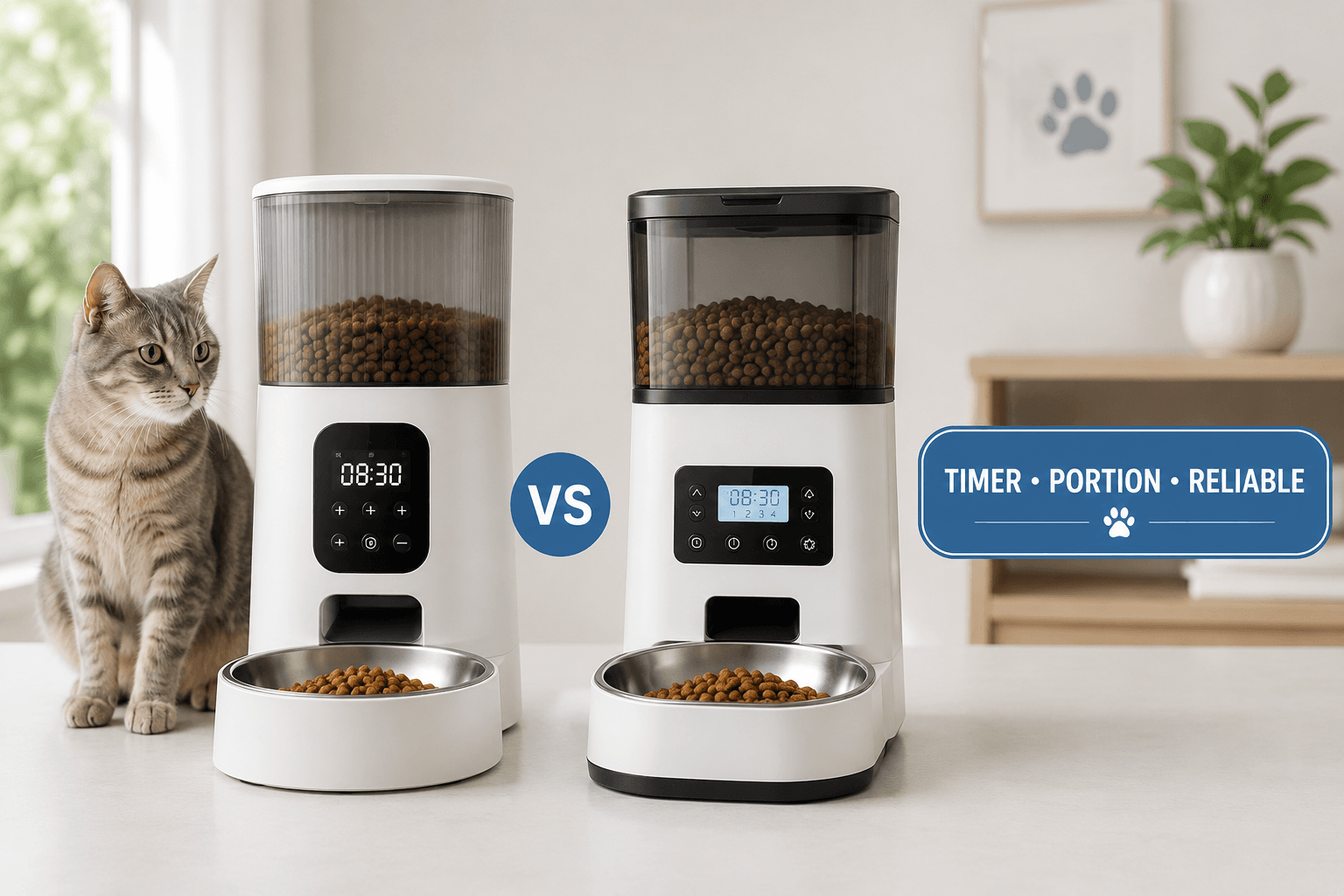
Direct Answer: Digital Timed Pet Feeder Comparison
A digital timed pet feeder comparison should compare timer accuracy, portion control, food compatibility, power backup, cleaning design, app reliability, offline behavior, camera need, bowl comfort, and maintenance effort. The best feeder is not automatically the most advanced one. It is the feeder that matches the pet’s food type, meal schedule, eating behavior, and the owner’s real ability to clean, refill, test, and monitor it.
Basic digital timed feeders work well for simple schedules. Smart WiFi feeders are better for remote control and app changes. Camera feeders help verify whether the pet actually ate. Battery-supported feeders reduce outage risk. Slow-feed models help pets that inhale food. A complete digital timed pet feeder comparison should separate these use cases instead of ranking every feeder as if every household has the same problem.
Why This Happens
Pet owners compare feeders because feeding problems look similar from the outside. The cat wakes the owner at 5 a.m. The dog eats too fast. A shift worker misses meal timing. A pet gains weight. A multi-pet home has food stealing. The owner wants one product to fix the whole routine.
The AVMA’s pet nutrition guidance treats feeding as part of overall pet care, not only a bowl-filling habit. That matters because timed feeders are useful only when they support the right food amount, body condition, and daily routine.
A digital timed pet feeder comparison becomes weak when it compares features without connecting them to behavior. A camera is useful if the owner needs meal verification. It is unnecessary if the owner only needs breakfast delivered on time. A large tank is useful for some schedules, but risky when food sits too long or the owner stops cleaning the feeder.
What To Do First
Start by defining the feeding problem. Do not begin with product photos. Write down the pet’s meal times, food type, daily food amount, eating speed, body condition goal, owner schedule, power reliability, WiFi strength, and whether someone needs remote verification.
A practical digital timed pet feeder comparison should answer five questions: Does the feeder deliver the right meal time? Does it deliver the right amount? Does the pet eat comfortably from it? Can the owner clean it properly? Does it keep working when power, WiFi, or routine changes occur?
Use scientific pet feeding schedule before choosing a feeder. The schedule should come first. The feeder should serve the schedule.
The Comparison Loop Behind Bad Buying Decisions
The comparison loop starts when the owner sees too many feeder options. One has a camera. One has app control. One has a large tank. One has battery backup. One has a slow-feed mode. The owner buys the feature-rich option without checking whether it solves the real problem.
Then the feeder arrives, but the routine still fails. The portions are not calibrated. The WiFi drops. The bowl is hard to clean. The pet is scared of the motor. The owner starts feeding manually again. The product was not always wrong. The comparison criteria were wrong.
A better digital timed pet feeder comparison starts with the failure point. If the problem is missed meal timing, compare timer reliability. If the problem is weight drift, compare calibration and portion control. If the problem is uncertainty while away, compare camera and app verification. If the problem is power outage, compare battery backup.
The Emotional Trigger Owners Miss
The emotional trigger is control anxiety. Owners want to feel that meals are handled, especially when they work long hours, travel, sleep through early demands, or manage a pet’s weight. A digital feeder looks like control, so the owner may stop checking the basic routine.
That is how automation becomes false confidence. A feeder can be digital and still dirty. It can be smart and still offline. It can be timed and still dispense the wrong amount. It can have a camera and still encourage overfeeding if and still dirty. It can be smart and still offline. It can be timed and still dispense the owner sends food every time the pet appears on screen.
A strong digital timed pet feeder comparison separates confidence from evidence. The feeder should be tested, cleaned, calibrated, and checked after setup.
The Addiction Mechanism
The addiction mechanism is button-based feeding. A digital feeder can make food too easy to deliver. If the owner presses manual feed whenever the pet begs, appears on camera, or stands near the bowl, the pet learns that feeder-area behavior produces food.
This weakens the entire purpose of timed feeding. The pet no longer follows the schedule. The pet learns to pressure the owner through the feeder.
A controlled digital timed pet feeder comparison should favor feeders that support measured schedules and make manual feeding deliberate. App control is useful only when the owner uses it with discipline.
Comparison Table: Which Feeder Type Fits Which Problem?
| Feeder Type | Best For | Main Weak Point | Best Owner Fit |
|---|---|---|---|
| Basic digital timed feeder | Simple scheduled meals | No remote verification | Owners with stable daily routines |
| Smart WiFi feeder | Remote schedule changes and app control | WiFi, app, and account dependence | Shift workers, travelers, busy homes |
| Camera feeder | Meal verification and multi-pet monitoring | Privacy, bandwidth, overfeeding risk | Owners who need proof that the pet ate |
| Battery backup feeder | Power-outage protection | Battery maintenance | Homes with unstable power or long workdays |
| Slow-feed timed feeder | Fast eaters and portion pacing | More cleaning and compatibility checks | Dogs or cats that inhale meals |
This digital timed pet feeder comparison shows why one feeder cannot be “best” for every home. The right choice depends on the routine problem and the owner’s maintenance habits.
Basic Digital Timed Feeder
A basic digital timed feeder uses a clock and programmable meal settings. It may not require WiFi. It can work well when the owner needs regular breakfast and dinner without remote features. The strength is simplicity. The weakness is limited visibility.
This feeder type is useful when the owner is home often enough to check the bowl, refill the tank, clean the station, and confirm the pet is eating. It is less useful when the owner needs remote alerts, camera checks, app schedule changes, or proof that a meal was eaten.
In a digital timed pet feeder comparison, a basic digital feeder should score well on simplicity and lower setup friction. It should not be expected to solve remote uncertainty.
Smart WiFi Feeder
A smart WiFi feeder adds app control, remote schedule edits, notifications, and sometimes feeding logs. This is useful for owners with changing schedules. It can also help households where multiple people need visibility into feeding status.
The weakness is connection dependence. Router changes, weak signal, wrong WiFi band, app logout, or firmware issues can create offline warnings. A smart feeder needs better setup discipline than a simple timer.
Use pet feeder WiFi connection and smart pet feeder offline when comparing WiFi models. A serious digital timed pet feeder comparison should check connection reliability before app features.
WiFi Feeder With Camera
A camera feeder helps owners see whether food dropped, whether the pet ate, whether another pet stole the meal, or whether the bowl is blocked. This is valuable for travel, shift work, multi-pet homes, and appetite monitoring.
The risk is emotional overfeeding. If the owner feeds manually every time the pet appears on camera, the camera becomes a remote snack trigger. Privacy also matters because the device may capture household activity beyond the bowl.
A smart WiFi pet feeder with camera fits owners who need visual confirmation. In a digital timed pet feeder comparison, camera value should be judged by verification need, not novelty.
Battery Backup Feeder
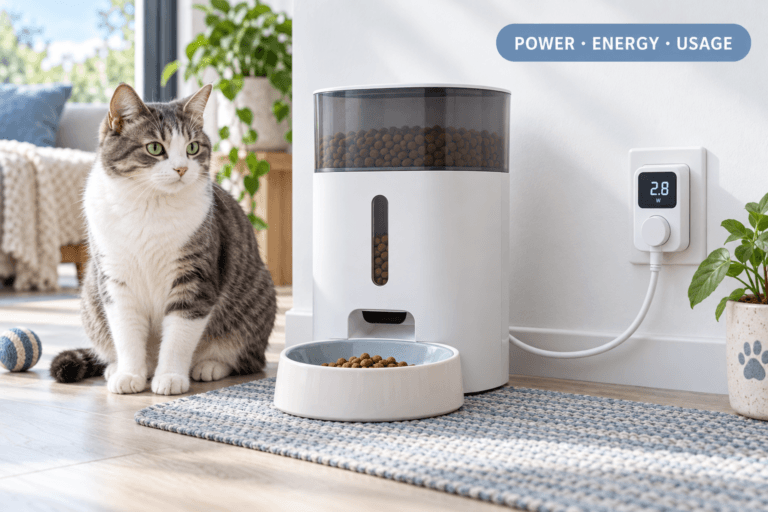
Battery backup matters when the feeder controls important meal windows and the owner is not always home. Power interruptions can make a feeder go offline, stop dispensing, or lose app connection depending on the model.
Battery backup does not replace maintenance. The owner still needs to check batteries, cable condition, outlet stability, food level, and schedule settings. Backup power is one layer, not the whole reliability system.
Use pet feeder with battery backup. A fair digital timed pet feeder comparison should give backup power extra weight for travelers, shift workers, senior pets, and homes with unstable electricity.
feeder with battery backup. A fair digital timed pet feeder comparison should giveSlow-Feed Timed Feeder
A slow-feed timed feeder helps pets that eat too quickly. Instead of dumping a full meal at once, it can divide portions or use bowl design to slow intake. This is useful for dogs that inhale food and cats that vomit after fast meals.
The weakness is cleaning and calibration. Slow-feed structures can trap crumbs, saliva, and residue. Portions still need weighing because a slow-feed feature does not guarantee the daily amount is correct.
For speed control, a timed slow feed automatic feeder can support a more controlled meal pace. In a digital timed pet feeder comparison, slow feeding should be chosen for eating behavior, not just because it looks more advanced.
Portion Control and Calibration
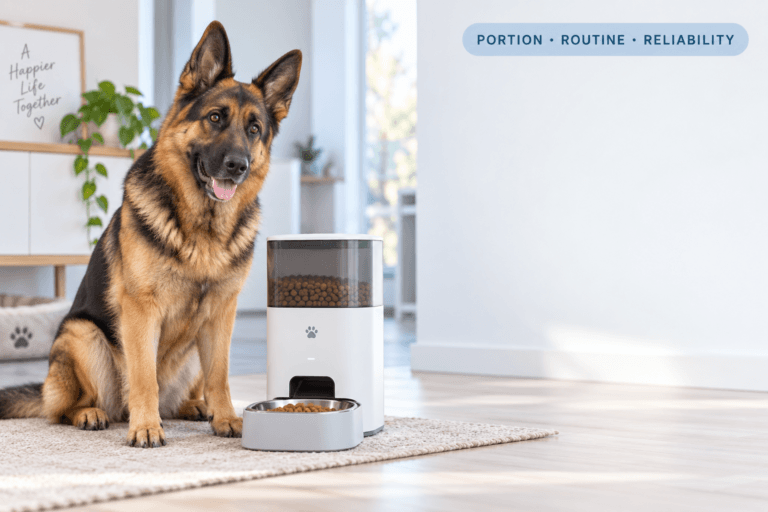
Portion control is the core of any timed feeder. If the feeder delivers the wrong amount, the schedule becomes less useful. Kibble size, shape, density, chute design, and tank loading all change output.
Use a kitchen scale. Run several test portions. Calculate the average. Build the feeding schedule from real grams, not the feeder’s portion label. This is especially important for weight-control pets.
Use pet feeder calibration. A complete digital timed pet feeder comparison should reject any feeder that cannot deliver consistent portions with the pet’s food.
Food Safety and Cleaning
A feeder that stores food must be cleaned like a food-contact device. Kibble leaves dust, oils, and crumbs. Pets add saliva and hair. Moisture can create clumps and odor. A large food tank is not useful if it hides stale food.
The FDA’s tips for safe handling pet food and treats emphasize washing hands, bowls, utensils, and food-contact surfaces. A digital feeder should follow the same hygiene logic because it stores and dispenses food repeatedly.
Use clean smart pet feeder and pet feeder maintenance. A strong digital timed pet feeder comparison should score easy cleaning as highly as app features.
Cat vs Dog Feeder Priorities
Cats often need smaller portions, quieter operation, whisker-friendly bowls, and careful placement away from litter boxes, noisy appliances, and dog traffic. A cat may reject a feeder if the motor sound, bowl shape, or location feels wrong.
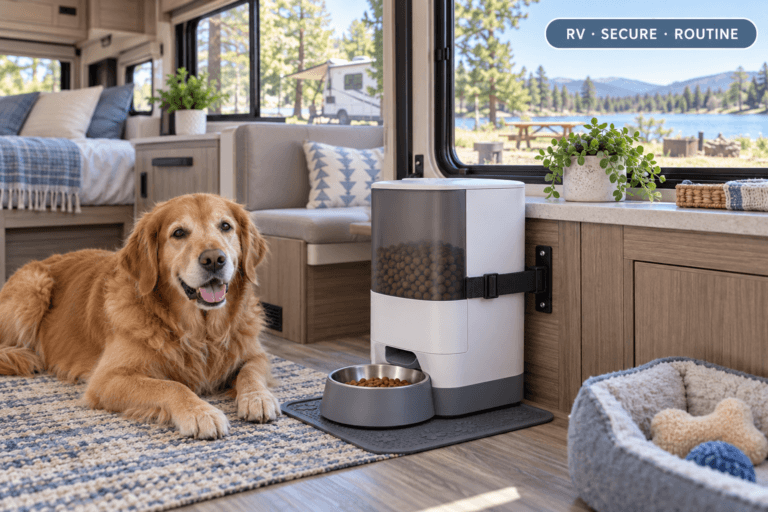
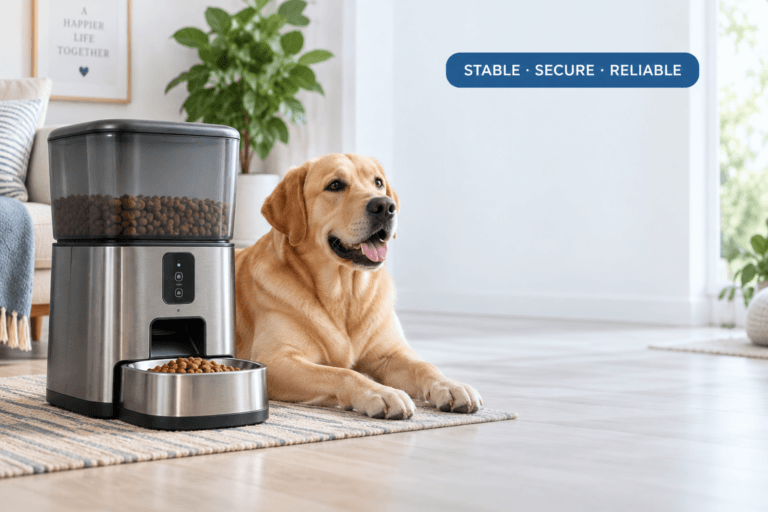
Dogs often need stronger feeder stability, larger bowl access, cable protection, and food-volume compatibility. Large dogs can push lightweight feeders, and fast eaters may need slow-feed support.
Cat owners can compare the cat feeders collection. Dog owners can compare the dog feeders collection. A useful digital timed pet feeder comparison should not treat cats and dogs as identical feeding problems.
Common Failure Pattern
The common failure pattern is buying by feature list. The feeder has WiFi, camera, large tank, voice recording, app control, and multiple meals. But the bowl is hard to clean, the kibble jams, the WiFi drops, and the owner never calibrates portions.
The second failure is ignoring maintenance. A timed feeder can run correctly and still become dirty, stale, or inaccurate. Automation does not remove cleaning work.
The third failure is choosing too much capacity. A large tank looks convenient, but food that sits too long can become stale, dusty, or exposed to moisture. In a digital timed pet feeder comparison, tank size should match cleaning rhythm and food freshness, not owner laziness.
Real-World Impact
The real-world impact of the right feeder is routine stability. Meals arrive on time. Portions stay measured. The owner stops reacting to begging. The pet learns a predictable schedule. Workdays, sleep, and short trips become easier to manage.
The impact of the wrong feeder is hidden chaos: wrong portions, skipped meals, double feeding, jams, stale food, app panic, and overfeeding from manual controls. The product may be digital, but the routine becomes less controlled.
A digital timed pet feeder comparison should therefore judge the whole system: feeder, food, pet behavior, owner schedule, cleaning ability, power reliability, and backup plan.
Can This Be Fixed?
Yes, a poor feeder choice can often be fixed by rebuilding the routine around the actual feeding problem. Clean the feeder. Calibrate portions. Check WiFi. Replace stale food. Verify power. Move the feeder to a better location. Test the pet’s comfort. Then decide whether the current feeder still fits.
Run a seven-day feeder comparison test at home. Record actual meal time, portion weight, leftovers, app alerts, jams, pet behavior, cleaning effort, and manual feeding. The best feeder is the one that performs under normal household conditions, not only in product descriptions.
For broader options, start with the smart feeders collection. Compare by timing, portion control, food capacity, cleaning access, camera need, WiFi reliability, backup power, and bowl fit.
Who Should Walk Away and Who Should Use This
Walk away from a feeder that cannot handle your pet’s kibble, cannot be cleaned easily, has no practical backup plan, or depends on WiFi when your home signal is weak. Also walk away from camera feeders if the camera will push you into unnecessary manual feeding.
Use a digital timed pet feeder comparison if you are choosing between a basic timer, smart feeder, camera feeder, battery backup feeder, or slow-feed model. It is especially useful for early-morning cats, fast-eating dogs, shift workers, travelers, weight-control pets, and multi-pet homes.
A smart feeder category comparison is strongest when the owner already knows the feeding goal. Choose the feeder that solves the real routine problem, not the one with the longest feature list.
Mini FAQ
What should I compare in a digital timed pet feeder?
Compare schedule accuracy, portion control, food compatibility, cleaning design, power backup, WiFi reliability, camera need, bowl comfort, and maintenance effort. The best feeder should fit the pet’s routine and the owner’s habits.
Is a smart feeder better than a basic timed feeder?
A smart feeder is better when the owner needs remote control, app changes, notifications, or camera verification. A basic timed feeder can be better when the routine is simple and the owner wants fewer connection issues.
Do I need a camera on a timed pet feeder?
You need a camera only when meal verification matters. It is useful for travel, shift work, multi-pet homes, appetite checks, and food-stealing problems. It is unnecessary if you only need simple scheduled meals.
How important is battery backup?
Battery backup is important when missed meals would be likely during power outages or when the owner is away for long periods. It protects the routine but does not replace cleaning, calibration, or food checks.
Can a timed feeder help with weight control?
A timed feeder can help with weight control when portions are calibrated and manual feeding is limited. It can hurt weight control if the owner keeps adding extra food outside the schedule.
What is the biggest mistake when comparing feeders?
The biggest mistake is comparing features instead of feeding problems. A good digital timed pet feeder comparison starts with the pet’s schedule, food amount, eating behavior, and the owner’s ability to maintain the device.
The best feeder comparison is not about finding the most complicated machine. It is about finding the most reliable routine. A digital timed pet feeder comparison should lead to one clear decision: the feeder that delivers measured food on time, stays clean, fits the pet, and still works when normal life gets messy.