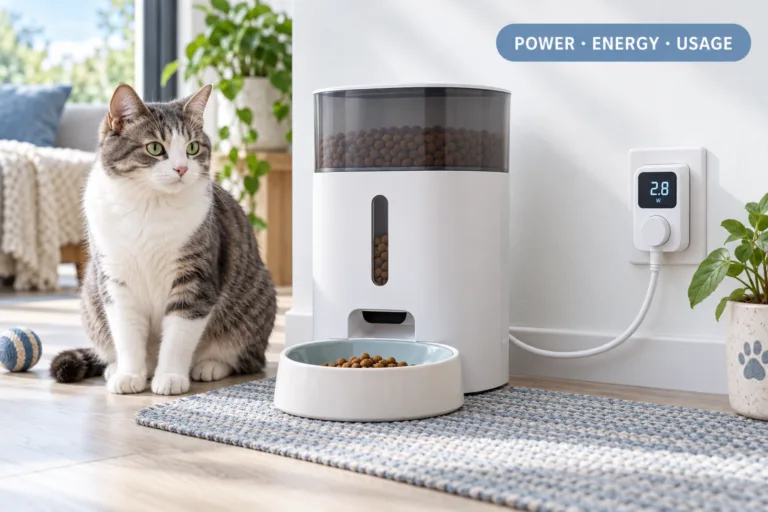
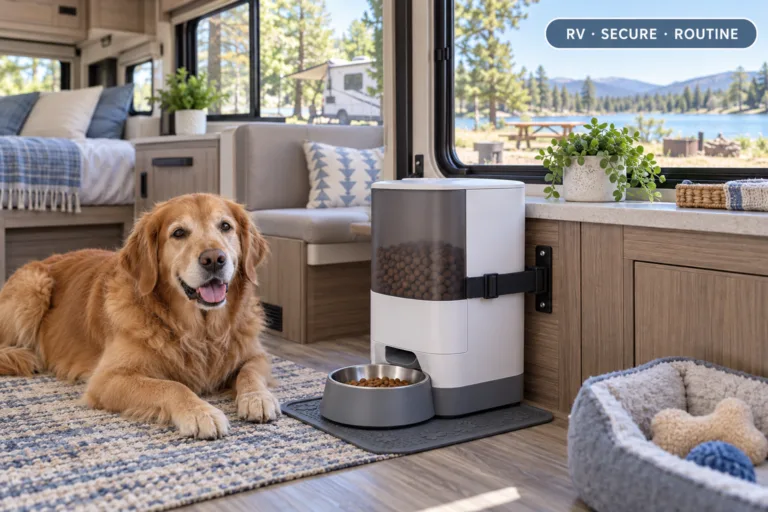
An outdoor smart pet feeder enclosure is not just a box around a feeder. It is a protection system for weather, moisture, pests, power cables, WiFi signal, food freshness, and feeding reliability. A smart feeder that works perfectly indoors can fail quickly outside if rain, humidity, ants, rodents, sun exposure, unstable flooring, or weak signal reach the feeding station.
For outdoor or semi-outdoor feeding routines, a smart automatic pet feeder with app control should only be used where the feeder is protected from direct weather and installed according to its intended use. The outdoor smart pet feeder enclosure adds a protective layer, but it does not turn every indoor device into a fully outdoor-rated machine.
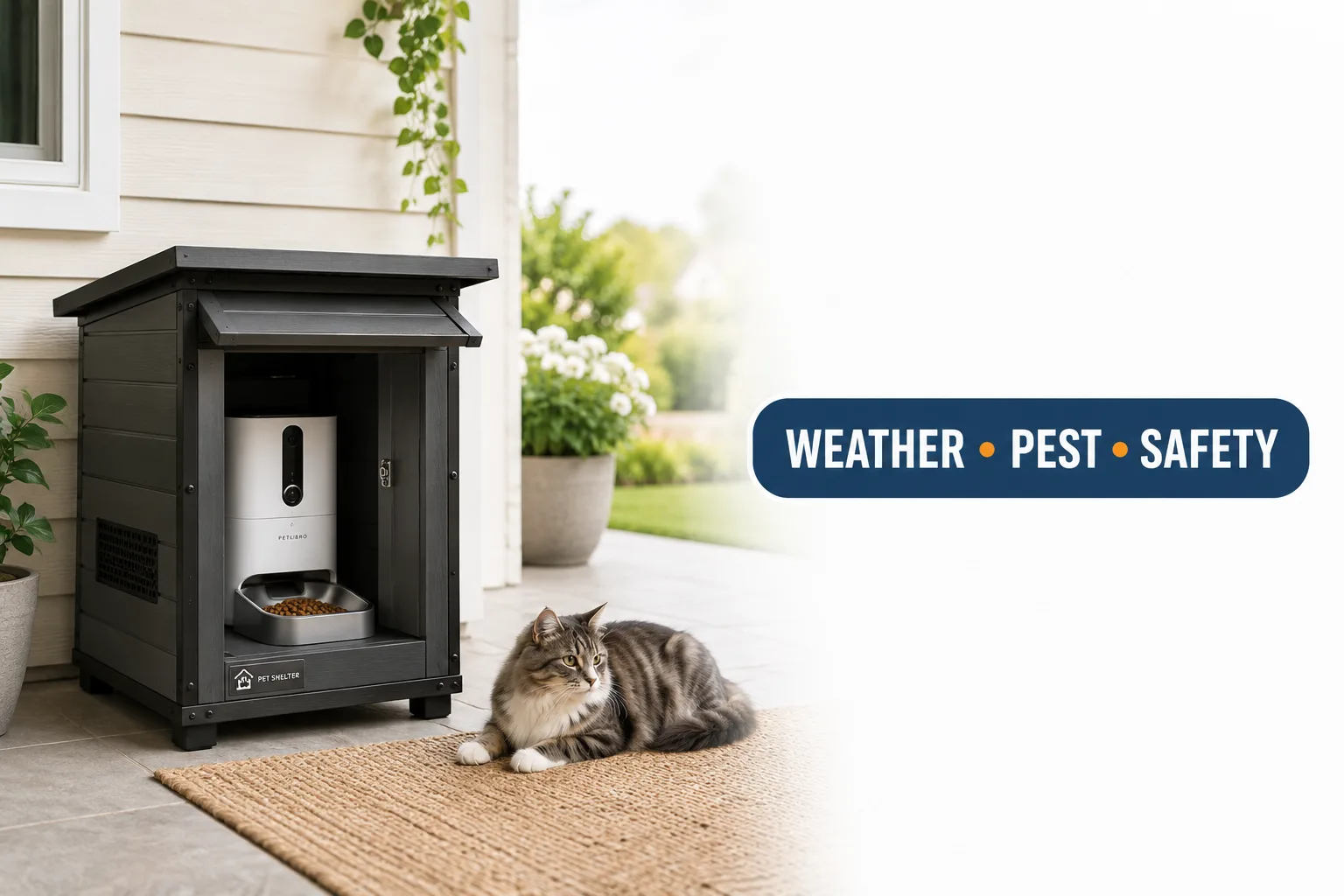
Direct Answer: Outdoor Smart Pet Feeder Enclosure
An outdoor smart pet feeder enclosure is a covered, stable, ventilated, pest-resistant, and easy-clean housing that protects a smart feeder from rain, sun, moisture, insects, wildlife, cable damage, and poor placement while keeping food access safe for the pet. The best enclosure shields the feeder without trapping heat, blocking WiFi, hiding food residue, or making the power setup unsafe.
A strong outdoor smart pet feeder enclosure must solve seven problems: weather exposure, food moisture, ants and pests, feeder stability, cable safety, WiFi connection, and cleaning access. If the enclosure only blocks rain but traps humidity or hides spilled kibble, it creates a different failure point.
Why This Happens
Outdoor feeding is harder because the environment changes constantly. Rain, dew, humidity, insects, heat, wind, dust, wildlife, and temperature swings affect dry food faster than indoor conditions. A feeder tank that stays clean in the kitchen can collect moisture and odor when placed on a patio, porch, garage edge, catio, balcony, or kennel area.
The FDA’s tips for safe handling pet food and treats emphasize clean handling, safe storage, and clean bowls or utensils. An outdoor feeder enclosure must follow the same logic because it stores food in a more exposed environment.
An outdoor smart pet feeder enclosure also changes how the device behaves. The enclosure may reduce airflow, weaken WiFi, make cables harder to inspect, hide ants, or make cleaning less convenient. A good enclosure protects the feeder while keeping the entire feeding station visible and maintainable.
What To Do First
Start by deciding whether the feeder location is truly outdoor or only semi-outdoor. A covered balcony, screened porch, garage corner, patio under a roof, catio, kennel, and open yard all create different risks. The more exposed the location is, the stricter the enclosure needs to be.
A practical outdoor smart pet feeder enclosure should be raised off wet ground, covered from direct rain, shaded from harsh sun, open enough for airflow, secure enough to resist pests, and easy enough to open for cleaning. It should not sit directly in soil, puddles, grass, mulch, or areas where water runs during storms.
Before building the enclosure, use outdoor automatic pet feeder. Outdoor feeding requires weather, pest, power, food, and routine planning before the feeder is placed outside.
The Feeding Loop Behind Outdoor Failures
The outdoor failure loop starts when the owner moves a smart feeder outside for convenience. The device is placed under a small cover, the app works, and meals dispense for a few days. Then humidity enters the tank, ants find crumbs, WiFi drops, or the feeder shows a jam warning. The owner adds food manually and assumes the feeder is unreliable.
The real problem is usually not the smart feeder alone. It is the station. Outdoor conditions reached the food path, power cable, app connection, or bowl area. The owner protected one part of the system and left another part exposed.
A reliable outdoor smart pet feeder enclosure breaks the loop by protecting the whole routine. The food stays dry. The bowl stays visible. The cable is covered. The feeder remains level. The app connection is tested. The owner cleans before pests appear.
The Emotional Trigger Owners Miss
The emotional trigger is convenience pressure. Owners want outdoor feeding because it keeps food mess outside, supports pets with yard access, helps community-style feeding, or separates pets inside the home. That convenience can make an unsafe setup look acceptable.
Outdoor feeding needs more discipline than indoor feeding. A feeder outside is not automatically low-maintenance. It needs more inspection, stronger cleaning, better pest control, and stricter food storage.
Use pet feeder maintenance before trusting an outdoor smart pet feeder enclosure. Outdoor use increases the maintenance burden, not lowers it.
The Addiction Mechanism
The addiction mechanism is wildlife and pest reward. If food crumbs, odor, or spilled kibble stay outside, ants, rodents, birds, raccoons, and other animals can learn that the station provides food. Once that pattern starts, the enclosure becomes a target instead of a protection system.
The pet may also learn to guard the outdoor station if other animals approach it. Feeding then becomes a territory problem. The enclosure must reduce access for non-target animals and reduce food rewards around the station.
A good outdoor smart pet feeder enclosure does not simply hide food. It removes crumbs, limits scent escape, protects the tank, blocks easy pest access, and keeps the bowl area clean. For ant-specific problems, use ant proof pet feeder.
Weather Protection Rules
Weather protection starts with overhead cover. The enclosure should block direct rain, dripping roof edges, wind-blown spray, and standing water. A roof that only protects from vertical rain is not enough if wind pushes water into the feeder bowl or food outlet.
The enclosure should also manage sun. Direct sun can heat the feeder, warm stored kibble, fade plastics, and make the station uncomfortable. Shade is useful, but the enclosure should not become a closed hot box. Airflow matters.
An outdoor smart pet feeder enclosure should use weather protection without sealing the feeder in a damp chamber. Dry, shaded, ventilated, and raised is better than sealed, dark, and humid.
Moisture and Food Freshness
Moisture is the main enemy of dry-food feeders outside. Kibble can soften, clump, smell stale, attract pests, and jam inside the chute. Outdoor humidity can affect food even when rain never touches the feeder directly.
If the feeder uses a desiccant holder, inspect it more often outdoors. Replace the pack on schedule and sooner if clumping, odor, or indicator changes appear. Do not place random loose silica packets inside the food tank.
Use pet feeder desiccant replacement. A proper outdoor smart pet feeder enclosure keeps moisture away from the feeder, but the food tank still needs active dryness control.
Pest and Wildlife Control
Outdoor food scent attracts attention. Ants find crumbs. Rodents target stored food. Birds may scatter kibble. Larger wildlife can damage lightweight enclosures or knock feeders over. Pest control should be built into the station from the beginning.
The University of California IPM ant management guidance emphasizes sanitation and removing food sources as part of ant control. For feeder owners, that means the enclosure must make cleaning easy and should not hide crumbs under a base or mat.
A strong outdoor smart pet feeder enclosure uses tight construction, raised placement, clean surfaces, controlled food scent, and daily crumb removal. Do not rely only on sprays or repellents around a pet feeding station.
Power and Cable Safety
Power is more complicated outside. Moisture, extension cords, chewing, tripping, door gaps, and exposed plug joints can create risk. A smart feeder should not be powered through a sloppy outdoor cable path.
The Electrical Safety Foundation International’s extension cord safety tips warn against improper extension cord use, including misuse around water and treating extension cords as permanent wiring. For outdoor feeder setups, the safer path is a protected outlet, short safe cable route, dry connections, and inspection.
Use chew proof pet feeder cable and pet feeder with battery backup. An outdoor smart pet feeder enclosure should protect the feeder and the power path together.
WiFi Signal Inside an Enclosure
Enclosures can weaken WiFi if they use metal panels, thick walls, dense covers, or are placed far from the router. A feeder may connect indoors but fail after being placed inside an outdoor box. Signal testing must happen in the final enclosure location.
Test the feeder with the enclosure closed. Check app status, camera stream if available, manual dispense response, scheduled meal delivery, and offline recovery. If the feeder only works with the enclosure open, the design is not finished.
Use pet feeder WiFi connection and smart pet feeder offline. A strong outdoor smart pet feeder enclosure protects the device without blocking the connection it needs.
Camera Feeder Enclosure Rules
A camera feeder needs a clear bowl view. The enclosure should not block the camera angle, create glare, cast heavy shadows, or place the pet’s head outside the visible frame. If the owner cannot see the bowl, the camera feeder loses much of its value.
Lighting also matters. Outdoor shadows, night conditions, bright sun, and reflective enclosure surfaces can reduce video usefulness. Test the camera during the actual feeding times, not only during setup.
Use WiFi pet feeder with camera. An outdoor smart pet feeder enclosure for a camera model should protect weather and still let the owner verify the meal clearly.
Cleaning Access and Drainage
A feeder enclosure that is hard to open will not be cleaned often enough. Outdoor stations need easier cleaning, not harder cleaning. The owner should be able to remove the bowl, wipe the floor, inspect the chute, check for ants, replace desiccant, and clean under the feeder without dismantling the whole structure.
The enclosure floor should not trap water. If water enters, it needs a safe path out that does not send dirty water toward the feeder cable, food outlet, or pet standing area. Avoid absorbent mats that hold moisture and odor.
Use clean smart pet feeder. A outdoor smart pet feeder enclosure should make cleaning easier because outdoor conditions punish hidden residue quickly.
Feeder Jams Outside
Outdoor jams usually come from moisture, dust, insects, stale kibble, or food that does not flow well after humidity exposure. A jam outside can go unnoticed longer if the feeder is not checked daily.
After any outdoor jam, do not keep pressing manual feed. Stop the schedule if needed, empty the tank, clear the chute, clean and dry parts, replace damp food, check desiccant, and run test portions before trusting the next meal.
Use pet feeder jammed and pet feeder calibration. A reliable outdoor smart pet feeder enclosure reduces jams by controlling moisture and keeping the feeder level.
Common Failure Pattern
The most common failure pattern is using an enclosure that blocks rain but ignores humidity. The feeder stays visibly dry, but kibble clumps inside the tank. The owner blames the dispenser, while the real cause is trapped moisture.
The second failure is hiding the feeder too well. The enclosure looks neat, but ants, crumbs, cable damage, stale food, and bowl mess become harder to see. A feeder that cannot be inspected easily will not stay reliable.
The third failure is building a strong box with weak WiFi. The feeder is protected physically but disconnected digitally. An outdoor smart pet feeder enclosure must protect the routine, not only the object.
Real-World Impact
The real-world impact of a good outdoor enclosure is more stable feeding in exposed areas. The feeder stays drier, pests have fewer rewards, the cable is safer, the app remains useful, and the pet can eat from a cleaner station.
The impact of a weak enclosure is worse than leaving the feeder indoors. Food can spoil faster, pests can multiply, WiFi can fail, power can become unsafe, and owners can miss early warning signs because the feeder is hidden.
A smart WiFi pet feeder with camera can add verification, but the enclosure still has to protect food, power, signal, cleaning access, and pet comfort.
Can This Be Fixed?
Yes, weak outdoor feeder setups can be fixed with a full enclosure reset. Move the station out of direct rain. Raise it off wet ground. Add shade without blocking airflow. Protect the cable. Test WiFi with the enclosure closed. Clean the bowl area. Replace damp food. Add desiccant control. Check for ants and wildlife access.
Run a seven-day outdoor reliability check. Record weather, feeder status, WiFi connection, food clumping, ants, water entry, bowl cleanliness, pet access, cable condition, and whether the feeder dispenses correctly. If one problem repeats, change the enclosure design instead of adding more food.
For feeder selection, start with the smart feeders collection. Choose based on dry-food compatibility, removable parts, app stability, power plan, portion control, and whether the feeder can be protected properly in the intended location.
Who Should Walk Away and Who Should Use This
Walk away from open-yard smart feeder setups without roof cover, drainage, pest control, safe power, and daily inspection. Also walk away from sealed boxes that trap heat and humidity, metal enclosures that destroy WiFi, and cable routes that cross wet ground or pet traffic.
Use an outdoor smart pet feeder enclosure if the feeder is placed on a covered porch, balcony, catio, kennel area, garage edge, or protected patio where weather exposure can be controlled. It is most useful when the enclosure improves dryness, cleanliness, pest resistance, and routine verification.
Cat owners can compare the cat feeders collection for smaller measured meals in protected spaces. Dog owners can use the dog feeders collection when feeder stability, food volume, and enclosure space need stronger planning.
Mini FAQ
What is an outdoor smart pet feeder enclosure?
An outdoor smart pet feeder enclosure is a protective housing that shields a smart feeder from rain, sun, moisture, pests, cable damage, and unstable placement while keeping the food station accessible to the pet.
Can I put a smart pet feeder outside?
You can put a smart pet feeder outside only when the device is suitable for the location and protected from direct weather, moisture, pests, unsafe power conditions, and weak WiFi. Many feeders are designed primarily for indoor use.
Does an enclosure make a feeder waterproof?
An enclosure does not automatically make a feeder waterproof. It can reduce exposure, but the feeder still needs dry placement, protected power, ventilation, and inspection. Do not treat a protected indoor feeder as a fully outdoor-rated device.
How do I keep ants out of an outdoor feeder enclosure?
Keep ants out by removing crumbs, sealing stored food, raising the station, cleaning daily, controlling moisture, and blocking easy access paths. Do not rely on pest sprays near a pet feeding station as the main solution.
Will an enclosure block WiFi?
An enclosure can block or weaken WiFi if it uses metal, thick panels, dense materials, or sits far from the router. Test the feeder with the enclosure closed before relying on remote feeding.
What should I check every day?
Check food dryness, bowl cleanliness, ants, water entry, feeder power, WiFi status, cable condition, and whether the pet can access the bowl comfortably. Outdoor feeder stations need more frequent inspection than indoor stations.
The best outdoor setup is not a sealed box. It is a dry, shaded, ventilated, pest-resistant, power-safe, and easy-clean station. An outdoor smart pet feeder enclosure works when it protects the whole feeding routine: food, feeder, pet, power, signal, and owner verification.