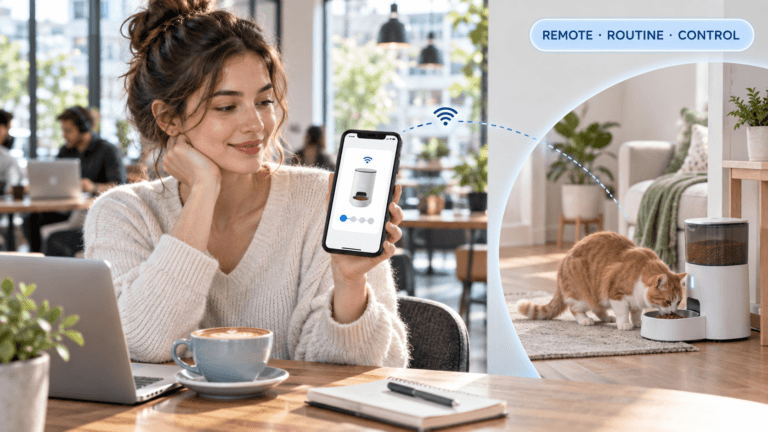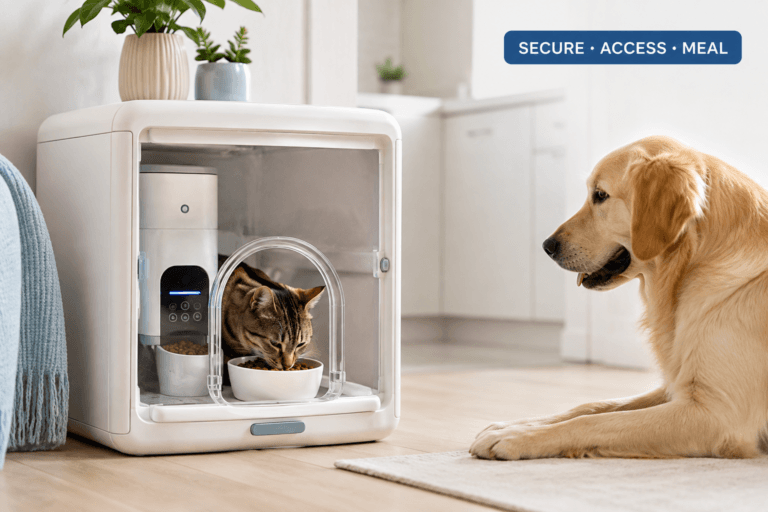

Battery operated vs plug in pet feeder is not a simple convenience debate; it is a reliability decision. A battery-powered feeder works without a wall outlet but requires battery monitoring. A plug-in feeder provides steady power but stops during an outage unless it includes a tested backup system. For unattended meals, the strongest setup is the one that matches the home’s outage risk, feeding schedule, and ability to check the device.
When comparing battery operated vs plug in pet feeder options, look beyond the power cable. Check whether the schedule remains stored during WiFi loss, whether the feeder switches automatically to backup power, whether portion delivery changes in battery mode, and how easily the owner can confirm that food actually reached the bowl.
A product such as a WiFi automatic feeder with button backup can suit households that want scheduled feeding with a manual fallback, but the exact backup behavior still needs to be confirmed in the product instructions.
Direct Answer: Battery Operated vs Plug In Pet Feeder
A plug-in pet feeder is better for stable daily use, while a battery-operated or dual-power feeder is better when outages, unstable outlets, or travel create a real interruption risk. A battery-only unit avoids dependence on a wall socket but introduces battery replacement and low-power risks. A plug-in unit avoids routine battery maintenance but needs backup power to continue dispensing during an outage. For most homes that cannot tolerate a missed meal, a dual-power feeder with automatic switchover is the strongest choice.
Why This Happens
Automatic feeders depend on two separate systems: the power source and the control system. Power allows the motor, display, sensor, and dispensing mechanism to operate. The control system stores meal times and portion settings. A feeder can have power but lose WiFi, or it can remain connected to WiFi while the motor has no electricity.
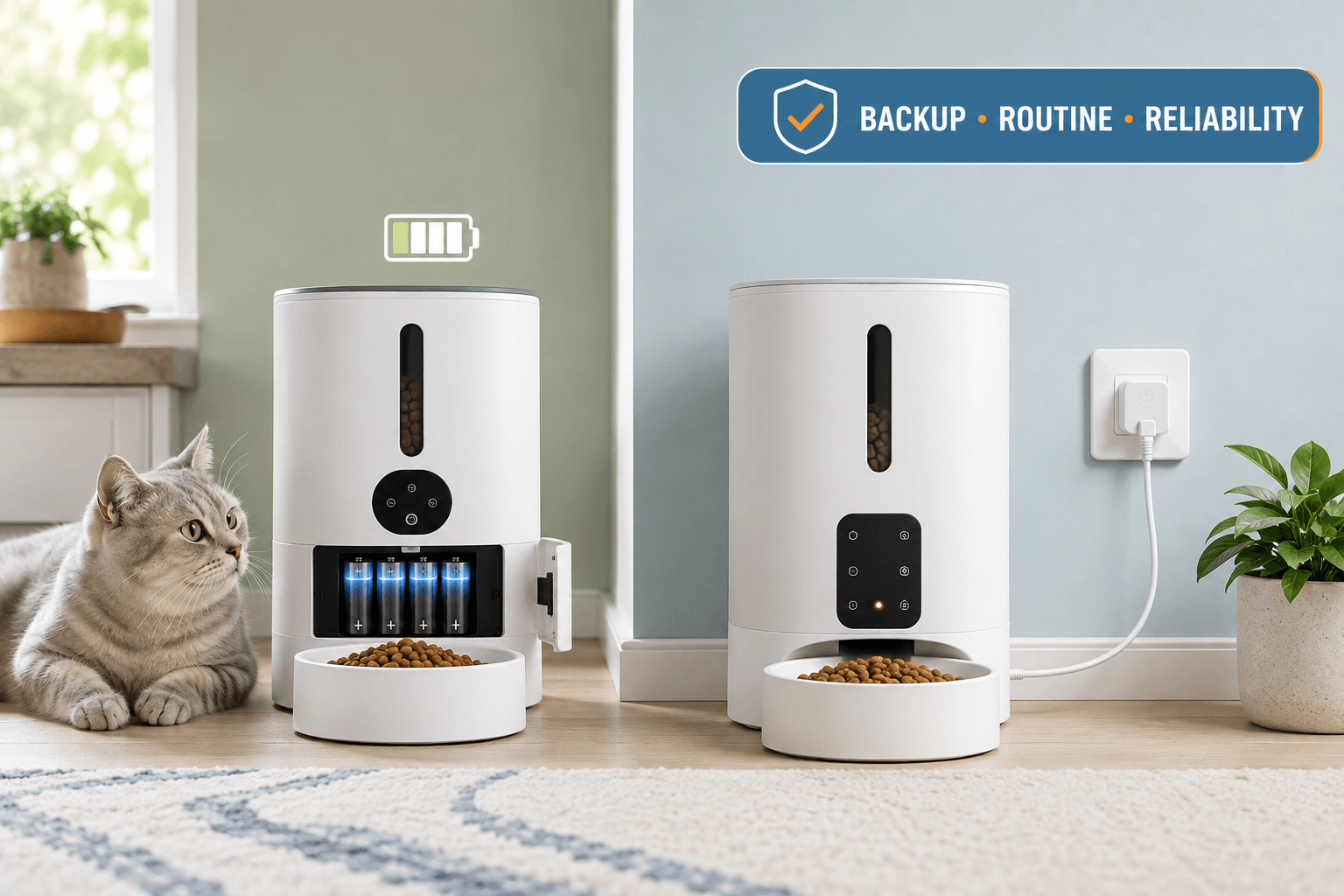
Battery-operated feeders draw energy from replaceable or rechargeable batteries. Their main advantage is independence from the wall outlet. Their main weakness is that battery condition is easy to overlook. A feeder can appear ready while the batteries are close to empty, especially when the device sits in a quiet room and nobody checks the display.
Plug-in feeders receive continuous power through an adapter. They are convenient for fixed locations and long-term schedules, but the adapter, outlet, and cable become part of the feeding system. A tripped breaker, loose connection, chewed cable, or water spill can interrupt feeding.
Dual-power models combine both approaches. PetSafe describes its FlexFeed as using an adapter with battery backup during power cuts, while Whisker states that its optional backup battery provides approximately 24 hours of operation for its Feeder-Robot. These figures apply to those specific products, not to every feeder. Read the exact manufacturer specifications before assuming a backup duration. The official PetSafe dual-power feeder information explains how one model handles power interruptions.
What To Do
1. Start with the home’s actual outage risk
If the home has rare, short outages and someone is usually present, a plug-in feeder can be sufficient. If outages are frequent, the property has unstable electricity, or the pet must receive food at a fixed time, choose a feeder with backup power or keep a tested manual backup.
2. Check whether battery backup is automatic
Some feeders switch to batteries automatically. Others require the owner to install batteries, press a button, or manually restart the device after power returns. Automatic switchover is more useful because an outage often happens when nobody is home.
Do not assume that a battery compartment means the feeder will continue the complete schedule during an outage. Some units reduce features, stop WiFi communication, or enter a lower-power mode. The pet feeder battery backup guide can help compare reserve power with normal operating power.
3. Test the feeder before trusting it
Unplug a plug-in feeder while the schedule is active and confirm whether the next meal dispenses. For a battery-only unit, install fresh batteries and run several manual portions. Check the bowl, not just the motor sound or app notification.
Repeat the test after reconnecting the adapter. The feeder should resume the correct schedule without resetting the clock or doubling the next serving. Record the result so the household knows what happens during a real outage.
4. Track battery condition
Use the battery type and replacement interval listed by the manufacturer. Replace batteries before a long trip, extreme weather event, or extended absence. Keep a spare set in a dry location, and remove old batteries when storing the feeder for a long period.
5. Protect the power cable
Keep adapters away from water bowls, litter areas, heaters, and reachable chewing points. Route the cord behind furniture or use a pet-safe cable cover. A plug-in feeder is only reliable when its entire power path remains intact.
6. Confirm offline behavior
WiFi is not the same as electricity. Ask whether the schedule is stored locally on the feeder and continues when the router is offline. The smart feeder offline guide can help owners test feeding behavior when the app cannot connect.
7. Keep a manual fallback
Store a measured portion in a clean container and write down the normal feeding schedule. A manual backup is useful when the feeder jams, the battery dies, the adapter fails, or the app reports an error. The emergency backup feeder guide can help build a more complete plan.
Micro Case: The Weekend Outage
A cat feeder is programmed for four meals per day and connected to a wall outlet. The owner leaves for the weekend, but a storm trips the circuit breaker after the first meal. The app shows the feeder as offline, yet there is no backup battery and nobody has a key. The missed meals were not caused by poor scheduling; they were caused by treating plug-in power as a complete reliability plan. A dual-power feeder, tested battery reserve, and a local check would have closed that gap.
The Feeding Loop Behind This Problem
The feeding loop begins when a feeder stops during a power interruption. The pet waits, the owner receives no clear alert, and a family member later adds a large manual meal. The pet then receives an inconsistent portion and learns that waiting beside the feeder or vocalizing can produce extra food.
Battery operated vs plug in pet feeder decisions affect this loop because the power source controls whether the expected routine continues. A battery-only model reduces wall-outlet dependence. A plug-in model reduces battery maintenance. A dual-power model reduces the chance that one failure breaks the schedule.
Keep the response consistent. Confirm what the feeder delivered, provide only the measured replacement amount, and restore the normal schedule. Do not compensate for a missed serving with several untracked meals.
The Emotional Trigger Owners Miss
Owners often choose a power source based on convenience, then assume the device is dependable because it worked during the first few days. That confidence becomes risky during vacations, overnight absences, and storms. The feeder looks automatic, so nobody checks the bowl or battery indicator.
The emotional pressure appears when the owner discovers an empty bowl. Guilt encourages an oversized refill or repeated changes to the schedule. The better response is procedural: check power, inspect the outlet and cable, confirm the food path, record the missed portion, and use the prepared backup plan.
The Addiction Mechanism
There is no clinical addiction involved in feeder power, but inconsistent delivery can create a strong reward dependency. If the feeder sometimes dispenses food and sometimes leads to a manual refill after loud begging, the pet keeps testing both the device and the owner.
This is intermittent reinforcement. The pet does not need to succeed every time for the behavior to continue. An outage followed by an oversized meal can strengthen begging, food guarding, and early-morning demands.
A stable routine weakens that pattern. Use a reliable power system, keep portions measured, and avoid turning every feeder failure into an unpredictable food bonus.
Real-World Impact
Power failure can create missed meals, double meals, spoiled food in specialized feeders, and uncertainty about actual intake. These errors matter more when the pet has a strict feeding schedule, receives medication with food, shares a bowl with another animal, or is on a weight-management plan.
A battery operated vs plug in pet feeder comparison should therefore include monitoring and maintenance, not just purchase price. Battery replacement, adapter replacement, outage protection, and physical checks all contribute to the real cost of reliability.
Use the pet feeder maintenance guide to inspect the bowl, hopper, cable, battery compartment, and dispensing mechanism. A clean feeder with a full battery can still fail if the food path is blocked.
For pets that cannot safely miss scheduled meals, prepare a human check-in plan. The ASPCA emergency care guidance reinforces the importance of immediate attention when an animal’s basic care is disrupted during an emergency.
Can This Be Fixed?
Yes, power-related feeder failures can be reduced through dual-power protection, regular battery checks, cable safety, offline testing, and a written backup plan. The important step is testing the complete system rather than trusting one feature.
Test the feeder with the hopper partly full and fully loaded. Test it with the router disconnected. Test the adapter unplugged. Test the battery reserve after the feeder has already completed several portions. These checks reveal whether the device continues the schedule under realistic conditions.
Recalibrate the portion after a power event if the manufacturer requires it. The pet feeder calibration guide can help verify that the backup mode delivers the same planned amount as normal operation.
Who Should Walk Away and Who Should Use This
Owners should avoid a battery-only feeder when they cannot check battery condition, need long unattended operation, or require a high-capacity device for multiple pets. They should avoid a plug-in-only feeder when outages are common and no person can reach the home quickly.
A plug-in feeder suits a stable home with a protected outlet and a reliable person available for occasional checks. A battery-operated feeder suits locations without convenient outlets and owners who can maintain battery condition. A dual-power feeder suits households where missed meals would create a serious problem.
For work schedules and travel, compare the full routine in this automatic feeder guide for busy households. Power backup is valuable only when the food supply, schedule, and physical inspection plan are also reliable.
Mini FAQ
Which is better, battery operated vs plug in pet feeder?
A dual-power feeder is the strongest general choice for unattended feeding. It combines steady adapter power with outage protection. Choose a plug-in-only model for stable homes and a battery-only model when wall power is unavailable, provided battery checks are part of the routine.
Will a plug-in pet feeder work during a power outage?
A plug-in-only feeder stops when household power stops. A model with automatic battery backup can continue dispensing, but backup duration and features differ by product. Unplug the exact feeder during testing and confirm that scheduled portions still reach the bowl.
How long do batteries last in an automatic pet feeder?
Battery life depends on the model, battery type, dispensing frequency, sensors, WiFi use, and backup mode. The manufacturer’s stated duration applies under specific conditions. Install fresh batteries before extended absence and test the feeder rather than relying only on the advertised runtime.
Does a WiFi feeder need WiFi to dispense food?
Many feeders continue a stored schedule without WiFi, but this is model-specific. WiFi loss can remove remote alerts or manual app control even when the feeder still has power. Disconnect the router during a test and confirm both scheduled dispensing and local controls.
Is a battery operated feeder safer for travel?
A battery-operated or dual-power feeder can simplify travel when no dependable outlet is available. Battery condition, food capacity, cleaning, and physical inspection still control reliability. Use a backup person and carry spare batteries instead of treating battery power as a complete travel plan.
Battery operated vs plug in pet feeder should be judged by failure risk, not by convenience alone. Plug-in power is efficient for stable homes, battery power protects against outlet dependence, and dual-power designs provide the broadest protection when the pet must receive meals during an absence. Test the feeder offline, unplug it, check the battery reserve, protect the cable, and keep a measured manual backup ready.