
RV pet feeder solutions work best when the vehicle is parked, the feeder is stable, and someone can check on the pet. An automatic feeder can keep meals on schedule at a campsite, but it is not designed to feed a pet safely while an RV is moving or to replace human supervision in a parked vehicle.
For a campsite setup, a feeder with app control and button backup may be worth considering if its power requirements and footprint fit your RV. Check those details before the trip; “portable” does not automatically mean secure during travel.
Direct Answer: RV Pet Feeder Solutions
The safest RV pet feeder solution is a tested feeder used only after the vehicle is parked, paired with a secure bowl location, a reliable power plan, and a person who can check the pet. Keep pets restrained in the moving RV, store the feeder so it cannot slide or spill, and set it up on a level surface at the destination. Never rely on an app, camera, or feeder as proof that a pet is safe alone in a parked RV.
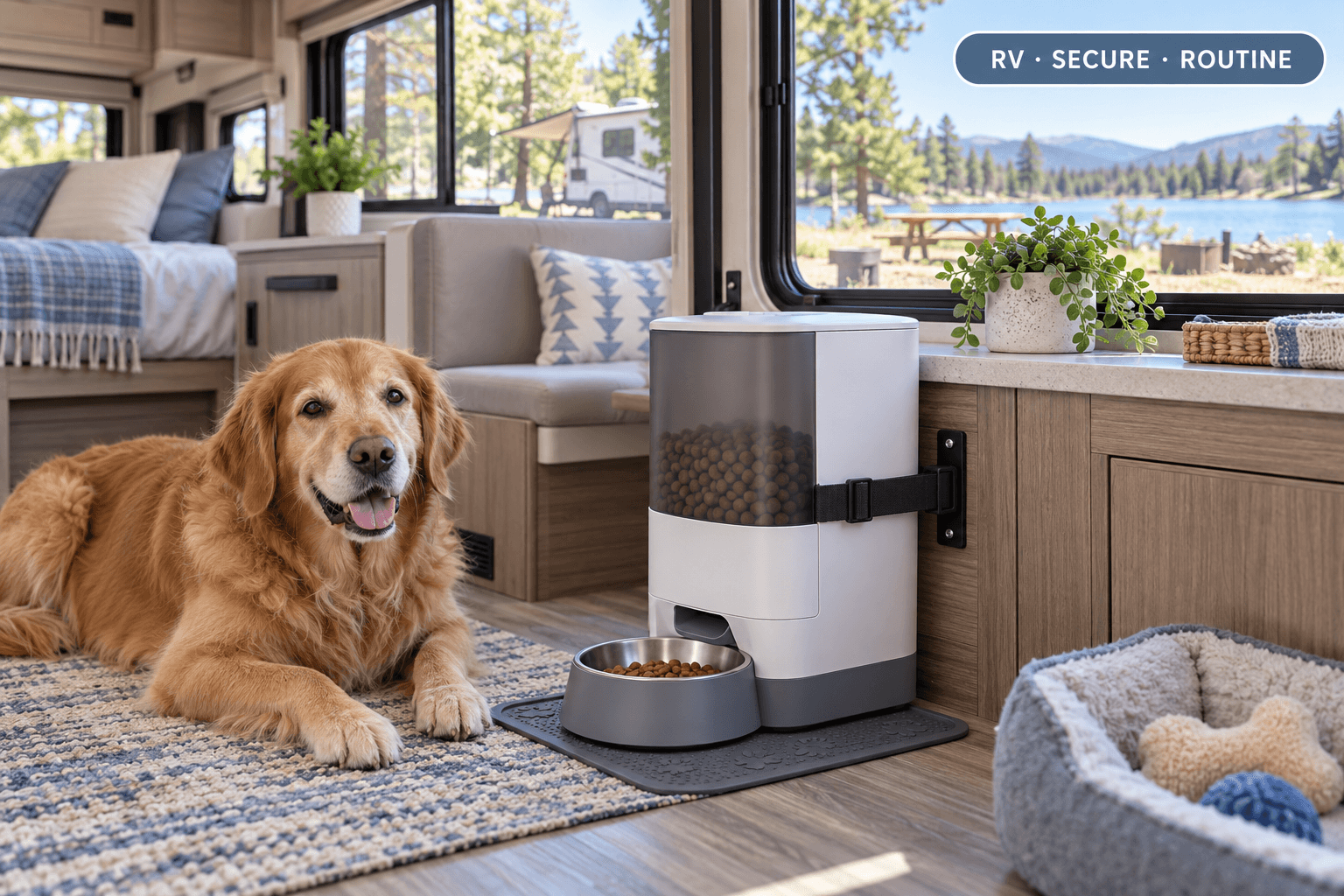
Why This Happens
RV travel combines several conditions that home feeders rarely face: vibration, tight floor space, changing power sources, variable Wi-Fi, temperature swings, and frequent packing and unpacking. A feeder that works perfectly on a kitchen floor may shift, tip, or spill kibble when the vehicle turns or brakes.
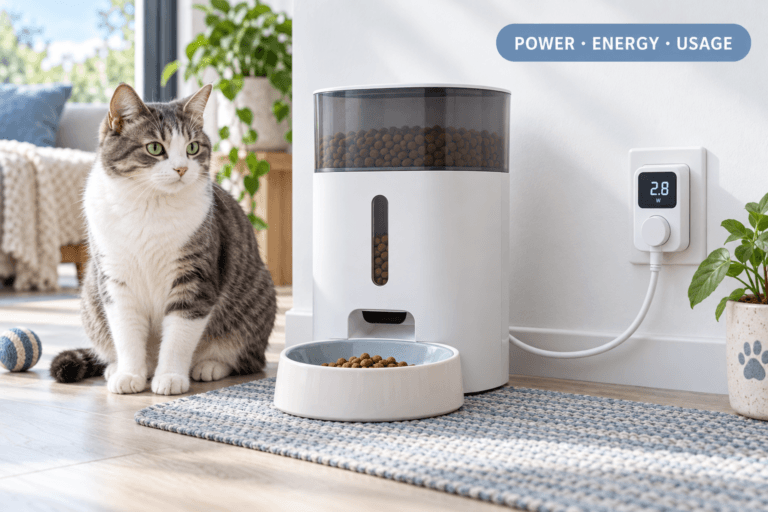
Power is another uncertainty. Some RVs use shore power at a campsite; others may rely on a generator, inverter, or battery system. The feeder’s adapter and backup batteries must match the manufacturer’s instructions. Do not assume a feeder will behave the same way when the RV changes power sources.
Wi-Fi can be inconsistent at campgrounds. A smart app may lose remote access even if the feeder’s local schedule continues. Other models may depend more heavily on a connection. Before travel, confirm whether the exact feeder stores its schedule locally and what functions stop when the internet is unavailable. The offline feeder guide can help you test that behavior.
Food storage can also be harder in a compact camper. Heat, humidity, spills, and pests can affect kibble. Wet food requires a feeder specifically designed to manage it; a standard dry-food hopper is not a safe substitute.
What To Do
Secure the pet and feeder separately
During travel, secure the pet in an appropriate carrier or restraint. Do not let the animal move freely around the cabin or eat from a loose bowl while the RV is moving. The ASPCA’s pet travel guidance recommends securing pets in the vehicle so they are less likely to be injured or distract the driver.
Turn off and stow the feeder while driving unless its manufacturer explicitly approves another setup. Keep it from sliding, tipping, or spilling food. Once parked, place it on a level surface where the pet can eat without blocking an exit or walkway.
Test the complete power plan
At home, run the feeder from its normal adapter and then test its backup mode. If you plan to use an RV inverter or power station, verify compatibility with the feeder’s label and manufacturer instructions. Pack the correct adapter and spare batteries where applicable.
Check the pet feeder battery-backup guide and confirm what the backup actually powers. A battery may preserve scheduled dispensing but not Wi-Fi or camera functions.
Preload a local schedule
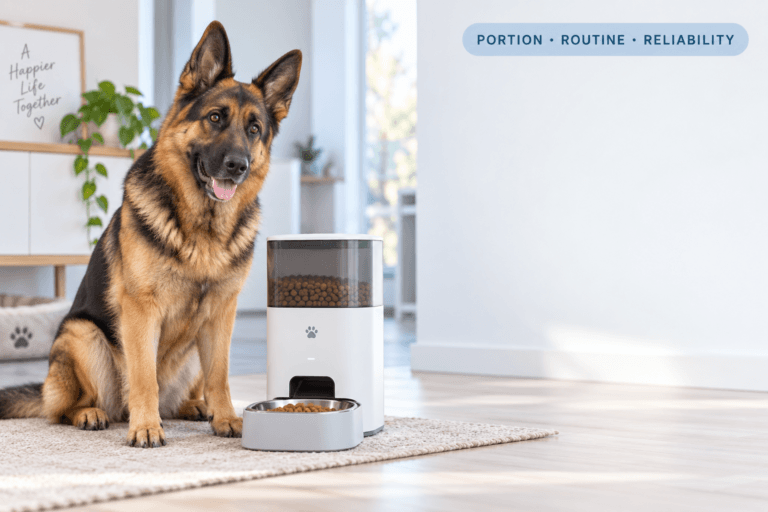
Program the schedule before leaving home and test it with the phone disconnected from Wi-Fi. Confirm the feeder dispenses the right amount and that the time remains correct. Campground connectivity should be treated as a convenience, not as the only way to trigger a meal.
Plan for movement and tight layouts
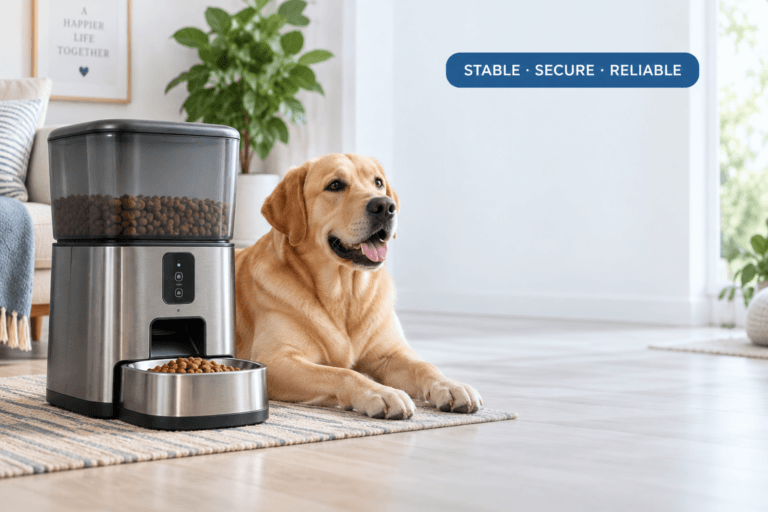
Choose a feeder with a stable base and a footprint that fits the RV’s feeding area. Keep the bowl away from doors, stairs, cooking surfaces, and places where people can trip. At camp, a nonslip mat or a protected feeding corner can help keep the bowl in position.
The feeder placement guide can help you choose a spot that stays accessible without interfering with the RV’s layout.
Bring food and a manual fallback
Pack enough of your pet’s usual food for the trip plus extra for delays. Keep it sealed in its original bag or another clean, airtight container, and do not leave it in a hot area of the RV. Bring a regular bowl and a measured backup portion in case the feeder jams or loses power.
Use the emergency feeding backup guide to prepare for problems that an app cannot fix.
Make meals a parked activity
Feed at a safe stop or after reaching the campsite, following your pet’s familiar routine where possible. If your pet gets motion sick or has special feeding needs, make a travel plan with a veterinary professional rather than applying a one-size-fits-all fasting rule.
Micro Case: The Feeder That Slid Under the Table
A family placed its automatic feeder near the dinette before setting off. During a turn, the unit slid across the floor, spilled kibble, and ended up beneath a cabinet. The app later showed the next meal as scheduled, but the bowl was inaccessible. The fix was to stow the feeder during travel, then set it on a nonslip mat in a clear, level area after parking.
The Feeding Loop Behind This Problem
The normal loop is simple: the feeder dispenses a measured meal, the pet eats, and the routine repeats at the next stop or campsite. Travel disrupts that loop when power changes, the RV moves, or the pet is too unsettled to eat.
RV pet feeder solutions should preserve the familiar schedule without encouraging owners to send extra food every time a pet appears restless on camera. A pet may be reacting to a new environment, road noise, or excitement—not necessarily a missed meal.
Confirm the last delivery, inspect the bowl, and provide only the planned portion. If the feeder has failed, use the measured manual backup and restore the routine at the next safe stop.
The Emotional Trigger Owners Miss
Owners often bring a feeder because they want freedom to explore a campground or run errands. That convenience can create a false sense of security: a camera shows the pet, the app shows a schedule, and it feels as though the animal is being supervised.
But a camera cannot restart a failed air conditioner, clear a jam, refill water, or respond to a pet in distress. Do not leave an animal alone in a parked RV relying only on climate control or phone alerts. The ASPCA’s vehicle heat-safety guidance warns that parked vehicles can become dangerous even when windows are cracked.
The Reinforcement Mechanism
There is no clinical addiction involved in RV feeding, but travel can make meal expectations unpredictable. If the pet sometimes receives extra food after whining at the feeder and sometimes does not, the behavior may become more persistent.
Keep the schedule and daily ration consistent. Use the feeder for planned meals, not as an unlimited remote treat button. If the pet refuses food, check the environment and the feeder rather than immediately adding another serving.
Real-World Impact
Reliable RV pet feeder solutions can make campsite routines easier, but a failed setup can lead to missed meals, spilled food, overheating risk, or a pet left without help. The key distinction is between automating a meal and providing care. A feeder can handle the first; a person must remain responsible for the second.
The AVMA travel guidance advises maintaining familiar feeding routines and checking pets during travel. Plan rest stops and meals around your animal, and carry extra food and water in case the route changes.
At the campsite, keep the feeder dry and protected from direct sun, rain, insects, and curious wildlife. Clean it before the trip and check that the bowl, hopper, and dispensing outlet are secure. The smart feeder cleaning guide can help prevent residue or food jams.
Can This Be Fixed?
Yes, most RV feeding problems can be reduced by treating travel, parked feeding, and unattended time as separate situations. Secure the pet and stow the feeder while moving. At a safe stop, place the feeder on a level surface, confirm power and schedule, and check that the pet can reach the bowl.
Test the full setup before the trip: run a meal on backup power, disconnect Wi-Fi, move the feeder as it will be packed, and verify that the scheduled amount reaches the bowl after setup. If any part fails, use a manual measured meal and revise the plan before traveling again.
Who Should Walk Away and Who Should Use This
Do not rely on an automatic feeder as the only care plan for a pet that needs medication with meals, has a history of refusing food, or cannot safely miss a serving. Avoid using a feeder in a moving RV or leaving a pet unattended in a parked vehicle based on app monitoring alone.
A portable feeder can suit owners who feed dry food, can secure the device during travel, and can supervise the pet at stops and campsites. For longer absences from the RV, arrange a trusted person or pet-care service rather than expecting remote controls to cover every eventuality.
Mini FAQ
Can I use an automatic feeder while my RV is moving?
No, feed your pet only after the RV is safely parked. A loose feeder or bowl can slide during turns or braking, and an unrestrained pet can distract the driver. Secure the animal for travel and set up the feeder at a stop.
Will an RV pet feeder work without campground Wi-Fi?
Some feeders continue a schedule stored locally, but remote controls and alerts may stop. Offline behavior varies by model. Test the exact feeder with Wi-Fi disconnected before leaving home and keep a manual feeding option available.
Can I leave my pet alone in an RV while the feeder runs?
A feeder does not make it safe to leave a pet unattended in a parked RV. Power and climate control can fail, and an app cannot provide physical help. Take the pet with you when safe or arrange a responsible person to stay and check in.
What food works best in a travel feeder?
Use food the feeder is designed for, usually compatible dry kibble. Heat, moisture, and movement can affect food and dispensing. Keep the main supply sealed, test the kibble at home, and use wet food only in a feeder specifically designed to store and serve it safely.
What should I do if the feeder fails at a campsite?
Give the pet a measured meal by hand and troubleshoot only after the animal is safe. A jam, power issue, or weak connection can prevent a scheduled serving. Check the outlet, backup power, hopper, and bowl, then test the next portion before relying on the device again.
RV pet feeder solutions are most dependable when the feeder is used at a parked campsite, not treated as a substitute for supervision. Secure the pet during travel, stow the device while moving, preload and test its schedule, protect food from heat and moisture, and carry a measured manual backup. A feeder such as a feeder with app control and button backup can support the routine—but a person remains responsible for the pet’s safety.