A German Shepherd automatic dog feeder should solve three practical problems: delivering enough food, measuring portions consistently, and working reliably when a large dog expects a meal. Capacity alone is not enough. The feeder also needs a secure lid, a dispensing system that matches the kibble, stable bowl placement, easy cleaning, and a backup plan for power or mechanical failure.
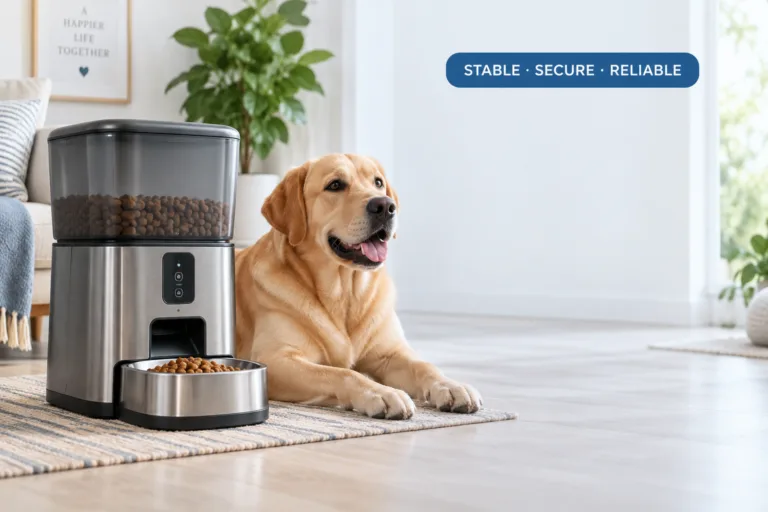
For a large-breed household, a large-capacity automatic pet feeder is a stronger starting point than a compact feeder designed around small daily portions. The larger hopper reduces constant refilling while scheduled dispensing separates meal timing from the owner’s workday.
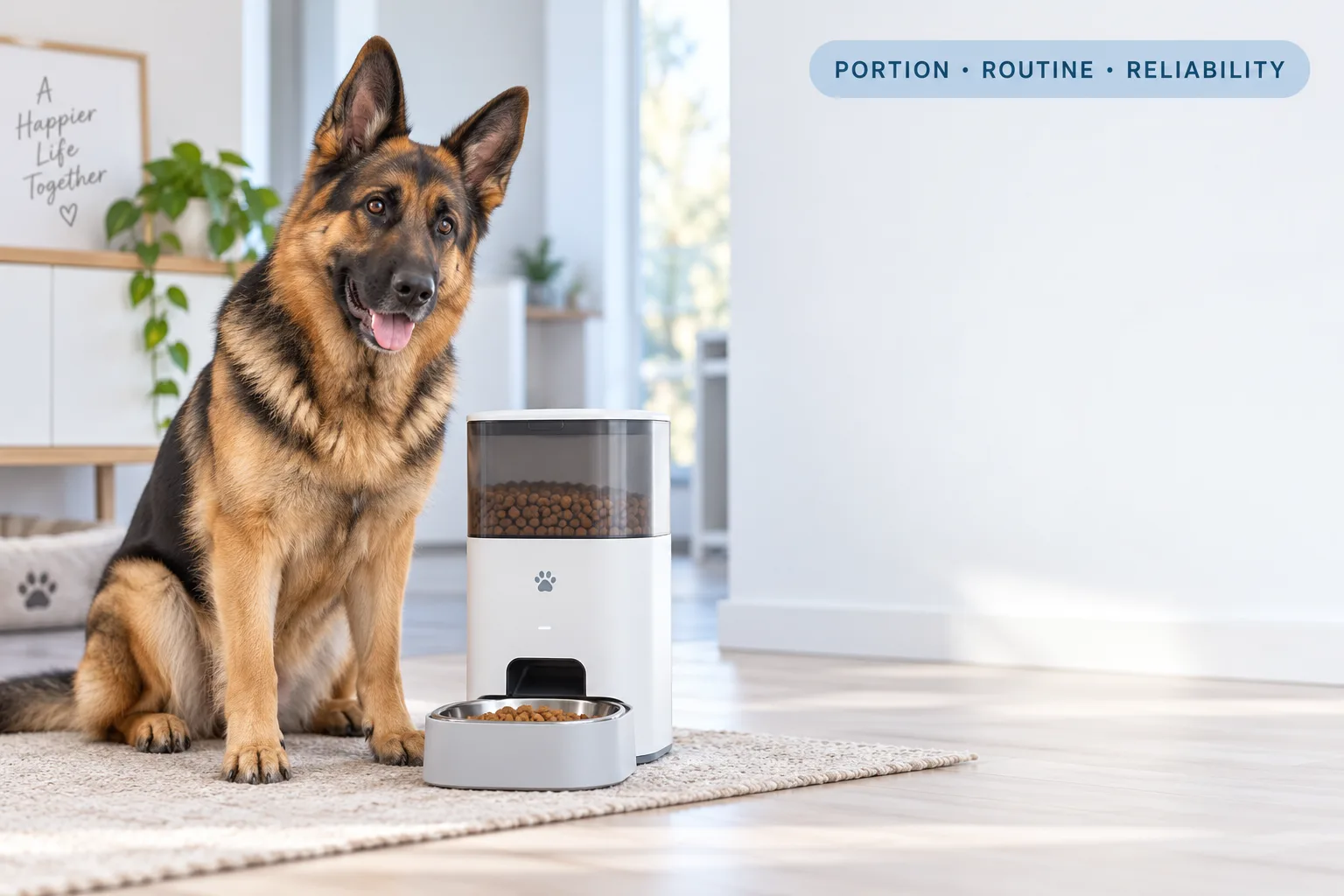
Direct Answer: German Shepherd Automatic Dog Feeder
The right German Shepherd automatic dog feeder combines large capacity, accurate portion control, kibble compatibility, a stable feeding bowl, secure food storage, and reliable scheduled dispensing. A feeder should make the dog’s routine more predictable without turning the hopper into unlimited access to food. For most homes, the best design is one that can divide the dog’s daily allowance into two or more measured meals and continue operating consistently without frequent jams or accidental releases.
Do not select a feeder only because the hopper looks large. A large dog exposes weak points quickly. A loose lid invites food stealing, an unstable base gets pushed across the floor, oversized kibble can jam a narrow rotor, and inaccurate portions can quietly add extra calories every day.
Why Large Dogs Expose Feeder Problems Faster
A German Shepherd eats substantially more dry food than a small companion dog, so small dispensing errors accumulate faster. If a feeder releases slightly too much at every cycle, the weekly difference can become meaningful. If it releases too little, owners often compensate by adding handfuls manually and lose the portion control that the feeder was supposed to create.
The same issue applies to hopper size. A feeder that technically works for a German Shepherd but requires constant refilling creates another failure point. Someone forgets to top it up, the remaining kibble bridges inside the hopper, or the owner assumes enough food remains for the next scheduled meal.
Start with a feeder built for larger meal volumes and compare it with the practical features described in this automatic dog feeder for large dogs guide. The useful question is not “How much food can this feeder hold?” It is “Can it deliver my dog’s actual meals accurately for several days without creating new problems?”
What To Do: Check These 6 Features Before Choosing One
1. Match Hopper Capacity to the Real Feeding Schedule
A German Shepherd automatic dog feeder should hold enough food to support the normal routine without requiring daily refilling. Larger capacity is especially useful for owners with long workdays or changing schedules, but capacity should not encourage storing weeks of kibble in the machine.
Calculate how much dry food the dog actually receives each day, then compare that amount with the usable hopper volume. Leave a margin rather than planning around the absolute maximum. The feeder still needs regular inspection, cleaning, and refilling.
2. Test Portion Accuracy Before Trusting the Schedule
Automatic-feeder portions are machine-defined units, not universal cups or grams. The amount delivered can change with kibble shape, size, and density. Set the feeder to dispense several test meals into an empty bowl, weigh the output, and calculate the average before using the schedule unsupervised.
This pet feeder calibration guide explains why testing the real output matters more than assuming one programmed portion equals a fixed nutritional amount.
3. Check Kibble Size and Anti-Jam Performance
Large dogs are often fed larger pieces of dry kibble. If those pieces do not fit the rotor or dispensing channel, a German Shepherd automatic dog feeder can miss part or all of a meal. Do not crush large kibble just to force it through a feeder unless that change is appropriate for the food and feeding plan.
Check the supported kibble dimensions before purchase and watch the machine dispense several full meals. If feeding interruptions are a major concern, understanding how anti-jam pet feeders work helps separate useful dispensing features from simple marketing language.
4. Choose a Secure Lid and Stable Bowl Area
A motivated German Shepherd can turn a weak feeder into a food puzzle. A lid that lifts easily, a hopper that tips, or a dispensing opening that can be pawed creates uncontrolled access. The feeder needs a secure food compartment and a base that remains stable when the dog eats enthusiastically.
Place it against a stable surface without trapping the dog in a tight corner. Keep electrical cords inaccessible. If the dog pushes, paws, or chews the machine, fix the placement before leaving the feeder unattended.
5. Build in a Power and Failure Backup
Reliability matters more than app features. WiFi can disconnect, power can fail, batteries can drain, and food can bridge inside a hopper. The feeder should have a clear way to confirm whether meals were actually dispensed.
If missed meals are a concern, review how a pet feeder with battery backup fits into the household plan. Backup power solves one failure mode, but owners still need to check food level, batteries, bowl condition, and dispensing performance.
6. Make Cleaning Part of the Purchase Decision
A feeder that is difficult to clean will eventually be cleaned less often. Choose removable food-contact parts and a bowl that can be washed thoroughly. Crumbs and oils collect around rotors, chutes, bowl edges, and corners where the dog cannot reach them.
Use a regular smart pet feeder cleaning routine instead of waiting until old food, odor, or dispensing problems become obvious.
The Feeding Loop Behind Poor Portion Control
A feeder does not automatically create a controlled diet. The common loop starts when the scheduled meal looks small to the owner. The owner adds a handful. Later another family member gives treats because the dog appears hungry. The dog then begins waiting near people after the machine dispenses because human attention produces extra calories.
A German Shepherd automatic dog feeder works only when the programmed meals represent part of a known daily calorie allowance. Every extra treat, training reward, chew, and table scrap must still fit inside that total. The AAFCO consumer pet-food resources can help owners understand nutritional adequacy statements, feeding directions, calorie information, and life-stage labeling.
For a more structured daily routine, use this smart dog feeding guide to separate scheduled meals from random food rewards.
The Emotional Trigger Owners Miss
German Shepherds are highly attentive to household patterns. Owners often interpret waiting near the feeder, following people into the kitchen, or watching the food container as proof that the dog needs another meal. That reaction turns normal anticipation into extra feeding.
A dog’s interest in food is not a measuring device. Use the planned amount, body-condition trend, activity level, and actual feeding record. If every stare produces food, the owner becomes part of the dispensing system and the automatic schedule loses its purpose.
The strongest routine makes meal delivery boring and predictable. The feeder dispenses. The dog eats. The bowl remains empty until the next planned event. Human attention can then come through training, play, brushing, walking, or calm interaction rather than extra food.
The Addiction Mechanism: Anticipation and Repeated Reward
This is not chemical addiction. It is a reinforcement loop. The feeder makes a sound, food appears, and the dog quickly learns the sequence. That predictability is useful because it moves meal anticipation away from the owner’s every movement.
The loop becomes unhelpful when the dog learns that pawing the feeder, barking at people, or hovering in the kitchen produces additional food. Owners reinforce the behavior because giving a snack stops the pressure temporarily. The next day, the same behavior begins sooner.
A German Shepherd automatic dog feeder should strengthen schedule dependency rather than begging dependency. Keep dispensing times stable, avoid manual bonus portions between meals, and use non-food interaction when the dog asks for attention outside the feeding schedule.
Micro Case: The Large Hopper That Still Failed
A household buys the largest feeder it can find for an adult German Shepherd and fills it for the week. The hopper easily holds enough food, but the kibble pieces are slightly too large for the dispensing mechanism. Meals become inconsistent, so the family starts pouring extra food into the bowl whenever the output looks small. The result is a large-capacity feeder with no real portion control. The fix is to test kibble compatibility, calibrate several meals by weight, and confirm dispensing performance before relying on the schedule.
Real-World Impact of Choosing the Wrong Feeder
The wrong feeder usually fails gradually rather than dramatically. A little extra food appears every day. A jam happens once a week. A lid becomes easier for the dog to open. The bowl slides farther across the floor. Owners compensate manually until the automatic system becomes less reliable than the original routine.
Weight management deserves special attention in a large dog because even small daily overfeeding can accumulate over months. The AVMA healthy pet weight guidance emphasizes balancing nutrition, activity, and body condition rather than relying on the food label alone.
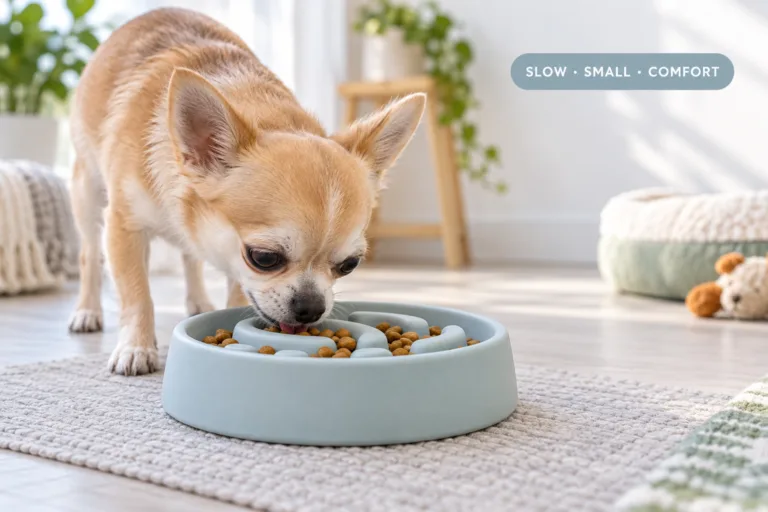
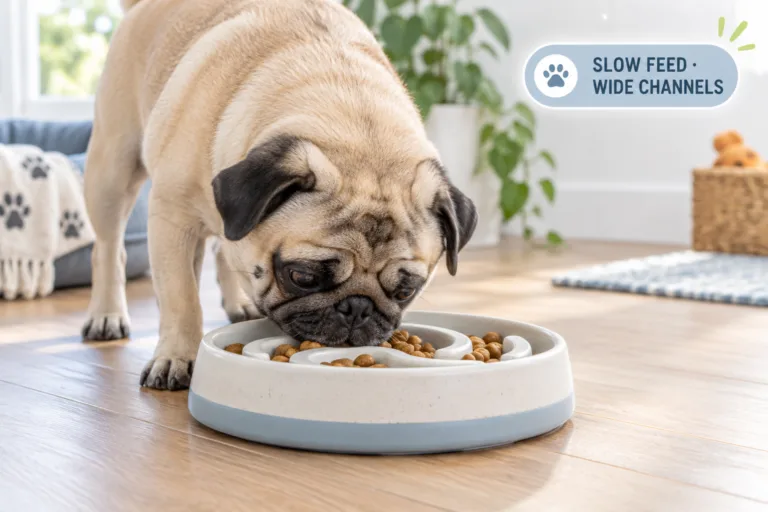
Fast eating creates another practical problem. If a German Shepherd empties each automatic portion immediately, dispensing multiple smaller scheduled meals can reduce the size of each eating event. For dogs that still rush through food, compare the feeder setup with a slow feeder approach for large breeds rather than simply increasing meal frequency without observation.
Can a Weak Automatic Feeding Setup Be Fixed?
Yes, when the problem is calibration, placement, schedule design, or household inconsistency. Empty and clean the feeder, verify kibble compatibility, measure several test portions, inspect the rotor, secure the machine, confirm backup power, and rebuild the schedule from the dog’s real daily allowance.
Do not change five variables at once. If portions are inaccurate, fix calibration first. If the dog accesses the hopper, fix the lid or placement. If meals are missed, diagnose the dispensing or power problem. If weight is increasing while the feeder works correctly, review total daily calories rather than blaming the machine.
A reliable system should make it easy to answer four questions every day: How much food went into the feeder? How much was programmed? Did the meal dispense? Did the dog eat it?
Who Should Use One and Who Should Choose Another Setup?
A German Shepherd automatic dog feeder is a strong fit for owners who need consistent meal times, measured dry-food portions, or support during long and changing work schedules. It also works well when several household members otherwise struggle to track who has already fed the dog.
Choose another feeding setup when the dog’s food cannot pass through the dispenser reliably, when the dog destroys or opens the feeder, or when meals require wet, fresh, frozen, or medically specific preparation that the machine cannot safely handle. A feeder should simplify the routine, not force the diet to fit the hardware.
For owners comparing different designs, the automatic and scheduled dog feeder range provides a useful starting point for matching capacity and control style to the household.
Mini FAQ
What size automatic feeder is good for a German Shepherd?
Choose capacity from the dog’s measured daily food intake rather than breed name alone. A large hopper reduces refilling, but the machine must also dispense the correct kibble accurately. Calculate daily use first, then select enough usable capacity with a reasonable refill margin.
How many times should an automatic feeder feed a German Shepherd?
Two or more measured meals are more useful than turning the feeder into continuous access. Scheduled meals make daily intake easier to track. Divide the dog’s established daily allowance across the programmed feeding times instead of adding food on top of the normal amount.
Can a German Shepherd automatic dog feeder handle large kibble?
Only when the dispensing mechanism is designed for that kibble size and shape. Oversized or irregular pieces can bridge or jam. Test several full dispensing cycles with the actual food before relying on the feeder unsupervised.
Is WiFi necessary for a German Shepherd feeder?
No. WiFi is useful for remote schedule changes and status checks, but dispensing reliability matters more. A dependable timed feeder with suitable capacity, calibration, and backup power can work without remote control.
Can an automatic feeder stop a German Shepherd from eating too fast?
It can reduce the size of each feeding event by dividing the daily allowance into smaller scheduled meals. It does not automatically slow chewing or swallowing. Pair smaller portions with an appropriate slow-feeding bowl when the dog still finishes food too quickly.
Should I leave a German Shepherd alone with an automatic feeder for several days?
No. Automatic feeding does not replace human care. Water can spill, machines can jam, power can fail, and a dog can become sick or injured. Use the feeder to maintain meal timing while a responsible person still checks the dog and home regularly.
For households that need capacity without turning feeding into a complicated app routine, a large-capacity automatic pet feeder can support measured daily meals. The right German Shepherd automatic dog feeder is not the one with the biggest hopper or longest feature list. It is the one that fits the kibble, delivers repeatable portions, stays secure, remains easy to clean, and keeps the dog’s feeding schedule predictable every day.