
A slow feeder dog bowl for large breeds is not a cute bowl upgrade. It is a control tool for dogs that inhale food, vomit after meals, crowd the bowl, or turn dinner into a high-speed pressure event. Large dogs do not only eat more food. They create more force, more speed, and more household disruption when the feeding system is loose.
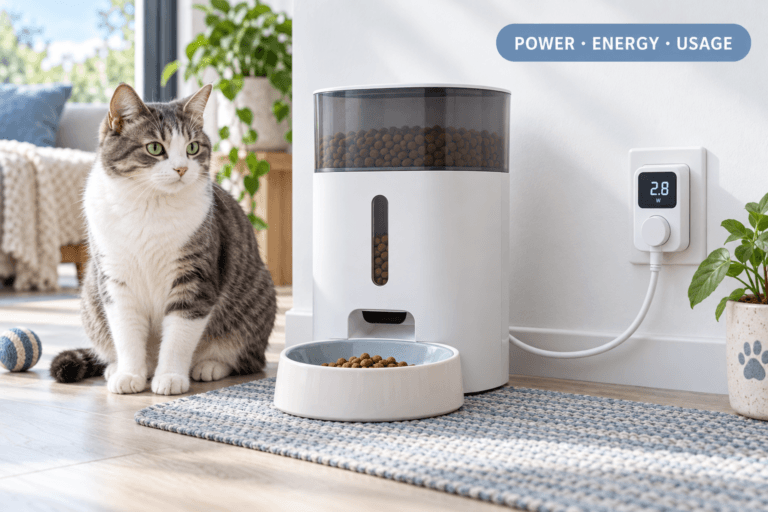
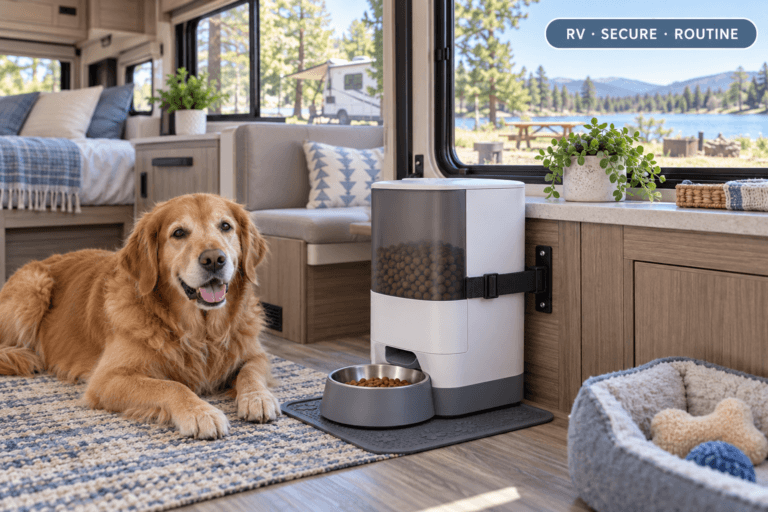
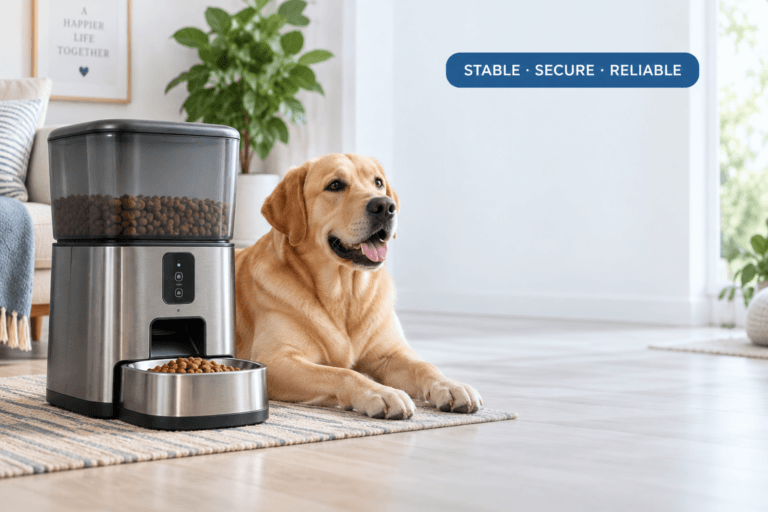
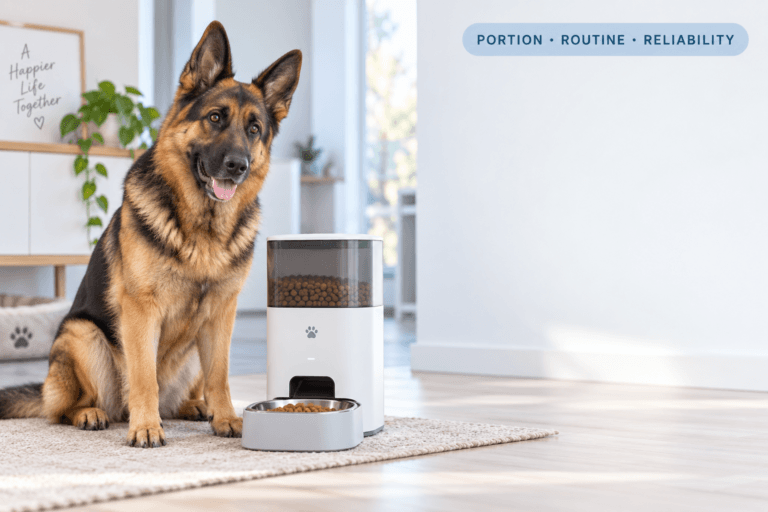
For homes where fast eating needs both timing and portion control, a timed slow feed automatic feeder is stronger than a plain open bowl because it slows access instead of trusting the dog to self-regulate. The point is not to make eating difficult. The point is to stop one large meal from becoming a race.
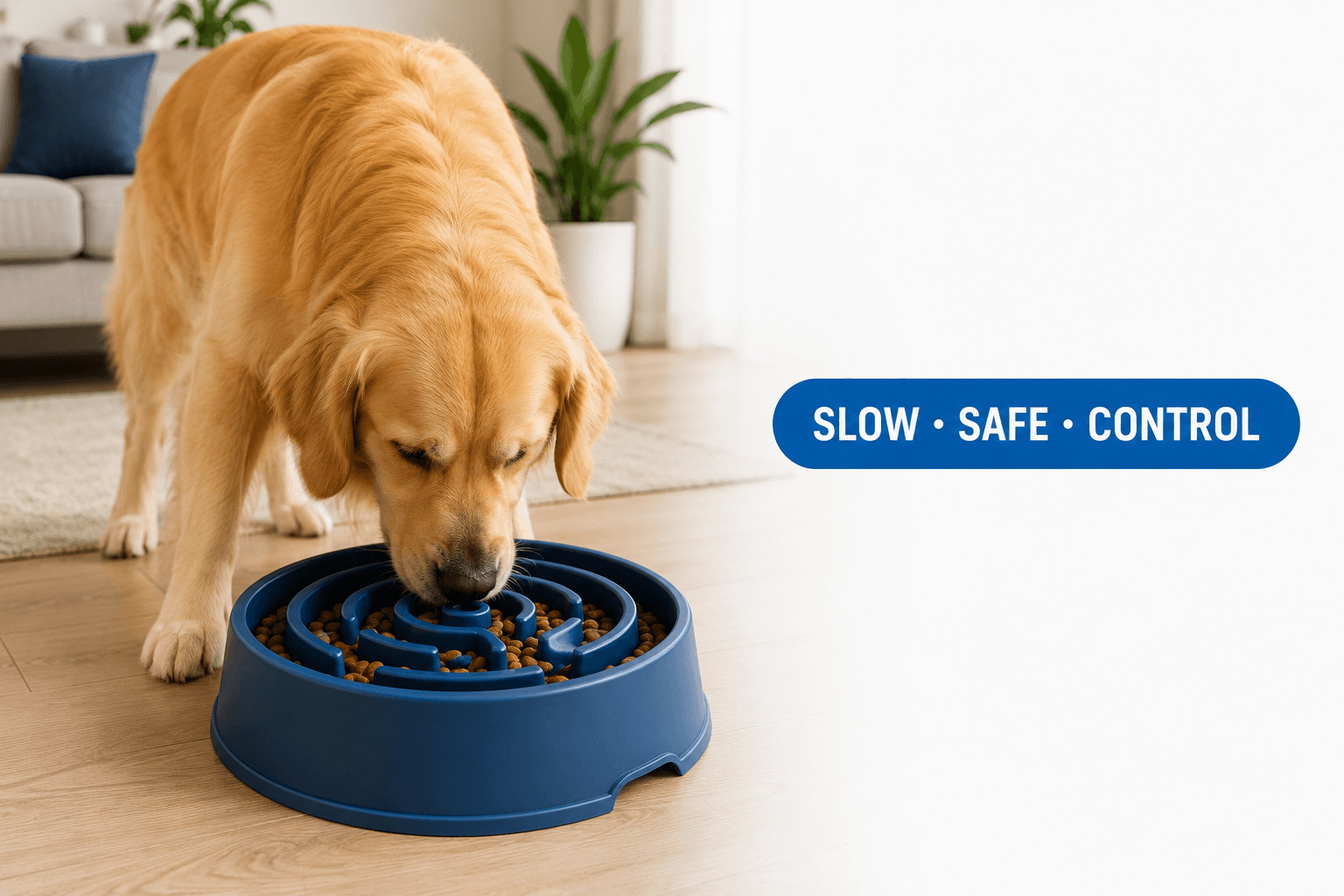
Direct Answer: Slow Feeder Dog Bowl for Large Breeds
A slow feeder dog bowl for large breeds is useful when a big dog eats too fast, vomits after meals, pressures the bowl, or needs stricter portion control. It works by forcing slower access to food, reducing gulping, and turning the meal into a structured routine. A normal open bowl rewards speed; a slow feeder creates friction that protects the feeding pattern.
Why This Happens
Fast eating is not just appetite. It is a learned feeding behavior. A large dog sees food, moves quickly, swallows fast, and finishes before the body has time to settle. If the owner refills the bowl, gives extra food, or praises the dog after the rush, the meal speed becomes part of the routine.
A slow feeder dog bowl for large breeds interrupts that pattern by changing the mechanics of access. The dog has to work around ridges, channels, timed release, or smaller sections. That slows the reward cycle. The dog still eats, but the feeding event stops functioning like a single high-value gulp.
Owners should connect bowl choice with a complete feeding plan, not a random product swap. A smart dog feeding routine helps define meal timing, portion size, and owner response so the bowl supports a rule instead of becoming another object in a chaotic system.
What To Do
Choose a slow feeder dog bowl for large breeds by screening for size, stability, difficulty level, cleaning access, and food compatibility. A bowl that is too small frustrates the dog. A bowl that slides across the floor turns the meal into a game. A bowl that is too complex can create scraping, chewing, or stress. The right design slows the dog without creating a new fight.
Start with measured portions. Do not use a slow feeder as permission to give more food. The bowl controls speed, not calories. Large breeds need clear meal amounts, especially when they already beg, gain weight, or act restless around food. Long-term portion control should stay aligned with healthy pet weight guidance.
If the dog eats dry food and needs stronger schedule control, pair slow feeding with timed meals. The smart pet feeder setup guide gives a practical structure for owners who need the feeding system to stay consistent when they are busy, away, or tired.
The Feeding Loop Behind This Problem
The feeding loop is direct: food appears, the dog rushes the bowl, food disappears quickly, the owner reacts, and the same pattern repeats at the next meal. The dog learns that speed is normal. If the owner responds with more food because the bowl is empty, the dog also learns that finishing fast can create another reward.
A slow feeder dog bowl for large breeds breaks this loop by making speed less effective. The dog cannot clear the food in one burst. The meal becomes a sequence of smaller actions. That extra time gives the feeding routine a new rhythm and reduces the payoff of frantic eating.
Dogs that inhale food often need more than a bowl change. The behavior pattern explained in how to stop a dog from inhaling food shows why meal speed, owner response, and portion timing have to be handled together.
The Emotional Trigger Owners Miss
The emotional trigger is the owner’s belief that fast eating means deep hunger. A large dog that finishes in seconds looks desperate, so the owner adds food, feeds earlier, or gives snacks between meals. That reaction feels kind, but it teaches the dog that urgency changes the outcome.
A slow feeder dog bowl for large breeds removes part of that emotional pressure. The dog cannot use speed to create the appearance of an emergency. The owner can see the meal last longer and stop treating an empty bowl as proof that the dog needs more food.
Large dogs also need movement and structure outside the bowl. When boredom drives food pressure, a feeding tool alone is too narrow. Owners should pair meal control with daily activity using a practical dog exercise guide so the dog does not treat the bowl as the only event of the day.
The Addiction Mechanism
The addiction mechanism is reinforcement through rapid reward. Fast eating gives the dog an intense, immediate payoff. The faster the food disappears, the more valuable the rush becomes. If the owner then adds attention, extra food, or another snack, the dog receives a second reward after the first one.
A slow feeder dog bowl for large breeds reduces that reward intensity. The dog still receives food, but the reward is spread across more time and effort. This changes the reinforcement loop from “rush and win” to “work through the meal calmly.” The bowl becomes a boundary instead of a trigger.
The goal is not to punish eating. The goal is to make the meal boring enough that the dog stops treating it like a contest. That routine dependency is useful. The dog learns that food arrives, the bowl slows the pace, and pressure does not create a larger reward.
Real-World Impact
The real-world impact of fast eating is visible in the home. Dogs gulp, cough, spit food, vomit after meals, guard the bowl, demand more food, or disturb the household at feeding time. Large breeds magnify the problem because their meal size and body force are higher. A slow feeder dog bowl for large breeds gives the owner a physical tool for slowing the event before it becomes a daily conflict.
Weight is part of the impact. Fast eating makes owners misread appetite and overfeed. Extra calories then become a normal part of the household routine. Owners trying to protect body condition should review how to prevent dog obesity before using food volume as a way to calm pressure.
Measured feeding principles also apply across pets. A structured cat weight reduction plan shows the same core rule: controlled portions work better than emotional access. Large dogs need that same discipline through slower meals and strict amounts.
Can This Be Fixed?
Yes, fast eating in large dogs can be fixed when speed control, portion control, and owner response are handled together. The bowl is the first boundary, not the whole system. The owner must stop rewarding the empty bowl with extra food and stop using snacks to calm pressure after meals.
A slow feeder dog bowl for large breeds should be tested with the dog’s normal food. Watch whether the dog can reach the food safely, whether the bowl stays stable, whether the dog chews the design, and whether cleaning is realistic. A dirty or unstable bowl becomes another failure point.
Owners comparing broader feeding tools should use the dog feeders category and screen by size, bowl stability, portion control, and feeding speed. The right choice should slow the meal without turning feeding into frustration.
Who Should Walk Away and Who Should Use This
Walk away from a standard slow bowl if the dog chews hard plastic, flips bowls, guards food aggressively, needs supervised feeding, or eats wet food in a way that sticks and spoils inside complex channels. In those homes, the problem is not only speed. The feeding setup needs closer control, separation, or a different design.
Use a slow feeder dog bowl for large breeds if the dog eats dry food too quickly, vomits after meals, pressures the owner for more food, or needs a stronger mealtime boundary. For breed-specific slow-feeding problems, owners can also review slow feeder choices for French bulldogs, because the same speed-control logic applies even when the bowl shape changes by breed and face structure.
For large dogs that also need timed meals, a bowl alone can be too passive. A scheduled feeding system is stronger when the owner needs the meal to happen at the same time every day without negotiation.
Mini FAQ
Does a slow feeder dog bowl for large breeds really work?
Yes, it works when the dog eats too fast and the bowl is sized correctly. The design slows access to food and reduces the reward of gulping. Use it with measured portions and a fixed meal schedule.
What size slow feeder should a large dog use?
A large dog should use a bowl wide and stable enough for its muzzle, meal size, and body force. A small bowl creates frustration and mess. Choose a large, non-sliding design that slows eating without blocking safe access.
Can a slow feeder stop vomiting after meals?
It can reduce vomiting linked to gulping and meal speed. Fast eating pushes too much food into the body too quickly. Slow the meal, measure the portion, and avoid extra food after the bowl is empty.
Is a slow feeder better than a regular bowl?
Yes, it is better for large dogs that inhale food or pressure the bowl. A regular bowl rewards speed because the food is fully exposed. A slow feeder adds structure and makes calm eating more likely.
Should I use a slow feeder with an automatic feeder?
Yes, that combination is strong when the dog needs both scheduled meals and slower access. The automatic system controls timing, while the slow-feeding design controls speed. Use both when fast eating and routine failure happen together.
For owners who need speed control built into a more structured feeding setup, an automatic timed slow feed bowl for dogs can make the routine harder to break. A slow feeder dog bowl for large breeds is the right tool when a big dog turns meals into a rush, a mess, or a negotiation. Choose slow access, keep portions measured, and make the bowl enforce the rule instead of letting speed control the meal.