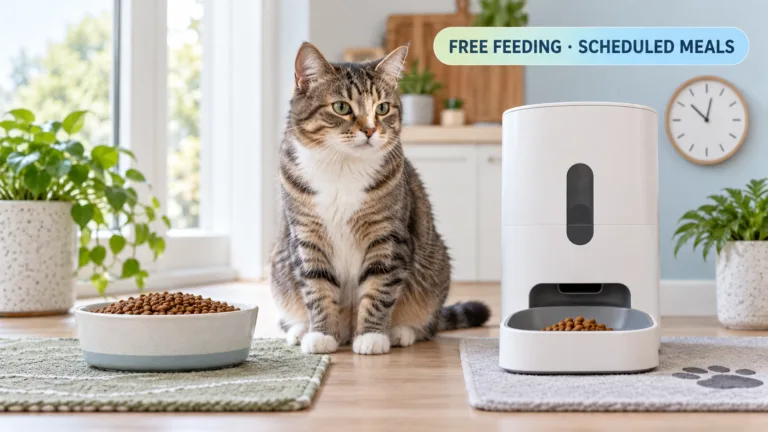
A dog proof automatic pet feeder needs more than a timer. It must resist nose pressure, pawing, tipping, lid access, food theft, and persistent attempts to reach the hopper. No feeder is universally dog-proof, so the right choice depends on the dog’s size, strength, persistence, and access to the feeding area.
When owners search for a dog proof automatic pet feeder, they are usually solving a specific household problem: a dog is eating another pet’s food, opening the lid, knocking over the feeder, or finishing a meal before the intended pet reaches it. The feeder must create a physical boundary, not simply release food on a schedule.
For multi-pet homes, a camera-equipped double-bowl automatic feeder can help owners monitor meal access, but camera visibility alone does not prevent a determined dog from reaching the food. Security comes from the feeder’s structure, placement, and access-control design.
Direct Answer: Dog Proof Automatic Pet Feeder
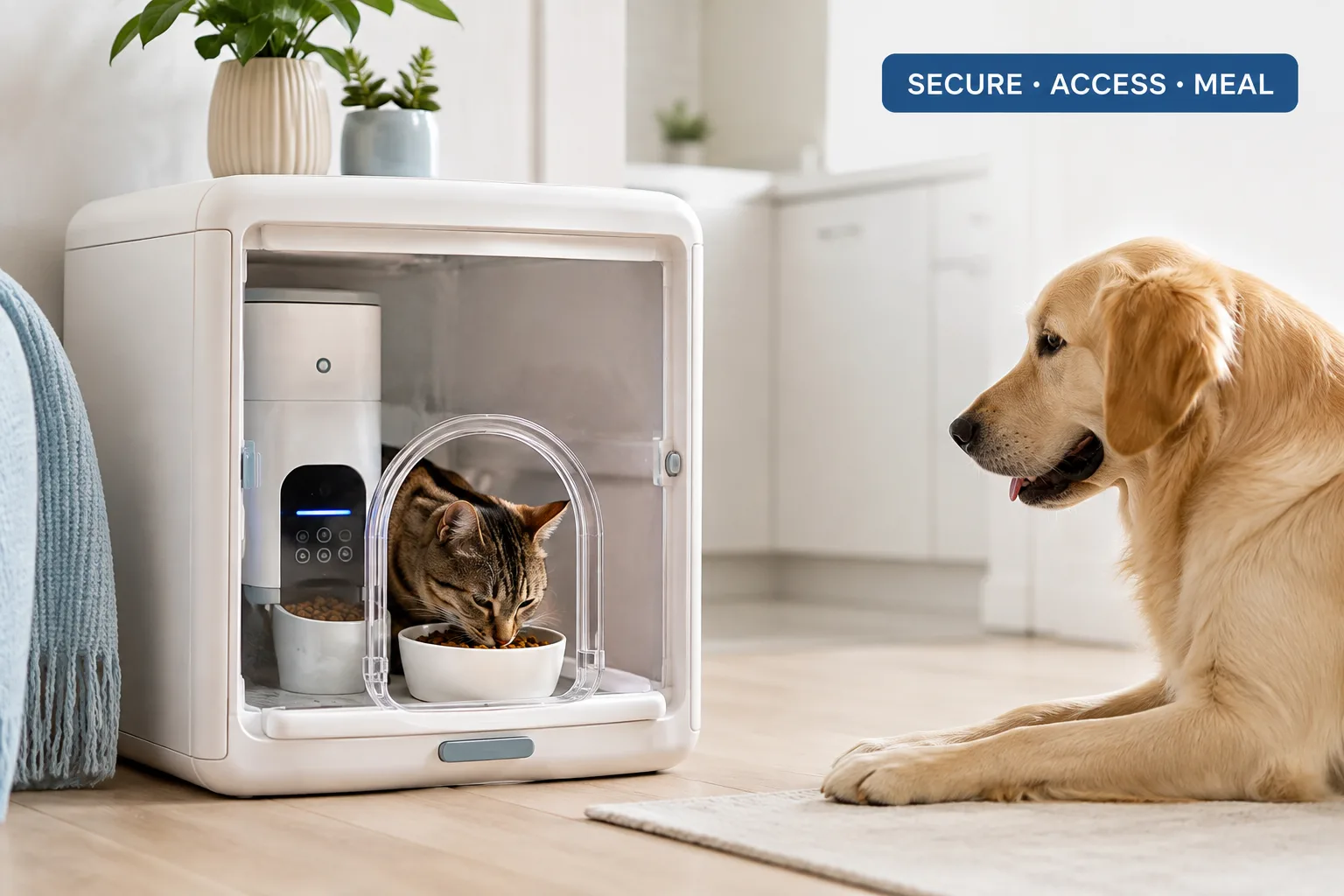
The most reliable dog proof automatic pet feeder combines a locking or tamper-resistant lid, a stable heavy base, a protected dispensing path, and controlled access for the intended pet. A timer prevents scheduled food from appearing early, but it does not stop a dog from stealing food after delivery. For a dog that repeatedly defeats ordinary feeders, use a secured feeding area, an access-controlled bowl, or a feeder designed to identify the correct pet.
Why This Happens
Dogs are strong, persistent food seekers. A dog does not need to understand the feeder’s electronics to defeat it. It can push the base across the floor, chew the power cable, lift a loose lid, wedge its nose beneath an opening, or wait beside the bowl until food appears.
Food theft becomes more intense when the dog has succeeded before. One successful raid teaches the dog that the feeder contains a valuable reward. After that, the dog repeats the behavior with more force and patience. A lightweight feeder that moves during the first attempt can become a daily target.
Multi-pet feeding creates a separate access problem. A cat may need food available at a different time, a smaller portion, or a special diet. If the dog can reach that food, the owner loses control of both animals’ intake. The multi-pet feeder guide explains why separate feeding stations are often necessary.
Manufacturers use different terms for security. PetSafe lists “pet-proof” features on some models, while Whisker describes a tamper-resistant lid on its Feeder-Robot. These descriptions apply to specific products and do not prove that a feeder can resist every dog. Inspect the construction and test the exact unit in your home.
What To Do
1. Identify how the dog attacks the feeder
Watch the dog for a few minutes while the feeder is empty. Does the dog push it, lift it, chew it, scratch around the bowl, or attack the lid? The solution must match the behavior. A locking lid does not solve a feeder that the dog can drag across the room.
2. Choose a secure lid
A snap-on lid is not equal to a locking lid. Look for a design that prevents the dog from lifting the top with its nose or paw. The lid should remain secure when the feeder is moved slightly, and the food opening should not allow the dog to reach backward into the hopper.
PetSafe’s pet-proof feeder information shows how tamper-resistant lids can be part of a feeder’s design. Use the exact manual to understand what the feature protects and what it does not protect.
3. Stabilize the base
Use a feeder with a wide footprint, non-slip feet, or a way to anchor the base. Place it against a wall or inside a protected feeding station when appropriate. Do not place it on a smooth surface where the dog can push it toward a corner and tip it over.
4. Protect the power cable
A dog that cannot open the hopper can still disable the feeder by chewing the cable. Route the cord behind furniture, use a pet-safe cable protector, and keep adapters away from water. Inspect the cable regularly for tooth marks, exposed wires, or loose connections.
5. Separate the bowl from the dog’s reach
For a cat in a dog household, placing the feeder on a counter is not always enough. Some dogs jump, climb, or wait for the cat to knock food onto the floor. A gated room, elevated feeding shelf, cat door, or access-controlled feeder creates a stronger barrier.
6. Consider pet identification
If the dog and cat must share the same home but cannot share food, an RFID or microchip feeder can open access for the intended pet. The microchip feeder versus RFID guide can help compare identification-based access with ordinary timed dispensing.
7. Test the actual schedule
Run the feeder while the dog is present but supervised. Confirm that the intended pet can reach the food comfortably, the dog cannot activate the controls, and the device does not move during dispensing. Then repeat the test at night, when household supervision is lower.
Micro Case: The Feeder That Moved Six Feet
A large dog could not lift the feeder’s lid, but it pushed the entire unit across a hardwood floor until the bowl reached the kitchen doorway. The dog then ate every meal intended for the cat. The problem was not the timer; it was the unstable placement. A wall-protected feeding station, non-slip base, and separate cat access point solved the food theft.
The Feeding Loop Behind This Problem
The feeding loop begins when the dog sees or smells food inside the feeder. The dog paws, pushes, or waits beside the bowl. If the feeder moves or the lid opens, the dog receives a powerful reward. That success strengthens the same behavior before the next scheduled meal.
A dog proof automatic pet feeder changes this loop only when the physical barrier remains effective after repeated attempts. If the dog gets food after ten minutes of pushing, the dog learns to push for ten minutes next time. If the feeder never opens and the dog is redirected consistently, the behavior loses its reward.
Owners should avoid giving the dog a replacement treat immediately after it attacks the feeder. That response can create a second reward loop. Move the dog away calmly, confirm that the intended pet received the correct portion, and reinforce calm behavior somewhere else.
The Emotional Trigger Owners Miss
Owners often focus on the dog’s cleverness and overlook the cat’s stress. A cat that approaches food while a dog is waiting nearby can eat too quickly, abandon the meal, or avoid the feeding area entirely. The result is not only food theft; it is an unsafe feeding environment for the quieter pet.
Guilt can also cause owners to leave extra food available “just in case.” That creates more opportunities for the dog to raid the feeder and makes the cat’s intake impossible to measure. The better response is to create a protected feeding location and keep portions scheduled.
The Addiction Mechanism
There is no clinical addiction involved in dog food theft, but the behavior can become strongly reward-dependent. Smell, access, and occasional success combine to make the feeder more attractive than ordinary toys or resting areas.
The strongest reinforcement occurs when the dog fails several times and then succeeds once. That occasional success encourages longer and more forceful attempts. A dog that opened the lid only once can continue testing the feeder for weeks because the previous reward remains memorable.
Remove the reward completely by improving the barrier. Use a secured placement, controlled access, and consistent redirection. Training helps, but training should support the physical solution rather than replace it when the dog has unrestricted access to valuable food.
Real-World Impact
Uncontrolled food theft can cause overeating, weight gain, digestive upset, food guarding, and conflict between pets. The cat can also miss meals because the dog reaches the bowl first. In homes using prescription diets, even one stolen meal can disrupt the intended feeding plan.
A dog proof automatic pet feeder should therefore be evaluated as part of a household access system. The lid, base, bowl position, cable, room layout, and pet behavior all affect reliability. A feeder with an attractive app but weak physical security is a poor choice for a determined food thief.
Use the smart feeder placement guide to reduce access from nearby furniture, shelves, corners, and jump points. For multi-pet households, also review the multi-cat automatic feeder guide.
Inspect the device weekly for scratches, loose hinges, cracked plastic, and food residue. The pet feeder maintenance guide can help identify early failures before the dog finds them.
Can This Be Fixed?
Yes, food theft can be fixed when the feeder’s physical security matches the dog’s behavior. Start with placement and access control, then add a locking lid, stable base, protected cable, or pet-identification system as needed.
Do not rely on a verbal command alone while the dog can still reach the food. Every successful raid weakens the training plan. Remove access during the transition period, supervise testing, and return the dog to the normal routine only after the feeder has passed repeated challenges.
Check the device after power interruptions and cleaning. A lid that was secure before disassembly can become loose after incorrect reassembly. If the feeder jams, use the pet feeder jam guide and inspect whether the dog’s interference damaged the dispensing path.
Who Should Walk Away and Who Should Use This
Owners should walk away from ordinary open-bowl feeders when the dog has a history of persistent food theft, destructive chewing, counter surfing, or feeder tipping. They should also avoid placing a cat’s feeder in a room the dog can enter freely.
A standard timed feeder can suit a calm dog that does not tamper with equipment. A more secure feeder is appropriate for dogs that push, pry, chew, or guard food. A microchip or RFID system is the better boundary when different pets need different foods and physical separation is difficult.
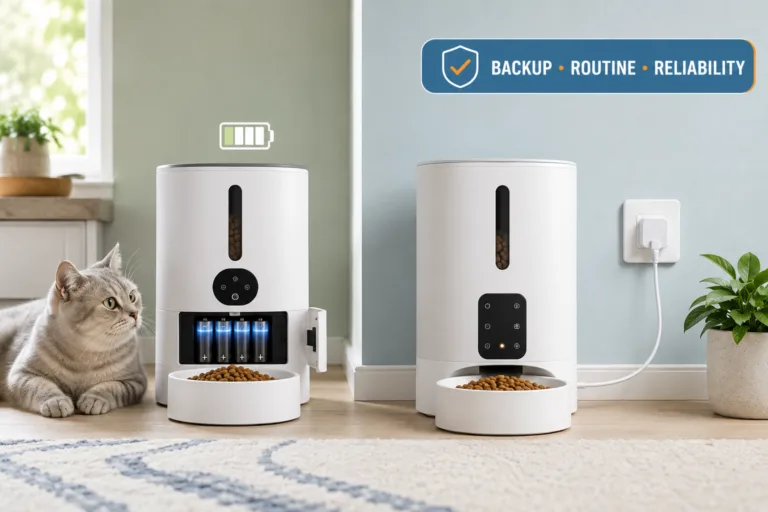
For homes where power reliability also matters, combine physical security with the pet feeder battery-backup guide. Backup power keeps the schedule active, but it does not prevent a dog from reaching the food after it is dispensed.
Mini FAQ
What makes a dog proof automatic pet feeder secure?
A secure feeder needs a tamper-resistant lid, stable base, protected controls, and limited access to the bowl. Dogs defeat weak feeders by pushing, lifting, or chewing them. Match the design to the dog’s strength and use a protected feeding location when necessary.
Can a dog open an automatic pet feeder?
Yes, a dog can open or damage some automatic feeders. Loose lids, exposed buttons, light bases, and reachable cables create access points. Test the feeder under supervision, secure the base, protect the cord, and choose a locking design.
Is a microchip feeder better than a dog-proof feeder?
A microchip feeder is better when the main problem is one pet stealing another pet’s food. A dog-proof feeder protects the food physically, while an identification feeder restricts access to the registered pet. Use identification-based access when separate diets are the priority.
Where should I place a feeder to keep a dog away?
Place it in a protected area the dog cannot enter, climb toward, or push into. Counters and shelves are not enough for athletic dogs. Use a gated room, cat door, secured feeding station, or elevated location that the intended pet can reach safely.
Can training alone stop my dog from stealing feeder food?
Training alone is unreliable when the dog can still access a rewarding meal. Each successful theft reinforces the behavior. Remove access with a secure feeder or separate room, then reward calm behavior and practice supervised routines.
A dog proof automatic pet feeder is effective only when it creates a real physical boundary. Choose a tamper-resistant lid, stabilize the base, protect the cable, separate pets when necessary, and test the feeder while the dog is present. For persistent food thieves, controlled access through a gated area, RFID system, or microchip feeder is more dependable than a timer alone.