
Dog anxiety rarely starts at the dramatic moment. The pacing, barking, whining, trembling, hiding, panting, chewing, door scratching, food refusal, or sudden clinginess usually appears after smaller stress signals were missed. A dog does not need to be “spoiled” to feel anxious. Anxiety can come from fear, separation, noise, pain, poor routine, under-stimulation, over-arousal, social conflict, or a home environment that gives the dog no clear way to settle.
For dogs that become anxious around meals, departures, or owner movement, a 2L smart pet feeder for regular feeding can help stabilize daily timing. A feeder will not cure dog anxiety by itself, but predictable meals remove one source of uncertainty from the routine.
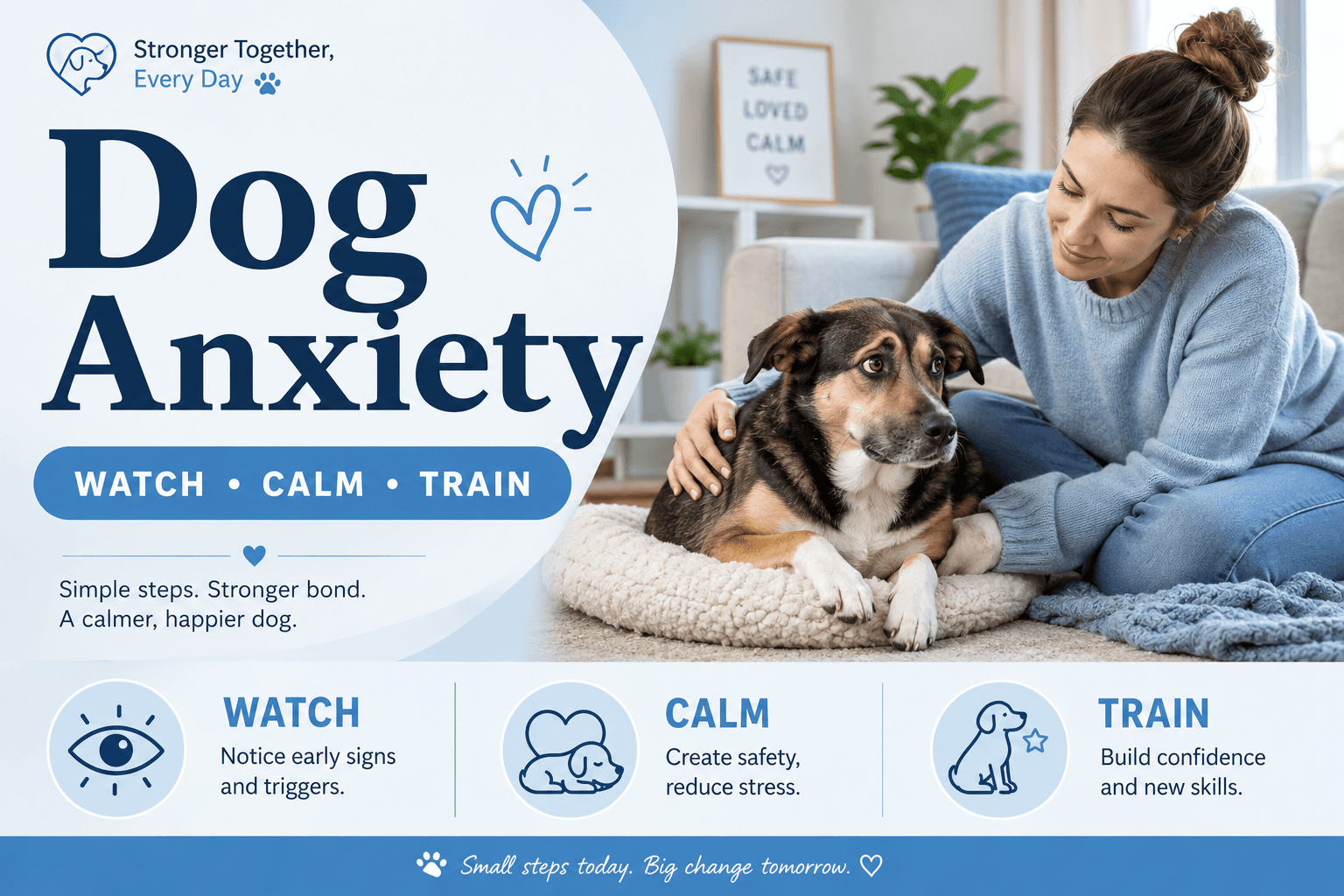
Direct Answer: Dog Anxiety
Dog anxiety is a state of fear, stress, or anticipation of threat that can show up as barking, pacing, panting, trembling, hiding, destructive chewing, clinginess, escape attempts, loss of appetite, excessive licking, house accidents, or aggression. The best response is to identify the trigger, reduce exposure while training, build predictable routines, reward calm behavior, avoid punishment, improve enrichment, check for pain or illness, and get veterinary or behavior-professional help when anxiety is severe, sudden, dangerous, or linked to separation distress.
The first step is not buying a calming product. The first step is tracking the pattern. When does the anxiety start? What happened before it? What does the dog do? What does the owner do? What reward or relief happens afterward? A useful dog anxiety plan targets the trigger and the routine, not just the visible meltdown.
Why This Happens
Anxiety is not one behavior. It is an internal state that can produce many outward behaviors. One dog barks at windows. Another hides during storms. Another destroys doors when left alone. Another refuses food when guests visit. Another pants and paces at night. These dogs may all be anxious, but they do not need the same plan.
Merck Veterinary Manual’s overview of behavior problems in dogs describes anxiety as a response to fear or apprehension when an animal anticipates a threat. VCA’s fears, phobias, and anxiety guidance also notes that underlying illness or pain can contribute to new or heightened fear responses.
That is why dog anxiety should not be dismissed as stubbornness. If the dog is panicking, punishment does not teach calm. It usually adds another reason to feel unsafe.
What To Do First
Start with a seven-day anxiety log. Record the time, place, trigger, body language, duration, owner response, food timing, exercise, sleep, stool, appetite, and whether the dog recovered quickly or stayed unsettled. This log is more useful than guessing from memory.
Next, reduce obvious triggers while you build skills. If the dog panics at the front window, block the view. If the dog barks at hallway noise, use white noise and move the bed. If the dog spirals before meals, make feeding predictable and stop rewarding barking or jumping with faster food.
Use dog won’t stop barking if noise is the main symptom. Barking is often the visible part of dog anxiety, but the trigger underneath matters more than the sound.
The Feeding Loop Behind Dog Anxiety
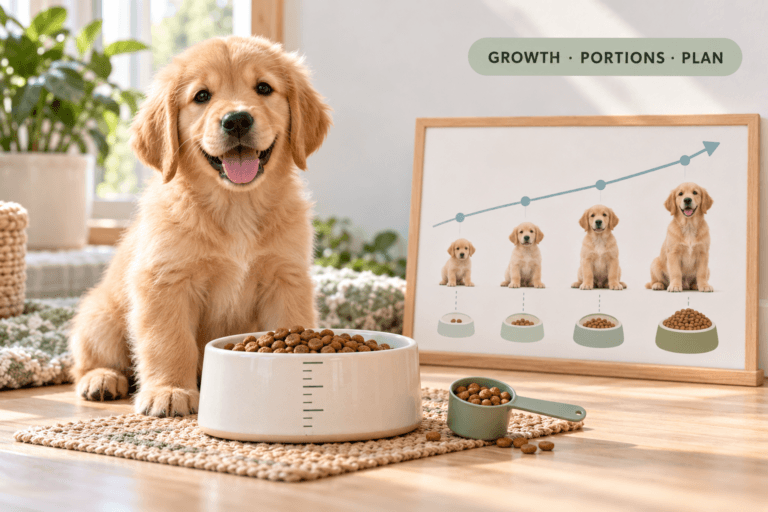
Food can become part of the anxiety loop. The dog does not know when breakfast will happen. The dog watches the owner. The owner moves toward the kitchen. The dog barks, jumps, whines, spins, or paws. The owner feeds quickly to stop the noise. Now the dog has learned that anxious pressure makes food appear.
The next day, the dog starts earlier. The owner reacts sooner. The behavior intensifies. What looks like hunger may be routine anxiety mixed with learned demand behavior.
A better dog anxiety feeding loop is predictable and calm. Meals happen on schedule. Food preparation pauses during barking or jumping. Quiet sitting, mat behavior, or waiting behind a gate moves the routine forward. The dog learns that calm behavior controls the outcome.
The Emotional Trigger Owners Miss
The emotional trigger is urgency. When a dog trembles, cries, barks, or destroys something, owners naturally want the behavior to stop immediately. They comfort too intensely, scold, feed, release from confinement, or rush through the trigger. The dog may get short-term relief, but the anxiety pattern remains.
This does not mean owners should ignore distress. It means the response must be structured. Calm support, distance from the trigger, predictable cues, and training below the panic threshold work better than dramatic reactions.
For food-linked stress, use scientific pet feeding schedule. A dog with predictable meals has one less daily uncertainty to monitor.
The Addiction Mechanism
The addiction mechanism is relief. The dog panics, barks, paws, scratches, or clings. The trigger stops, the owner returns, food appears, the door opens, or the dog is released. Relief is powerful. If anxious behavior repeatedly creates relief, the behavior becomes more likely.
This is especially clear in separation-related cases. The dog panics when alone. The owner returns. The dog feels relief. The dog does not understand the owner would have returned anyway. The anxiety pattern strengthens unless departures are rebuilt carefully.
Effective dog anxiety work teaches the dog that calm behavior also creates safety, access, and reward. The goal is not suppression. The goal is emotional recovery.
Common Dog Anxiety Signs
Common signs include pacing, panting when not hot, trembling, whining, barking, hiding, drooling, yawning, lip licking, refusing food, clinginess, destructive chewing, door scratching, escape attempts, house accidents, scanning, tail tucked posture, pinned ears, whale eye, excessive licking, and sudden irritability.
Some signs are subtle. A dog that stops taking treats, turns away, freezes, lowers the body, or repeatedly checks exits may already be anxious. Waiting until full barking or panic means the dog is already over threshold.
A strong dog anxiety plan starts with early signals. The earlier you interrupt the stress climb, the easier training becomes.
Separation Anxiety
Separation anxiety is more than a dog disliking alone time. It can involve panic when separated from the owner, especially when paired with barking, howling, pacing, drooling, destructive behavior near doors or windows, escape attempts, or house soiling while the owner is gone.
The ASPCA’s separation anxiety guidance describes barking, howling, chewing, digging, destruction, escape attempts, pacing, and elimination as possible signs when dogs are left alone or separated from their guardians.
If dog anxiety happens mainly when the dog is alone, do not rely on punishment, shock collars, or simply letting the dog “cry it out.” Separation distress usually needs controlled absence training and may need veterinary behavior support.
Noise Anxiety
Noise anxiety can be triggered by thunder, fireworks, construction, trucks, alarms, vacuum cleaners, motorcycles, or household appliances. The dog may hide, shake, pant, pace, bark, cling, or try to escape.
Prepare before the noise season. Build a safe space. Use sound buffering. Close curtains. Offer calm presence. Pair low-volume recordings with rewards only when the dog is relaxed. Do not flood the dog with full-volume noise and expect it to “get used to it.”
For severe noise phobia, speak with a veterinarian before predictable events such as fireworks. Some dogs need a medical plan in addition to training.
Meal-Time Anxiety
Meal-time dog anxiety often looks like barking, spinning, jumping, guarding, gulping food, trembling near the bowl, or crowding the feeder. It can come from hunger timing, previous food insecurity, competition with other pets, inconsistent schedules, or owner reactions.
Use measured meals in a quiet location. Feed dogs separately if there is competition. Teach waiting on a mat. Use slow-feeding tools for gulping. Do not make the dog fight for access to food.
For fast eaters, use how to stop my dog from inhaling his food and slow feeder dog bowl for large breeds. A calmer bowl routine often lowers daily arousal.
Walk Anxiety
Some dogs become anxious on walks because of traffic, strangers, other dogs, children, bikes, slick surfaces, loud areas, or past bad experiences. They may stop moving, pull home, bark, lunge, scan, freeze, or refuse treats.
Make walks easier before making them longer. Choose quieter routes. Increase distance from triggers. Reward checking in. Let the dog sniff. Avoid forcing direct greetings. If the dog cannot take food, the situation may already be too intense.
A walk should build confidence, not prove toughness. Repeatedly dragging an anxious dog into overwhelming environments can make dog anxiety worse.
Crate Anxiety
Crates can help some dogs and panic others. Crate anxiety may show as barking, drooling, pawing, biting bars, bending wires, trying to escape, or soiling the crate. This is not ordinary protest if the dog is injuring itself or panicking.
Build crate value gradually. Feed near the crate, then inside with the door open, then close the door briefly while calm. Use short sessions. Do not use the crate only when leaving for long periods.
If the dog has severe separation distress, crating may make panic worse. Use professional guidance before forcing confinement.
Night Anxiety
Night anxiety can come from pain, digestive discomfort, needing to eliminate, hearing outdoor sounds, separation from the owner, senior cognitive changes, temperature, or a disrupted routine. The dog may pace, bark, whine, pant, or wake repeatedly.
Check the basics first: final potty break, water access, bedding, room temperature, meal timing, pain signs, and whether new noises are present. Sudden night anxiety in an adult or senior dog deserves a veterinary check.
Use pet hydration tips. Water access and comfort should be settled before treating night restlessness as purely behavioral.
Puppy Anxiety
Puppies can be anxious because the world is new. New sounds, crates, alone time, grooming, car rides, strangers, and household routines can overwhelm them. Early handling should be calm, short, and predictable.
Teach independence in tiny pieces. Reward calm rest away from the owner. Pair new experiences with positive outcomes. Do not flood a puppy with crowds, noise, and handling all at once.
If a puppy’s dog anxiety includes refusal to eat, repeated diarrhea, extreme hiding, panic when touched, or inability to recover after ordinary events, speak with a veterinarian or qualified trainer early.
Senior Dog Anxiety
Senior dogs may become anxious because of pain, hearing loss, vision loss, cognitive changes, disrupted sleep, urinary urgency, or less tolerance for household chaos. A senior dog that suddenly paces, barks at night, shadows the owner, or startles easily should not be dismissed as “just old.”
Veterinary evaluation matters. Pain management, environmental support, predictable routines, night lighting, non-slip surfaces, and easier access to water and potty breaks can make a major difference.
For senior dogs, dog anxiety management should be gentle and medical-aware. Training alone cannot fix untreated discomfort.
How Feeding Routine Can Help
Predictable feeding does not solve every anxiety problem, but it reduces daily uncertainty. Dogs learn patterns. If meals, walks, rest, and owner departures are chaotic, some dogs become hypervigilant because every movement might matter.
Use a consistent feeding location. Keep portions measured. Avoid emotional snacks every time the dog looks worried. If using a feeder, test portions and schedule reliability so the dog’s routine remains stable.
A smart automatic pet feeder with app control can help owners deliver routine meals without turning every anxious look into manual feeding.
Smart Feeder Placement and Anxiety
Feeder placement matters for anxious dogs. A bowl near a doorway, loud appliance, slippery floor, active child zone, or another pet’s path can make meals tense. The dog may eat fast, guard, bark, or avoid the area.
Place the feeder in a quiet, stable location where the dog can eat without being cornered. Use a non-slip surface. Keep other pets away if competition exists. Do not place the feeder where delivery noise, hallway movement, or window triggers happen.
Use smart feeder placement. Environment design is one of the cheapest ways to lower dog anxiety during daily meals.
Do Not Use Punishment as the Main Tool
Punishment may interrupt behavior, but it often does not change the underlying emotion. A dog that is punished for barking at thunder may still fear thunder and may become afraid of the owner too. A dog shocked for barking when alone may still panic silently.
Reward-based training, counterconditioning, desensitization, management, and veterinary support are safer foundations. The dog needs to learn that the trigger predicts safety, distance, food, or calm outcomes, not conflict.
For barking-heavy cases, use dog won’t stop barking. The answer is usually trigger control and alternate behavior, not louder correction.
Counterconditioning and Desensitization
Counterconditioning means changing the dog’s emotional response to a trigger. Desensitization means exposing the dog to a very low version of the trigger that does not cause panic, then building gradually.
For example, a dog afraid of door sounds may first hear a soft recording at low volume while receiving rewards. A dog anxious about departures may first practice the owner touching keys without leaving. A dog worried on walks may begin far away from other dogs and receive rewards for calm observation.
The key is staying below threshold. If the dog is already barking, lunging, shaking, or refusing food, the setup is too hard. Effective dog anxiety training works before the panic point.
Enrichment Without Over-Arousal
Enrichment helps anxious dogs when it is structured. Sniff walks, chewing, food puzzles, scent games, calm training, and predictable rest can reduce stress. Constant high-energy play can make some dogs more aroused rather than calmer.
Balance movement with decompression. A dog that only gets frantic fetch may remain wired. A dog that gets sniffing, chewing, and rest may settle better.
Use food enrichment carefully. Count calories, especially for dogs on weight plans. Use pet nutrition tips to keep training food from becoming uncontrolled feeding.
When Food Refusal Matters
An anxious dog may refuse food during triggers. That tells you the dog is over threshold. Do not assume the food is not good enough. The emotional state may be too intense for eating.
Food refusal can also signal illness, pain, nausea, dental problems, or digestive trouble. If appetite changes persist outside the trigger situation, schedule a veterinary check.
A dog anxiety plan should not use hunger to force training. The dog needs easier exposures, not more pressure.
Clean Feeding Station, Calmer Routine
Food odors, dirty bowls, stale kibble, pests, and messy feeding areas can create avoidable stress. Some dogs become more agitated around bowls when food areas are chaotic or shared with other pets.
Wash bowls, keep the feeder dry, remove old crumbs, and check the chute or bowl area if using an automatic feeder. Clean feeding equipment makes the routine more predictable and reduces one possible source of discomfort.
Use clean smart pet feeder and pet feeder maintenance. A clean system will not cure dog anxiety, but it removes unnecessary friction.
When to Ask for Professional Help
Get help when anxiety is severe, escalating, paired with aggression, linked to self-injury, causing escape attempts, happening when alone, or appearing suddenly in an adult or senior dog. Also seek help if the dog cannot recover after triggers or if the household is changing its life around the dog’s panic.
Merck’s diagnosing behavior problems in dogs explains that a behavior history includes onset, duration, frequency, pattern changes, prior responses, and the dog’s 24-hour schedule. Bring that information to your veterinarian or behavior professional.
Medication is not a moral failure when a dog is truly anxious. For some dogs, veterinary medication lowers panic enough for training to work. Do not use human anxiety medication or supplements without veterinary instruction.
Common Failure Pattern
The most common failure pattern is waiting too long. Owners ignore early stress signs, then react only when the dog barks, bites, destroys, or panics. By then, the dog has rehearsed the full anxiety sequence many times.
The second failure is using punishment. The dog may get quieter, but the fear remains. Quiet panic is not recovery.
The third failure is changing too many things at once: new crate, new food, new trainer, new collar, new schedule, new room. An anxious dog needs clarity, not constant experiments.
Real-World Impact
The real-world impact of managing dog anxiety correctly is a dog that recovers faster, eats more calmly, rests better, barks less reactively, handles departures more predictably, and trusts the household routine. The owner stops guessing and starts reading the pattern.
The impact of poor management is predictable: escalating barking, damaged doors, food refusal, leash explosions, sleep disruption, owner frustration, and a dog that spends more of the day scanning for threat.
For routine support, compare the dog feeders collection. Feeding tools help most when combined with trigger tracking, training, enrichment, and health checks.
Can This Be Fixed?
Yes, many dog anxiety patterns can be improved with a structured routine reset, trigger management, reward-based training, and veterinary support when needed. Start with a log. Reduce triggers. Stabilize meals. Improve sleep. Add calm enrichment. Teach mat behavior. Reward recovery. Avoid punishment. Check pain, digestion, hearing, vision, and senior changes.
Run a fourteen-day anxiety reset. Feed on schedule. Walk in easier environments. Use a safe rest area. Block unnecessary triggers. Practice one calm skill daily. Record anxiety intensity from 1 to 5. If symptoms worsen or safety is at risk, get professional help rather than escalating corrections.
For daily meal structure, start with the smart feeders collection. A feeder supports consistency; the anxiety plan still needs training and health-aware management.
Who Should Walk Away and Who Should Use This
Walk away from punishment-based shortcuts, shock collars for panic barking, forcing the dog into overwhelming triggers, flooding noise exposure, feeding every anxious behavior, and assuming sudden anxiety is only behavioral. Also walk away from treating separation distress as simple disobedience.
Use this dog anxiety guide if your dog paces, pants, barks, hides, trembles, refuses food, panics when alone, reacts to noises, becomes tense at meals, or cannot settle in normal household routines. It is especially useful for puppies, rescues, senior dogs, apartment dogs, noise-sensitive dogs, food-insecure dogs, and dogs with chaotic schedules.
For dogs that need slower, calmer meals, a timed slow feed automatic feeder can help reduce meal-time arousal. Use it with calm placement, measured portions, and training for quiet waiting.
Mini FAQ
What are common dog anxiety signs?
Common dog anxiety signs include pacing, panting, trembling, whining, barking, hiding, drooling, destructive chewing, clinginess, escape attempts, appetite changes, and house accidents.
How do I calm dog anxiety at home?
Calm dog anxiety by identifying triggers, reducing exposure, using predictable routines, rewarding calm behavior, providing safe rest areas, adding structured enrichment, and avoiding punishment.
Can feeding schedule affect dog anxiety?
Yes, an inconsistent feeding schedule can increase anticipation and demand behavior in some dogs. Predictable measured meals can reduce food-related stress and make behavior easier to read.
Is dog anxiety the same as bad behavior?
No, dog anxiety is not the same as bad behavior. Anxiety is an emotional state that can produce barking, chewing, hiding, aggression, or escape attempts. The trigger must be addressed.
When does dog anxiety need a veterinarian?
Dog anxiety needs veterinary input when it is sudden, severe, escalating, linked to aggression or self-injury, paired with health changes, or mainly happens when the dog is left alone.
Can an automatic feeder help an anxious dog?
An automatic feeder can help an anxious dog when anxiety is linked to unpredictable meals or owner-driven feeding pressure. It does not replace training, enrichment, trigger control, or veterinary care.
The clearest way to handle dog anxiety is to stop reading only the loudest symptom. Track the trigger, stabilize the routine, lower the difficulty, reward recovery, protect sleep and meals, and get help when the dog is panicking rather than learning. Calm is not forced into a dog. It is built through predictable safety.