
Pet feeder desiccant pack life is shorter than many owners assume. A desiccant pack inside a smart feeder does not stay useful forever. It absorbs moisture every time the lid opens, every time humid air enters the hopper, and every time dry food sits near a kitchen, water bowl, patio door, laundry area, or outdoor station. Once the pack is saturated, it stops protecting kibble and becomes only a packet sitting in the lid.
For daily dry-food routines, a smart automatic pet feeder with app control works best when food stays dry, loose, and easy to dispense. The schedule controls meal timing, but the desiccant pack helps protect the food path. If pet feeder desiccant pack life is ignored, the feeder can develop clumps, odor, stale kibble, and jams.
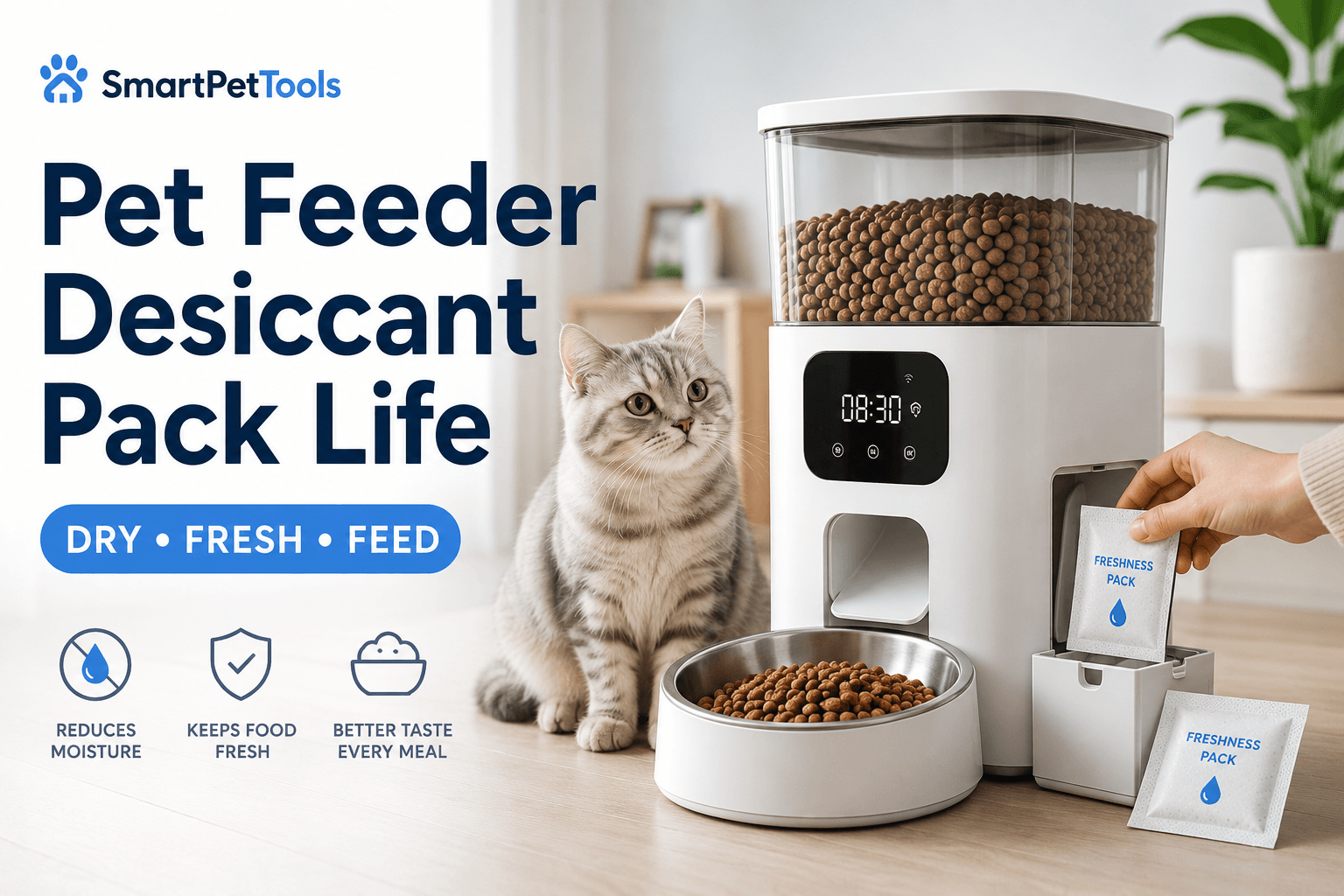
Direct Answer: Pet Feeder Desiccant Pack Life
Pet feeder desiccant pack life depends on humidity, feeder location, lid opening frequency, food moisture, hopper size, seal quality, and whether the feeder sits near water or outdoors. Most owners should treat the pack as a consumable part, inspect it regularly, replace it when the indicator changes, when kibble clumps, when odor appears, after deep cleaning, after humid weather exposure, or according to the feeder manufacturer’s replacement schedule.
The safest rule is simple: do not wait until food smells stale or the feeder jams. A pet feeder desiccant pack life check should be part of normal feeder maintenance. The pack protects dry food only while it still has moisture-absorbing capacity.
Why This Happens
Dry pet food is not immune to moisture. Kibble can absorb humidity, soften, clump, release odor, collect dust, and stick inside the hopper or chute. A feeder hopper is not just a storage bin. It is part of a dispensing machine. If food texture changes, the feeder’s portion output can change too.
The FDA’s proper storage guidance for pet food and treats says dry pet food should be stored in a cool, dry place and that excess heat or moisture can affect food quality. That principle applies directly to smart feeders because the hopper stores food between meals.
A desiccant pack absorbs moisture from the air trapped around the food. It does not make spoiled food safe. It does not replace correct storage. It does not protect food if the feeder lid is loose, the hopper is dirty, or the feeder is placed in a damp location. Pet feeder desiccant pack life is only one layer of moisture control.
What To Do First
Start by checking the feeder location. If the feeder sits beside a water fountain, sink, humidifier, bathroom, laundry room, patio door, open window, garage, balcony, or outdoor enclosure, assume the desiccant pack works harder and expires sooner.
Next, inspect the food. Look for clumps, soft pieces, stale odor, visible dust, oily residue, condensation, ants, or kibble sticking near the hopper outlet. If these signs appear, replace the pack and clean the feeder before refilling.
Use pet feeder desiccant replacement for the replacement process. A proper pet feeder desiccant pack life routine includes inspection, cleaning, drying, and refill discipline.
The Feeding Loop Behind Desiccant Failure
The failure loop starts when the owner fills the hopper and forgets the desiccant pack. The feeder works normally for several days or weeks. Humidity enters slowly. Kibble near the bottom becomes dustier or stickier. The rotor or chute begins dispensing unevenly.
Then the feeder under-dispenses or jams. The owner feeds manually, shakes the feeder, or presses manual feed again. Later, the blockage loosens and extra food drops. The pet receives inconsistent meals because moisture was allowed to change the food path.
A controlled pet feeder desiccant pack life routine breaks that loop. Replace the pack before the food changes texture. Clean the food path before a jam. Test output before trusting the next schedule.
The Emotional Trigger Owners Miss
The emotional trigger is false freshness. A full feeder looks prepared. A sealed lid looks safe. An app schedule looks controlled. Owners assume the food inside is still in good condition because the feeder is modern and closed.
That assumption is risky. A closed hopper can still hold humid air, food dust, old oil residue, and stale kibble. The desiccant pack helps only while it is active. Once saturated, it no longer provides meaningful moisture control.
Use clean smart pet feeder to keep the storage zone clean. A fresh desiccant pack inside a dirty hopper is only a partial fix.
The Addiction Mechanism
The addiction mechanism is convenience dependency. Owners like filling the feeder and forgetting it. The more convenient the feeder feels, the easier it is to ignore moisture, crumbs, and expired desiccant packs.
This creates a hidden maintenance debt. The feeder keeps working until it does not. Then the owner treats the jam as a sudden failure, even though the food path has been changing for days.
A strong pet feeder desiccant pack life habit keeps convenience under control. The feeder can automate meal timing, but it cannot inspect humidity for the owner unless the owner checks the pack, food, lid seal, and hopper.
How Long Does a Desiccant Pack Last?
There is no universal lifespan. A pack may last longer in a cool, dry, indoor room with a tight lid and infrequent opening. It may expire quickly in a humid home, outdoor station, open hopper, or feeder that is refilled several times per week.
If the feeder uses an indicator desiccant, color change is the best practical signal. Many indicating silica gel products change color as moisture saturation increases. AGM Container’s indicating silica gel explanation describes how indicator materials can show moisture saturation through color change, though owners should follow the specific packet instructions supplied with their feeder.
If there is no indicator, replace on a conservative schedule and replace sooner after humid exposure. In practical feeder use, pet feeder desiccant pack life should be judged by conditions, not by a fixed calendar alone.
Signs the Desiccant Pack Is Done
Replace the pack when the indicator changes, the packet feels swollen or damp, the feeder develops stale odor, kibble clumps, food dust sticks to the hopper, ants appear, the chute collects residue, or the feeder begins dispensing unevenly.
Also replace after accidental water exposure, after deep cleaning if moisture entered the lid compartment, after outdoor humid weather, after storing the feeder unused with food inside, or after switching to a more crumb-heavy food.
A pet feeder desiccant pack life check should happen before the feeder fails. If the first warning is a jam, the pack was replaced too late.
Humidity Changes the Replacement Schedule
Humidity is the main variable. A feeder in a dry bedroom may not challenge the pack much. A feeder in a kitchen near steam, a laundry room, or a covered patio may saturate the pack faster. Homes in tropical or rainy climates should treat replacement as a frequent maintenance item.
Air conditioning can help reduce indoor humidity, but it does not protect the feeder if the lid opens often or the food tank is repeatedly topped up. Every refill brings fresh air into the hopper.
For outdoor or semi-outdoor setups, use outdoor smart pet feeder enclosure. Outdoor stations shorten pet feeder desiccant pack life unless weather, airflow, shade, and moisture control are handled correctly.
Opening the Lid Uses Up the Pack
Every lid opening exchanges dry protected air for room air. If the owner opens the hopper several times per day to check food, add kibble, show guests the feeder, or manually stir the tank, the desiccant pack must absorb more moisture.
Refilling habits matter. It is better to empty old food, clean and dry the hopper, then refill deliberately than to top fresh kibble over old kibble again and again. Topping up traps older, dustier food near the bottom where it reaches the rotor first.
A practical pet feeder desiccant pack life rule is to replace or inspect the pack whenever the hopper is fully emptied and cleaned. That keeps moisture control tied to real feeding maintenance.
Do Not Let Pets Reach the Packet
A desiccant pack should remain in the feeder’s designated holder, not loose inside the food tank. Loose packets can tear, fall into food, block the chute, or become accessible to pets. Use only the type and placement recommended by the feeder design.
Many packets are labeled “do not eat” because they are not food. If a pet chews or swallows a packet, contact a veterinarian or poison-control resource with the packet details. Do not guess based on packet appearance.
Safe pet feeder desiccant pack life management means replacing the pack before it becomes brittle, torn, damp, or loose. The pack should protect food without becoming a foreign-object risk.
Food Storage Outside the Feeder
The desiccant pack cannot fix poor food storage before kibble enters the feeder. If the main food bag is stored open in a humid room, the feeder receives food that is already exposed. The pack inside the feeder then has to work harder and may not recover food quality.
Store dry food in its original bag when possible, sealed tightly and kept in a cool, dry place. If using a storage container, clean and dry the container before refilling. The FDA also advises washing and drying storage containers between bags to remove residual fat and crumbs.
For feeding accuracy, pair storage discipline with pet feeder calibration. Moist or clumpy kibble can change how much food drops per portion, even if the schedule stays the same.
Desiccant Pack and Feeder Jams
An expired desiccant pack can lead indirectly to jams. Moisture makes kibble softer, stickier, or more likely to clump. Dust can attach to damp surfaces. The rotor assembly and chute then move food less consistently.
If the feeder jams, do not only clear the chute. Check the hopper, lid seal, desiccant holder, food texture, and location. A jam caused by moisture will return if the humidity problem remains.
Use pet feeder jammed and clean pet feeder rotor assembly. A smart pet feeder desiccant pack life routine prevents the food path from turning sticky before it blocks.
Cleaning Before Replacement
Do not replace the pack and ignore the dirty hopper. If the tank has stale dust, oil film, soft crumbs, or residue, the new pack is starting in a contaminated environment. Clean first, dry fully, then install the new pack.
Wash only approved removable food-contact parts. Keep water away from electronics, ports, motors, and battery compartments. Dry the hopper, lid, chute, bowl, tray, and desiccant holder completely before refilling.
Use pet feeder maintenance. Desiccant replacement should be one task inside a full maintenance cycle, not a standalone ritual.
Common Failure Pattern
The most common failure pattern is replacing the desiccant pack only after the feeder smells bad. Odor is a late signal. By then, food dust, oils, and moisture may already be affecting the hopper and chute.
The second failure is leaving the packet loose inside the food. This can block the food path or become accessible to the pet. The pack belongs in the designated holder.
The third failure is assuming one pack lasts the same in every home. A dry apartment and a humid outdoor catio are not the same environment. Pet feeder desiccant pack life must be adjusted to real conditions.
Real-World Impact
The real-world impact of replacing desiccant packs on time is better feeder reliability. Kibble stays drier. Food flows more predictably. Jams are less likely. Odor drops. The hopper stays cleaner. The owner can trust scheduled meals with less manual correction.
The impact of ignoring the pack is hidden instability: stale food, clumping, ants, food dust paste, rotor resistance, uneven portions, and unnecessary feeder troubleshooting. The feeder may look connected and functional while the food inside is slowly changing.
For owners who need remote meal checks, a smart WiFi pet feeder with camera can help verify food delivery, but it cannot judge whether the desiccant pack is saturated. Moisture control still needs inspection.
Can This Be Fixed?
Yes, weak moisture control can be fixed with a full feeder reset. Empty the hopper. Discard stale or clumped kibble. Remove the old desiccant pack. Clean approved parts. Dry everything fully. Install a fresh pack in the correct holder. Refill with properly stored food. Run test portions. Check the feeder again after several meals.
Run a seven-day moisture check. Record food texture, odor, clumps, hopper condensation, room humidity if known, lid openings, feeder location, desiccant indicator color, and portion consistency. If the pack saturates quickly, the feeder location or storage method needs correction.
For feeder selection, start with the smart feeders collection. Choose based on lid seal, desiccant holder design, cleaning access, hopper size, food path reliability, and how easily the owner can inspect the food.
Who Should Walk Away and Who Should Use This
Walk away from treating desiccant packs as permanent parts, placing loose packets in food, ignoring indicator changes, refilling over stale kibble, storing food in humid areas, or using damp feeder parts after cleaning. These habits shorten pet feeder desiccant pack life and increase jam risk.
Use a desiccant replacement routine if your feeder stores dry food for scheduled meals, sits in a humid room, uses a large hopper, is opened often, has shown clumps or odor, or has jammed after damp weather. It is especially useful for automatic cat feeders, automatic dog feeders, camera feeders, outdoor stations, and homes using crumb-heavy kibble.
Cat owners can compare the cat feeders collection for smaller measured meals and easy-clean storage. Dog owners can use the dog feeders collection when larger kibble and higher food volume make moisture control more important.
Mini FAQ
How long does a pet feeder desiccant pack last?
Pet feeder desiccant pack life depends on humidity, feeder location, lid opening frequency, hopper seal, and food condition. Replace it according to the feeder instructions, when the indicator changes, or whenever clumping, odor, or damp exposure appears.
How do I know when to replace the desiccant pack?
Replace the desiccant pack when the indicator changes color, the packet feels damp or swollen, kibble clumps, the hopper smells stale, food sticks near the chute, or the feeder has been exposed to humid conditions.
Can I reuse a pet feeder desiccant pack?
Do not reuse a pet feeder desiccant pack unless the product instructions clearly say it is rechargeable and explain how to recharge it safely. Most feeder owners should replace packets rather than experimenting.
Can I put a loose silica gel packet inside the food tank?
No, do not put a loose desiccant packet inside the food tank. Use the feeder’s designated desiccant holder and the correct replacement type so the packet cannot tear, block food, or become accessible to pets.
Does a desiccant pack stop pet food from spoiling?
A desiccant pack helps control moisture, but it does not make old, stale, contaminated, or poorly stored pet food safe. Food still needs cool, dry storage, clean containers, and normal freshness checks.
Why is my feeder still clumping after I replaced the pack?
Your feeder may still clump because the hopper is dirty, parts are damp after cleaning, the food was already exposed to moisture, the lid seal is weak, the feeder is in a humid location, or the kibble creates excessive dust.
The best pet feeder desiccant pack life rule is practical: inspect before problems, replace before saturation, clean before refilling, and keep the feeder in a cool, dry location. A fresh desiccant pack cannot replace maintenance, but it can help keep dry food flowing cleanly through the hopper, rotor, chute, and bowl.