
An elevated pet feeder for seniors can make meals easier for older dogs and cats that struggle with bending, stiff joints, neck discomfort, weak posture, or unstable floor-level bowls. But height is not automatically safer. A raised feeder only helps when the bowl height, stability, food access, cleaning routine, and the pet’s medical condition are matched correctly.
For senior pets that also need predictable meal timing, smart feeders can support routine control. The elevated station supports access. The feeding schedule controls timing. The nutrition plan controls health.
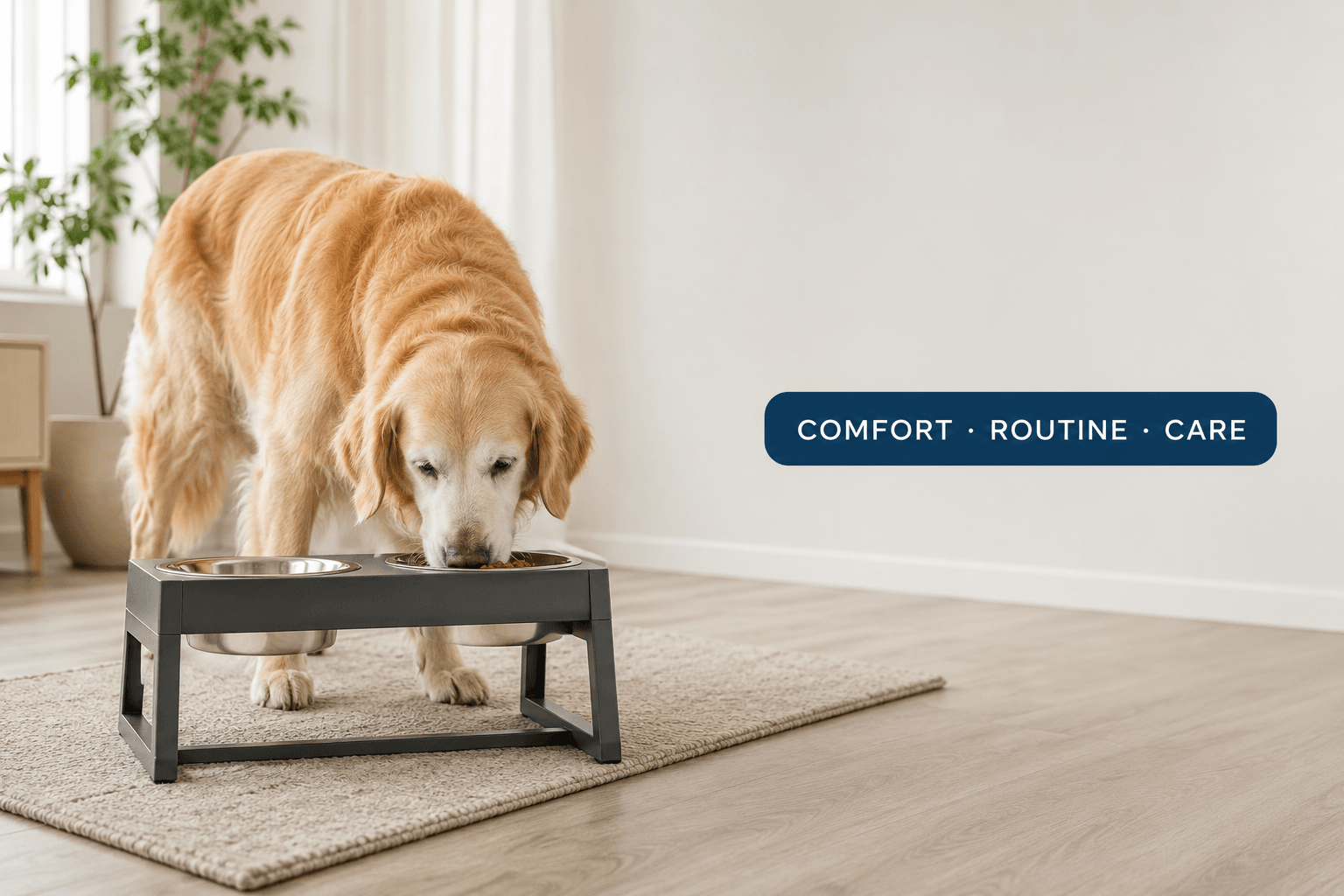
Direct Answer: elevated pet feeder for seniors
An elevated pet feeder for seniors is useful when an older pet has trouble reaching a low bowl, slides the bowl around, eats in an awkward posture, or avoids meals because feeding is physically uncomfortable. Choose a stable, non-slip feeder that brings the bowl close to chest height without forcing the pet’s head upward. Avoid extreme height, unstable stands, and designs that are hard to clean. For pets with arthritis, dental pain, swallowing problems, vomiting, weight loss, or sudden appetite changes, use veterinary guidance before treating the bowl as the solution.
Why This Happens
Senior pets often change how they eat before owners recognize why. A dog may hesitate at the bowl, spread its front legs, eat lying down, or walk away early. A cat may eat less because the bowl is too low, too narrow, or placed where jumping and bending are uncomfortable. The feeding problem can look like appetite loss when part of it is access difficulty.
An elevated pet feeder for seniors changes the posture requirement. Instead of bending sharply toward the floor, the pet can eat from a more accessible height. This may reduce mealtime strain for some older pets, especially when the feeder is stable and placed in a quiet feeding zone.
The mistake is assuming all senior pets need raised bowls. Some pets eat better from low bowls. Some need shallow bowls. Some need slow feeders. Some need medical care. A raised feeder is a tool, not a diagnosis.
What To Do
Use seven checks before choosing an elevated pet feeder for seniors. First, observe the pet’s normal eating posture. Second, choose a height that reduces bending without lifting the head too high. Third, make sure the feeder cannot slide, tip, or wobble. Fourth, use a bowl shape that does not press whiskers, nose, or jaw awkwardly. Fifth, choose easy-clean materials. Sixth, place the feeder where the pet does not need to climb, jump, or compete. Seventh, keep portions measured instead of using comfort as a reason to overfeed.
For daily control, pair the feeder with a fixed scientific pet feeding schedule. Senior pets often benefit from predictable meals because appetite changes, missed meals, and weight shifts become easier to notice.
If the senior pet eats too fast, a raised stand alone will not fix the speed problem. Consider whether a slow bowl, smaller meals, or a timed feeder is needed. For larger dogs, SmartPetTools explains speed and capacity issues in slow feeder dog bowl for large breeds.
Correct Bowl Height
The best height is usually the lowest height that clearly improves access. The pet should be able to eat with a relaxed neck, stable feet, and no need to stretch upward. A bowl that is too high can create a new posture problem.
For dogs, the feeder should generally sit below the shoulder and near the lower chest area, not near the throat. For cats, a slight raise is often enough. Many cats do not need a tall stand; they need a shallow, stable bowl that is easy to approach.
An elevated pet feeder for seniors should be tested, not assumed. Watch the first several meals. If the pet backs away, coughs, gulps, paws the stand, or leaves food behind, the height or bowl design may be wrong.
The Feeding Loop Behind This Problem
The feeding loop starts when the senior pet approaches the bowl, experiences discomfort or uncertainty, eats less or eats awkwardly, and the owner reacts. The owner may add tastier food, offer treats, hand-feed, or change portions without understanding the access issue.
A good elevated pet feeder for seniors can interrupt that loop by making the meal easier to reach. But the owner still needs to separate comfort from appetite. If the pet eats better after the bowl is raised, access was likely part of the problem. If the pet still avoids food, the issue may be medical, dental, digestive, stress-related, or diet-related.
This is why measured feeding matters. When food is measured and meals are scheduled, owners can see whether intake is truly changing instead of guessing from bowl appearance.
The Emotional Trigger Owners Miss
The emotional trigger is concern. Senior pets make owners more sensitive to every missed meal, slow bite, or unfinished bowl. That concern often leads to extra food, more treats, richer toppings, or constant bowl changes.
Some adjustment is reasonable, but emotional feeding can hide the real pattern. A pet may be gaining weight while the owner thinks it is being “helped.” Another pet may be losing weight because the owner keeps changing the bowl instead of checking health. An elevated pet feeder for seniors should reduce feeding friction, not replace monitoring.
The Addiction Mechanism
Food reward remains powerful in senior pets. If a pet refuses regular food and then receives high-value treats, the pet may learn that waiting produces better food. If the owner adds extras after every hesitant meal, the feeding routine becomes negotiation.
This does not mean owners should ignore appetite changes. It means the response should be structured. Check bowl access. Check dental comfort. Check weight. Check stool, vomiting, water intake, and energy. Then adjust the plan with evidence.
For nutrition boundaries, use reliable resources such as AVMA pet nutrition guidance and AAFCO pet food label guidance. A raised feeder improves access only if the food plan still makes sense.
Common Failure Pattern
A common failure pattern starts when an older dog or cat begins eating slowly. The owner buys a tall raised feeder, adds extra food, and assumes comfort has been solved. The pet still leaves food behind, but the owner blames age instead of checking dental pain, nausea, joint pain, or bowl height.
The correction is practical. Use a moderate height. Keep the feeder stable. Measure the portion. Track how much is actually eaten. Watch posture. If appetite, weight, or swallowing changes continue, involve a veterinarian. An elevated pet feeder for seniors should be one part of a senior-care system, not the whole answer.
Real-World Impact
The right elevated feeder can make meals calmer, cleaner, and easier for an older pet to approach. It can reduce bowl sliding, awkward bending, and floor-level feeding stress. It can also help owners notice intake patterns because the feeding station becomes more organized.
The wrong feeder creates different problems: poor height, unstable footing, spilled water, trapped food, unclean surfaces, or a posture that is worse than the original floor bowl. Senior pets need less friction, not a complicated feeding station.
Weight control also matters. Older pets may move less, so random extra feeding can become a slow weight problem. SmartPetTools covers this broader risk in pet obesity prevention and pet nutrition tips. Comfort feeding should still be measured feeding.
Can This Be Fixed?
Yes, many senior feeding access problems can be improved when bowl height, stability, meal timing, and health monitoring are handled together. Start with a simple feeder height, not an extreme one. Watch posture. Measure intake. Clean the bowl daily. Keep water easy to reach.
If the senior pet has sudden appetite loss, weight loss, vomiting, coughing during meals, difficulty swallowing, mouth pain, or repeated refusal to eat, do not rely on an elevated pet feeder for seniors as the fix. Those signs need veterinary attention. The feeder may support care, but it cannot diagnose the reason feeding changed.
Who Should Walk Away and Who Should Use This
Walk away from a tall raised feeder if the pet has no bending problem, eats comfortably from a low bowl, or becomes awkward when the bowl is lifted. Walk away from unstable stands, narrow bowls, and hard-to-clean designs. For senior pets, simple and stable usually beats decorative and tall.
Use an elevated pet feeder for seniors if your older dog or cat struggles with low bowls, stiff posture, sliding dishes, or uncomfortable mealtime positioning. Use a smart feeder if the bigger issue is missed meals or routine drift. Owners can compare options inside cat feeders, dog feeders, and smart feeders.
Mini FAQ
Is an elevated pet feeder good for senior pets?
An elevated pet feeder can be good for senior pets that struggle to bend, reach, or eat from floor-level bowls. It is not automatically better for every older pet. Test a moderate height and watch posture, appetite, and comfort.
How high should an elevated pet feeder be for seniors?
The feeder should be high enough to reduce bending but low enough to keep the neck relaxed. Avoid forcing the pet to stretch upward. For many cats, a small lift is enough; for dogs, the bowl should generally sit near lower chest height rather than throat height.
Can an elevated feeder help pets with arthritis?
It may help some arthritic pets by reducing the need to bend toward the floor. It does not treat arthritis itself. If the pet has pain, stiffness, limping, or appetite change, use veterinary guidance alongside feeder adjustments.
Is a raised feeder better for senior cats?
A raised feeder can help senior cats when low bowls are uncomfortable, but the height should be modest. Many cats also need shallow bowls, stable placement, and easy access without jumping or competition.
Is a raised feeder better for senior dogs?
A raised feeder can help senior dogs that strain when eating from the floor. Choose a stable, non-slip stand and avoid excessive height. Watch for gulping, coughing, or discomfort during meals.
What is the biggest mistake with an elevated pet feeder for seniors?
The biggest mistake is choosing a tall feeder without observing the pet’s posture and health. Senior feeding changes can come from pain, dental disease, nausea, or other medical issues. The feeder should improve access, not hide symptoms.
The clear conclusion is this: an elevated pet feeder for seniors is useful when it solves a real access problem with the right height, stable design, easy cleaning, and measured feeding routine. It should make meals easier, not taller by default. For senior pets, comfort, monitoring, and consistency matter more than the feeder style.