
The best feeder for Labradors is the one that controls the problem Labradors create most often: fast eating, oversized portions, or food pressure around the kitchen. A big bowl alone is not enough. Most Labrador feeding problems come from a loose system, not from hunger alone.
For homes that need more structure, a feeder should match the real job. Some Labradors need slower access to food. Some need fixed meal timing during work hours. Some need tighter portion control because they stay interested in food long after a correct meal. That is why many owners end up comparing dog feeders, basic feeders, and smart feeders by routine control rather than by appearance.
If your main problem is inconsistent mealtimes, a reliable option is a WiFi automatic pet feeder with button backup. If your Labrador eats too fast, the better starting point is slowing the eating pattern before increasing bowl size.
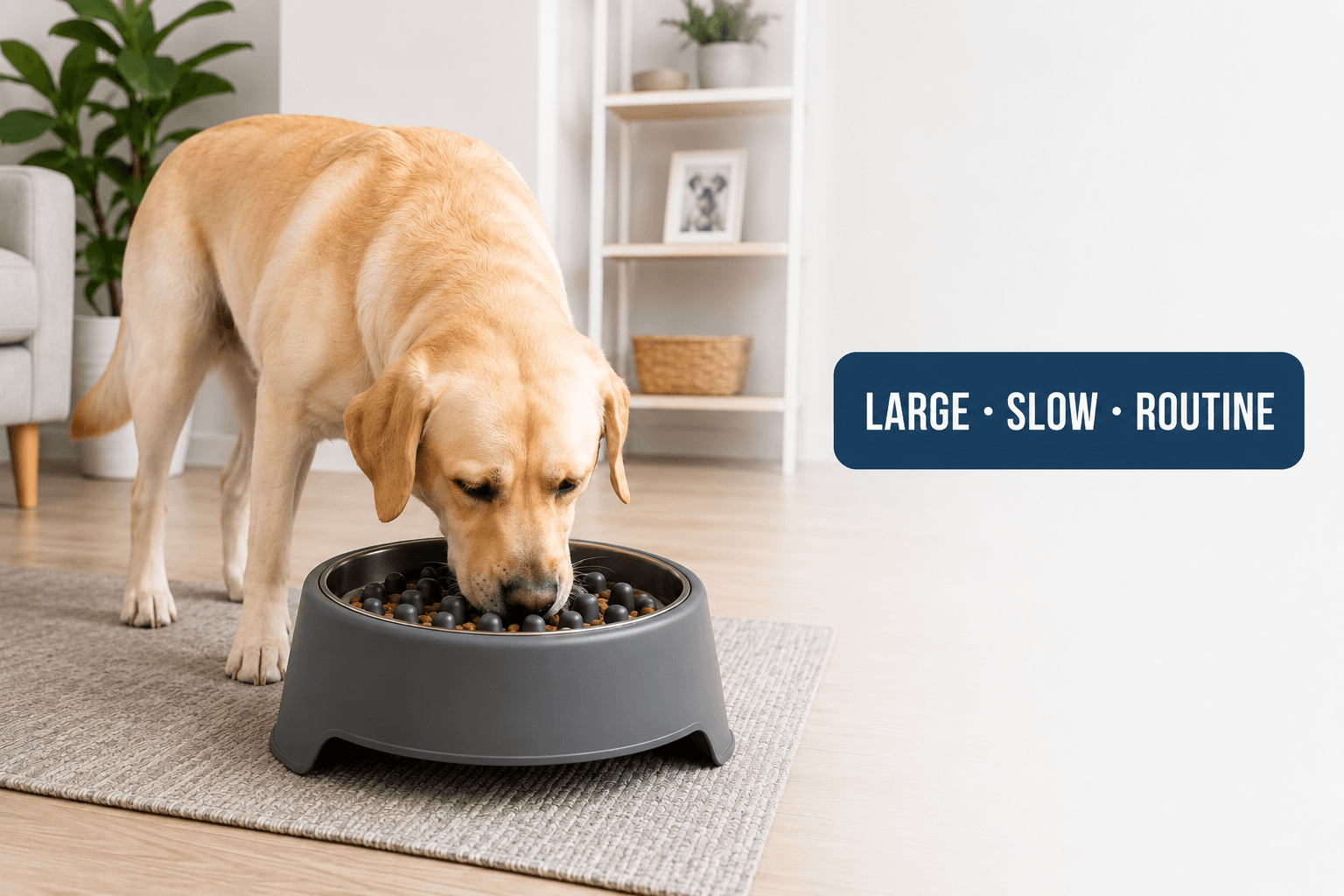
Direct Answer: best feeder for Labradors
The best feeder for Labradors is a large, stable, easy-clean feeder that controls portion size and matches the dog’s real feeding risk. If the Labrador gulps food, use a slow feeder. If the schedule is inconsistent, use an automatic feeder with dependable portion control. If the dog gains weight easily, measured meals matter more than bowl size.
Why This Happens
Labradors are strongly food-motivated, and that changes how a feeder should be chosen. In most home-feeding cases, the issue is not true hunger. The issue is reinforcement. If barking, staring, hovering, or following people leads to food, the behavior becomes part of the meal routine.
The best feeder for Labradors must reduce that reinforcement instead of decorating it. A regular open bowl gives fast access. A feeder that is too small creates refill friction. A weak plastic bowl may slide across the floor or become a chew target. A raised bowl may look premium but still fail at portion control.
For owners dealing with large-dog capacity and timing, SmartPetTools covers the bigger-device side in automatic dog feeder for large dogs guide. For overall meal structure, the stronger foundation is a scientific pet feeding schedule. Labradors usually need both: enough volume and clear routine boundaries.
What To Do
Start by identifying the main failure point. If your Labrador finishes meals too quickly, choose a slow feeder with a wide non-slip base and enough room for a full measured portion. If your schedule is the weak point, choose an automatic feeder with enough capacity for a large-breed routine. If your Labrador begs, steals food, or drifts upward in weight, fix measurement before buying a bigger bowl.
Then check the design details that matter for large dogs: bowl stability, cleaning ease, material strength, and realistic food capacity. A Labrador feeder should be hard to push, simple to wash every day, and practical enough that the household actually uses it correctly.
The best feeder for Labradors should also support the same daily plan described in how to feed your dog smart guide. A feeder cannot correct random snacks, double feeding, or family members adding food because the dog looks persuasive.
Slow Feeder vs Automatic Feeder for Labradors
A slow feeder solves speed. It is the better fit when the Labrador gulps, coughs during meals, finishes too quickly, or starts pressuring the owner immediately after eating. Choose a large-breed pattern that slows access without making the meal frustrating for a big muzzle.
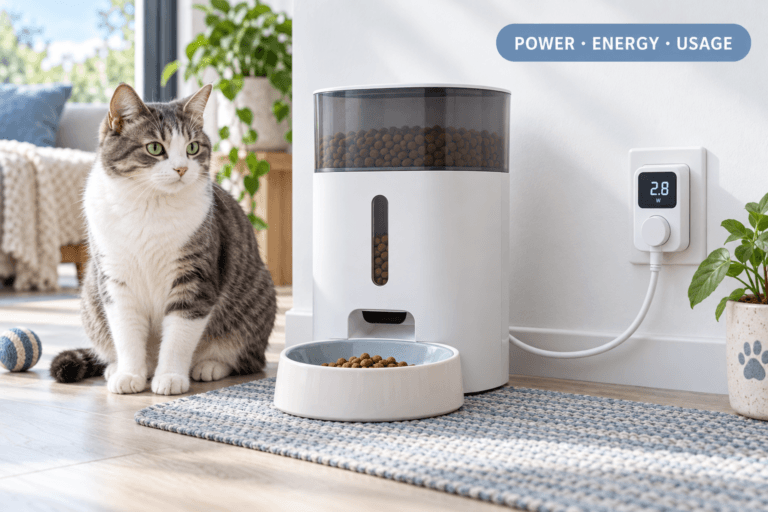
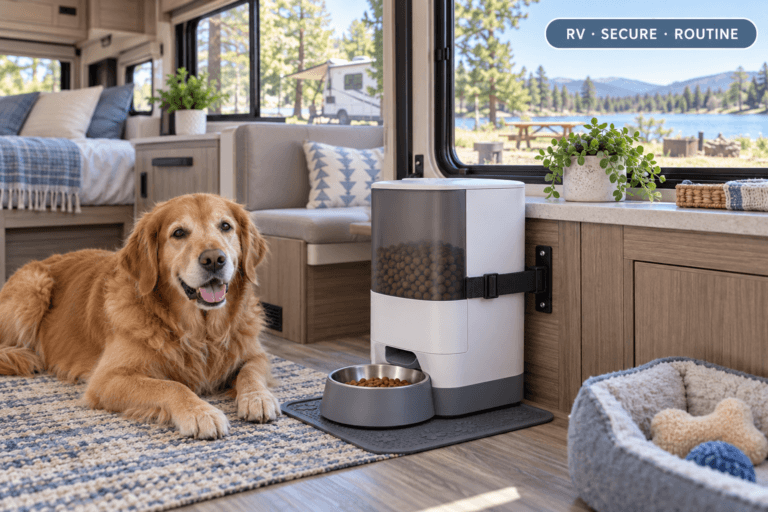
An automatic feeder solves timing. It is the better fit when meals are late, skipped, or inconsistent because of work hours. For Labradors, capacity matters more than marketing language. A small feeder built mainly for cats or toy breeds is often the wrong choice even if the app looks convenient.
In many homes, the best feeder for Labradors is a combined system: scheduled delivery for timing and slower eating for control. The right answer follows the dog’s failure pattern, not the product label.
Material and Design Checks
Stability and durability matter more for Labradors than for smaller dogs. Thin plastic bowls can slide, scratch, and hold odor over time. Soft silicone designs may work for calm eaters but are weaker choices for dogs that mouth or chew feeding tools. Stainless steel is often easier to clean and more durable, but stainless alone does not slow eating.
A good Labrador feeder should be wide enough for comfortable access, heavy enough to resist pushing, and simple enough to rinse without becoming a daily hassle. Avoid narrow maze designs that frustrate a broad muzzle. Avoid decorative feeders that look oversized but do nothing for speed or portions.
The Feeding Loop Behind This Problem
The feeding loop is simple. The Labrador expects food, shows pressure behavior, the owner reacts, and food appears. Once that happens enough times, the dog learns that intensity helps. If the dog finishes fast and gets more food, speed becomes part of the reward chain.
The best feeder for Labradors breaks that loop by shifting food access away from owner reaction. A slow feeder increases meal duration. An automatic feeder fixes timing. A portion-controlled setup limits the amount. The result is a routine the dog cannot negotiate in real time.
The Emotional Trigger Owners Miss
The emotional trigger is the Labrador’s expression after the bowl is empty. Many Labradors look ready for another meal even when the portion was correct. Owners read that look as proof of hunger and add a little more. Over weeks, those small extras become normal intake.
This is why the best feeder for Labradors must protect the owner from guessing. Measured feeding is more reliable than bowl appearance, dog enthusiasm, or how quickly the meal disappears.
The Addiction Mechanism
Food-seeking behavior becomes sticky when it is rewarded inconsistently. If a Labrador paws, stares, or follows people and food appears only sometimes, the dog often tries even harder next time. That is how begging stays loud even in homes that think they only “give in once in a while.”
A feeder helps only when the household follows the system. If scheduled meals come from the feeder but extra calories still come from pressure behavior, the loop remains active. The best feeder for Labradors works as a boundary tool, not as a substitute for boundaries.
For long-term nutrition standards, owners can review AAFCO pet food label guidance and AVMA pet nutrition guidance.
Common Failure Pattern
A common failure pattern is buying a larger bowl because the dog is larger. The Labrador still eats too fast, still stares after meals, and still receives extra food. The bowl solved capacity, but it did not solve speed, portions, or owner response.
The correction is direct. Measure the daily food. Split it into scheduled meals. Use a slow feeder if speed is the problem. Use an automatic feeder if timing is the problem. Remove open access if begging and drifting portions are the problem. The best feeder for Labradors closes the real leak instead of hiding it.
Real-World Impact
The right feeder can reduce gulping, prevent missed meals, support steadier portions, and lower feeding conflict in the home. It also makes responsibility clearer because food delivery no longer depends on who responds first to the dog.
The wrong feeder creates different problems: bowl flipping, constant refilling, weak hygiene, food stealing, and gradual overfeeding. Labradors are especially easy to overfeed because they often stay interested in food no matter how much they already received.
If weight control is part of the decision, connect feeder choice with prevent pet obesity, pet nutrition tips, and how to keep your pet at a healthy weight. A feeder controls delivery, but it does not erase extra calories from treats, scraps, or emotional feeding.
Can This Be Fixed?
Yes, most Labrador feeding problems can improve when feeder type, portion size, meal timing, and owner behavior are controlled together. If the Labrador gulps, slow access. If meals drift, automate timing. If weight rises, measure total daily intake. If the dog steals food, separate feeding zones.
If coughing during meals, repeated vomiting, abdominal swelling, or sudden appetite changes are part of the picture, do not treat the feeder as the full answer. The best feeder for Labradors supports routine control, but it does not replace medical evaluation when symptoms point beyond routine.
Who Should Walk Away and Who Should Use This
Walk away from small-capacity feeders if your Labrador’s daily food volume makes frequent refilling likely. Walk away from soft materials if your dog chews bowls. Walk away from open bowls if your Labrador gulps, begs, or gains weight easily.
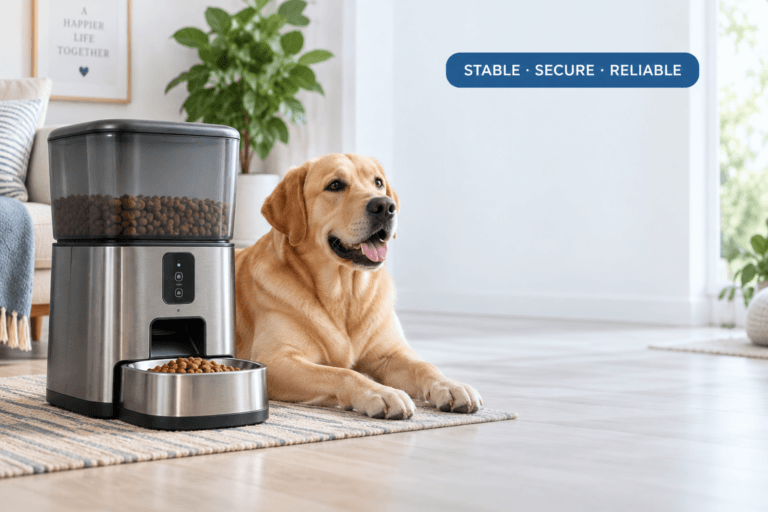
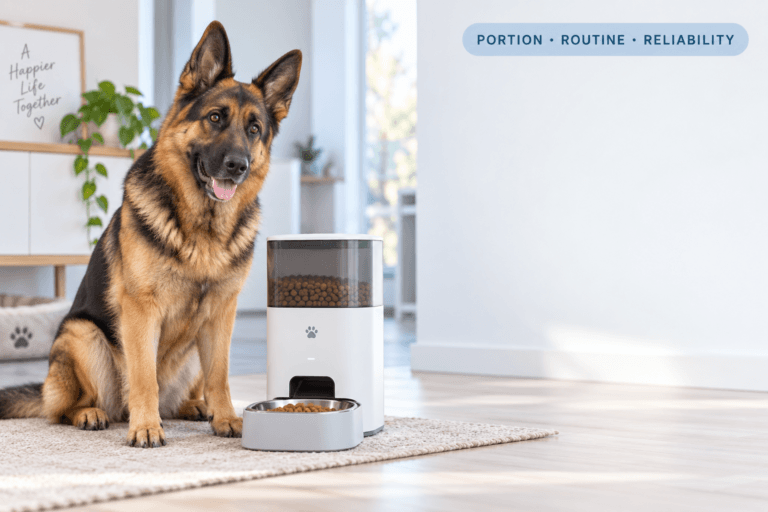
Use a slow feeder if speed is the main issue. Use an automatic feeder if timing is the main issue. Use a smart feeder if the household needs app scheduling or workday visibility. Use a larger durable feeder if capacity is the pressure point. For routine support, a practical option is a large-capacity automatic pet feeder when the meal plan actually fits the device’s portion range.
Mini FAQ
What is the best feeder for Labradors?
The best feeder for Labradors is usually a stable feeder that supports portion control and matches the dog’s main risk. Use slow-feeding structure for gulping and scheduled delivery for inconsistent mealtimes.
Do Labradors need slow feeders?
Many Labradors benefit from slow feeders because fast eating is common in this breed. Slower access helps stretch the same measured portion and reduces the reward of inhaling meals.
Can an automatic feeder work for Labradors?
An automatic feeder can work for Labradors when the capacity, kibble size, and portion settings fit a large-dog routine. Small devices built for cats often fail on volume or practicality.
Is a raised feeder better for Labradors?
A raised feeder is not automatically better for Labradors. Height may change comfort, but it does not solve gulping, begging, or overeating unless the feeding system itself is controlled.
How do I stop my Labrador from eating too fast?
Use a slow feeder, split meals if needed, and stop rewarding post-meal pressure with extra food. If competition from other pets is part of the problem, separate feeding zones are necessary.
What is the biggest mistake when choosing a Labrador feeder?
The biggest mistake is choosing by size alone. A larger bowl may hold more food but still fail at speed control, portion control, and household routine boundaries.
The clear conclusion is this: the best feeder for Labradors is the feeder that fixes the Labrador’s real feeding weakness. For fast eaters, slow the meal down. For inconsistent schedules, automate timing. For weight-prone dogs, measure portions and hold the routine. The feeder should support discipline, not replace it.