
A golden retriever slow feeder is useful when a Golden eats too fast, gulps food, coughs during meals, finishes before other pets, or keeps asking for more immediately after eating. But the right slow feeder is not just the bowl with the deepest maze. Golden Retrievers are large, food-motivated dogs, so the feeder must slow intake without causing frustration, chewing damage, poor posture, or cleaning problems.
For owners comparing feeding tools for larger dogs, dog feeders should be chosen by behavior first. A slow feeder controls eating speed. An automatic feeder controls meal timing. A portion plan controls calories. A Golden often needs all three working together.
Direct Answer: golden retriever slow feeder
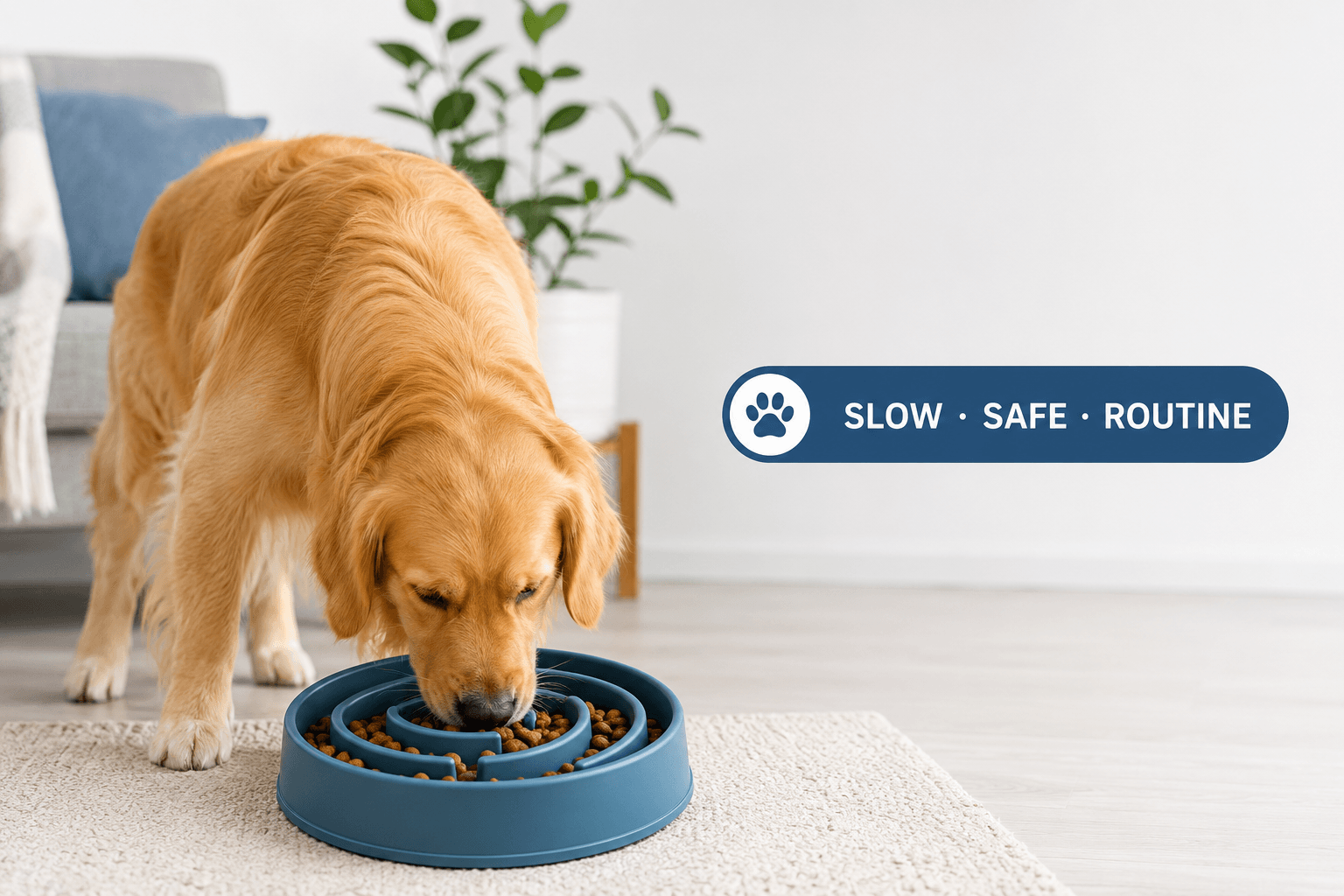
A golden retriever slow feeder is best for Goldens that eat too quickly, swallow large mouthfuls, compete with other pets, or act hungry right after meals. Choose a large, stable, non-slip slow feeder with moderate obstacles, easy-clean surfaces, and enough capacity for the dog’s measured portion. Avoid flimsy silicone or thin plastic designs if your Golden chews bowls, paws aggressively, or flips feeding tools.
Why This Happens
Golden Retrievers are often highly food-driven. That does not mean every Golden is truly hungry all the time. It means food is a strong reward, and many Goldens learn quickly that speed, pressure, and attention can influence the feeding routine.
A normal open bowl gives a fast eater almost no resistance. The dog can scoop, gulp, and finish before the body has much time to register the meal. A golden retriever slow feeder changes the food path by spreading kibble through ridges, channels, raised shapes, or puzzle-like sections. The dog still eats, but the meal takes more work.
This matters most when fast eating is part of a larger routine problem. If the Golden eats too fast, then begs, then receives extra food, the household accidentally teaches the dog that fast eating plus pressure creates more reward. SmartPetTools explains the wider routine problem in scientific pet feeding schedule and pet nutrition tips.
What To Do
Use seven checks before buying a golden retriever slow feeder. First, choose a size that holds the full measured meal without piling food too high. Second, choose a non-slip base because Goldens can push lightweight bowls across the floor. Third, avoid patterns that are too tight for a large muzzle. Fourth, check whether the material can survive your dog’s chewing behavior. Fifth, choose a design that can be washed thoroughly. Sixth, place the bowl in a calm feeding zone away from other pets. Seventh, use the slow feeder with measured portions, not random refills.
The pattern should slow the dog without turning the meal into a fight. If the ridges are too deep or narrow, the Golden may paw, flip, chew, or become frustrated. If the pattern is too shallow, the bowl may not slow intake enough. For most Goldens, a moderate maze with a wide base is more practical than an extreme puzzle bowl.
If the main problem is inconsistent meal timing rather than speed, pair the slow feeder with a scheduled routine. Owners with large dogs can compare timing and capacity issues in automatic dog feeder for large dogs. The slow feeder handles speed. The schedule handles predictability.
Best Material for a Golden Retriever Slow Feeder
Plastic slow feeders are common because they offer many maze designs, but low-quality plastic can scratch, slide, or become harder to clean. Stainless steel is usually stronger and easier to sanitize, but many stainless designs have simpler slow-feed patterns. Silicone is softer and useful for some dogs, but it is not ideal for strong chewers.
For a Golden Retriever, durability matters more than novelty. A golden retriever slow feeder should stay stable under pressure, resist chewing damage, and clean easily after daily use. If your Golden bites bowls or carries feeding tools, choose stronger materials and supervise meals.
For owners considering soft feeding surfaces, SmartPetTools covers the material tradeoff in silicone dog slow feeder. Silicone can work, but only when the dog does not treat it as a chew toy.
The Feeding Loop Behind This Problem
The feeding loop starts when the Golden expects food, the owner prepares the meal, the dog eats quickly, and then the dog asks for more. If the owner adds food after that pressure, the dog learns that fast eating is not the end of the meal. It is the start of negotiation.
A golden retriever slow feeder interrupts the loop at the speed stage. The dog still receives the same measured amount, but access becomes slower. This gives the owner more time to observe the dog’s behavior and reduces the emotional pressure to add more food immediately after the bowl is empty.
The feeder does not replace discipline. If treats, table scraps, and extra scoops continue after every meal, the slow feeder becomes a slower delivery tool, not a feeding-control system.
The Emotional Trigger Owners Miss
The emotional trigger is the Golden’s “still hungry” look. Many Goldens are persuasive. They stare, follow, sit near the pantry, or act as if the meal was too small. Owners often respond by adding a little more because the dog looks unsatisfied.
That reaction is understandable, but it can create portion drift. A golden retriever slow feeder helps because it makes the measured meal last longer. The owner sees the dog working through food more slowly, which reduces the urge to solve fast eating with extra calories.
The Addiction Mechanism
Food reward becomes powerful when it arrives quickly after a behavior. If a Golden gulps food, begs, and then receives more food, the behavior chain becomes useful. If extra food appears only sometimes, the dog may become even more persistent because pressure occasionally works.
The correction is measured feeding. Use the slow feeder for the planned meal. Do not add food because the dog finished, stared, or followed you. For nutrition boundaries, owners can review AAFCO pet food label guidance and AVMA pet nutrition guidance. The bowl should support a feeding plan, not replace one.
Common Failure Pattern
A common failure pattern is buying the hardest-looking puzzle bowl because the Golden eats fast. The dog becomes frustrated, paws the bowl, flips it, chews the ridges, and scatters kibble across the floor. The owner decides the slow feeder failed and returns to an open bowl.
The better approach is gradual. Start with a moderate golden retriever slow feeder. Use the normal measured portion. Place the bowl on a stable surface. Watch the first several meals. If the dog calmly works through the food, the difficulty is appropriate. If the dog attacks the bowl instead of eating from it, the design is too frustrating or too weak.
Real-World Impact
The real-world impact of a good slow feeder is calmer eating, slower intake, less gulping behavior, and better portion discipline. It can also help owners separate true hunger from speed-driven dissatisfaction. A dog that finishes in thirty seconds can look deprived. A dog that spends several minutes working through the same measured portion gives the owner a clearer signal.
A poor slow feeder creates the opposite result: frustration, floor mess, chewing risk, trapped food, odor, and inconsistent use. Cleaning matters because slow feeder grooves can hold saliva and food residue. Wash the feeder regularly and inspect it for cracks, bite marks, or worn surfaces.
Owners managing weight should connect slow feeding with broader calorie control. SmartPetTools covers this in pet obesity prevention. A slow bowl does not prevent weight gain if the total daily food amount stays too high.
Can This Be Fixed?
Yes, fast eating in Golden Retrievers can often be improved when eating speed, portion size, timing, and owner response are controlled together. A slow feeder can reduce gulping speed, but it cannot fix overfeeding, table scraps, competition with other pets, or a household that rewards begging.
If your Golden coughs, vomits, retches, has a swollen abdomen, seems distressed after eating, or shows repeated digestive problems, do not treat the slow feeder as a medical solution. Use veterinary care. A golden retriever slow feeder is a routine tool, not an emergency treatment or a guarantee against serious digestive conditions.
Who Should Walk Away and Who Should Use This
Walk away from soft or lightweight slow feeders if your Golden is a heavy chewer, bowl flipper, or destructive eater. A damaged feeder can become a safety problem. Walk away from extreme maze designs if your dog becomes frustrated instead of calmly eating.
Use a golden retriever slow feeder if your dog eats too fast, gulps kibble, finishes far ahead of other pets, or pressures the household for more food immediately after meals. Choose a large, stable, easy-clean feeder and pair it with a fixed feeding schedule.
For broader dog feeding equipment, compare options through dog feeders. Match the tool to the problem: slow feeder for speed, automatic feeder for timing, measured plan for weight control.
Mini FAQ
Do Golden Retrievers need slow feeders?
Many Golden Retrievers benefit from a slow feeder if they eat too fast or gulp food. The breed is often food-motivated, so a slow feeder can make meals more controlled. It is most useful when paired with measured portions and a consistent schedule.
What is the best slow feeder for a Golden Retriever?
The best slow feeder for a Golden Retriever is large, stable, non-slip, easy to clean, and not too narrow for a large muzzle. Moderate maze patterns usually work better than extreme puzzle designs because they slow eating without causing frustration.
Is silicone safe for a Golden Retriever slow feeder?
Silicone can be safe for calm eaters, but it is not ideal for strong chewers. Many Golden Retrievers need a more durable feeder if they bite, drag, or paw at bowls. Inspect silicone regularly and remove it if the dog damages it.
Can a slow feeder stop bloating?
A slow feeder can slow eating speed, but it should not be treated as a guarantee against bloat or other medical emergencies. Dogs with retching, abdominal swelling, distress, or repeated digestive symptoms need veterinary attention.
How often should I use a slow feeder for my Golden?
Use a slow feeder for regular meals if fast eating is a repeated problem. Keep the portion measured and the routine consistent. Do not use the feeder as an excuse to add more food because the meal takes longer.
What is the biggest mistake with a golden retriever slow feeder?
The biggest mistake is choosing a difficult bowl without fixing the feeding routine. A slow feeder helps speed, but the owner still has to control portions, timing, treats, and begging responses.
The clear conclusion is this: a golden retriever slow feeder is effective when it slows eating without creating frustration, chewing risk, or cleaning failure. Choose a durable large-breed design, measure the food, keep the schedule stable, and do not reward post-meal pressure with extra calories.