Start 2027 on schedule — the gift that feeds them every day. · US & EU delivery: estimated 30–51 days (about 4–7 weeks). See Shipping for details. Shop feedersStart 2027 on schedule — the gift that feeds them every day. Shop feeders


Direct Answer: Two Hours at Room Temperature
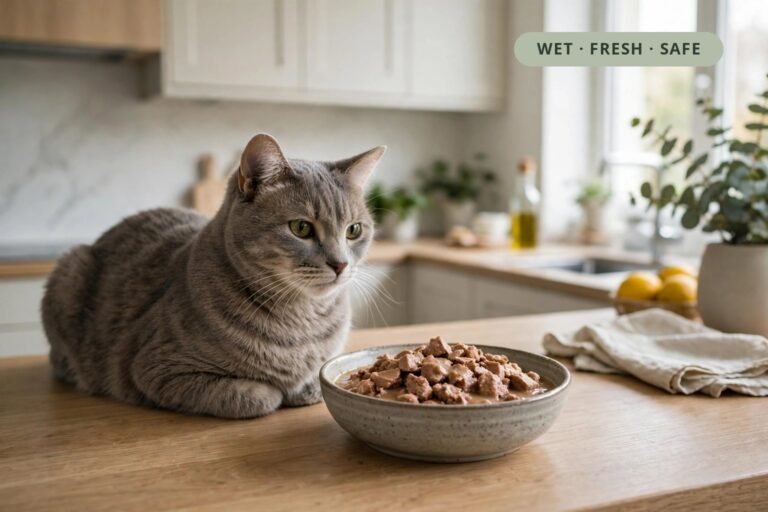
Wet cat food can sit out for two hours at room temperature — that is the U.S. Food and Drug Administration’s rule for perishable food, and it applies to your cat’s bowl as much as to your own plate. After two hours, bacteria have had enough time to multiply to levels that can upset your cat’s stomach, and the food should be thrown out, not served later. A sealed lid on a wet-food feeder stretches the practical window to 6–8 hours, according to the feeder’s manufacturer — but that is a manufacturer claim about freshness, not a food-safety guarantee, and it never overrides the two-hour rule. If you are unsure, the safe choice is always the shorter window.
The Two-Hour Rule, Explained
The FDA’s guidance is simple: “Discard food that’s left out at room temperature for longer than two hours. When temperatures are above 90°F (32°C), discard food after one hour.” (FDA food safety guidance) The rule exists because bacteria multiply fastest between roughly 40°F and 140°F (4°C and 60°C) — the range food-safety experts call the danger zone. A bowl of wet food at room temperature sits squarely inside it.
Two details matter for cat owners. First, the clock starts when the food leaves the fridge, not when your cat starts eating — the hour it sits untouched counts the same as the hour it is nibbled at. Second, the one-hour limit above 90°F applies in hot kitchens and sun-warmed rooms in summer, not just outdoors. If the room feels warm to you, assume the shorter limit.
What Happens After Two Hours
Three things go wrong once wet food has sat too long. Bacteria multiply — you cannot see or smell the early stages, which is exactly why a time rule matters more than a sniff test. The food dries out — the exposed surface forms a crust, the texture changes, and most cats will refuse it even if it were still safe. And the bowl becomes a contamination source — residue left in the bowl seeds the next meal with the bacteria from the last one.
Cats are not immune to foodborne illness. Spoiled wet food can cause vomiting, diarrhea, and a refusal to eat that looks like fussiness but is actually your cat telling you the food is off. The cost of throwing out an uneaten portion is a few cents; the cost of a vet visit is considerably more.
Sealed Lids and Ice Packs: How They Extend the Window
A sealed lid helps by limiting air exposure: the food is covered until serving time, so it dries out more slowly and picks up fewer airborne contaminants. That is why a rotating-tray feeder can credibly hold wet meals for a workday. The manufacturer of our 5-Meal Automatic Wet Food Feeder states its sealed lid keeps food fresh for 6–8 hours. Treat that figure as a freshness claim — how long the food stays appetizing — and keep the two-hour food-safety rule in mind for the meal that sits longest.
Ice packs go one step further by actually cooling the food. A feeder with frozen packs under the tray, such as the Cat Mate C500, keeps wet food chilled for several hours — longer if the food goes in cold. The trade-off is routine: packs must be frozen solid the night before, and once they thaw, the advantage is gone. If you are choosing between the two designs, our guide to the best automatic wet food feeder compares them in full, and our guide to putting wet food in an automatic feeder explains which feeder types are safe for wet food at all.
Practical Rules for Everyday Feeding
Load food cold. Fill the feeder straight from the fridge so the food starts the clock at a safe temperature. Food loaded at room temperature has already used up part of its window.
Do not pre-fill beyond the window. If you will be away longer than the lid or the ice packs can cover, do not load extra meals and hope — use a pet sitter, or feed dry kibble from a hopper feeder for the missed meals.
Wash the tray and bowl between fills. Dried residue from yesterday shortens today’s fresh window. Stainless steel compartments are the easiest to keep clean. Our guide to keeping pet food fresh in a feeder covers cleaning and storage in more detail.
Shorten the window in summer. Above 90°F, the safe limit is one hour. On hot days, serve smaller portions more often rather than one large meal left out all morning.
Frequently Asked Questions
Can I leave wet cat food out overnight?
No. Overnight is far beyond the two-hour rule, and even a sealed lid is not designed for that long. If your cat needs a night meal, use a rotating-tray feeder that uncovers a fresh portion at the programmed time.
What should I do if my cat didn’t finish the wet food?
If it has been out for less than two hours, you can refrigerate the remainder and serve it at the next meal. If it has been out longer, throw it out and wash the bowl before refilling.
Does refrigerating wet food before serving help?
Yes. Cold food starts the clock at a safe temperature, which is why feeder guides always recommend loading portions straight from the fridge. Let refrigerated food sit for a few minutes before serving if your cat dislikes it cold — a few minutes is safe; two hours is not.
How do I know wet food has gone bad?
A sour or unusually strong smell, a dried crust, discoloration, or a slimy texture are all signs to throw it out. But do not rely on your nose alone — harmful bacteria can multiply before the food smells off. When in doubt, go by the clock.
Final Thoughts
Two hours is the rule; a sealed lid or ice packs buy you practical time beyond it, but they do not rewrite food safety. Load food cold, do not pre-fill beyond the window, and wash the tray between fills — and your cat gets fresh wet meals on schedule without the risk. If you are setting up timed wet feeding, start with the right equipment: a rotating-tray feeder with a sealed lid is the only automatic feeder design that handles wet food safely.