

Why do dogs eat grass when they already have food, treats, toys, and a full water bowl? The short answer is that grass eating is common in dogs and is not automatically an emergency. Some dogs graze because the texture is interesting. Some do it from habit. Some do it when bored. Some do it before vomiting. Some do it because the yard is the most stimulating part of the day. The important question is not only whether the dog eats grass, but how often, how intensely, and what happens afterward.
For owners trying to stabilize daily feeding, a 2L smart pet feeder for regular feeding can help create predictable meals. That matters because inconsistent feeding, boredom, gulping, and outdoor scavenging can all make the question why do dogs eat grass harder to answer.
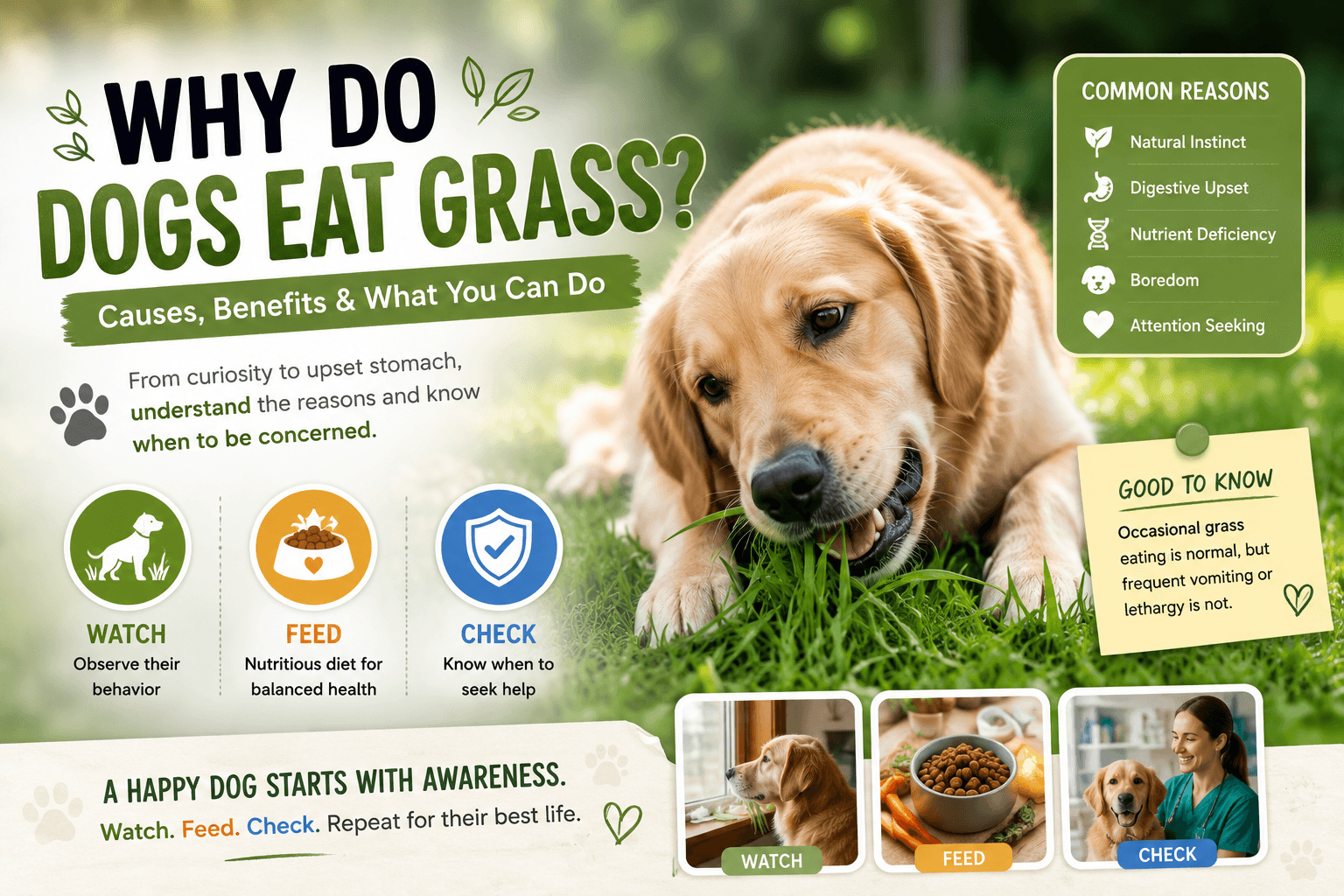
Direct Answer: Why Do Dogs Eat Grass?
Why do dogs eat grass? Dogs commonly eat grass because of normal grazing behavior, curiosity, boredom, outdoor exploration, texture preference, hunger between meals, attention-seeking, or occasional stomach discomfort. Grass eating is usually not dangerous when it is occasional, the grass is clean and untreated, and the dog is otherwise normal. It becomes a concern when the dog eats grass obsessively, vomits repeatedly, has diarrhea, loses weight, refuses food, seems lethargic, coughs, gags, or may have eaten chemically treated grass or toxic plants.
The owner’s job is to watch the pattern. A dog that nibbles grass during a relaxed walk is different from a dog that frantically swallows grass, vomits, and repeats the behavior every day. A useful answer to why do dogs eat grass comes from context: meal timing, stool quality, hydration, boredom level, yard access, pesticides, and digestive signs.
Why This Happens
Grass eating is often described as pica or plant-eating behavior, but not every grass-eating dog has a medical disorder. VCA Hospitals’ overview on why dogs eat grass explains that many dogs eat grass and that the behavior is not always tied to illness. Some dogs simply like it.
That said, owners should not dismiss every case. Dogs can eat grass when their stomach feels off, when their diet or meal rhythm is not working, or when they are looking for stimulation. They can also get sick from lawn chemicals, parasites, contaminated soil, or toxic plants nearby.
The practical answer to why do dogs eat grass is therefore layered. It can be normal behavior, a routine problem, a boredom problem, a digestive clue, or an environmental safety issue.
What To Do First
Start with observation. For seven days, record when your dog eats grass, whether it happens before or after meals, whether vomiting follows, what the stool looks like, whether the dog seems hungry, and whether the behavior happens during boredom, walks, yard time, or stressful moments.
Next, check the yard. Grass treated with herbicides, pesticides, fertilizers, de-icing chemicals, or unknown lawn products should be off-limits. Public grass near sidewalks, dog parks, and apartment landscaping can also carry chemical residue, fecal contamination, or parasite exposure.
Use scientific pet feeding schedule if your dog eats grass most often before meals. Predictable food timing helps separate true hunger from habit, boredom, or digestive discomfort.
The Feeding Loop Behind Grass Eating
The feeding loop often starts with an irregular routine. The dog eats breakfast late one day, early the next day, then receives treats, scraps, or hand-fed snacks when the owner worries. Outdoor time also changes. Some days the dog gets a real walk. Other days the dog gets sent into the yard alone.
When the dog starts chewing grass, the owner reacts. The dog gets attention, a treat, a call back inside, or a rushed meal. Now grass eating has a reward attached to it. The owner thinks the dog is asking for help. The dog may simply have learned that grass chewing makes the owner engage.
A better why do dogs eat grass investigation stabilizes the loop. Feed on schedule. Walk on schedule. Keep treats measured. Supervise yard time. Then see whether the grass habit decreases when the dog’s day becomes more predictable.
The Emotional Trigger Owners Miss
The emotional trigger is worry. Owners often see grass eating and immediately assume the dog is sick. They start Googling, feed extra, offer bland food, switch diets, or call the dog away with high-value treats every time grass appears.
That response can make the behavior noisier. If the dog learns that grazing produces attention, food, or indoor comfort, grass eating can become a communication tool even when the original reason was mild curiosity.
The better response is calm pattern tracking. Do not panic over one grass-eating episode. Do act if grass eating becomes frantic, frequent, paired with illness signs, or connected to unsafe lawn exposure.
The Addiction Mechanism
The addiction mechanism is variable reward. Sometimes grass tastes fresh. Sometimes it creates attention. Sometimes it leads to a walk ending. Sometimes the owner offers food afterward. Because the reward is inconsistent, some dogs keep testing the behavior.
Dogs are excellent at learning routines around food and attention. If grass eating repeatedly changes what the owner does, the dog may continue even if the original physical reason is gone.
A disciplined answer to why do dogs eat grass keeps rewards under control. Redirect before grazing starts, reward walking forward, offer enrichment away from the lawn, and do not turn grass into a dramatic event.
Reason 1: Normal Grazing
Some dogs graze. They sniff, select a few blades, chew slowly, and move on. This type of grass eating is usually calm and occasional. The dog still eats normal meals, has normal stool, and shows normal energy.
Normal grazing is not the same as frantic grass swallowing. A relaxed dog taking a few bites during a walk is not automatically signaling disease. The owner should still make sure the grass is untreated and safe.
If the dog is healthy and the behavior is occasional, the best response may be simple supervision and environmental safety.
Reason 2: Boredom and Low Stimulation
Dogs that spend long periods alone in the yard may invent their own activities. Grass chewing is easy, available, and sensory. A bored dog may graze, dig, bark, chew sticks, lick soil, or patrol fences.
If the dog eats grass mostly during unsupervised yard time, the issue may be lifestyle design rather than stomach trouble. More structured walks, sniffing time, training games, chew options, and owner interaction can reduce the behavior.
This is one of the most common answers to why do dogs eat grass: the yard is not enough. Outdoor access is not the same as meaningful activity.
Reason 3: Hunger Between Meals
Some dogs eat grass more often before meals or when the feeding interval is long. That does not prove malnutrition. It may mean the dog is using the environment when food expectation is high.
Check daily calories, treat load, meal spacing, and body condition. A dog that receives one large meal may behave differently from a dog receiving measured meals across the day. For some dogs, a more predictable schedule reduces scavenging behavior.
For dogs that eat too fast or seem hungry immediately after meals, use how to stop my dog from inhaling his food. Fast eating, hunger behavior, and grass grazing often overlap in the same routine.
Reason 4: Upset Stomach
Some dogs eat grass before vomiting, and owners often conclude that grass eating is always a nausea response. That is too broad. Many dogs eat grass without vomiting. Some vomit after grass because the grass irritated the stomach or throat. Some eat grass because they already felt unwell.
Watch the sequence. Did the dog seem restless, drool, swallow repeatedly, lick lips, refuse food, or act uncomfortable before eating grass? Did vomiting happen once, or does it happen repeatedly? Does the dog return to normal after one episode, or does illness continue?
Call a veterinarian if grass eating is paired with repeated vomiting, diarrhea, blood, abdominal pain, weakness, dehydration, refusal to eat, weight loss, or sudden behavior change. The answer to why do dogs eat grass becomes more serious when other symptoms appear.
Reason 5: Diet or Digestive Pattern
Some dogs with poor stool quality, inconsistent diets, or frequent table scraps show more scavenging behavior. Grass eating may appear alongside loose stool, gas, hunger behavior, or irregular appetite.
The AVMA’s pet nutrition guidance emphasizes that pets need appropriate nutrition based on life stage, health, and body condition. For owners, the practical step is to feed a complete, appropriate diet and avoid constant random extras.
Use pet nutrition tips. A stable diet makes it easier to identify whether grass eating is normal grazing or part of a digestive pattern.
Reason 6: Attention-Seeking
If grass eating reliably makes the owner talk, rush over, offer treats, or end the walk, the behavior can become attention-seeking. This is especially likely when the dog looks at the owner before chewing or repeats the behavior in predictable places.
Do not punish the dog. Punishment can create conflict and may make the dog gulp grass quickly before the owner intervenes. Instead, redirect earlier. Reward walking forward, eye contact, recall, or sniffing in safer areas.
A strong why do dogs eat grass plan looks at owner behavior too. Sometimes the dog is not obsessed with grass. The dog is responding to what grass makes the human do.
Reason 7: Puppies Explore With Their Mouths
Puppies chew grass because puppies explore everything. Grass moves, smells interesting, and feels different from toys or food. Puppy grass eating should still be supervised because puppies are more likely to swallow unsafe plants, mulch, soil, stones, or chemically treated material.
Redirect puppies early. Use leash control in yards. Reward leaving the grass. Offer appropriate chew outlets. Teach “leave it” with low-value objects before expecting success around outdoor distractions.
If a puppy eats grass and also has vomiting, diarrhea, poor growth, pot-bellied appearance, or intense scavenging, schedule a veterinary check. Puppies need parasite control and diet checks more urgently than adult dogs.
When Grass Eating Is Not Normal
Grass eating deserves concern when it is sudden, intense, repetitive, or paired with other signs. Red flags include repeated vomiting, diarrhea, blood in stool or vomit, weight loss, refusal to eat, lethargy, abdominal pain, coughing, gagging, drooling, bloating, weakness, or possible toxin exposure.
The ASPCA’s toxic and non-toxic plants database is useful because grass areas often contain more than grass. Dogs may chew weeds, ornamental plants, mushrooms, or treated landscaping material.
If you are asking why do dogs eat grass because your dog looks sick, do not treat it as a quirky habit. Check the dog, the lawn, and the timeline. Veterinary care is appropriate when illness signs are present.
Grass, Chemicals, and Yard Safety
Grass itself is not the only concern. Lawn chemicals, weed killers, fertilizers, insecticides, contaminated water, feces, parasites, mushrooms, and sharp plant material can create risk. Public grass is harder to control because the owner may not know what has been applied.
The EPA’s safe pest control product guidance explains that pesticide products should be used according to label directions and stored safely. For dog owners, the rule is simple: keep dogs away from treated areas until the product label says it is safe.
Do not let a dog graze on unknown grass near apartment lawns, road edges, golf courses, parks with chemical treatments, or areas with visible mushrooms. A good answer to why do dogs eat grass must include whether the grass is safe to access.
How Feeding Routine Changes the Pattern
Meal timing affects outdoor behavior. Dogs that expect food soon may scavenge more. Dogs that eat too fast may continue looking for oral activity after meals. Dogs that receive table scraps may patrol the environment for more edible material.
Use measured meals. Keep feeding times predictable. Avoid constant random treats. Track whether grass eating happens before breakfast, after dinner, during walks, or only when the dog is left outside.
For larger dogs or strong food-motivated dogs, compare automatic dog feeder for large dogs guide. A feeder will not stop grass eating by itself, but a stable feeding routine reduces guesswork.
Hydration and Grass Eating
Some dogs chew grass more during hot weather, after exercise, or when water access is poor. This does not mean grass replaces water. It means the owner should check hydration and outdoor conditions.
Keep fresh water available. Clean bowls. Bring water on long walks. Watch for heavy panting, dry gums, weakness, or heat stress. Dogs should not be left to solve thirst by licking dew or chewing wet grass.
Use pet hydration tips. A clear answer to why do dogs eat grass should include basic water access, especially in warm weather.
Should You Stop Your Dog From Eating Grass?
Stop your dog from eating grass when the grass is chemically treated, unknown, contaminated, full of weeds, near mushrooms, or when the dog eats frantically or becomes sick afterward. Also stop puppies from grazing freely until they have better outdoor manners.
If the grass is clean, the dog eats only a few blades calmly, and there are no illness signs, the behavior may not need heavy intervention. Still, owners should supervise and prevent access to unsafe plants or lawn products.
The better question is not “Should all grass eating be banned?” The better question is “Is this grass safe, is this behavior calm, and is the dog healthy afterward?”
Training Plan: Leave It, Move On, Reward
Train “leave it” away from grass first. Start indoors with low-value items. Reward the dog for turning away. Then practice outside with leaves, sticks, and mild distractions. Only then apply it to grass grazing.
During walks, do not drag the dog from grass after it starts chewing. Redirect before the dog locks onto the patch. Use movement, recall, and reward. Keep the reward calm, not dramatic.
This training plan works best when the dog also gets enough enrichment. A dog with no sniffing outlets will keep trying to create its own outdoor activities.
Feeder and Bowl Hygiene
Grass eating can distract owners from the indoor feeding station. Dirty bowls, stale food, old crumbs, and inconsistent portions can all affect feeding behavior. Dogs may leave food indoors and scavenge outdoors if the bowl area is unpleasant or the food is stale.
The FDA’s safe handling tips for pet food and treats recommend washing pet bowls and utensils regularly. A clean bowl and clean feeder make the normal food station more reliable.
Use clean smart pet feeder and pet feeder maintenance. A clean feeding station will not explain every case of why do dogs eat grass, but it removes one preventable variable.
Slow Feeding and Grass Scavenging
Some dogs eat meals so quickly that they remain behaviorally unsatisfied even after consuming enough calories. They may leave the bowl and immediately search the yard for more oral activity. This can include grass, sticks, soil, or other objects.
For these dogs, slower meals can help. Slow feeders, food puzzles, measured portions, and scheduled feeding reduce the rush. The goal is not to make the dog eat less by accident. The goal is to slow the meal without creating frustration.
Use slow feeder dog bowl for large breeds if your dog inhales meals and then grazes outside. Fast eating is often part of the larger answer to why do dogs eat grass.
Common Failure Pattern
The most common failure pattern is overreacting to normal grazing and underreacting to red flags. Owners panic when a healthy dog chews a few blades, but ignore repeated vomiting, diarrhea, weight loss, or treated-lawn exposure.
The second failure is using food to interrupt grass eating every time. If the dog learns that grass equals treats, the behavior may increase.
The third failure is ignoring boredom. A dog left alone in the yard every day will find something to do. Grass eating may be one symptom of an underbuilt routine.
Real-World Impact
The real-world impact of understanding why do dogs eat grass is better decision-making. The owner stops panicking over harmless grazing, notices true illness signs faster, keeps dogs away from treated lawns, and improves feeding and enrichment routines.
The impact of guessing is poor control: unnecessary diet changes, extra treats, repeated owner anxiety, unsafe lawn access, missed veterinary warning signs, and confusion about whether the dog is sick or simply bored.
For owners building a better daily feeding system, compare the dog feeders collection. A stable routine makes outdoor behavior easier to interpret.
Can This Be Fixed?
Yes, grass eating can often be reduced when the cause is boredom, hunger timing, attention-seeking, fast eating, or poor routine. Stabilize meals, improve walks, add sniffing and training, supervise yard time, teach “leave it,” keep the lawn safe, and stop rewarding the behavior with dramatic reactions.
If grass eating is linked with illness signs, the fix is not a training plan first. The fix is veterinary assessment. Bring notes on meal timing, vomiting, stool quality, diet, treats, lawn exposure, parasite prevention, and any recent changes.
For feeding structure, start with the smart feeders collection. The feeder controls timing, but the owner still controls exercise, lawn safety, hydration, and health monitoring.
Who Should Walk Away and Who Should Use This
Walk away from punishment, panic feeding, letting dogs graze on treated lawns, ignoring repeated vomiting, or assuming all grass eating is normal. Also walk away from changing food repeatedly without tracking symptoms.
Use this why do dogs eat grass guide if your dog nibbles grass on walks, grazes before meals, vomits after grass, eats grass when bored, or has started outdoor scavenging. It is especially useful for puppies, fast eaters, shift-worker households, large dogs with high food drive, and owners who cannot tell whether the behavior is normal or a warning sign.
For routine support, a timed slow feed automatic feeder can help some dogs eat on a steadier rhythm. It should be paired with supervision, enrichment, clean water, and safe outdoor access.
Mini FAQ
Why do dogs eat grass after eating?
Dogs may eat grass after eating because of habit, outdoor curiosity, leftover hunger behavior, fast eating, boredom, or mild stomach discomfort. If vomiting, diarrhea, or lethargy follows, treat it as a health sign rather than a harmless habit.
Why do dogs eat grass and throw up?
Dogs may throw up after eating grass because the grass irritates the stomach or throat, or because the dog already felt nauseous before eating it. Repeated vomiting needs veterinary attention.
Is it safe for dogs to eat grass?
Grass eating is usually safer when the grass is clean, untreated, and eaten calmly in small amounts. It is not safe when the grass is chemically treated, contaminated, near toxic plants, or eaten frantically.
Should I stop my puppy eating grass?
Yes, puppies should be supervised and redirected because they are more likely to swallow unsafe plants, soil, mulch, stones, or treated grass. Teach “leave it” early and keep yard access controlled.
Does grass eating mean my dog is missing nutrients?
Grass eating does not automatically mean a dog is missing nutrients. Still, diet quality, stool changes, weight loss, constant hunger, and poor coat condition should be discussed with a veterinarian.
When should I call the vet about grass eating?
Call a veterinarian if grass eating is sudden, obsessive, paired with repeated vomiting, diarrhea, blood, weight loss, refusal to eat, lethargy, abdominal pain, coughing, or possible toxin exposure.
The clearest answer to why do dogs eat grass is pattern-based. Calm occasional grazing can be normal. Frantic eating, repeated vomiting, unsafe lawn exposure, or behavior changes need action. Feed on schedule, keep the yard safe, improve enrichment, watch the stool and appetite, and treat grass eating as a clue only when the rest of the dog’s behavior supports it.