
Microchip vs RFID Cat Feeders: How Selective Feeding Actually Works, and When You Don’t Need One
Selective Feeding Guide
A microchip cat feeder opens a bowl for one registered cat and no other. This guide explains how microchip and RFID feeders actually work, when one is worth its premium, and when a simpler dual-bowl feeder solves the same problem.
SmartPetTools Editorial Team · Category information checked 30 October 2026
Quick answer — and an honest disclosure
We do not currently sell a microchip cat feeder. It is the right tool when one cat is on a medical or prescription diet, or proven stealing defeats separate bowls. If neither applies, a dual-bowl automatic feeder usually fixes the layout at a fraction of the cost — and we would rather explain that line than blur it.
How a microchip cat feeder works
Microchip feeders read the identification microchip already implanted in your cat — the same chip a vet scans, and the same kind of chip the AVMA explains in its guide to microchips and pets. The lid unlocks only when a registered chip is close. Nothing is worn and nothing on the cat needs charging — but a cat with no implanted chip cannot use one until a vet implants one.
RFID tag feeders work the same way, except the credential hangs on the collar. That suits cats without an implanted chip, but the system is only as reliable as the collar — a lost collar is a lost dinner key, and a tag can open the feeder while the other cat does the eating if they crowd the bowl. Our earlier piece microchip feeder vs RFID compares the two head to head.
When a microchip cat feeder is genuinely the right tool
Prescription or medical diets. If one cat must eat a specific food and the other must not touch it, “mostly separate” is not good enough. This is the strongest case for a microchip cat feeder.
Weight control where stealing is proven. If one cat is on measured portions and the other finishes them, a locked bowl ends the argument in a way supervision cannot. Try the free methods in our guide on how to stop one cat from eating the other’s food first if the stakes are low.
Homes where rooms cannot be separated. Small flats and open-plan homes remove the “different rooms” option. A selective feeder creates the separation at the bowl instead. For set-ups with three or more cats, see our multi-cat microchip guide, and for a hands-on look at the category, our microchip pet feeder review.
How to decide whether you need a microchip cat feeder
- Check the diet stakes. Is one cat on a prescription or medical diet the other must never eat? If yes, you need selective feeding.
- Check whether stealing is proven. Has one cat repeatedly taken measured food despite separate bowls and schedules? If yes, selective feeding is justified.
- Check the layout first. Do both cats simply eat at the same time from one bowl today? Start with a dual-bowl feeder and reassess after a month.
- Check for anxiety, not theft. If the “stealing” is one cat eating faster out of anxiety, slow-feed designs and feeding-location changes come before any locked bowl.
When you don’t need a microchip cat feeder: the dual-bowl alternative
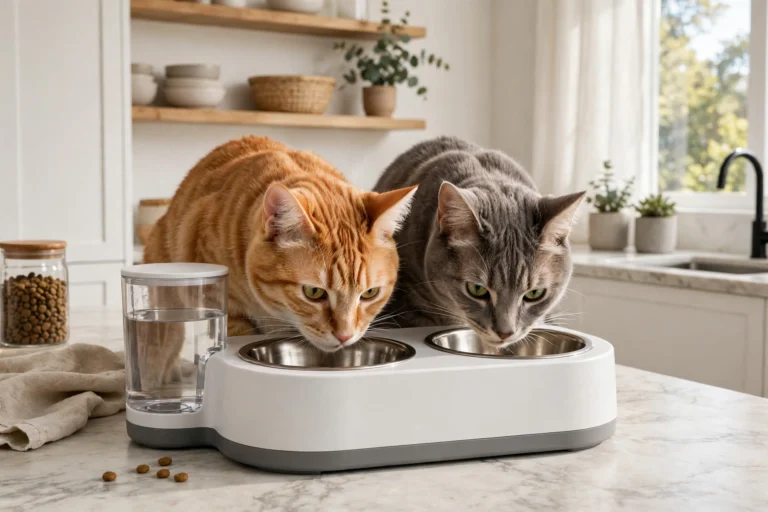
Many “food stealing” problems are really simultaneous-access problems: both cats are hungry at once, there is one bowl, and the faster cat wins by default. The two dual-bowl models we do sell are in our feeders for multiple pets collection: the 5L Smart Pet Feeder with Camera, Voice, and Double Bowls (single- or double-bowl options, 1080P camera on video variants, from $59.70) and the 4.5L Smart Pet Feeder with two stainless steel bowls (WiFi or button variants, from $98.94) — prices checked 30 October 2026.
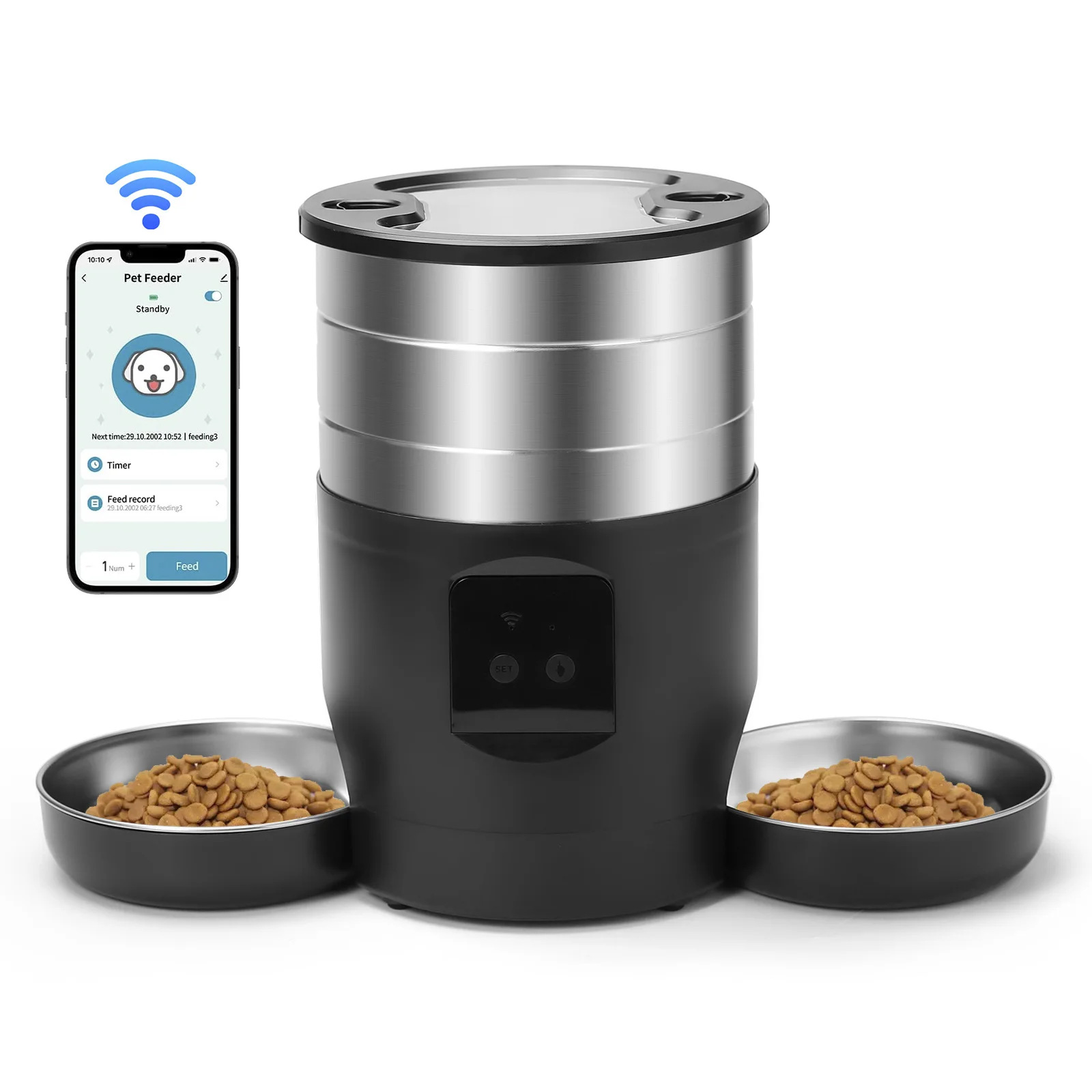
Neither is a microchip cat feeder and we will not describe them as one: their bowls are open. They solve the layout problem, not the locking problem. Selective feeders remain a premium category led by specialist brands — SureFeed (Sure Petcare) is the reference name for microchip feeders and PETLIBRO’s One RFID leads the tag-based side. If and when we stock one, it will appear in the multi-pet collection above with full specifications; until then, any seller implying we already do is out of date.
FAQ
Does a microchip cat feeder work with my cat’s existing chip?
That is the design of the category: these feeders read standard implanted pet microchips, registered by presenting the cat to the feeder in a learning mode. If your cat has no chip, an RFID tag feeder or a vet-implanted chip are the two routes.
Can a microchip cat feeder serve two cats?
Selective feeders are normally one registered cat per bowl: a two-cat home where both need protection needs two units, or one selective feeder for the cat on the special diet plus a normal feeder for the other.
Is RFID less secure than a real microchip cat feeder?
The lock is the same idea; the credential differs. An implanted chip cannot be lost or removed by the cat. A collar tag can be lost — and while the tag is near the feeder, a determined second cat may still reach the bowl. For medical diets, that difference matters.
How much does a microchip cat feeder cost?
Selective feeders sit at the premium end of the feeder market, well above open automatic feeders, because of the reader and locking mechanism. Check current retailer pricing for the specific model — we do not sell one, so we do not quote a price of our own.
Can two registered cats share one microchip cat feeder?
If both cats are registered, the bowl opens for either of them — which defeats the purpose when the point is keeping one cat out of a special diet. Sharing only makes sense when both cats eat the same food and you are excluding a third, unregistered pet.
Keep reading
The head-to-head comparison of the two selective-feeding technologies.
The dual-bowl alternatives discussed above, in one collection.