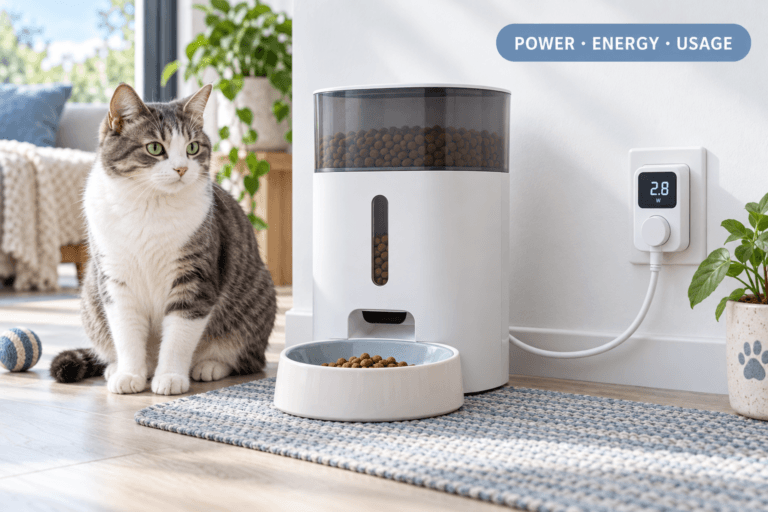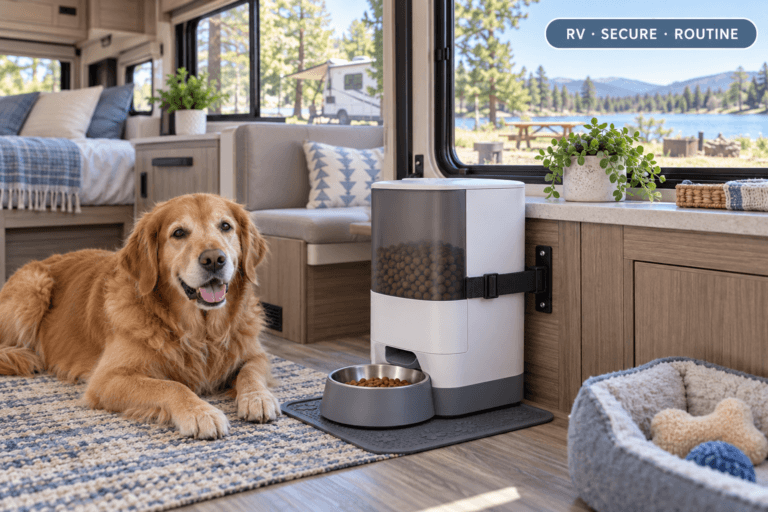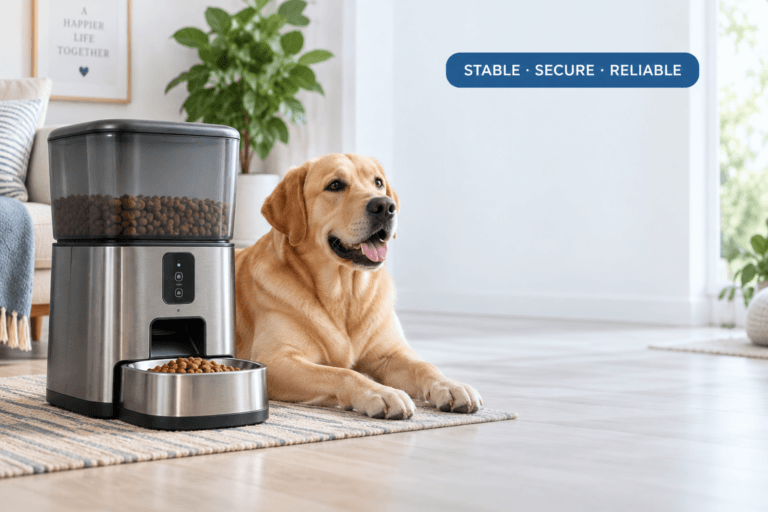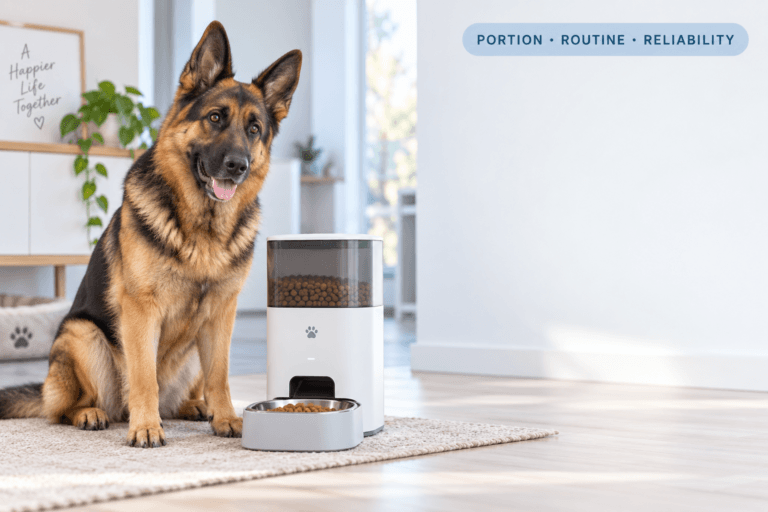

A universal stainless steel pet bowl insert sounds like a small accessory, but it can change how clean, stable, and practical a feeding station feels every day. The insert is the removable bowl piece that sits inside a pet feeder, raised stand, slow feeder frame, or feeding tray. When it fits correctly, it makes cleaning easier, reduces food residue, and gives cats and dogs a smoother eating surface than many plastic bowls.
For owners using scheduled feeding systems, a 2L smart pet feeder for regular feeding works best when the bowl area is easy to remove, wash, dry, and reinstall. A universal stainless steel pet bowl insert is not only about appearance. It is about hygiene, fit, food access, and whether the owner will actually clean the bowl often enough.
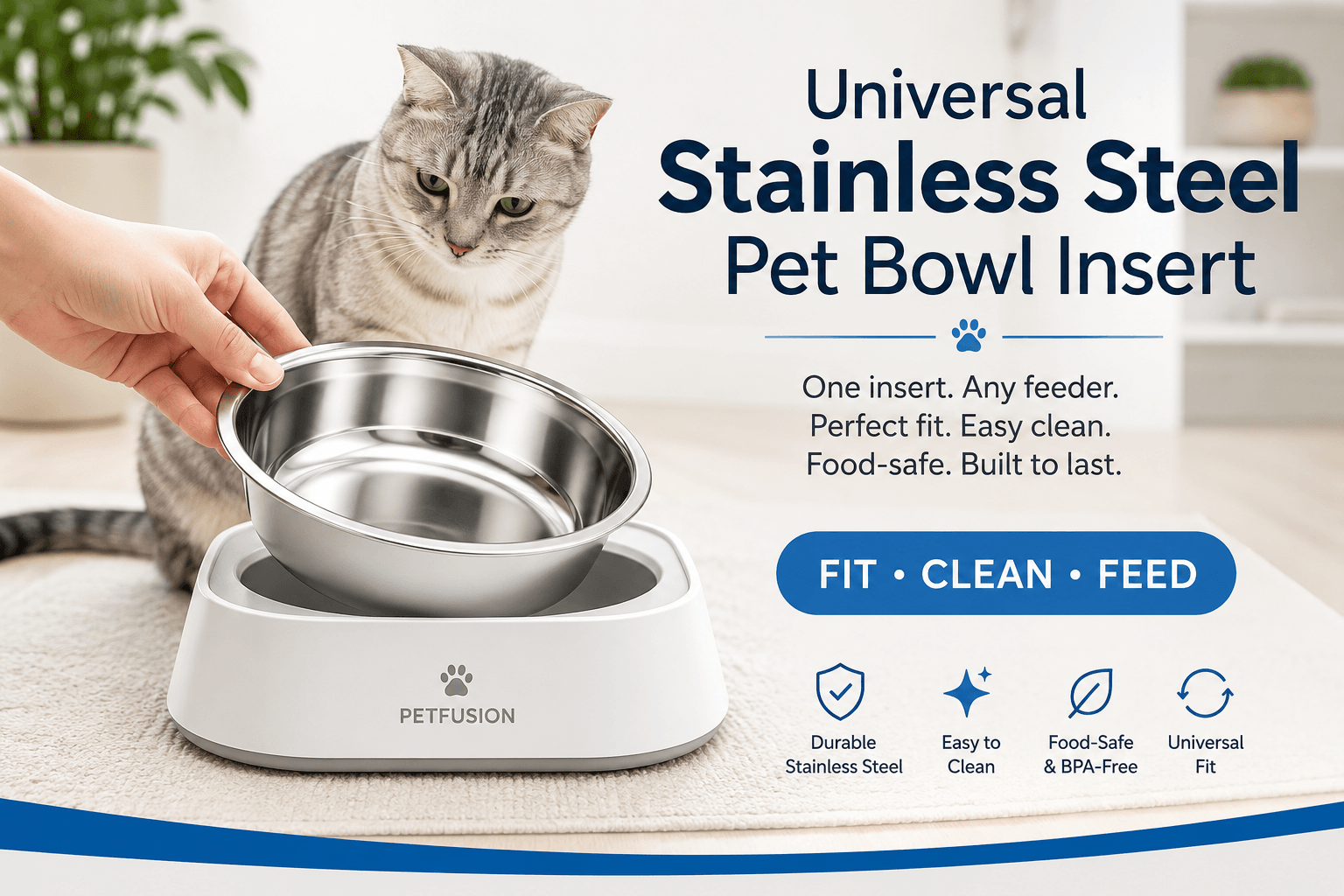
Direct Answer: Universal Stainless Steel Pet Bowl Insert
A universal stainless steel pet bowl insert is a removable stainless bowl designed to fit many feeder bases, stands, trays, or automatic feeder stations, but “universal” still requires checking diameter, rim style, depth, base stability, feeder chute alignment, pet size, and cleaning access before buying. The best insert should sit flat, not rattle, not block food flow, not tip when the pet eats, and be easy to remove for washing after meals.
The safest buying rule is direct: measure before assuming. A bowl insert can be stainless steel and still be wrong if it is too deep for a cat, too shallow for a dog, too wide for the feeder tray, too loose in the holder, or too tall under an automatic feeder chute.
Why This Matters
Pet bowls are food-contact surfaces. They collect saliva, oils, crumbs, wet food residue, dry food dust, hair, and water spots. If the bowl is difficult to remove or unpleasant to wash, it stays dirty longer. That turns a feeding accessory into a hygiene problem.
The FDA’s tips for safe handling pet food and treats recommend washing pet food bowls and scooping utensils with soap and hot water. A removable stainless insert supports that habit because the owner can lift it out and clean it separately from the feeder base.
A universal stainless steel pet bowl insert also matters for feeder reliability. If the bowl sits too high, food may bounce out. If it sits too low, food may pile near the chute. If it shifts during eating, pets may push food under the feeder or knock the insert loose.
What To Do First
Start by measuring the existing bowl or feeder opening. Measure outer rim diameter, inner bowl diameter, depth, bottom diameter, and total height. If the insert needs to sit under an automatic feeder chute, measure the distance between the chute outlet and the bowl surface.
Next, observe how your pet eats. A flat-faced cat, large dog, whisker-sensitive cat, fast eater, senior pet, or messy drinker may need a different insert shape. Bowl fit is not only about the feeder. It is also about the animal’s face, posture, and eating speed.
Use stainless steel cat feeder bowl benefits for a deeper look at why stainless steel is often preferred over plastic for daily feeding. A good universal stainless steel pet bowl insert should make the feeding station cleaner, not simply shinier.
The Feeding Loop Behind Dirty Bowl Problems
The dirty bowl loop starts when the bowl is hard to remove. The owner wipes it quickly instead of washing it. Food residue remains. The pet eats from the same surface again. Odor builds. The owner notices the smell and blames the food or feeder.
Then the pet starts leaving food, pawing near the bowl, or pulling pieces out onto the floor. The owner changes the food, adjusts the schedule, or buys another feeder, but the real problem may be the bowl surface and cleaning routine.
A properly fitted universal stainless steel pet bowl insert breaks this loop by making cleaning simple. Lift out. Wash. Rinse. Dry. Replace. The easier that cycle is, the more likely it happens on time.
The Emotional Trigger Owners Miss
The emotional trigger is convenience. Owners want feeding to be automatic, neat, and low effort. That is reasonable. The mistake is treating the bowl as permanent hardware instead of a washable food-contact part.
A smart feeder can automate meal timing, but it cannot make an unwashed bowl clean. The insert is where food and saliva meet every day. If the owner upgrades only the app, schedule, or hopper while ignoring the bowl, the system is incomplete.
Use clean smart pet feeder. A clean feeding routine depends on removable parts that the owner can actually maintain.
The Addiction Mechanism
The addiction mechanism is buying around the problem. The pet eats messily, the bowl smells, or food sticks. The owner buys new food, new treats, a new feeder, or a new mat. The bowl insert stays the same.
That pattern delays the simple fix. Many feeding problems become easier to manage when the bowl surface is smooth, removable, stable, and correctly sized. A universal stainless steel pet bowl insert is not a magic solution, but it fixes one daily friction point.
The correct sequence is practical: fit first, cleanability second, pet comfort third, feeder compatibility fourth. Design matters only after those basics work.
Fit: What “Universal” Really Means
Universal does not mean guaranteed. It means the insert is shaped to fit a broad range of holders or feeders. The owner still needs to verify dimensions. A few millimeters can decide whether the insert sits securely or rattles every time the pet eats.
Check the rim. Some inserts hang by the rim. Others sit on a flat base. Some need a lip to lock into the feeder tray. Some automatic feeders require a specific bowl height so food lands correctly.
A universal stainless steel pet bowl insert should be tested with water or a small amount of dry food before full use. Push it gently from each side. If it tips, spins, or lifts easily, it may not be safe for an energetic eater.
Material: Why Stainless Steel Is Common
Stainless steel is popular because it is durable, smooth, washable, and less likely to hold scratches than many plastic bowls. Scratched plastic can trap residue and odor more easily. Stainless steel is not maintenance-free, but it usually supports better daily cleaning.
Choose food-grade stainless steel from a reliable seller. Avoid unknown coatings, peeling finishes, sharp edges, rough seams, or thin bowls that dent easily. A good insert should feel stable, smooth, and easy to wash.
The AVMA’s pet nutrition guidance focuses on feeding appropriate food and maintaining healthy routines. Bowl choice supports that routine by making meals cleaner and more predictable.
Depth: Cats and Dogs Need Different Shapes
Bowl depth matters. A deep bowl may work for some dogs but irritate some cats, especially cats with sensitive whiskers or flat faces. A shallow insert can make food easier for cats to access but may spill more with larger dogs.
For cats, a wide and shallow shape is often more comfortable than a narrow deep bowl. For dogs, the correct depth depends on muzzle size, food type, eating speed, and portion size.
Use whisker fatigue cat feeder if your cat pulls food out, hesitates at the bowl, or avoids eating from narrow dishes. A universal stainless steel pet bowl insert should fit the pet, not only the feeder.
Automatic Feeder Compatibility
An automatic feeder bowl insert must align with the chute. If the insert is too high, food can bounce. If it is too low, food can pile unevenly. If the insert is too far forward or backward, kibble may miss the bowl or collect near the edge.
Run several test portions after installing a new insert. Watch where food lands. Check whether the pet can access all of it. Weigh test portions if the feeder dispenses measured food.
Use pet feeder calibration. A new universal stainless steel pet bowl insert can change how food piles, even if the feeder portion setting has not changed.
Cleaning Routine
A stainless insert should be washed regularly with warm water and mild dish soap. Rinse fully and dry before returning it to the feeder. If the insert is dishwasher safe, use the product’s instructions, but still inspect for stuck food around the rim and base.
Wet food bowls need more frequent cleaning. Dry food bowls still need cleaning because saliva, oil, and crumbs remain. Water bowls should be cleaned often because biofilm can develop.
A universal stainless steel pet bowl insert is most useful when it makes cleaning automatic in the owner’s routine: remove after meals, wash, dry, reinstall, and check the feeder base for crumbs.
Stability and Noise
Some stainless bowls rattle in feeder bases. Noise can bother nervous cats or sound-sensitive dogs. A loose insert can also make the pet paw at the bowl or drag food out.
Check whether the insert needs a silicone ring, non-slip base, or exact rim fit. If using a mat under the feeder, make sure it does not tilt the entire unit. Stability should come from fit, not unsafe improvisation.
Use smart feeder placement. A stable feeder location and a stable insert work together.
When a Bowl Insert Is Better Than Buying a New Feeder
A new insert can be enough when the feeder works well but the bowl is scratched, stained, smelly, cracked, too hard to clean, or poorly shaped for the pet. Replacing the insert is usually simpler than replacing the whole feeder.
However, a new insert will not fix a weak motor, bad WiFi, jammed rotor, broken lid, incorrect schedule, or poor portion accuracy. Do not use bowl replacement to avoid mechanical troubleshooting.
Use pet feeder maintenance. A universal stainless steel pet bowl insert is one maintenance upgrade, not a full feeder repair.
Wet Food vs Dry Food
Stainless inserts are useful for both wet and dry food, but the cleaning burden changes. Wet food leaves more residue and should not sit for long periods. Dry food leaves dust and oil film, especially near automatic feeder bowls.
If the feeder is designed only for dry food, do not use a bowl insert to convert it into a wet-food feeder unless the product instructions allow it. The hopper, rotor, and chute may not be built for wet food.
A universal stainless steel pet bowl insert can improve the bowl surface, but it does not change what the feeder mechanism can safely dispense.
Multi-Pet Homes
In multi-pet homes, inserts can help with cleaning because each pet may need a separate bowl. Stainless bowls are easy to label, rotate, and wash. This reduces cross-feeding residue and makes it easier to notice who is eating from which station.
If one pet steals from another, the insert is not the main fix. The feeding station needs access control, distance, supervision, or identity-based feeding.
Use how to stop one cat from eating the other’s food. A clean bowl matters, but access control matters when the wrong pet keeps eating the meal.
Common Failure Pattern
The most common failure pattern is buying a “universal” insert without measuring. The bowl arrives, fits loosely, rattles, or blocks the feeder chute. The owner keeps using it because it is stainless steel, but the feeding station becomes less reliable.
The second failure is choosing a bowl that is too deep for a cat. The cat pulls food out, leaves food at the edges, or avoids the bowl. The owner blames the food instead of the shape.
The third failure is not drying the insert before reinstalling it. A wet insert near dry food can create clumps, residue, and odor around the feeder bowl area.
Real-World Impact
The real-world impact of the right universal stainless steel pet bowl insert is cleaner feeding with less friction. The bowl lifts out easily. Washing becomes faster. Odor drops. Food residue is easier to see. The pet eats from a smoother surface. The feeder base stays cleaner.
The impact of the wrong insert is daily irritation: rattling, tipping, spilled food, poor chute alignment, bowl avoidance, and cleaning frustration. A bowl insert is small, but it sits at the final point of every meal.
For owners comparing full feeding systems, start with the smart feeders collection. Choose a feeder with a removable bowl system that supports the type of insert and cleaning routine you will actually use.
Can This Be Fixed?
Yes, most bowl insert problems can be fixed by measuring correctly, choosing the right depth, checking feeder chute alignment, washing and drying the insert consistently, and testing the pet’s eating behavior for several meals. The right insert should disappear into the routine. It should not require daily adjustment.
Run a seven-day bowl check. Record whether the insert rattles, tips, holds odor, traps food under the rim, changes portion landing, causes whisker contact, or makes cleaning easier. If the pet eats better and the owner cleans more consistently, the insert is doing its job.
Cat owners can compare the cat feeders collection when shallow bowls and small portions matter. Dog owners can compare the dog feeders collection when larger portions, bowl depth, and base stability matter more.
Who Should Walk Away and Who Should Use This
Walk away from any insert with sharp edges, unstable fit, unknown coating, poor rim shape, excessive rattling, difficult removal, or dimensions that interfere with the feeder chute. Also walk away from assuming stainless steel alone solves cleaning if the owner will not wash the bowl.
Use a universal stainless steel pet bowl insert if your current bowl is scratched, stained, smelly, hard to remove, too plastic-heavy, difficult to wash, or poorly matched to your pet’s face shape. It is especially useful for automatic feeders, raised stands, cat feeding stations, small dog bowls, and households that want cleaner daily food contact surfaces.
For routine feeding, a smart automatic pet feeder with app control should be paired with a bowl system that is removable, washable, stable, and correctly sized. The feeder controls timing; the insert controls the surface your pet actually eats from.
Mini FAQ
What is a universal stainless steel pet bowl insert?
A universal stainless steel pet bowl insert is a removable stainless bowl designed to fit many feeder bases, stands, trays, or feeding stations. It still needs measurement before purchase because “universal” does not mean every feeder fits.
How do I know if a bowl insert will fit my feeder?
Measure the outer rim diameter, inner bowl diameter, depth, bottom width, and feeder opening before buying. For automatic feeders, also check chute height and where food lands.
Is stainless steel better than plastic for pet bowls?
Stainless steel is often easier to clean, more durable, and less likely to hold scratches than many plastic bowls. It still needs regular washing and drying.
Can I use a universal insert in an automatic feeder?
You can use a universal insert in an automatic feeder only if it fits securely, does not block the chute, does not change food flow badly, and can be removed for cleaning. Test several portions before relying on it.
What bowl depth is best for cats?
Many cats prefer a wider, shallower bowl because it can reduce whisker contact and make food easier to reach. The best depth depends on the cat’s face shape, eating style, and portion size.
How often should I wash a stainless pet bowl insert?
Wash the insert regularly with soap and hot water, and clean more often after wet food or messy meals. Dry it fully before returning it to a feeder station.
The best universal stainless steel pet bowl insert is not the one that only looks clean. It is the one that fits securely, lines up with the feeder, suits the pet’s face, washes quickly, dries fully, and makes daily feeding easier to maintain. Measure first, test the fit, watch the pet eat, and keep the bowl surface as clean as the schedule is precise.