
A Maine Coon cat feeder bowl should not be chosen like a normal small cat bowl. Maine Coons are large, broad-faced cats with longer whiskers, heavier bodies, and a feeding style that can expose weak bowl design quickly. A narrow, deep, slippery, or poorly placed bowl can create whisker pressure, neck awkwardness, food scattering, fast eating, and avoidable mess.
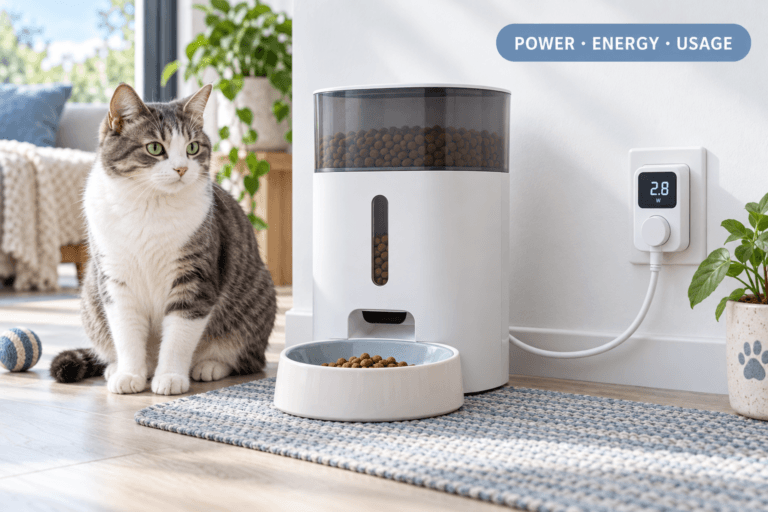
For dry-food routines, a 2L smart pet feeder for regular feeding can support scheduled meals when the bowl area is wide enough, stable enough, and clean enough for a large cat. The feeder controls timing, but the Maine Coon cat feeder bowl controls comfort at the actual eating point.
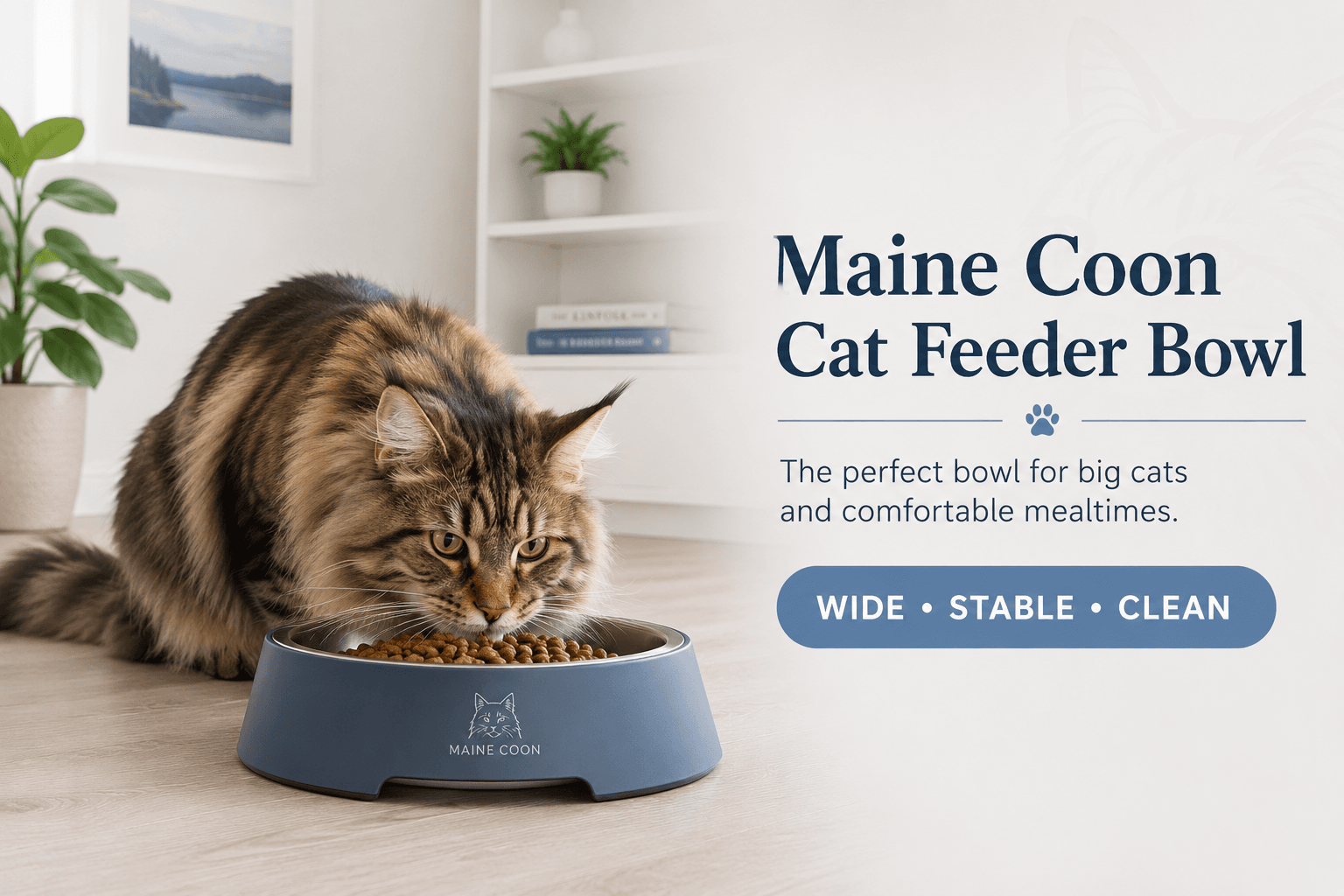
Direct Answer: Maine Coon Cat Feeder Bowl
The best Maine Coon cat feeder bowl is wide, shallow, stable, easy to clean, and large enough for the cat’s face and whiskers without forcing the cat to dig food from a narrow cup. Stainless steel or another smooth washable material is usually easier to maintain than scratched plastic, and the bowl should sit in a calm feeding station with enough room for the cat’s body.
A good Maine Coon cat feeder bowl solves four problems at once: whisker comfort, posture, hygiene, and portion control. The bowl should not make the cat press its whiskers against the sides. It should not slide during meals. It should not trap old food in corners. It should not make the owner guess how much food the cat is actually eating.
Why This Happens
Maine Coons are not just “regular cats but fluffier.” Their larger frame changes how they interact with feeding equipment. A bowl that works for a small domestic shorthair can feel cramped for a Maine Coon. If the bowl is too narrow, the cat’s whiskers may touch the sides repeatedly. If the bowl is too deep, the cat may have to angle its face down awkwardly to reach food.
The Cornell Feline Health Center’s feeding your cat guidance emphasizes that feeding should match the cat’s needs and routine. For a large breed cat, that means equipment fit matters as much as food timing.
A Maine Coon cat feeder bowl also needs to support clean eating. Large cats can push lightweight bowls, scatter kibble, and leave residue around the station. If the bowl moves or traps crumbs, the feeding area becomes harder to maintain.
What To Do First
Start by looking at the cat’s face while it eats. If the cat pulls food out of the bowl, paws at the food, leaves kibble at the edges, eats only from the center, tilts its head awkwardly, or walks away from a full bowl, the bowl design may be part of the problem.
A practical Maine Coon cat feeder bowl should be wide enough for the cat to eat without facial crowding, shallow enough to avoid deep digging, heavy enough not to slide, and smooth enough to wash fully. Do not solve every feeding issue by changing food first. Inspect the bowl, placement, portion size, and station hygiene.
Use whisker fatigue cat feeder to check whether bowl shape is creating discomfort. Then use smart feeder placement to fix the feeding station around the bowl.
The Feeding Loop Behind This Problem
The feeding loop starts when the cat avoids the bowl or eats messily. The owner assumes the cat is picky or still hungry. The owner changes food, adds toppers, offers treats, or moves meals around. The bowl remains too narrow, too deep, dirty, or unstable, so the same behavior continues.
Then the owner begins feeding extra because the cat “did not finish.” In reality, the cat may be avoiding the bowl experience rather than rejecting the food. This turns a simple equipment mismatch into portion confusion.
A better Maine Coon cat feeder bowl loop starts with fit. Use the right bowl shape, keep food measured, keep the station clean, and observe whether the cat eats more calmly. If the behavior improves, the problem was not appetite. It was feeding mechanics.
The Emotional Trigger Owners Miss
The emotional trigger is breed pride. Maine Coon owners often know their cat is large and impressive, but they still use small standard cat bowls because they look tidy or match the kitchen. The result is a feeding station designed for the room instead of the cat.
A large cat needs room to eat. The bowl should match the animal’s face, body position, and meal routine. A beautiful bowl that crowds the cat is not a good bowl.
For bowl material decisions, use stainless steel cat feeder bowl benefits. A Maine Coon cat feeder bowl should be chosen for cleaning and fit before color, shape trend, or decorative design.
The Addiction Mechanism
The addiction mechanism is topper dependency. If the Maine Coon avoids the bowl and the owner adds higher-value food every time, the cat learns that hesitation improves the meal. The bowl problem remains, but the owner now has a reward problem too.
This is especially easy with large cats because owners may assume a bigger cat needs more food every time it asks. A Maine Coon may have a larger frame, but that does not mean every demand should become a portion increase.
A controlled Maine Coon cat feeder bowl routine keeps food rewards separate from bowl troubleshooting. Fix the bowl first. Measure the food. Then evaluate appetite without turning every hesitation into treats, toppers, or extra scoops.
Bowl Width Matters More Than Bowl Depth
Many owners buy deep bowls because they hold more food. For Maine Coons, width is usually more important than depth. A wide, shallow bowl lets the cat reach food without pressing whiskers hard against the sides. It also makes leftover food easier to see and clean.
A deep narrow bowl can hide old crumbs at the bottom. It can also make the cat push food out onto the floor to eat comfortably. That behavior looks messy, but it may be the cat solving a poor bowl design.
A good Maine Coon cat feeder bowl should allow the cat to eat from the bowl surface naturally. If the cat constantly removes food from the bowl, the bowl may be too deep, too narrow, or too uncomfortable.
Elevated Bowls: Useful, Not Automatic
An elevated bowl can help some large cats eat with a more comfortable posture, especially when the bowl height reduces awkward bending. But elevation is not automatically better for every cat. If the bowl is too high, unstable, or angled poorly, the cat may eat less naturally.
The right height lets the cat stand or sit comfortably without reaching upward or crouching hard downward. Stability matters more than appearance. A tall but wobbly stand is worse than a low bowl that stays firm.
For a Maine Coon cat feeder bowl, test the cat’s posture. The cat should approach easily, eat calmly, and leave without pushing the station around. If elevation creates slipping, tipping, or neck strain, adjust it.
Material and Hygiene
Smooth washable materials matter because cat bowls are food-contact surfaces. Scratched plastic can trap residue and odor. Ceramic can work when the glaze is intact, but chipped areas should not remain in use. Stainless steel is popular because it is durable, smooth, and easy to clean.
The FDA’s safe handling guidance for pet food and treats emphasizes washing hands, surfaces, and food-related items. A Maine Coon cat feeder bowl should be treated as a daily food-contact item, not a decorative object that is rinsed only when it looks dirty.
Use clean smart pet feeder for the full hygiene routine. Bowl cleanliness, chute cleanliness, food storage, and floor cleaning all affect whether the cat trusts the station.
Automatic Feeder Compatibility
Not every automatic feeder bowl is ideal for a Maine Coon. Some feeders use small narrow bowls that work for average cats but crowd larger faces. Others have a food outlet that drops kibble into one tight area, causing the cat to push food around.
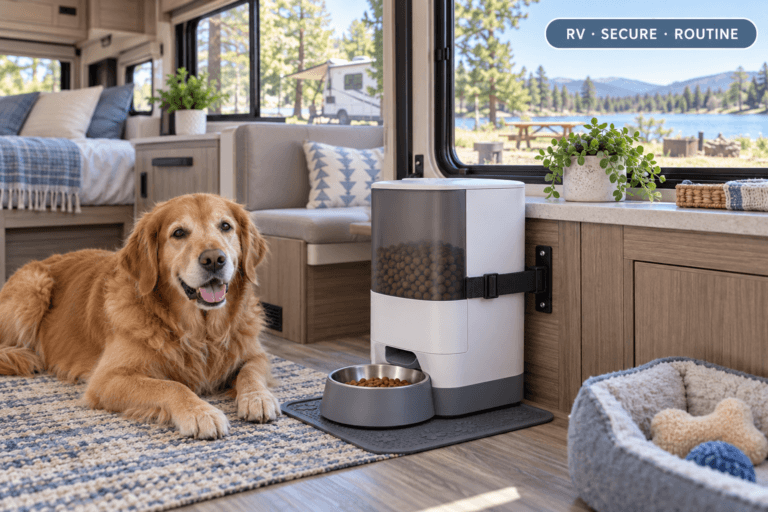
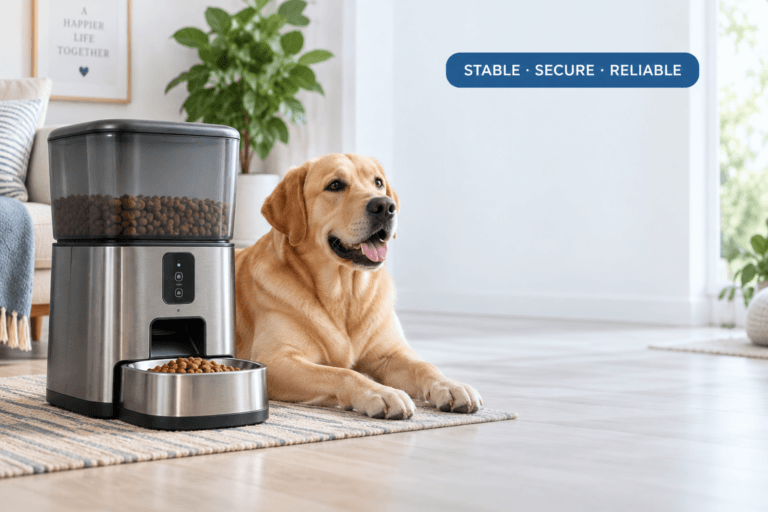
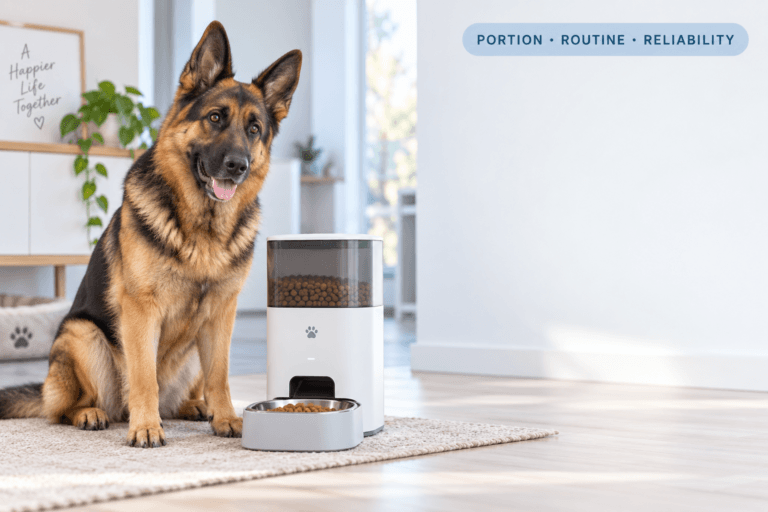
A smart feeder for a Maine Coon should have a stable base, a bowl shape that does not crowd the face, a clean chute, portion control, and enough food capacity for the household routine. The bowl must still be removable and washable.
Use the cat feeders collection when comparing feeder designs. A Maine Coon cat feeder bowl inside an automatic system should still follow the same rule: wide, clean, stable, and comfortable.
Portion Control for Large Cats
A Maine Coon’s larger size does not remove the need for measured feeding. Large cats can still gain weight if portions drift, treats increase, or multiple people feed manually. Bowl size should improve comfort, not encourage unlimited food.
The AVMA’s healthy pet weight guidance explains why body condition matters. For Maine Coons, body size should not be confused with ideal body condition. A big frame still needs measured intake.
Use pet feeder calibration if using an automatic feeder. A Maine Coon cat feeder bowl can make eating more comfortable, but calibration makes the daily food amount measurable.
Placement Rules for Maine Coons
A large cat needs space around the feeding station. Do not wedge the bowl into a tight corner, narrow hallway, or crowded area near trash, litter, doors, or appliances. The cat should be able to approach, eat, and leave without feeling blocked.
Multi-pet homes need extra care. A smaller cat, dog, or second Maine Coon can crowd the station. If one pet steals food, the bowl design is not the only issue. Feeding access must be controlled.
For multi-cat homes, use how to stop one cat from eating the other’s food. A Maine Coon cat feeder bowl should give the right cat comfortable access, not become a shared food conflict point.
Common Failure Pattern
The common failure pattern is buying a bowl that looks large because it is deep, but it is still too narrow at the eating surface. The cat can technically reach the food, but the experience is uncomfortable. Food gets pulled out, left behind, or scattered.
The second failure is using a lightweight bowl. A Maine Coon can push it across the floor during normal eating. The owner sees mess and assumes the cat is clumsy. The real problem is poor stability.
The third failure is using a large bowl as permission to overfill. A large bowl is for space, not unlimited food. A Maine Coon cat feeder bowl should improve comfort while the owner still measures daily intake.
Real-World Impact
The real-world impact of the wrong bowl is easy to miss. The cat may eat less comfortably, scatter food, beg after partial meals, avoid the station, or prefer eating from the floor. The owner may misread these signs as pickiness or hunger.
The right Maine Coon cat feeder bowl creates cleaner signals. If the bowl is comfortable, stable, and clean, appetite changes become easier to interpret. If the bowl is cramped or dirty, every feeding behavior becomes harder to read.
A smart WiFi pet feeder with camera can help verify whether the Maine Coon actually eats the scheduled meal, but the bowl design still has to support comfortable eating.
Can This Be Fixed?
Yes, most bowl-related Maine Coon feeding problems can be fixed with a station reset. Replace narrow deep bowls with a wide shallow surface. Use a heavier base or non-slip mat. Clean the bowl daily. Measure portions. Move the station to a calmer space. Watch whether the cat eats with less pawing, scattering, or hesitation.
Run a seven-day bowl check. Record food left behind, food scattered, head angle, whisker contact, bowl movement, begging after meals, and whether the cat avoids the station. Do not change food, bowl, location, and schedule all on the same day unless the current setup is clearly failing.
For feeder selection, start with the smart feeders collection. Choose based on bowl shape, stable base, cleaning access, portion control, app reliability, and whether the feeding station gives a large cat enough room.
Who Should Walk Away and Who Should Use This
Walk away from narrow bowls, deep cups, scratched plastic, lightweight dishes, unstable elevated stands, and decorative bowls that are difficult to clean. Also walk away from assuming a bigger bowl means bigger portions.
Use a Maine Coon cat feeder bowl system if your cat scatters food, pulls kibble from the dish, avoids the bowl edges, paws at meals, pushes the bowl, eats too fast, begs after partial meals, or seems uncomfortable at the station. It is especially useful for large male Maine Coons, multi-cat homes, dry-food routines, and smart feeder setups.
For structured daily meals, use the smart feeders collection and compare products by bowl access, cleaning design, and portion control. The final rule is direct: a Maine Coon cat feeder bowl should fit the cat’s face and routine, not just the owner’s countertop style.
Mini FAQ
What kind of bowl is best for a Maine Coon cat?
The best bowl for a Maine Coon cat is wide, shallow, stable, and easy to clean. It should give the cat enough whisker space and should not force the cat to dig food from a narrow deep cup.
Do Maine Coons need elevated bowls?
Some Maine Coons do well with slightly elevated bowls, but elevation is not required for every cat. The bowl should support a relaxed eating posture without wobbling, slipping, or forcing the cat to reach upward.
Is a stainless steel bowl good for Maine Coons?
A stainless steel bowl is a strong option for Maine Coons because it is smooth, durable, and easy to wash. The shape still matters. Stainless steel does not help if the bowl is too narrow or too deep.
Why does my Maine Coon pull food out of the bowl?
A Maine Coon may pull food out of the bowl because the bowl is too narrow, too deep, unstable, dirty, or uncomfortable around the whiskers. Try a wider shallow bowl and observe whether scattering decreases.
Can I use an automatic feeder for a Maine Coon?
You can use an automatic feeder for a Maine Coon if the bowl area is large enough, the base is stable, the chute handles the kibble, and portions are calibrated. Do not rely on a feeder with a cramped bowl.
How often should I clean a Maine Coon cat feeder bowl?
Clean a Maine Coon cat feeder bowl daily for normal food-contact hygiene, and clean sooner when wet food, residue, odor, crumbs, or saliva buildup appears. A large cat bowl can still become dirty quickly.
The best bowl for a Maine Coon is not the biggest bowl on the shelf. It is the bowl that gives enough width, stable access, clean surfaces, and measured feeding. A well-chosen Maine Coon cat feeder bowl makes daily meals calmer, cleaner, and easier to control.