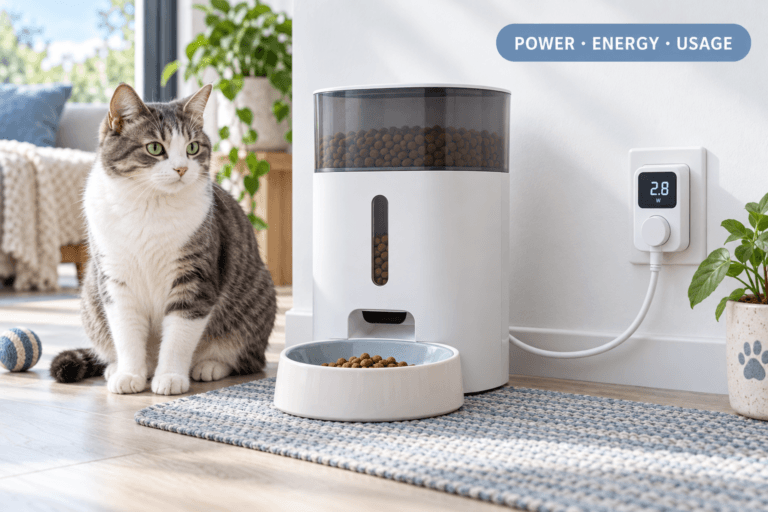

A stainless steel cat feeder bowl is not just a nicer-looking dish. It is a hygiene boundary for cats that eat from the same surface every day, leave saliva behind, push crumbs into corners, and react strongly when food smells stale or the bowl feels uncomfortable. The wrong bowl material can turn a feeding routine into odor, residue, refusal, or repeated food pressure.
For owners building a cleaner dry-food routine, a smart pet feeder for regular feeding gives a practical timing system, but the bowl surface still matters. A feeder controls when food arrives. The bowl controls what the cat actually touches, smells, and trusts at mealtime.
Direct Answer: Stainless Steel Cat Feeder Bowl
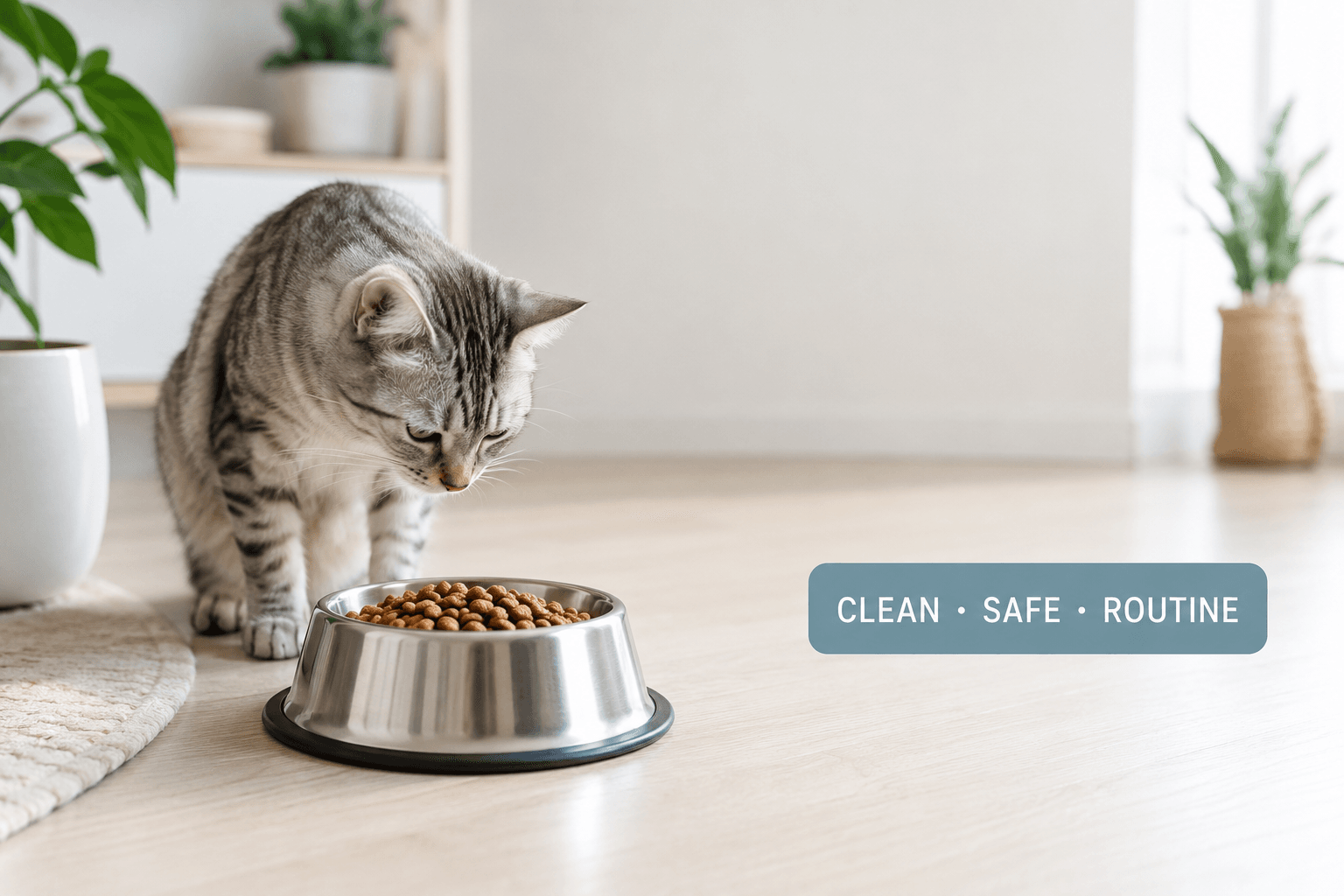
A stainless steel cat feeder bowl is a strong choice when the goal is cleaner feeding, easier washing, less trapped residue, and better routine control. Plastic bowls can hold scratches and odor, while a smooth stainless surface is easier to clean and inspect. The bowl will not fix poor portions by itself, but it removes one common hygiene weakness from the feeding system.
Why This Happens
Cat bowl problems often begin before owners notice them. Food oil sticks to the surface. Saliva dries near the edge. Crumbs settle in corners. Damp cleaning leaves residue behind. If the bowl has scratches, soft corners, or old food film, the cat receives unclear food signals. The meal smells different, feels different, and becomes less predictable.
A stainless steel cat feeder bowl helps because the surface is easier to wash, dry, and inspect. The issue is not style. The issue is repeat contact. Cats eat close to the bowl surface, and many cats are sensitive to odor, texture, and bowl shape. A dirty or uncomfortable bowl can make the cat hesitate, paw near food, leave meals unfinished, or demand replacement food from the owner.
Owners who use timed feeding should connect bowl hygiene with the full setup process in how to use a smart pet feeder. A clean feeder without a clean bowl is still a weak system.
What To Do
Choose a stainless steel cat feeder bowl that is shallow, stable, easy to remove, and easy to wash. Avoid deep narrow bowls that force the cat’s face into the sides. Avoid bowls that slide during meals. Avoid any design that traps food under rims, rubber seams, or hard-to-reach corners.
The bowl should support a fixed feeding rhythm. Wash it before residue becomes visible. Dry it fully before the next meal. Keep the surrounding feeding area clean. Use measured portions so food does not sit exposed for too long. A scientific pet feeding schedule works better when food is served in a clean, predictable place.
For cats that eat too much or act hungry after meals, bowl material is only one part of the system. Portion control still matters. Long-term meal structure should follow healthy pet weight guidance rather than owner emotion or bowl-checking pressure.
The Feeding Loop Behind This Problem
The feeding loop begins with expectation. The cat approaches the bowl, smells the food, eats the portion, and leaves. When the bowl is clean and the portion is predictable, the loop stays calm. When the bowl smells stale, slides, holds residue, or feels uncomfortable, the cat starts testing the system.
A stainless steel cat feeder bowl protects the loop by making the feeding surface easier to keep neutral. The cat should not have to sort through old odor, sticky corners, or unstable placement. Food should appear in the same place, in the same amount, on a surface that does not add noise to the routine.
If the cat keeps returning to the bowl after eating, the problem can be a learned checking loop rather than true hunger. The guide on why cats seem hungry after eating explains why repeated rewards make food pressure stronger.
The Emotional Trigger Owners Miss
The emotional trigger is owner overcorrection. When a cat refuses food or leaves part of a meal, many owners immediately change the food, add treats, hand-feed, or refill the bowl. That response feels caring, but it teaches the cat that hesitation can produce a better offer.
A stainless steel cat feeder bowl reduces one source of hesitation by keeping the feeding surface cleaner and easier to trust. The owner can stop guessing whether the cat dislikes the food, the smell, or the bowl. A clean bowl removes clutter from the decision and keeps the feeding rule clearer.
Hydration belongs in the same routine. Cats eating dry food need stable water access near, but not crowding, the food station. Owners should connect bowl hygiene with pet hydration tips so feeding and drinking do not become separate weak points.
The Addiction Mechanism
The addiction mechanism comes from reward changes after bowl conflict. If the cat hesitates at a dirty bowl and the owner upgrades the meal, the hesitation gains value. If the cat paws at the area and the owner replaces food, pawing gains value. If the cat refuses a stale-smelling bowl and receives treats, refusal gains value.
A stainless steel cat feeder bowl does not train the cat by itself. It supports the owner’s boundary by making the normal meal easier to accept. Clean bowl, measured portion, same location, same timing. That structure reduces random reward and lowers the chance that the cat learns to negotiate around food.
The goal is not to make the bowl exciting. The goal is to make it boring, clean, and reliable. Routine dependency should point toward the feeding schedule, not toward owner reaction.
Real-World Impact
The real-world impact of poor bowl choice shows up as odor, residue, ants, food refusal, chin grime, scattered kibble, and owner frustration. When the owner responds by adding more food or switching meals randomly, portion control weakens. For cats already above ideal body condition, that pattern pushes weight management in the wrong direction. A structured cat weight reduction plan depends on measured meals and consistent surfaces.
A stainless steel cat feeder bowl also supports nutrition quality because old residue does not belong in a daily feeding station. Owners should connect bowl cleaning with broader pet nutrition tips. Clean feeding is not cosmetic. It protects the meal from becoming mixed with yesterday’s film.
For cats with face sensitivity or bowl discomfort, shape matters alongside material. The guide on whisker fatigue cat feeder benefits explains why shallow, accessible bowl design can reduce feeding friction.
Can This Be Fixed?
Yes, bowl-related feeding problems can be fixed when material, shape, cleaning, and portion control are handled together. Replace scratched or odor-holding bowls. Use a smooth removable bowl. Wash and dry it consistently. Keep the feeding area stable. Stop using treats or extra food to compensate for a dirty feeding station.
A stainless steel cat feeder bowl should be part of a full feeding system, not a standalone miracle. The system needs clean food contact, measured meals, predictable timing, water support, and owner discipline. If one part stays loose, the behavior stays loud.
Who Should Walk Away and Who Should Use This
Walk away from a stainless bowl design if it is too deep, too narrow, unstable, difficult to remove, or paired with a feeder that traps food around the rim. Stainless steel is useful only when the bowl shape and cleaning access support the cat’s actual eating routine.
Use a stainless steel cat feeder bowl if the cat eats dry or wet food from a daily bowl, the owner wants easier cleaning, and the feeding station needs less odor and residue. Cat owners comparing complete setups should start with cat feeders and screen for bowl material, bowl access, portion control, and cleanability.
For homes with more than one cat, one shared bowl can create residue and conflict faster. The automatic feeder guide for multi-cat households shows why access control and feeding separation matter when several cats use the same food area.
Mini FAQ
Is a stainless steel cat feeder bowl better than plastic?
Yes, stainless steel is better for most feeding routines because it is easier to clean and inspect. Plastic can hold scratches and odor. Use a smooth stainless bowl and wash it on a fixed schedule.
Does a stainless steel cat feeder bowl stop food smell?
It helps reduce food smell when the bowl is cleaned consistently. Odor comes from residue, saliva, food oil, and old crumbs. Wash and dry the bowl instead of covering smell with fresh food.
What shape should a cat feeder bowl have?
A shallow and stable shape is the stronger choice for most cats. Deep narrow bowls can create face pressure and feeding hesitation. Choose a wide surface that is easy to reach and easy to clean.
Can bowl material affect cat feeding behavior?
Yes, bowl material can affect behavior when odor, residue, or discomfort changes the meal experience. Cats respond to feeding signals. Use a clean, stable bowl so the routine stays predictable.
How should I clean a stainless steel cat bowl?
Wash it regularly, remove food film, and dry it fully before use. Moisture and residue weaken hygiene. Keep the bowl and surrounding feeding area clean so each meal starts from a neutral surface.
For owners who want cleaner scheduled feeding, a 2L smart pet feeder for regular feeding can support timing while the bowl routine protects hygiene. A stainless steel cat feeder bowl is the right choice when the goal is cleaner meals, less odor, fewer residue problems, and a feeding system that does not train the cat to negotiate around dirty food.