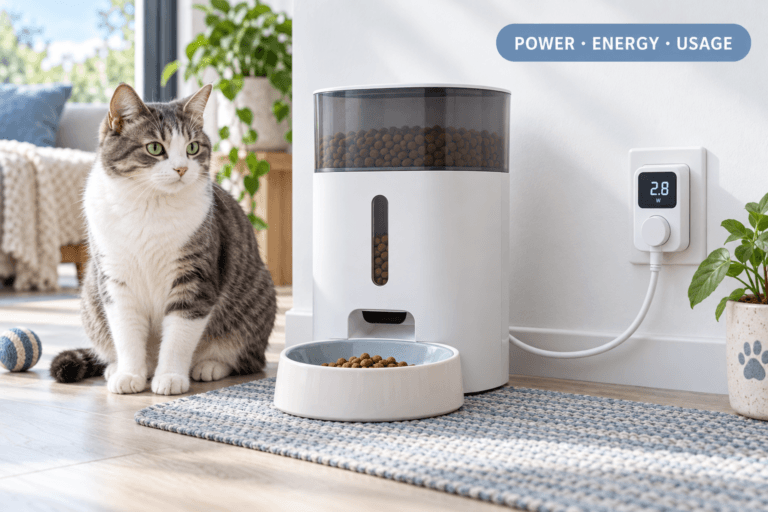

An automatic kitten feeder is not a shortcut for raising a young cat. It is a feeding control tool for kittens that already eat suitable dry food, follow a basic meal rhythm, and need small portions released consistently through the day. Used correctly, it supports routine. Used carelessly, it can create overeating, missed meals, food anxiety, or weak owner boundaries during a sensitive growth stage.
For kittens that need simple scheduled meals rather than random refills, a smart pet feeder for regular feeding gives a cleaner structure than an open bowl. The feeder should not replace supervision. It should make meal timing and portion control more consistent when the household routine gets busy.
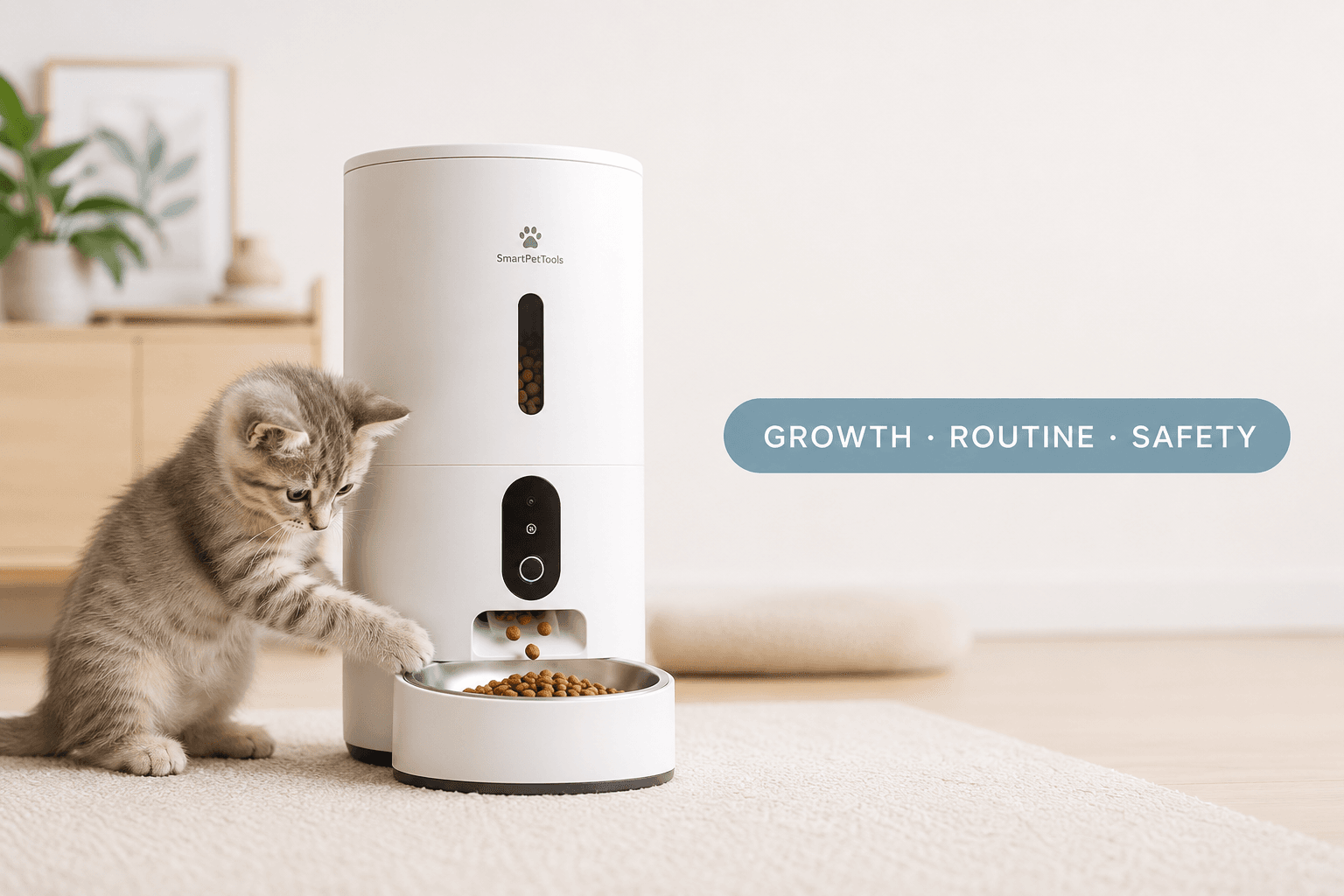
Direct Answer: Automatic Kitten Feeder
An automatic kitten feeder is useful when the kitten eats dry food reliably, needs small scheduled meals, and can safely use the bowl without stress or competition. It is not the right tool for very young kittens that still need close feeding support, wet-food-only meals, or constant monitoring. The feeder works best as a routine builder, not as a substitute for owner judgment.
Why This Happens
Kitten feeding problems develop quickly because young cats learn patterns fast. If food appears whenever the kitten cries, climbs, scratches, or follows the owner, those actions become part of the feeding system. The kitten learns that pressure creates food. The owner then sees louder begging and assumes the kitten is simply hungry again.
An automatic kitten feeder changes the source of food reward. Meals arrive from a fixed location at planned times. The kitten starts reading the schedule instead of reading the owner’s emotional reaction. That matters because early feeding patterns often become adult feeding habits. A loose routine during kittenhood can become bowl checking, dawn meowing, food guarding, or constant begging later.
Owners should connect kitten feeding with a structured scientific pet feeding schedule. The feeder should support a clear meal rhythm, not create random access just because the device can dispense food.
What To Do
Use an automatic kitten feeder only after the kitten can eat the selected dry food cleanly and reach the bowl comfortably. Start with small meals. Check whether the feeder dispenses the right amount every time. Watch whether the kitten eats calmly, leaves food behind, or keeps returning to the bowl. The goal is controlled routine, not mechanical overfeeding.
Choose a feeder with accurate small portions, easy cleaning, stable bowl placement, and a food path that matches the kibble size. Oversized kibble, dusty food, oily crumbs, or damp parts can create jams and uneven meals. A kitten feeder has to be clean and predictable because the feeding pattern is being learned every day.
For setup discipline, use how to use a smart pet feeder before relying on automation. A feeder that is not tested with the real food, real portion, and real schedule is not a feeding plan. It is a guess.
The Feeding Loop Behind This Problem
The feeding loop begins with a signal. The kitten feels anticipation, approaches the bowl, receives food, eats, and leaves. When the signal is consistent, the loop becomes calm. When the owner feeds after crying, jumping, or scratching, the loop becomes noisy. The kitten learns to repeat the action that produced food.
An automatic kitten feeder protects the loop by removing owner reaction from the reward chain. Food does not arrive because the kitten demands it. Food arrives because the schedule says so. That difference is small in the moment and large over time.
If a kitten or young cat keeps acting hungry after eating, the problem can become a learned checking pattern. The guide on why cats seem hungry after eating explains how repeated reward can look like constant appetite when the real issue is reinforcement.
The Emotional Trigger Owners Miss
The emotional trigger is protectiveness. A kitten looks small, urgent, and hard to refuse. Owners often respond by giving extra meals, topping up bowls, or offering snacks whenever the kitten makes noise. That reaction feels safe, but it can train food pressure before the owner notices the pattern.
An automatic kitten feeder gives the owner a rule to follow when emotion is high. The portion is already planned. The meal time is already set. The owner does not need to decide while the kitten is crying near the kitchen or climbing toward the food bag.
Food control also needs water control. Dry-food automation should sit beside stable water access, clean bowls, and predictable placement. Owners should pair feeder routines with pet hydration tips so the feeding system does not ignore drinking behavior.
The Addiction Mechanism
The addiction mechanism comes from uncertain reward. If the kitten cries and sometimes receives food, the behavior becomes stronger. If the kitten checks the bowl and sometimes finds extra food, checking becomes valuable. If the owner gives snacks to stop noise, noise becomes a tool.
An automatic kitten feeder reduces that random reward pattern when it is used strictly. The feeder should release planned meals, not surprise snacks. It should create a predictable reinforcement loop: wait near the feeding area, hear the feeder, eat the portion, leave the bowl.
This is routine dependency in the useful direction. The kitten depends on the feeding schedule, not on owner weakness. That boundary matters because early food learning shapes how the cat behaves around meals later.
Real-World Impact
The real-world impact of poor kitten feeding shows up as constant begging, fast eating, bowl obsession, early morning wakeups, and owner overfeeding. Once the kitten learns that pressure changes food access, the household becomes reactive. The owner keeps feeding to calm the moment, and the kitten keeps using the behavior that works.
An automatic kitten feeder can protect meal structure, but only when portions stay measured. Growth does not justify uncontrolled feeding. Owners should still keep body condition and meal discipline aligned with healthy pet weight guidance, because early overfeeding can turn into a long-term routine problem.
For cats that later need stricter weight control, a structured cat weight reduction plan depends on measured meals and consistent owner behavior. It is easier to build that discipline early than to repair years of random feeding.
Can This Be Fixed?
Yes, weak kitten feeding habits can be fixed when the feeder is used as a controlled routine system. The fix is not leaving food available all day. The fix is small scheduled meals, accurate dispensing, clean food contact, stable bowl placement, and no extra food in response to noise.
An automatic kitten feeder should be introduced gradually. Let the kitten learn the sound, location, and meal timing while the owner watches the first several feeding cycles. Check that the kitten is not afraid of the motor, not blocked by the bowl shape, and not leaving food to become stale.
Cleanliness matters because kittens interact closely with the bowl. Owners should review pet nutrition tips and keep the feeder dry, washed, and free of stale crumbs. A smart routine with a dirty food path is still a weak routine.
Who Should Walk Away and Who Should Use This
Walk away from an automatic feeder as the main solution if the kitten is too young for dry food, eats wet food only, struggles to reach the bowl, shares food with a faster pet, or needs close meal supervision. In those homes, the main problem is not timing. The main problem is access, age suitability, or monitoring.
Use an automatic kitten feeder if the kitten eats dry food reliably, responds calmly to feeding sounds, needs small scheduled meals, and lives in a home where the owner wants stronger routine control. Cat owners can compare cat feeders by bowl height, portion size, cleanability, and dry-food flow.
For homes with multiple cats, kitten feeding needs separation. A faster adult cat can steal the kitten’s food and make one feeder fail. The automatic feeder guide for multi-cat households explains why access control matters when more than one cat uses the same feeding area.
Mini FAQ
Is an automatic kitten feeder safe to use?
Yes, it is safe when the kitten eats dry food reliably and the feeder is tested under supervision. The risk comes from wrong food, poor portion settings, unstable access, or untested dispensing. Use small scheduled meals and watch the first feeding cycles.
What should I look for in an automatic kitten feeder?
Look for accurate small portions, a low accessible bowl, easy cleaning, and reliable dry-food flow. Kittens need controlled access, not a large open food supply. Choose a feeder that supports routine rather than surplus.
Can an automatic kitten feeder stop begging?
Yes, it can reduce begging when food stops coming from owner reaction. Begging grows when crying or climbing produces food. Use fixed meal times and avoid snacks outside the routine.
Should kittens have unlimited food from a feeder?
No, unlimited access is a weak feeding pattern for many homes. It teaches repeated bowl checking and makes portions harder to read. Use scheduled meals that match the kitten’s routine and monitor intake.
Can a kitten share an automatic feeder with an adult cat?
No, shared access is usually a poor setup when one cat eats faster or dominates the bowl. The kitten can lose food while the adult cat gains extra reward. Use separation or a controlled multi-pet feeding plan.
For a simple first routine, a 2L smart pet feeder for regular feeding can support small scheduled meals when the owner keeps supervision and cleaning in the system. An automatic kitten feeder is the right tool when it builds calm meal timing, measured portions, and early routine discipline. Choose control over constant refills, test the feeder before relying on it, and make the schedule teach the kitten how feeding works.