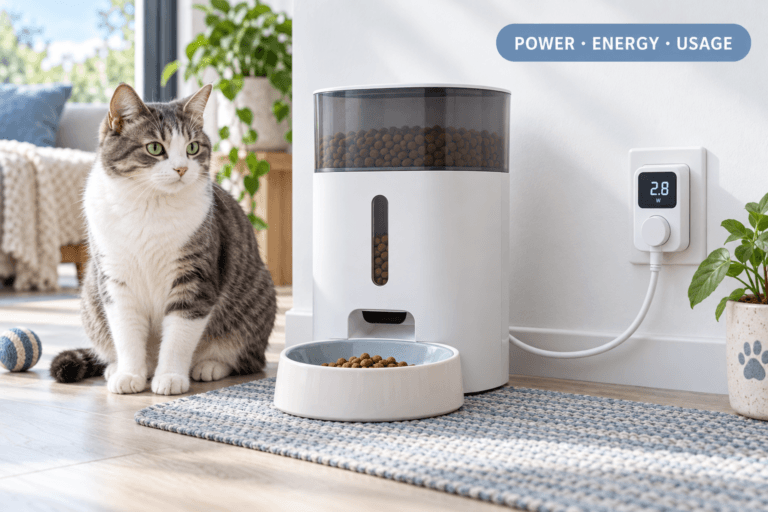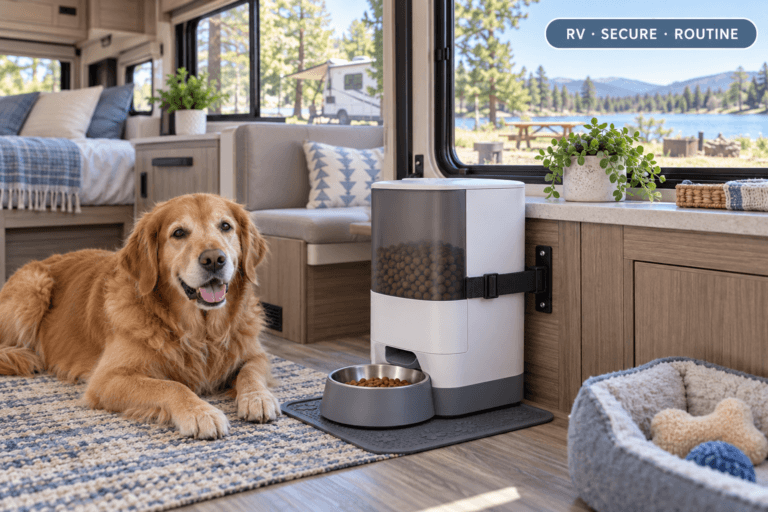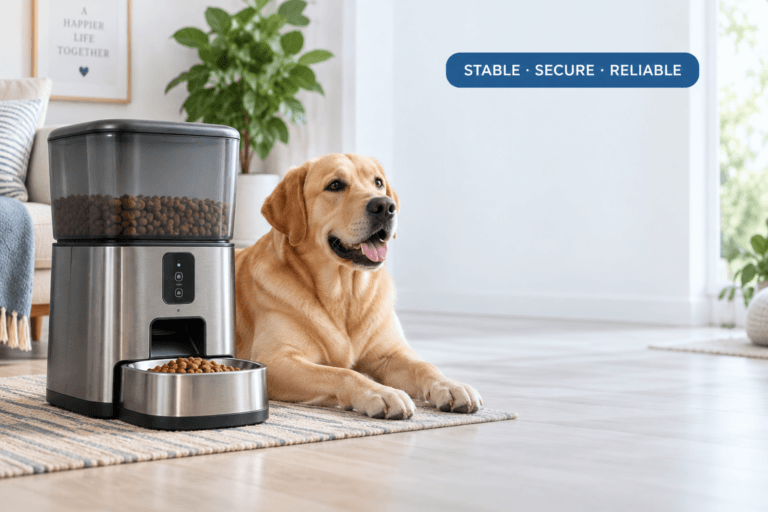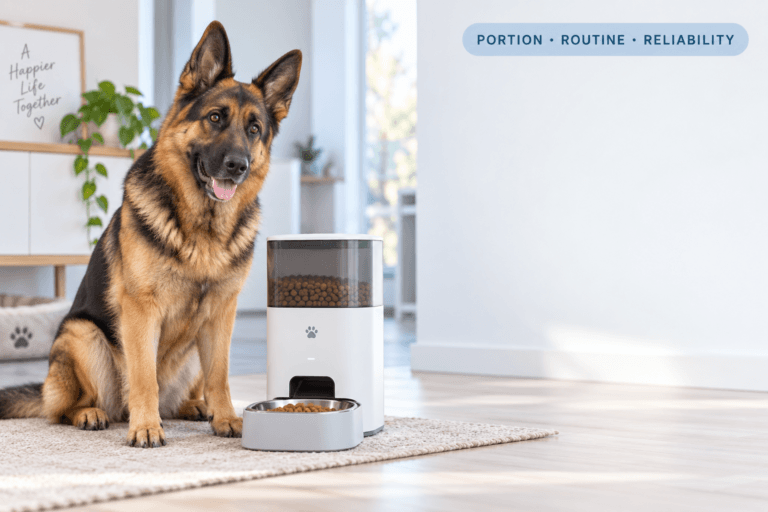

A cat feeder for vacation is not just a container that holds extra food. It is a feeding control system that has to protect meal timing, portion size, food freshness, power reliability, and your cat’s normal routine while you are away. Vacation feeding fails when owners confuse visible food with a safe feeding plan.
For short trips and dry-food routines, a WiFi automatic pet feeder with button backup gives stronger control than an open bowl because it keeps meals scheduled, measured, and less dependent on owner panic. The goal is not to leave more food. The goal is to leave a rule that still works.
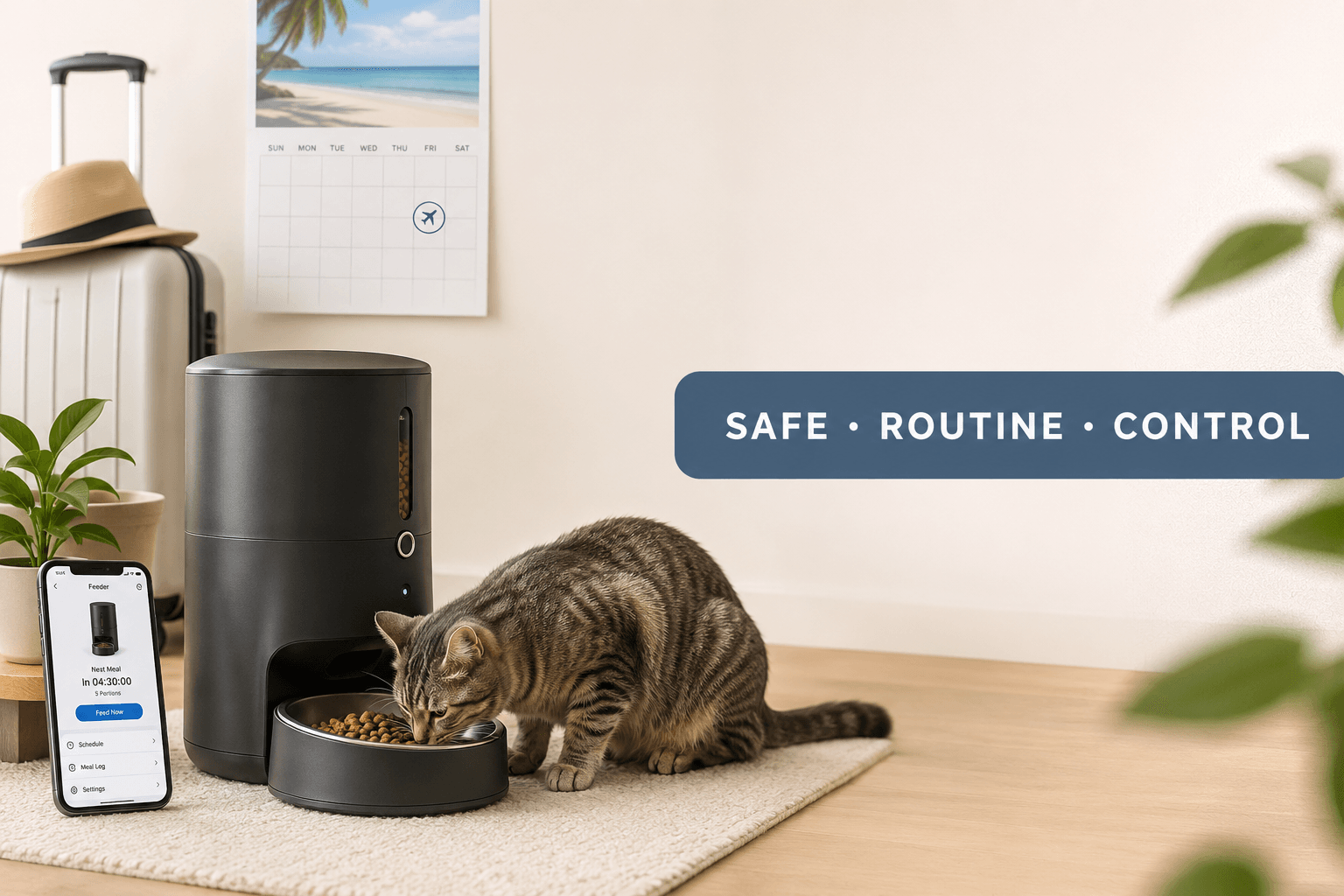
Direct Answer: Cat Feeder for Vacation
A cat feeder for vacation should be a timed automatic feeder with portion control, reliable dry-food flow, enough capacity for the trip length, and a backup plan. Gravity bowls and overfilled dishes create open access, which can reward overeating, bowl checking, food guarding, and post-trip begging. A controlled feeder keeps your cat inside the same feeding rhythm used before you leave.
Why This Happens
Vacation feeding problems happen because the normal food signals disappear. Cats learn from repeated patterns: owner movement, kitchen sound, bowl location, food smell, and meal timing. When the owner leaves, those signals become weaker. The cat starts checking the bowl more often because the feeding environment has become uncertain.
A cat feeder for vacation works only when it replaces that uncertainty with a clear system. Food appears at set times. Portions stay measured. The bowl remains in a stable place. The cat does not need to test the home, guard the bowl, or eat against fear of shortage.
Before a trip, the feeder should follow a normal routine, not a special vacation rule. A scientific pet feeding schedule gives the feeding system a rhythm your cat can learn before the owner leaves.
What To Do
Choose a cat feeder for vacation by checking four controls: timing, portion accuracy, backup reliability, and food-path safety. Timing prevents panic. Portion accuracy prevents overeating. Backup reliability protects meals during power or control failure. Food-path safety prevents jams, stale crumbs, and blocked dispensing.
Test the feeder for several full feeding days before the trip. Use the exact food, portion size, and schedule you plan to use while away. Watch whether the feeder dispenses cleanly, whether the bowl stays stable, and whether the cat accepts the sound and location. A feeder introduced on departure day is not a plan. It is a risk.
For setup discipline, use how to use a smart pet feeder before relying on automation. The device must be tested as a real household system, not treated as a plug-in food promise.
The Feeding Loop Behind This Problem
The feeding loop is simple: the cat expects food, checks the bowl, receives reward, and repeats the behavior. When food is freely available, checking becomes useful. When the bowl is overfilled before a trip, the cat learns that owner absence changes the food rule.
A cat feeder for vacation breaks that loop by making food arrive by schedule instead of by access. The cat waits, hears the feeder, eats the measured portion, and leaves. That is the loop you want. It builds routine dependency in the useful direction.
If your cat already acts hungry after eating, vacation can make that pattern louder. The guide on why cats seem hungry after eating explains how repeated food rewards can look like constant hunger when the real issue is learned checking.
The Emotional Trigger Owners Miss
The emotional trigger is guilt. Owners overfill bowls because they want proof that the cat has enough food. That choice feels responsible, but it often teaches the cat that absence means surplus. The result is faster eating, repeated checking, stale food exposure, and a weaker routine after the owner returns.
A cat feeder for vacation should make the home feel normal. Same food. Same meal rhythm. Same portion logic. Same bowl area. The feeder should reduce emotional noise, not turn the trip into a food exception.
Food planning also needs water planning. Dry-food automation does not solve hydration. Pair the feeder with stable water access and use pet hydration tips to keep the vacation setup from becoming too food-centered.
The Addiction Mechanism
The addiction mechanism comes from uncertain reward. When food can appear at random or remain freely available, the cat checks more often because another visit to the bowl can produce a payoff. That pattern becomes stronger even when the cat does not need more calories.
A cat feeder for vacation should prevent random reward. Timed meals create a cleaner reinforcement loop: wait for the signal, eat the portion, leave the bowl. The cat learns that the schedule controls food, not anxiety, searching, or repeated bowl visits.
This is why remote feeding should not become random app feeding. Surprise meals, oversized portions, and open bowls all teach the cat to keep testing the system. A vacation feeder should lower negotiation, not create a food casino in the kitchen.
Real-World Impact
The real-world impact appears after the trip. Cats that had loose food access often return to stronger begging, faster eating, food guarding, or weight gain. Owners then blame appetite instead of the temporary feeding system that rewarded the behavior. Feeding discipline should stay aligned with healthy pet weight guidance, because vacation overfeeding can become a new normal.
For cats already on controlled portions, a cat feeder for vacation must protect the weight plan. A structured cat weight reduction plan depends on measured meals, not open access or guilt refills.
Owners planning time away should also review safe cat feeder for vacation tips. Safety includes power, food flow, cleaning, water, capacity, and a home check plan when the absence is longer.
Can This Be Fixed?
Yes, vacation feeding can be fixed when the feeder is treated as a tested routine system instead of a storage container. The fix is to match feeder capacity to the trip length, measure portions, test the schedule, clean the food path, and keep the same feeding rhythm your cat already knows.
A cat feeder for vacation still needs a backup layer. That means fresh water, stable power, suitable dry food, clean parts, and someone who can check the home during longer absences. A feeder is a control tool. It is not a replacement for every form of oversight.
Who Should Walk Away and Who Should Use This
Walk away from automatic vacation feeding if the cat eats wet food only, knocks devices over, needs supervised meals, shares food with a faster animal, or lives in a home where one bowl creates conflict. In those cases, the main problem is not timing. The main problem is access control or supervision.
Use a cat feeder for vacation if your cat eats dry food reliably, follows meal routines, does not destroy feeding equipment, and needs predictable portions during a short absence. For regular workday absences, automatic pet feeder for work routines explains why the same boundary should hold on normal days and travel days.
Owners comparing devices should start with cat feeders and screen for portion accuracy, tank size, food-path design, backup support, and cleanability. Multi-cat homes need extra care because one cat can dominate one bowl; the automatic feeder guide for multi-cat households gives a better path for shared feeding spaces.
Mini FAQ
What is the best cat feeder for vacation?
The best choice is a timed automatic feeder with portion control, reliable dry-food dispensing, and backup support. Vacation feeding fails when food access becomes loose or unlimited. Choose a feeder that keeps meals measured and predictable.
Is a gravity feeder safe for vacation?
A gravity feeder is a weak vacation choice for most cats. It gives open access and rewards repeated eating. Use a timed feeder when the goal is routine control and portion discipline.
How long should I test a feeder before leaving?
Test it for several full feeding days before the trip. A new feeder changes sound, timing, food location, and reward signals. Run the real schedule before departure so the cat learns the system.
Should I overfill the feeder before vacation?
No, overfilling is the wrong safety strategy. Extra food can become stale, jam the food path, and train overeating. Match the tank amount to scheduled meals and keep a backup check plan.
Can a cat feeder for vacation reduce food anxiety?
Yes, it can reduce food anxiety when it protects the normal feeding rhythm. Anxiety grows when meals become unpredictable or food access becomes loose. Keep timing, portions, food type, and bowl location consistent.
For most short dry-food absences, a 4L WiFi feeder with button backup for cats gives a practical balance of capacity, schedule control, and fallback reliability. A cat feeder for vacation is the right choice when it keeps your cat inside a clear feeding system while you are away. Choose control over surplus, test the setup before leaving, and make the feeder enforce the routine instead of letting absence rewrite the rules.