
A clean smart pet feeder is not just a nicer-looking feeding station. It is the difference between measured meals and a dirty machine that collects kibble dust, saliva residue, oil, crumbs, odor, ants, and blocked food paths. Smart feeding only works when the device stays clean enough to deliver food safely and consistently.
For daily dry-food routines, a smart automatic pet feeder with app control works best when the bowl, chute, tank, lid, and floor area are maintained on a fixed schedule. The app controls timing, but hygiene still depends on the owner.
Direct Answer: Clean Smart Pet Feeder
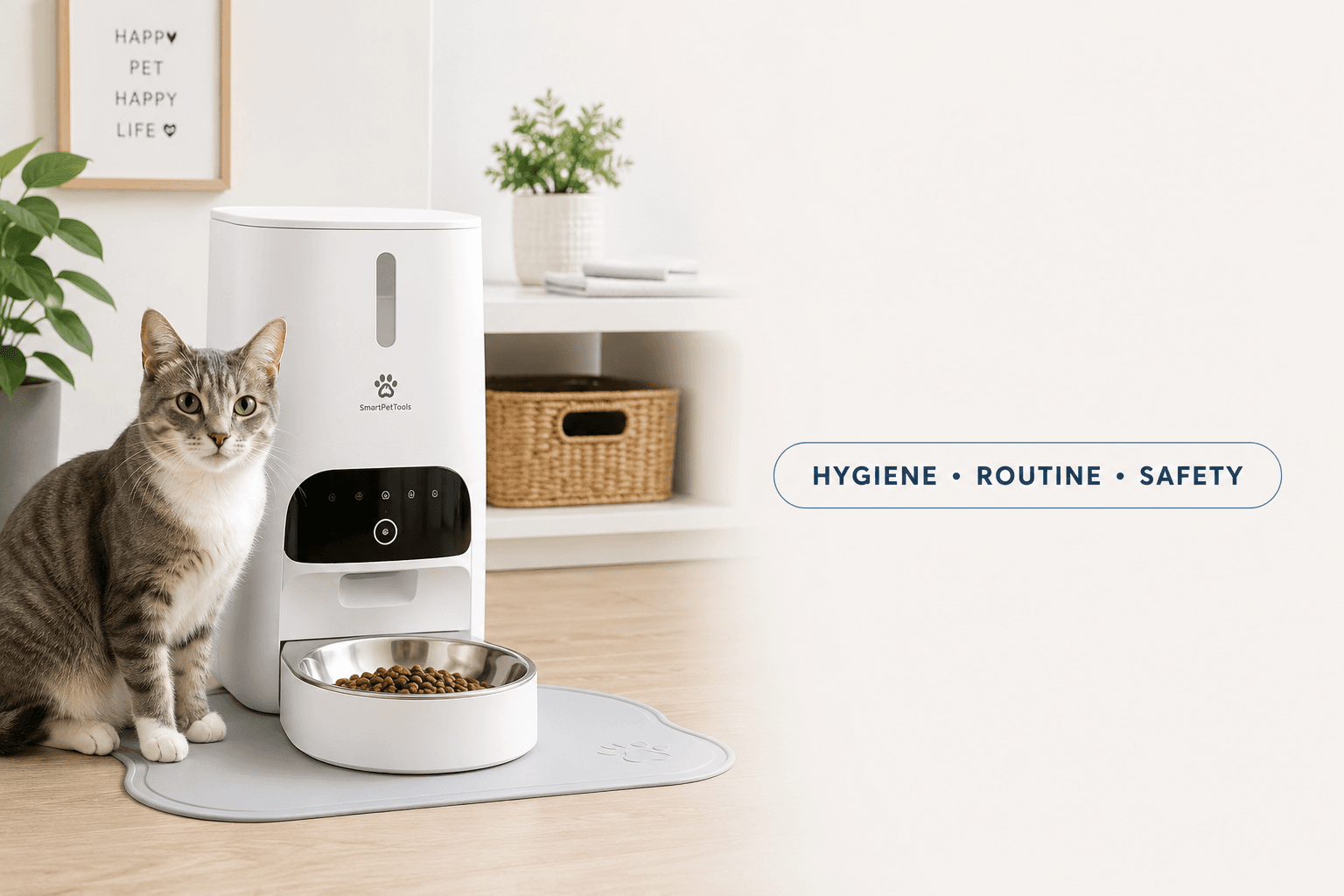
A clean smart pet feeder needs a removable bowl, sealed food tank, dry chute, washable parts, fresh kibble storage, and a weekly cleaning routine that removes dust, oils, crumbs, and residue before they cause odor or jams. The feeder should be cleaned as a food-contact device, not treated like furniture.
The biggest mistake is cleaning only the visible bowl. A clean smart pet feeder also requires tank inspection, chute wiping, lid checks, floor cleanup, and portion testing after reassembly. Dry food looks clean, but it leaves dust and oil inside the dispenser. Over time, that buildup affects hygiene, smell, and dispensing accuracy.
Why Smart Feeders Get Dirty
Smart feeders get dirty because pet food is not dry in the way owners imagine. Kibble carries oils, crumbs, powder, and coating residue. When the feeder releases food several times per day, small particles collect around the chute, bowl edge, tray, and tank corners. Pets also add saliva, hair, and floor debris back into the eating area.
The FDA safe handling guidance for pet food and treats emphasizes clean storage, clean handling, and washing practices around pet food. A smart feeder should follow the same logic because it stores and dispenses food every day.
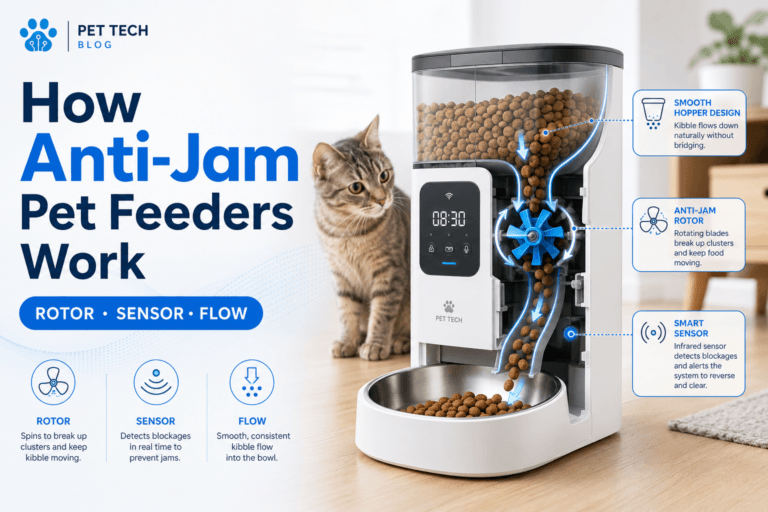
A clean smart pet feeder also protects routine accuracy. When kibble dust builds up, the chute can drag, portions can become inconsistent, and food can sit in hidden corners. Owners then think the device is unreliable when the real issue is maintenance failure.
What To Do First
Start by unplugging the feeder or turning it off according to the product instructions. Remove the bowl, tray, tank lid, and any detachable food-contact parts. Empty old kibble. Do not pour new food on top of old food that has been sitting in the tank for too long.
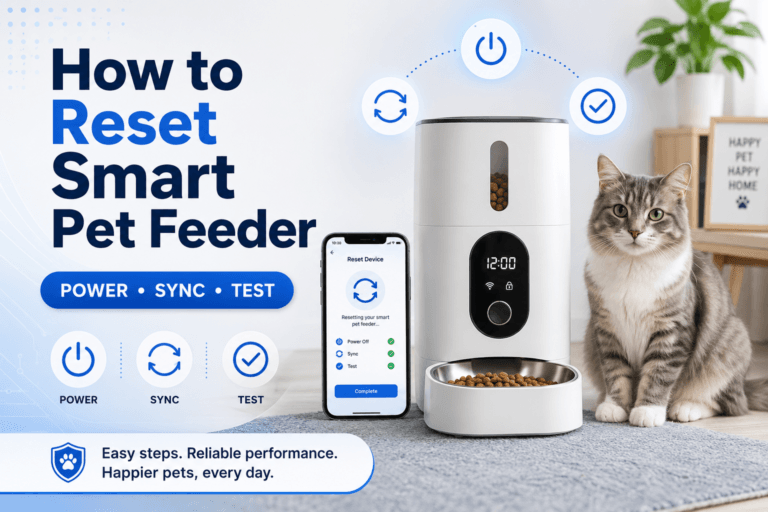
A practical clean smart pet feeder routine has five steps: empty, disassemble, wash, dry, and test. Empty the food path. Disassemble only the parts designed to be removed. Wash food-contact parts. Dry everything fully before refilling. Test one small dispense cycle before restoring the full feeding schedule.
Use the smart pet feeder setup guide after cleaning if the feeder schedule, portion settings, or app connection needs to be checked again. A clean feeder still needs correct programming.
The Cleaning Loop Behind This Problem
The cleaning loop starts when the owner sees food in the bowl and assumes the system is working. The feeder dispenses on time, so the owner trusts the device. Meanwhile, crumbs collect in the chute, oil builds inside the tank, and the bowl area starts to smell. The feeder still looks functional, but the hygiene layer is weakening.
Then the pet leaves food behind, ants appear, or the feeder jams. The owner wipes the bowl quickly and adds more food. The hidden residue remains. The same problem returns because the full food path was never cleaned.
A clean smart pet feeder breaks this loop with scheduled maintenance. Cleaning should happen before odor, ants, or jam warnings appear. The feeder is part of the feeding routine, so maintenance belongs on the same calendar as meal planning.
The Emotional Trigger Owners Miss
The emotional trigger is trust in automation. Owners buy a smart feeder because it feels precise and dependable. That trust becomes a problem when the device makes feeding look handled even though hygiene is drifting.
A full tank does not prove that the food is fresh. A working app does not prove that the chute is clean. A bowl with kibble in it does not prove that the station is sanitary. A clean smart pet feeder requires visual checks, touch checks, smell checks, and routine washing.
For better station design, use smart feeder placement. Poor placement makes cleaning harder and increases dust, moisture, pest, and traffic problems around the feeding area.
The Addiction Mechanism
The addiction mechanism is convenience creep. The feeder makes daily meals easier, so the owner gradually checks it less. First, the owner skips one bowl wash. Then the tank stays full longer. Then old kibble gets topped with new kibble. Then crumbs under the tray become normal.
This is how a smart tool becomes a dirty habit. Automation reduces missed meals, but it also reduces owner attention when the household treats the device as self-maintaining.
A controlled clean smart pet feeder system reverses that pattern. The feeder handles timing. The owner handles cleaning. Those two jobs should not be confused. The device cannot inspect its own food residue, smell, floor crumbs, or hidden dampness.
Weekly Cleaning Routine
A weekly cleaning routine is the minimum structure for many homes using dry food. Remove the bowl and tray. Wash them with pet-safe dish soap and warm water. Rinse thoroughly. Dry completely. Wipe the chute opening with a clean damp cloth, then dry it so kibble does not clump.
Empty the tank before refilling. Check the lid seal and the inside corners for kibble dust. Do not soak electronic parts. Do not spray cleaner directly into motors, buttons, sensors, or charging ports. A clean smart pet feeder should be washed in parts, not flooded as one object.
For bowl material, the stainless steel cat feeder bowl benefits guide explains why smooth, washable surfaces are easier to maintain than scratched plastic. The same principle applies to dog bowls and shared pet feeding stations.
Food Storage Rules
Cleaning the feeder is not enough if the food storage system is weak. Kibble should stay sealed, dry, and protected from heat, insects, and humidity. Do not leave open food bags beside the feeder. Do not refill the tank from a dusty storage scoop. Do not mix old stale kibble with fresh food.
The AVMA pet nutrition guidance connects feeding decisions with overall pet health. A clean smart pet feeder supports that care only when the food itself stays properly stored and measured.
Use smaller refills when the pet eats slowly. A large tank is convenient, but it is not always cleaner. Food that sits too long collects odor and dust. Match tank volume to the household’s cleaning cycle instead of filling the feeder to the top by default.
Placement and Moisture Control
Moisture is one of the fastest ways to ruin a feeder. Do not place the feeder beside a splashing water bowl, damp laundry area, bathroom floor, garage drain, outdoor doorway, or humid patio corner. Dry kibble that absorbs moisture can clump, smell, and block the chute.
A clean smart pet feeder should sit on a dry, level, washable surface. Keep it away from litter boxes, trash cans, heat vents, direct sun, and greasy kitchen areas. The feeding station should be easy to wipe under and around, not trapped behind boxes or furniture.
For water setup, use automatic water dispenser for pets. Food and water both need clean access, but they should not be so close that splashes contaminate the kibble outlet.
Ants, Odor, and Kibble Dust
Ants and odor are warning signs that the station is rewarding pests or holding residue. Food smell can come from the bowl, chute, tank, lid, floor mat, or crumbs under the feeder. If the owner cleans only the bowl, the attractant can remain active.
A clean smart pet feeder routine should include the floor. Lift the feeder, wipe the surface, check under rubber feet, and wash the mat if one is used. Cloth mats trap crumbs and odor. Smooth washable trays are easier to maintain.
For pest-specific control, use ant proof pet feeder. The core rule is the same: remove the reward before adding barriers. Ant-resistant design fails when crumbs and residue stay in place.
Common Failure Pattern
The common failure pattern is topping up the tank without emptying it. The owner adds fresh kibble over older kibble again and again. The food at the bottom becomes dusty, oily, and stale. The feeder still dispenses, but the food path gets dirtier each week.
The second failure is washing parts and reassembling them while damp. Moisture inside the bowl area, chute, or tank can make kibble stick. A feeder that jams after cleaning was often not dried properly.
The third failure is ignoring pet behavior. If a pet suddenly avoids the feeder, paws around the bowl, leaves food, or begs after scheduled meals, check cleanliness before changing the food brand. The pet may be reacting to odor, residue, bowl discomfort, or a dirty station.
Real-World Impact
The real-world impact of a dirty feeder is bigger than appearance. Poor cleaning can lead to odor, pest activity, missed portions, chute jams, food refusal, scattered kibble, and owner distrust. The device becomes less reliable because the maintenance routine is weak.
A clean smart pet feeder gives the owner better feeding data. If the bowl is clean and food is fresh, appetite changes are easier to interpret. If the feeder is dirty, every behavior becomes harder to read because the pet may be responding to the station instead of the food.
For time and portion structure, use scientific pet feeding schedule. Scheduled meals and clean equipment work together. Timing controls intake, while cleaning protects the feeding environment.
Can This Be Fixed?
Yes, a dirty smart feeder routine can be fixed with a seven-day reset. Empty the feeder completely. Wash removable parts. Dry all pieces fully. Wipe the chute. Clean the floor. Seal the food bag. Refill with fresh kibble. Run a test dispense cycle. Then restart the schedule.
During the reset, record odor, leftover food, ants, kibble dust, pet hesitation, portion accuracy, and cleaning time. If the feeder becomes dirty quickly, the problem is usually placement, overfilling, food dust, moisture, or bowl material.
For product selection, start with the smart feeders collection. Choose a feeder with removable parts, a secure lid, a smooth bowl, easy tank access, and a layout that does not trap food in hidden corners.
Who Should Walk Away and Who Should Use This
Walk away from feeders that are hard to disassemble, hard to dry, hard to wipe under, or built with narrow food pockets that trap residue. Also walk away from any routine that treats a large food tank as a reason to stop checking the station.
Use a clean smart pet feeder system if your pet eats dry food on a timer, the home has ants, the feeder smells, the bowl gets greasy, kibble dust builds up, or the pet has started avoiding meals. Use it especially in homes with cats, small dogs, multi-pet feeding, shift work, or weight-control routines.
Cat owners can compare the cat feeders collection for smaller bowls and controlled portions. Dog owners should use the dog feeders collection when bowl size, stability, and food volume require a stronger setup.
Mini FAQ
How do I keep a clean smart pet feeder?
Keep a clean smart pet feeder by washing the removable bowl and tray, wiping the chute, emptying old kibble, drying parts fully, and cleaning the floor around the station. Do not only wipe the visible bowl.
How often should I clean a smart pet feeder?
Clean food-contact parts weekly for a normal dry-food routine, and clean sooner when odor, crumbs, ants, moisture, or leftover food appear. Wet food areas need faster cleaning than dry-food dispensers.
Can a dirty smart feeder cause jams?
A dirty smart feeder can cause jams when kibble dust, oil, moisture, or crumbs build up around the chute. Keep the food path dry and test dispensing after every deep clean.
Why does my smart feeder smell bad?
A smart feeder smells bad when old kibble, food oil, crumbs, saliva residue, or damp parts collect in the bowl, tank, chute, or floor mat. Empty the tank and clean the full station, not only the bowl.
Should I wash the food tank?
Wash the food tank when the product design allows it and dry it fully before refilling. If the tank is not washable, empty it, wipe safe surfaces, remove kibble dust, and keep electronics dry.
What features make cleaning easier?
Removable bowls, smooth surfaces, secure lids, accessible tanks, washable trays, and simple chute access make cleaning easier. A clean smart pet feeder should be designed for routine maintenance, not just app control.
A 2L smart pet feeder for regular feeding is easier to manage when the owner follows a fixed cleaning routine. The final rule is direct: a clean smart pet feeder works when timing, portion control, food storage, placement, and hygiene stay connected.