
An automatic feeder for weight loss is not a magic diet machine. It is a portion-control system that stops random refills, protects meal timing, and makes daily food intake visible. For overweight cats and dogs, the real problem is rarely one large mistake. It is the repeated small mistake: an extra scoop, a second breakfast, a late-night apology treat, or a full bowl that nobody measures.
For dry-food routines, a smart automatic pet feeder with app control can create the structure weight control needs. The feeder controls time and portion. The owner still controls the total daily food amount, treats, water, activity, and household feeding rules.
Direct Answer: Automatic Feeder for Weight Loss
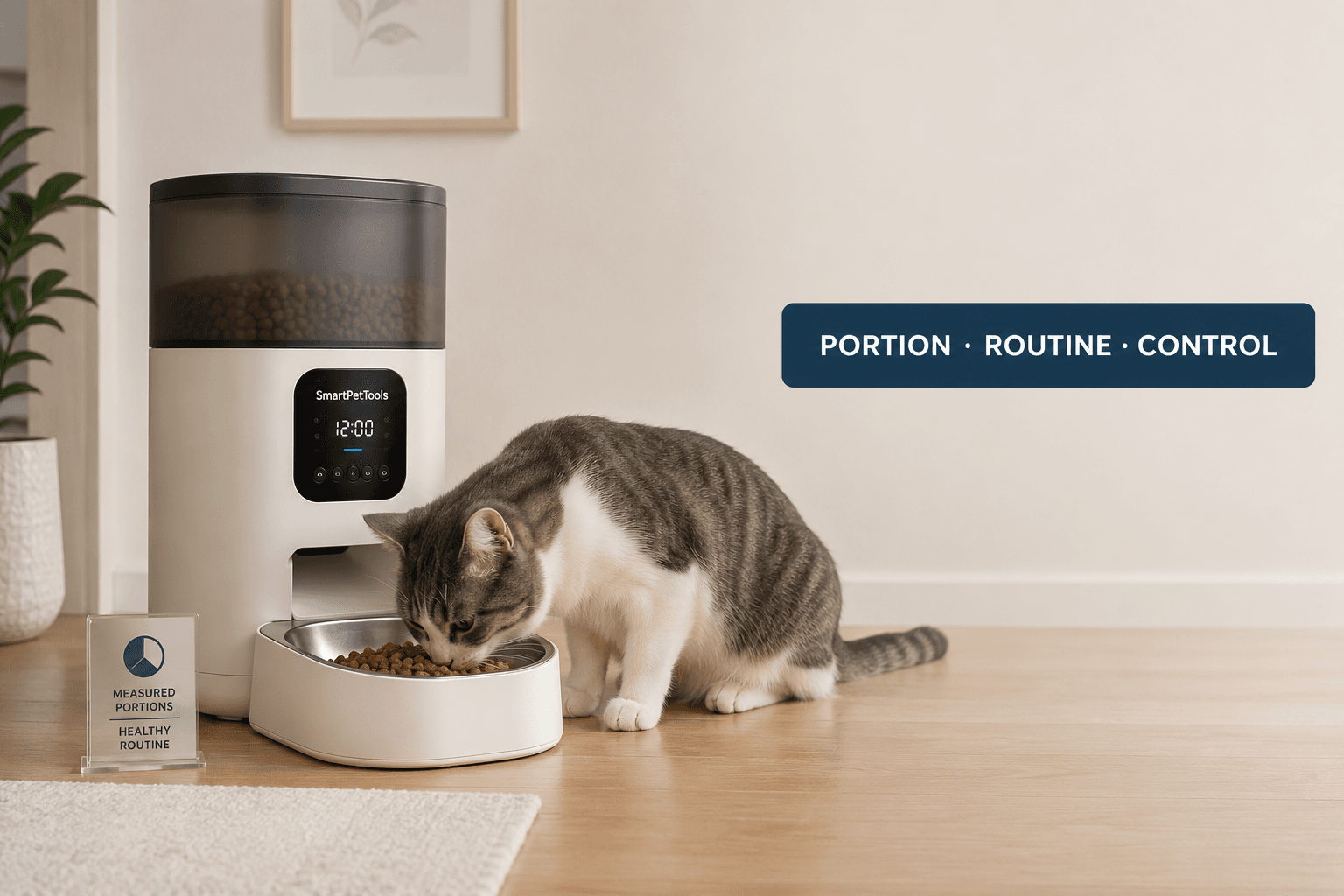
The best automatic feeder for weight loss is a timed, portion-controlled feeder that divides the daily food allowance into measured meals and removes free feeding from the home. It helps because pets lose weight through consistent calorie control, not through bowl access, begging, or owner memory.
A strong automatic feeder for weight loss should have accurate portion settings, a secure food tank, a washable bowl, reliable scheduling, and a routine that every person in the home follows. It should not be used as a snack machine. It should not dispense extra meals because the pet begs. It should make the feeding plan harder to break.
Why This Happens
Weight gain usually happens when intake exceeds the pet’s real daily need. That sounds simple, but home feeding makes it hard to see. Food comes from the bowl, treats, training rewards, table scraps, puzzle toys, another pet’s dish, and emotional refills. The owner sees the official meal, but the pet experiences the full calorie stream.
The AVMA healthy pet weight guidance explains that healthy weight supports long-term pet health. That makes feeding structure important. A pet that receives food whenever it asks is not on a plan. It is on a negotiation cycle.
An automatic feeder for weight loss fixes the most common control failure: inconsistent human behavior. The device gives the same measured portion at the same planned time. The pet no longer has to pressure the owner for the base meal, and the owner no longer uses food as the quickest response to noise, staring, pawing, or guilt.
What To Do
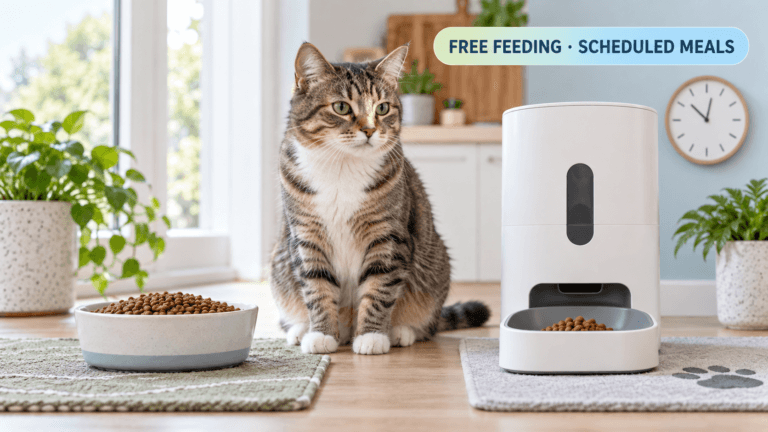
Start by replacing free feeding with scheduled feeding. Measure the pet’s daily dry-food allowance before it enters the feeder. Program that amount into several meals instead of one large dump. Keep treats separate and counted. Do not let a second person add food because the bowl looks empty.
A practical automatic feeder for weight loss plan uses three controls: total daily food, meal timing, and behavior boundaries. Total food controls calories. Timing controls hunger rhythm. Boundaries stop begging from becoming a feeding command.
Use the scientific pet feeding schedule framework before changing the device settings. Set the feeding windows first, then test portion size, then observe appetite and body condition. If the pet eats too fast, the problem is not solved by more food. It is solved by slower delivery, smaller meals, or a better bowl setup.
The Feeding Loop Behind This Problem
The feeding loop starts when a pet begs between meals. The owner gives a small amount to stop the noise. The pet learns that pressure works. The next demand comes earlier or louder. The owner gives again because it feels easier than holding the boundary.
After several weeks, the household no longer knows how much food the pet actually eats. The official meal may look correct, but the extra food around it destroys the plan. This is why many pets stay overweight even when the owner believes portions are controlled.
An automatic feeder for weight loss breaks the loop by moving the base meal away from emotion. The feeder delivers food. The owner delivers attention, play, brushing, walks, or calm contact. Food is no longer the default answer to every demand behavior.
The Emotional Trigger Owners Miss
The emotional trigger is guilt. Owners feel bad when a pet looks hungry, follows them into the kitchen, wakes them early, or stares at an empty bowl. The empty bowl feels like neglect, so the owner adds food. In weight management, that reaction is the problem.
The pet does not need a full bowl to feel cared for. The pet needs a predictable routine, measured food, clean water, and interaction that is not always edible. An automatic feeder for weight loss helps because it makes the empty bowl less personal. The bowl is empty because the meal is complete, not because the owner forgot.
For cats that demand food after eating, why a cat is always hungry after eating explains how learned food pressure can look like real hunger. For dogs that inhale meals, how to stop a dog from inhaling food gives a better speed-control path than increasing the bowl size.
The Addiction Mechanism
The addiction mechanism is unpredictable reward. When food sometimes appears after begging, sometimes after pawing, sometimes after barking, and sometimes after an early-morning wake-up, the pet keeps testing the system. The behavior becomes stronger because the reward is inconsistent.
This is why free feeding and random top-offs are weak systems for overweight pets. The pet is not only eating. The pet is learning which behaviors move food. The owner then describes the pet as “always hungry,” even when the deeper issue is a reward structure with no boundary.
A controlled automatic feeder for weight loss removes the gambling pattern. The portion arrives by schedule. Extra noise does not change the portion. The pet adapts to routine because the routine stops moving.
Portion Control Rules
Portion control starts with the food label, but it does not end there. AAFCO’s pet food label guidance explains that complete and balanced pet foods include feeding directions. Those directions are a starting point. The household still has to measure, track, and adjust according to the pet’s body condition and actual intake.
Use a kitchen scale or a consistent measuring cup. Do not estimate by eye. Do not mix multiple foods without tracking the total. Do not let treats float outside the plan. If training rewards are used, subtract them from the daily allowance or keep them small enough to avoid breaking the deficit.
A useful automatic feeder for weight loss divides food into smaller meals when the pet struggles with hunger behavior. Smaller scheduled meals reduce long gaps without increasing the daily total. The number of meals can change, but the total daily amount stays controlled.
Body Condition Check
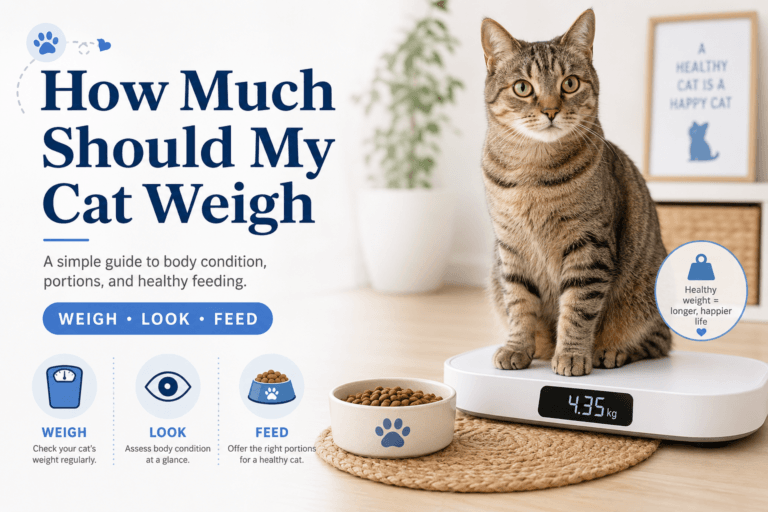
Weight loss should be tracked by body condition, not only by the number on the scale. The AAHA nutrition and weight management resources hosted by the FDA explain that nutritional assessment includes body weight, body condition, muscle condition, diet history, and feeding management. That is the correct framework for feeder-based weight control.
Use visual and touch checks weekly. The pet should have a visible waist from above, an abdominal tuck from the side, and ribs that are easy to feel without heavy fat cover. The WSAVA global nutrition guidelines support structured nutrition assessment rather than guessing from appetite alone.
An automatic feeder for weight loss becomes more useful when paired with a log. Record feeding times, total food dispensed, treats, weight trend, body condition notes, stool quality, and begging behavior. The log shows whether the feeder is creating control or only adding technology to the same old habits.
Common Failure Pattern
The most common failure pattern is using the feeder and still feeding by hand. The owner programs breakfast and dinner, then gives extra food when the pet complains. Now the pet has two systems: the machine and the human. The human is easier to manipulate.
The second failure is setting portions too high because the owner worries the pet will feel hungry. This turns the device into an automatic overfeeding tool. A feeder does exactly what it is told. If the program is wrong, the machine repeats the mistake every day.
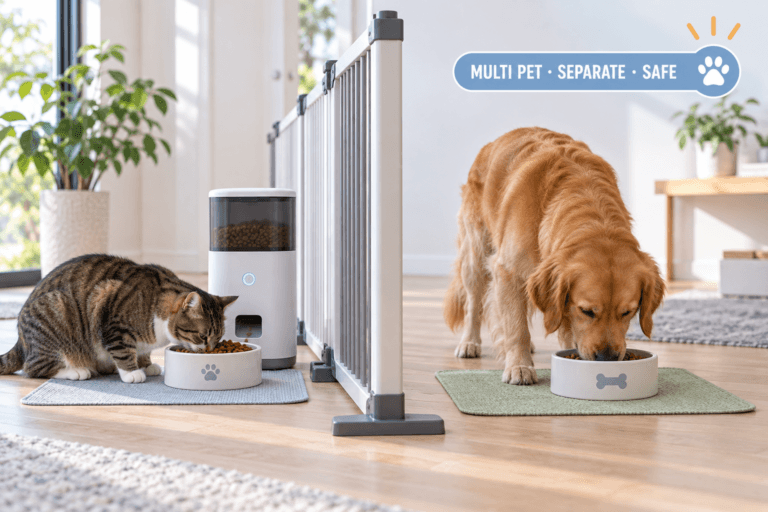
The third failure is ignoring food theft. In multi-pet homes, one pet can lose weight while another gains because the wrong animal eats the dispensed portion. Use the strategy in how to stop one cat from eating the other’s food when shared access ruins portion accuracy.
Real-World Impact
The real-world impact of a good automatic feeder for weight loss is cleaner data. The owner knows when food was offered, how much was dispensed, and whether extra food entered the system. That makes weight drift easier to detect and easier to correct.
For cats, scheduled feeding can reduce early-morning food pressure and remove all-day grazing. For dogs, scheduled portions can support a cleaner walk, rest, and feeding rhythm. For both, the main advantage is that the daily food amount stops expanding silently.
Hydration still matters. Weight-control feeding should not turn the home into a dry-food-only system with poor water access. Use pet hydration tips to keep water clean and available while the feeder handles measured meals.
Can This Be Fixed?
Yes, weight-control feeding can be fixed when the owner uses the feeder as a boundary system instead of a food container. The device should not simply hold kibble. It should enforce the plan.
Run a seven-day reset. Measure the daily food amount. Program fixed meals. Remove free-feeding bowls. Count treats. Keep water available. Record begging without rewarding it. Weigh the pet or check body condition on the same weekly schedule. Do not change five variables at once.
For setup details, use how to use a smart pet feeder. For cats specifically, best cat feeder for weight loss gives a more feline-focused path for cats that graze, beg, or steal from other bowls.
Who Should Walk Away and Who Should Use This
Walk away from an automatic feeder for weight loss if the household refuses to stop manual extras. The feeder cannot fix a kitchen where every person adds food. Also walk away from open shared feeders when multiple pets need different diets or different portion sizes.
Use an automatic feeder for weight loss if the pet overeats from a full bowl, wakes the owner for food, begs between meals, gains weight on “small” extras, or lives in a home where feeding duties are shared. It is also useful for shift workers, busy owners, and homes where inconsistent meal timing causes demand behavior.
For product selection, start with the smart feeders collection. Cat owners can compare the cat feeders collection, while dog owners should use the dog feeders collection when bowl size, kibble volume, and eating speed require a dog-specific setup.
Mini FAQ
Does an automatic feeder help with weight loss?
An automatic feeder helps with weight loss when it controls portions and stops random refills. The feeder does not cause weight loss by itself. It works when the daily food amount is measured, scheduled, and protected from manual extras.
What is the best automatic feeder for weight loss?
The best automatic feeder for weight loss is a timed feeder with accurate portion control, a secure food tank, and easy cleaning. It should divide the daily allowance into controlled meals and prevent the household from guessing.
Should cats use an automatic feeder for weight loss?
Cats can benefit from an automatic feeder for weight loss when free feeding causes grazing or early-morning food pressure. Smaller scheduled meals help replace all-day access without increasing the total daily food amount.
Should dogs use an automatic feeder for weight loss?
Dogs can use an automatic feeder for weight loss when meals need strict timing and portion control. For fast eaters, pair scheduled feeding with slow-feed design instead of giving one large meal.
What is the biggest mistake with weight-loss feeders?
The biggest mistake is programming the feeder and then adding extra food by hand. That destroys the calorie plan. Count treats, remove free-feeding bowls, and make every household member follow the same feeding rule.
How many meals should I schedule for weight loss?
Schedule enough meals to reduce begging without increasing total food. Many pets handle weight-control routines better with smaller portions spread through the day. The daily amount matters more than the number of meals.
A timed slow feed automatic feeder is useful when weight control and fast eating happen together. The final rule is direct: an automatic feeder for weight loss should make portions visible, meals predictable, and emotional refills harder to repeat.