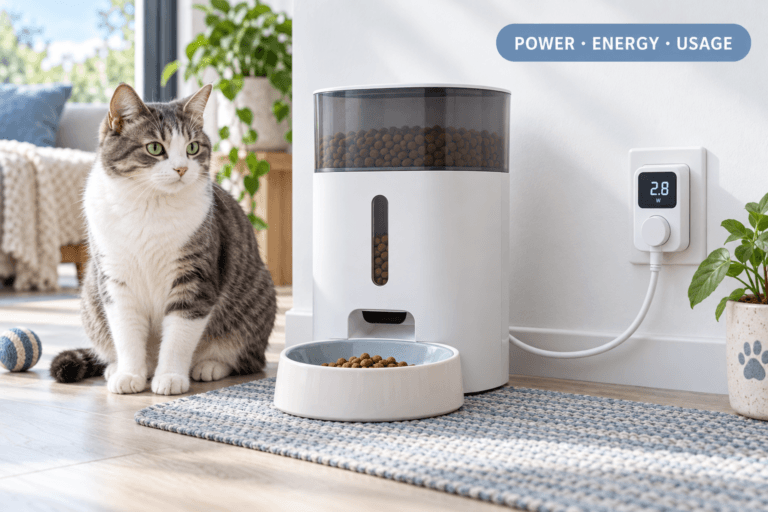

A feeder for rescue cats should do more than drop food into a bowl. Many rescue cats arrive with uncertain food history, shelter stress, competition experience, fast eating, hiding behavior, or strong anxiety around meals. The right feeder can help create predictability, but the wrong setup can make food pressure worse.
For adopted cats that need consistent dry-food meals, a smart automatic cat feeder with app control can support a calmer routine. The feeder should not replace patience, observation, or veterinary care. It should make feeding more predictable while the cat learns that food is safe, measured, and not a competition.
Direct Answer: feeder for rescue cats
The best feeder for rescue cats is a stable, quiet, easy-clean feeder that supports measured portions and predictable meal timing. Timed feeders help cats that panic around inconsistent meals. Slow feeders help rescue cats that gulp food. Microchip or RFID feeders help multi-cat homes where one cat steals food. A smart feeder helps owners track routine, but it should be introduced gradually so the feeder does not become another source of fear.
Why This Happens
Rescue cats often need a different feeding approach because their behavior may reflect past instability. Some cats were underfed. Some competed with other animals. Some lived outdoors and learned to eat quickly before food disappeared. Some came from homes where feeding was inconsistent. After adoption, these patterns can remain even when food is now safe and available.
This is why a feeder for rescue cats should focus on security first. A rescue cat does not only need calories. It needs a feeding environment that teaches safety. Loud motors, moving lids, crowded feeding zones, unstable bowls, and sudden schedule changes can make the cat more cautious or more frantic.
Owners often assume the cat is “greedy” or “dramatic,” but the deeper issue may be food uncertainty. The goal is not to punish food-seeking. The goal is to make meals boring, predictable, and controlled.
What To Do
Use seven checks before choosing a feeder for rescue cats. First, observe whether the cat eats too fast, hides before meals, guards food, or steals from another cat. Second, choose a quiet feeder if the cat is sound-sensitive. Third, use measured portions instead of free feeding immediately. Fourth, place the feeder in a low-traffic zone. Fifth, avoid forcing the cat to share a bowl. Sixth, clean the bowl and food path often. Seventh, introduce automatic feeding gradually while you are home.
A rescue cat should not meet a new feeder for the first time during an owner’s workday or vacation. Start with the feeder turned off. Let the cat sniff it. Feed near it. Then run small test meals while the cat is calm. If the cat startles at the sound, reduce pressure and repeat slowly.
Pair the feeder with a fixed scientific pet feeding schedule. Rescue cats benefit when meals happen in a predictable pattern. Predictability reduces bargaining, panic, and owner guessing.
Best Feeder Types for Rescue Cats
A timed automatic feeder is useful when the cat needs stable meal timing. This helps owners stop reacting emotionally to meowing, pacing, or early-morning pressure. The cat learns that food arrives by schedule, not by escalating behavior.
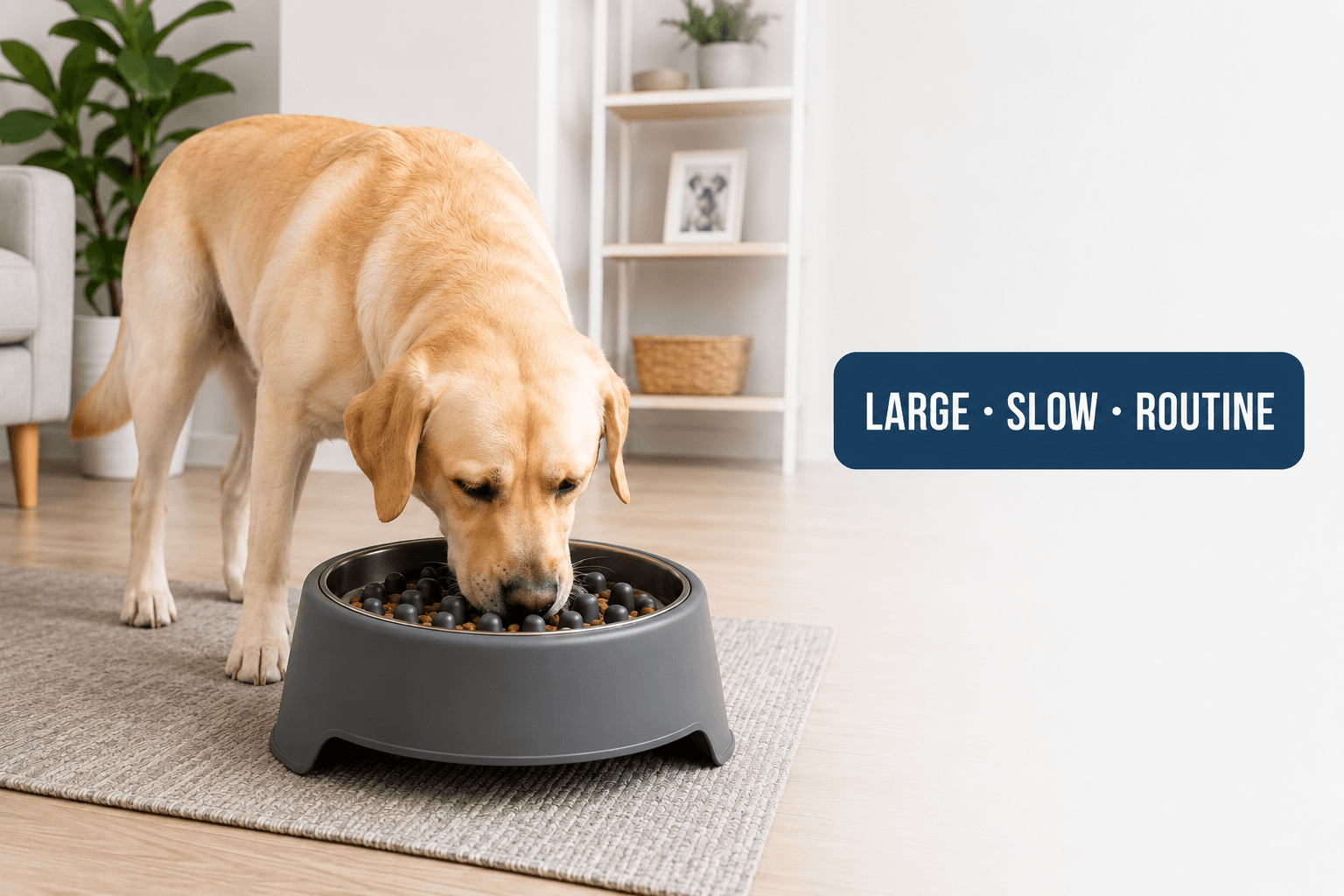
A slow feeder is useful when the rescue cat eats too quickly. Fast eating may come from food insecurity, competition history, or habit. A slow feeder spreads food across grooves or obstacles so the cat cannot swallow the full meal too quickly.
A microchip or RFID feeder is useful in multi-cat homes. If one cat steals food or one cat is timid, identity-based access can protect the correct portion. SmartPetTools explains this choice in microchip pet feeder vs RFID.
A camera feeder can help owners verify whether the rescue cat is eating calmly, avoiding the bowl, or being interrupted by another pet. For multi-cat routines, a smart feeder with camera and double bowls may support better observation when the household needs more visibility.
The Feeding Loop Behind This Problem
The feeding loop starts when the rescue cat feels food pressure, signals strongly, the owner reacts, and food appears. If the owner gives food after meowing, pawing, jumping, stealing, or guarding, the cat learns that pressure works. This does not mean the cat is bad. It means the system rewarded the behavior.
A feeder for rescue cats should interrupt that loop gently. Food should arrive from a schedule, not from panic. The owner becomes the planner. The feeder becomes the delivery point. The cat stops treating human anxiety as the food trigger.
This is especially important during the first adoption weeks. A rescue cat is learning the new home’s rules quickly. If every anxious meow produces food, the routine can become unstable before the cat has even settled.
The Emotional Trigger Owners Miss
The emotional trigger is guilt. Rescue cat owners often know the cat has had a hard start, so they respond to food pressure with extra meals, larger portions, treats, or open bowls. The intention is kind, but the result can be overeating, vomiting from fast meals, food guarding, or constant begging.
A feeder for rescue cats helps because it gives the owner a rule to trust. The portion is measured. The time is fixed. The cat receives food without the owner having to negotiate every meal emotionally.
Compassion still matters. But compassion should look like structure, not unlimited food. A rescue cat needs safety and predictability more than random extra scoops.
The Addiction Mechanism
Food is a fast reward. When a cat performs a behavior and food appears immediately after, that behavior becomes more likely. If the reward appears unpredictably, the behavior can become even stronger because persistence sometimes pays.
This is why rescue cats with food anxiety can become louder after adoption if the owner feeds inconsistently. One day the cat receives food after crying. Another day after jumping on the counter. Another day after stealing from another bowl. The cat learns multiple food strategies instead of one calm routine.
The correction is controlled access. Use measured meals, timed feeding, and no open reward for pressure behavior. For nutrition boundaries, owners can review AAFCO pet food label guidance and AVMA pet nutrition guidance. A feeder supports the plan, but the plan still has to be clear.
Common Failure Pattern
A common failure pattern starts when a newly adopted cat eats too fast. The owner feels sorry for the cat and leaves food out all day. The cat keeps eating, becomes more food-focused, and starts guarding the bowl. In a multi-cat home, another cat may avoid the feeding area or lose access.
The fix is not sudden restriction. The fix is structure. Start measuring the current intake. Divide meals into predictable times. Use a slow feeder if the cat gulps. Use separate feeding stations if another cat is involved. Use a smart feeder only after the rescue cat accepts the sound and location calmly.
Real-World Impact
The right feeder for rescue cats can reduce food panic, prevent missed meals, slow fast eating, support weight control, and make the home feel safer. It also helps owners separate true hunger from learned pressure behavior.
The wrong feeder can create fear, avoidance, food stealing, or frustration. A loud automatic feeder may scare a nervous cat. A shared bowl may reward a dominant cat. A feeder placed in a hallway may make a shy cat feel exposed. A free-feeding setup may hide overeating until weight gain becomes obvious.
For adopted cats with weight risk, connect feeder choice with cat calorie guide for weight loss and best cat feeder for weight loss. For general care expectations, external resources such as ASPCA cat care guidance can help owners think beyond food alone.
Can This Be Fixed?
Yes, many rescue cat feeding problems can be improved when timing, portion control, feeder placement, and owner behavior are handled together. If the cat eats too fast, use a slow feeder and smaller scheduled meals. If the cat hides, move the feeder to a quiet protected space. If one cat steals food, use separate feeding or identity-based access. If the cat begs constantly, stop rewarding pressure behavior with extra food.
If the rescue cat refuses food, loses weight, vomits repeatedly, has diarrhea, drinks excessively, or shows sudden appetite changes, do not solve the problem with a feeder alone. Use veterinary guidance. A feeder for rescue cats can improve routine, but it cannot diagnose medical or stress-related disease.
Who Should Walk Away and Who Should Use This
Walk away from loud, complex, or unstable feeders if the rescue cat is newly adopted, fearful, sound-sensitive, or still hiding. Walk away from shared open bowls if the household has multiple cats and one cat controls the food area. Walk away from free feeding if overeating, vomiting after meals, or food guarding is already present.
Use a feeder for rescue cats when the cat needs predictable meal timing, measured portions, slower eating, or protection from another pet. Start with simple placement and routine. Then add smart features only when they solve a real problem.
Owners comparing options can start with cat feeders or broader smart feeders. Match the feeder to the rescue cat’s behavior, not the owner’s wish for automation.
Mini FAQ
What is the best feeder for rescue cats?
The best feeder for rescue cats is quiet, stable, easy to clean, and able to support measured meals. Use a timed feeder for routine, a slow feeder for fast eating, and a microchip or RFID feeder for multi-cat food stealing.
Should rescue cats use automatic feeders?
Rescue cats can use automatic feeders when the feeder is introduced gradually. Do not start with sudden motor sounds or unattended meals. Let the cat explore the feeder, test small meals while you are home, and keep the feeding area calm.
Are slow feeders good for rescue cats?
Slow feeders are useful for rescue cats that gulp food or vomit after eating too quickly. Choose a simple design first. The goal is slower access, not frustration. Use measured portions and monitor the first meals.
How do I stop a rescue cat from stealing food?
Stop food stealing by removing shared access and feeding cats separately. Use closed doors, separate stations, timed meals, or microchip access. The stealing behavior continues when the wrong cat can still reach the reward.
Should I free feed a rescue cat?
Free feeding is not ideal for many rescue cats with food anxiety, overeating, or multi-cat competition. Measured meals make intake easier to track and help the cat learn that food appears predictably instead of disappearing unpredictably.
What is the biggest mistake with a feeder for rescue cats?
The biggest mistake is using automation before the cat feels safe. A rescue cat may need a quiet location, gradual introduction, and predictable human behavior before a smart feeder becomes helpful. The feeder should reduce stress, not add another unknown object.
For many adopted cats, a smart automatic cat feeder with app control can become useful after the cat accepts the routine. The clear conclusion is this: a feeder for rescue cats should create safety through timing, portion control, quiet placement, and calm repetition. The device matters, but the routine teaches the cat that food is no longer a threat.