
An automatic dog feeder for large dogs is not just a larger food container. It is a feeding boundary for dogs that eat fast, demand loudly, push bowls around, and turn loose meal timing into daily pressure. Large dogs need capacity, but capacity without portion control only creates a bigger version of the same problem.
For homes that need stronger bowl size, dry-food capacity, and simple feeding control, a large-capacity automatic pet feeder with button control is a better fit than a small dispenser or open gravity bowl. The goal is not to store more food within reach. The goal is to make meal timing and portion size harder for the dog to negotiate.
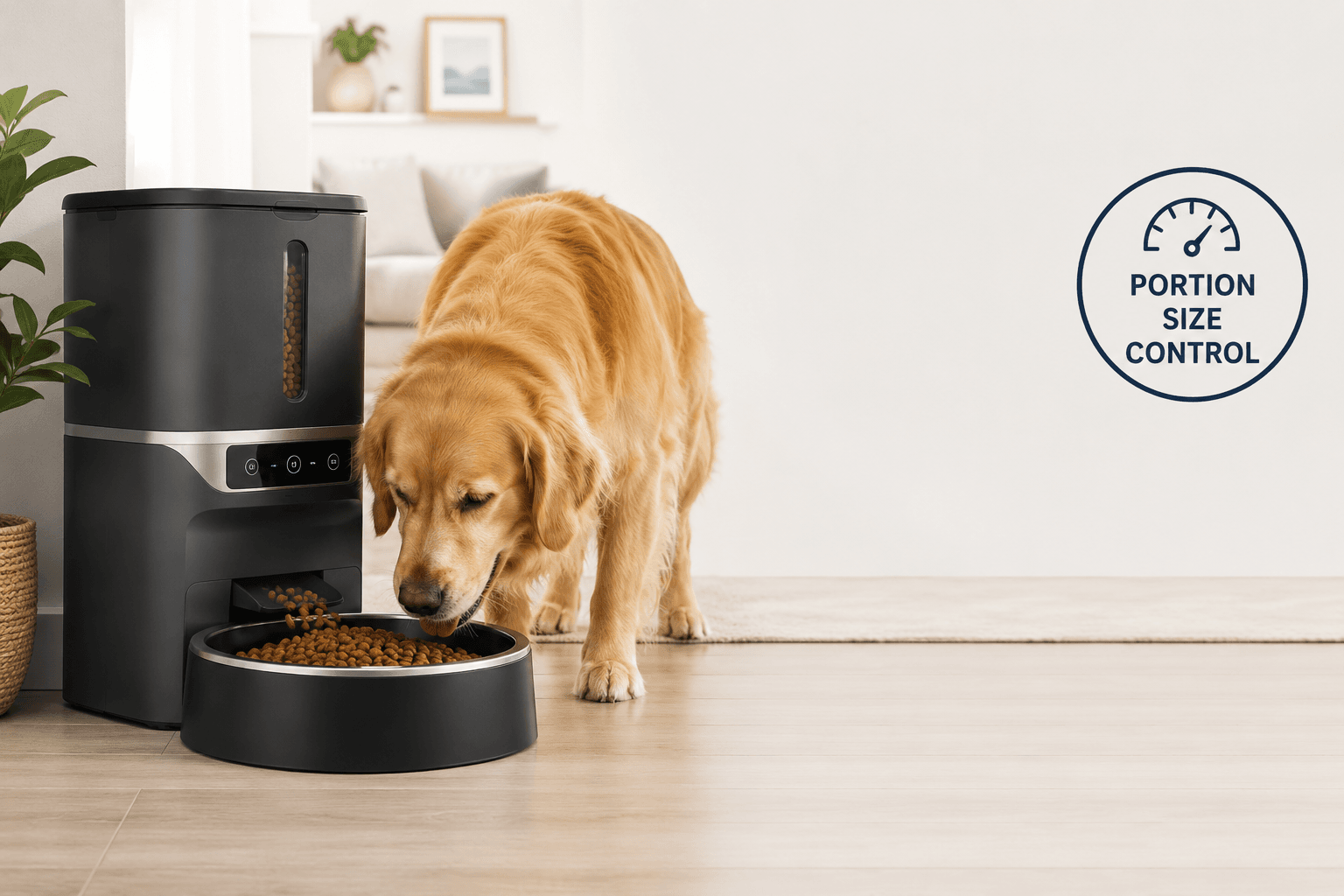
Direct Answer: Automatic Dog Feeder for Large Dogs
An automatic dog feeder for large dogs is useful when it has enough capacity, a stable bowl, accurate portions, and a feeding schedule that matches the dog’s real meal routine. Large dogs do not need unlimited access. They need controlled meals that arrive predictably, in amounts that protect digestion, weight, behavior, and household calm.
Why This Happens
Large-dog feeding problems often look like hunger, but the deeper issue is learned control. A big dog can stare harder, bark louder, move bowls, block kitchens, and pressure owners more intensely than a small pet. When the owner responds with early meals, extra scoops, or random snacks, the dog learns that pressure changes the feeding result.
An automatic dog feeder for large dogs changes the reward source. Food comes from a schedule and feeder, not from the owner’s reaction to barking, pacing, or staring. That distinction matters because dogs repeat behaviors that produce results. If noise produces food, noise becomes part of the feeding system. If waiting near the feeder produces food at fixed times, waiting becomes the stronger pattern.
Owners should not build large-dog feeding around appetite signals alone. A structured smart dog feeding routine gives a better foundation than refilling the bowl whenever the dog acts restless.
What To Do
Choose an automatic dog feeder for large dogs by screening for food capacity, portion range, bowl stability, kibble flow, and cleaning access. A feeder that holds enough food but dispenses unevenly is not reliable. A feeder with accurate portions but a tiny bowl creates mess and frustration. A feeder that slides, tips, or jams gives the dog another weak point to exploit.
Set the schedule before the behavior starts. If the dog begins demanding dinner at 4:30 p.m., do not wait for barking and then release food. That rewards the pressure. Set fixed meals and keep the rule stable. A feeder only works when the owner stops using food as a response to noise.
For setup discipline, use how to use a smart pet feeder before relying on any automatic system. The feeder needs correct portions, suitable kibble, stable placement, and a tested schedule before it becomes dependable.
Large dogs also need clear weight boundaries. Bigger body size does not justify loose feeding. Meal size should stay aligned with healthy pet weight guidance instead of matching the dog’s ability to keep asking.
The Feeding Loop Behind This Problem
The feeding loop is direct: the dog expects food, the dog performs pressure behavior, the owner responds, food appears, and the behavior becomes stronger. The dog does not need to be starving for this loop to work. The behavior only needs to succeed often enough.
An automatic dog feeder for large dogs breaks the loop by moving the reward away from the owner. The dog learns that meals come from the feeding station at fixed times. Barking, pacing, bowl pushing, and kitchen blocking stop being useful when they no longer change the outcome.
This loop becomes more serious when the dog eats too fast. Fast eating can turn normal meals into coughing, gagging, vomiting, and stronger bowl obsession. Owners dealing with this pattern should review how to stop a dog from inhaling food, because timing and eating speed need to be controlled together.
The Emotional Trigger Owners Miss
The emotional trigger is intimidation mixed with guilt. A large dog looks urgent when it wants food. The stare carries weight. The bark fills the room. The body takes space. Owners often feed early because the dog feels impossible to ignore. That decision trains the dog to apply more pressure next time.
An automatic dog feeder for large dogs protects the owner from negotiating under pressure. The rule is already set. Food comes at the scheduled time. The portion is already measured. The owner does not have to decide while the dog is staring at the pantry, pawing the bowl, or barking near the kitchen.
Food pressure also increases when boredom drives the dog toward the bowl. Feeding control works better when paired with activity structure, so the dog exercise guide is a useful next step for homes where food has become the main daily event.
The Addiction Mechanism
The addiction mechanism is reinforcement through successful demand. A dog barks and food appears. A dog paws the bowl and food appears. A dog follows the owner into the kitchen and food appears. Each successful result makes the behavior more valuable.
Loose feeding strengthens this dependency. If food is always available, the dog checks more often. If food appears after pressure, the dog pressures more often. If extra portions appear when the owner feels guilty, the dog learns that intensity changes meal size.
An automatic dog feeder for large dogs creates the right dependency. The dog depends on the schedule, not on owner weakness. Food arrives through a predictable routine. That routine lowers negotiation and makes feeding less emotional.
Real-World Impact
The real-world impact of poor large-dog feeding appears quickly. The dog gains weight, eats too fast, guards the bowl, demands food earlier, or disrupts the household around meals. Large dogs carry extra weight heavily, and uncontrolled feeding can affect mobility, stamina, and long-term comfort. Owners trying to prevent this pattern should read how to prevent dog obesity before treating extra kibble as harmless.
An automatic dog feeder for large dogs gives the household a repeatable structure for mornings, evenings, workdays, and short absences. The same logic applies to owners away during meal windows; the automatic pet feeder for work guide explains why scheduled feeding is stronger than leaving a large open bowl.
Measured feeding principles apply across pets. A structured cat weight reduction plan uses the same core rule: controlled portions work better than emotional access. Large dogs need that discipline through daily measured meals.
Can This Be Fixed?
Yes, large-dog feeding chaos can be fixed when the feeder is matched to size, appetite, schedule, and household behavior. The fix is not choosing the biggest tank. The fix is choosing a feeder that can hold enough dry food, release accurate portions, resist movement, and support the same meal rhythm every day.
An automatic dog feeder for large dogs should be tested before the owner relies on it. Run the real kibble through the feeder. Confirm portion size. Watch whether the bowl area stays stable. Check whether the dog can push, tip, chew, or block the unit. Clean the food path before residue becomes a jam risk.
Who Should Walk Away and Who Should Use This
Walk away from this solution if the dog eats wet food only, destroys devices, needs direct meal supervision, guards food aggressively, or eats so fast that a normal bowl creates choking-style behavior. In those homes, a basic feeder does not solve the main risk. The feeding system needs supervision, separation, or a slow-feed design.
Use an automatic dog feeder for large dogs if the dog eats dry food reliably, follows routines, pressures the owner before meals, or needs measured portions while the household is busy. Owners comparing options should start with dog feeders and screen by capacity, bowl design, portion control, and stability.
For large breeds specifically, the internal guide to an automatic dog feeder for large dogs gives a focused comparison path. The right feeder should reduce daily conflict, not simply hold more food.
Mini FAQ
What is the best automatic dog feeder for large dogs?
The best automatic dog feeder for large dogs has large capacity, a stable bowl, and accurate portion control. Large dogs create stronger food pressure than small pets. Choose a feeder that controls meals instead of only storing food.
Is a gravity feeder good for large dogs?
No, a gravity feeder is a weak choice for large dogs that overeat or demand food. It gives open access and rewards repeated eating. Use a scheduled feeder when the goal is portion control and behavior boundaries.
How large should a feeder be for a big dog?
The feeder should hold enough dry food for the planned schedule without encouraging overfilling. Capacity is useful only when portions stay measured. Match tank size to meal frequency and keep the feeding plan strict.
Can an automatic feeder stop a dog from begging?
It can reduce begging when food stops coming from owner reaction. Begging stays strong when barking, staring, or pawing produces meals. Use fixed meal times and remove side rewards.
Should large dogs use slow feeding with an automatic feeder?
Yes, slow feeding is important when the dog eats too fast. Large dogs that inhale food need portion timing and bowl control. Use smaller scheduled releases or a slow-feed setup to reduce speed-driven feeding problems.
For owners who need a practical large-dog setup, a 5L pet feeder with button control and a large-capacity bowl gives size, structure, and routine control without turning meals into open access. An automatic dog feeder for large dogs is the right tool when the household needs measured meals, less pressure behavior, and a feeding system strong enough for a big dog. Choose portion control over surplus, test the feeder before relying on it, and make the schedule firm enough that food stops being a daily negotiation.