
Finding a reliable automatic dog feeder for large dogs is significantly more challenging than shopping for small breeds. While a standard unit might suffice for a Terrier, a Golden Retriever or a German Shepherd brings two unique challenges: an immense appetite and the physical strength to potentially “break into” a flimsy machine. If the device isn’t built for durability, it becomes an expensive chew toy rather than a health tool.
A high-quality automatic dog feeder for large dogs must balance a high-capacity hopper with a heavy-duty, anti-tipping chassis. In this guide, we will explore why heavy-duty materials matter, how to manage dog calorie intake for big breeds, and why an automatic dog feeder for large dogs is the ultimate solution for preventing overweight dog issues.
1. The Capacity Factor: Why Size Matters for Big Breeds
An adult large breed dog can consume between 3 to 5 cups of kibble per day. If you choose an automatic dog feeder for large dogs with a small 2-liter tank, you will be refilling it every 48 hours, defeating the purpose of automation.
H2: Hopper Standards for an Automatic Dog Feeder for Large Dogs
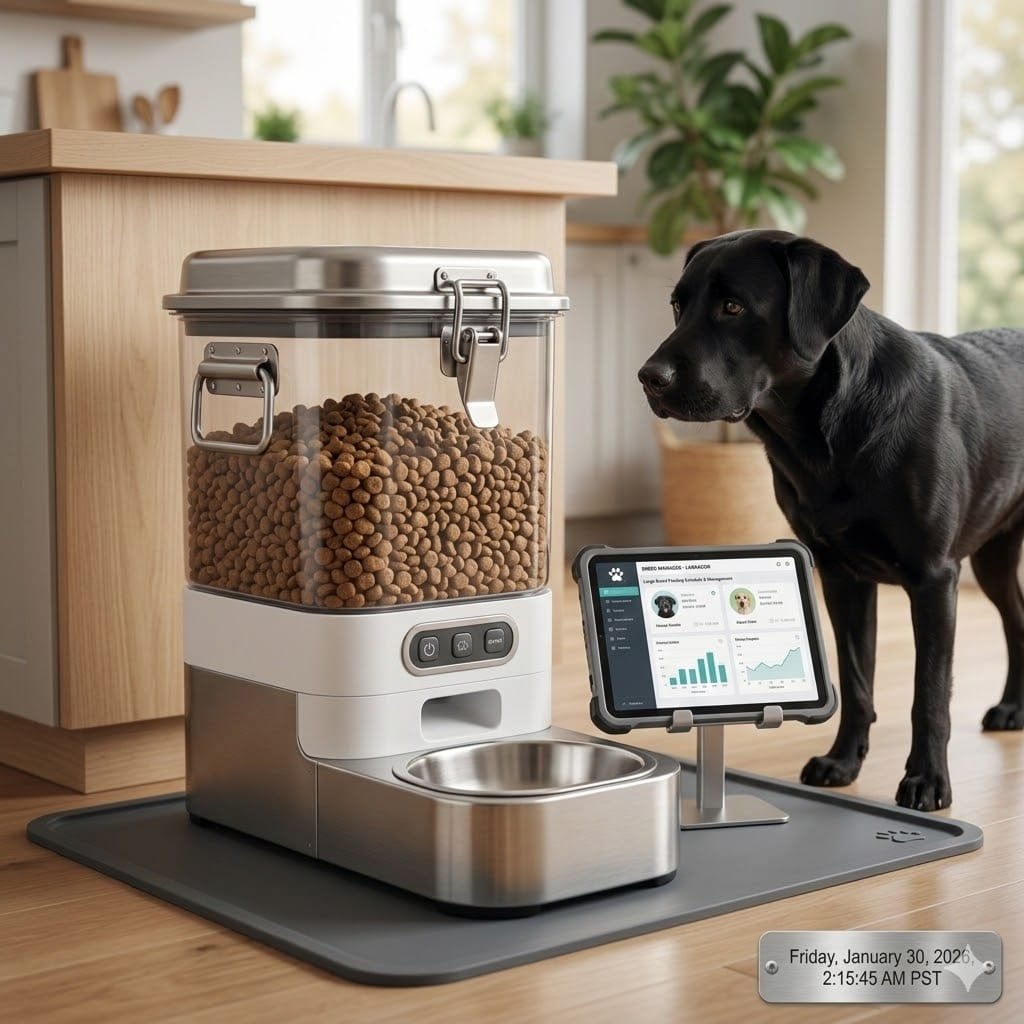
For 2026, the gold standard for an automatic dog feeder for large dogs is a capacity of at least 6L to 9L (roughly 15-20 lbs of dry food). This ensures a week of stress-free feeding. Additionally, a large hopper must feature an anti-jam stirring system to handle the larger kibble sizes typically required for big dogs.
2. User Scenario: The “Hungry Engineer” Struggle
The Scene: Mike owns a 90lb Alaskan Malamute named Bear. Mike works 10-hour shifts and uses a standard plastic automatic feeder.
The Problem: Bear is highly food-motivated. During the day, Bear realizes that if he hits the side of the feeder hard enough, a few extra kibbles fall out. Eventually, Bear knocks the entire unit over, snaps the plastic lid, and eats the entire 2-week supply in one afternoon.
The Result: Bear suffers from severe bloating and digestive distress, leading to an emergency vet visit.
The Solution: Mike upgrades to a heavy-duty automatic dog feeder for large dogs with a weighted base and a twist-lock lid. Bear can no longer tip it or break in, and Mike can monitor Bear’s healthy weight via his phone.
3. Comparison Table: Standard Feeders vs. Heavy-Duty Large Dog Feeders
| Feature | Standard Pet Feeder | Automatic Dog Feeder for Large Dogs |
| Hopper Capacity | 2L – 4L | 6L – 10L+ |
| Material Strength | Thin ABS Plastic | Reinforced, Bite-Proof Resin or Metal |
| Lid Security | Snap-on (Easy to pry) | Twist-Lock or Latched (Tamper-Proof) |
| Base Stability | Lightweight | Weighted or Anti-Tipping Suction |
| Kibble Size Support | Up to 10mm | Up to 20mm (Large Breed Friendly) |
4. Durability and “Bite-Proof” Design Standards
Large dogs have incredible bite force. When selecting an automatic dog feeder for large dogs, you must look beyond the aesthetics.
Anti-Tipping Chassis
A top-heavy feeder is a hazard. The best dog feeders for large breeds feature a wide, flared base. Some even allow you to bolt the unit to the floor or a wall-mount for 100% security.
Reinforced Power Cords
Large dogs, especially puppies, are prone to chewing. An automatic dog feeder for large dogs should come with a stainless steel wrapped power cable. This prevents electrocution and ensures the smart life pet feeder setup remains online even during a “chewing phase.”
5. Pros & Cons of Automating Large Dog Mealtimes
Pros:
Prevents Bloat: By using the “Slow Feed” or “Micro-Meal” settings, you reduce the risk of acid reflux and life-threatening GDV.
Stable Metabolism: Consistent timing supports a scientific pet feeding schedule.
Joint Health: Managing weight through an automatic dog feeder for large dogs is the best non-medical way to treat dog arthritis.
Hygiene: Many large dog models feature stainless steel bowls, which are easier to sanitize.
Cons:
Higher Footprint: Takes up more floor space in your kitchen.
Initial Cost: Heavy-duty materials increase the price compared to basic feeders.
6. Managing Diet and Weight in Large Breeds
Large dogs age faster than small dogs, meaning their caloric needs change rapidly. Using a smart pet feeder allows you to adjust portions without the guesswork.
Monitor Growth: Puppies need frequent, small meals. An automatic dog feeder for large dogs can provide timed meals for sensitive stomachs.
Senior Care: As your dog ages, reduce calories to avoid putting stress on their joints. This is a critical part of preventing pet obesity.
App Tracking: Use the feeding history to ensure your dog is eating properly. If appetite drops, it could be an early sign of dental issues or teeth health decline.
7. FAQ: Automatic Dog Feeder for Large Dogs
Q: Can a large dog break the motor?
A: High-end automatic dog feeder for large dogs units use high-torque motors designed for heavy kibble loads. Ensure the model you choose has “stall protection.”
Q: Is it safe for dogs with food aggression?
A: Yes. Automation removes the “human-to-food” association. However, in multi-pet households, we recommend using separate feeders to prevent bullying.
Q: How often should I clean a large dog feeder?
A: Large breed kibble often has higher oil content. Refer to our guide on how often should you groom your dog and maintain your gear—clean the hopper and bowl every two weeks to prevent bacterial growth.
Final Thoughts
Investing in a robust automatic dog feeder for large dogs is about more than just convenience; it’s about safety and health. By choosing a device with the right capacity and a tamper-proof design, you ensure your large companion stays at a healthy weight and avoids the dangers of rapid eating. Whether you are managing a diabetic dog’s schedule or simply looking for peace of mind during the workday, the right feeder makes all the difference.
(Note: For professional guidance on large breed nutrition, please refer to the American Veterinary Medical Association (AVMA) guidelines.)