
An automatic feeder for dogs with acid reflux can be a life-saving tool when your pet suffers from chronic vomiting, regurgitation, or early-morning bile. Acid reflux in dogs is often less about what they eat and more about how and when they eat. When the stomach stays empty for too long—especially overnight—acid buildup can lead to extreme discomfort.
In this 2026 guide, you’ll learn why timing is everything, how to build a feeding schedule for a puppy with a sensitive stomach, and why choosing the right automatic feeder for dogs with acid reflux can fundamentally improve your pet’s digestive health.
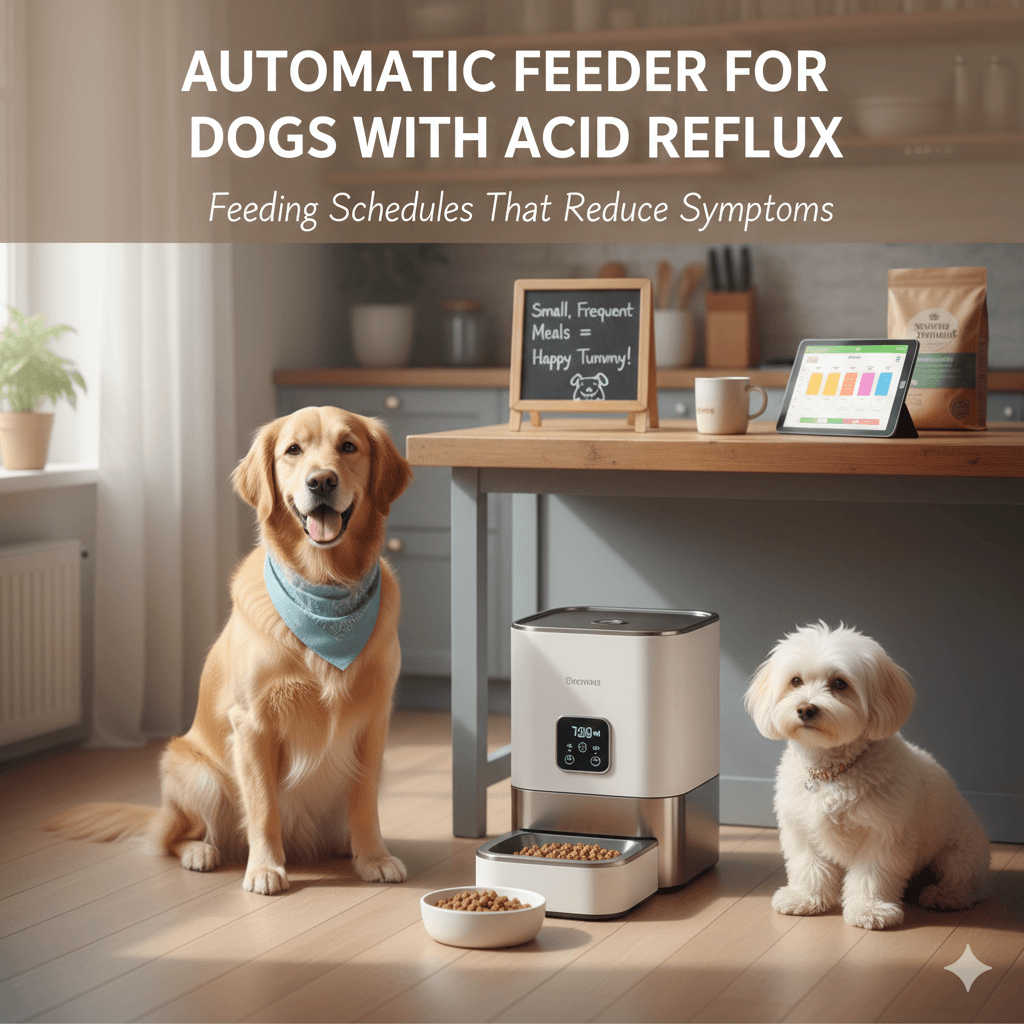
1. Why Timing Matters with an Automatic Feeder for Dogs With Acid Reflux
Acid reflux occurs when stomach acid irritates the esophagus. This is most common when the stomach is empty for too long or overly full after one large meal. Using an automatic feeder for dogs with acid reflux solves this by:
Eliminating Long Fasts: Preventing that 10-hour gap between dinner and breakfast.
Stabilizing Acid Levels: Frequent, small amounts of food keep the stomach “occupied.”
Consistency: According to VCA Animal Hospitals, regularity in feeding is the primary non-medical way to manage reflux symptoms.
2. Benefits of Micro-Meals for Dogs With Sensitive Stomachs
The core strategy for any automatic feeder for dogs with acid reflux is the implementation of “micro-meals.” Instead of 1–2 large feedings, these dogs do best with 4–6 tiny meals per day.
Reduced Pressure: Smaller portions put less strain on the lower esophageal sphincter.
Improved Digestion: Frequent feedings prevent pet obesity, which is known to worsen reflux due to abdominal pressure.
Weight Support: Maintaining a healthy weight is crucial for long-term recovery.
3. Designing a Feeding Schedule for a Puppy With a Sensitive Stomach
Puppies are particularly prone to reflux because their GI systems are still developing. An automatic feeder for dogs with acid reflux ensures their small stomachs are never overwhelmed.
| Time | Portion Size | Notes |
| 7:00 AM | Micro-Portion | First meal to settle morning bile |
| 1:00 PM | Micro-Portion | Mid-day digestion support |
| 7:00 PM | Micro-Portion | Evening meal |
| 11:00 PM | Micro-Portion | Late-night meal to prevent empty stomach acid |
For more on building these routines, check our guide on scientific pet feeding schedules.
4. How to Stop My Dog From Inhaling His Food to Reduce Reflux
Dogs that gulp food inhale air, which increases stomach pressure and pushes acid upward. If you are researching how to stop my dog from inhaling his food to manage reflux, a smart pet feeder is your best ally.
Slow Dispensing: Unlike manual bowls, a WiFi-enabled automatic feeder can release kibble slowly over 10 minutes.
Prevention: By addressing speed, you directly reduce the dog bloating and gas that often triggers reflux.
5. What to Look for in an Automatic Feeder for Dogs With Acid Reflux
Not all feeders are suitable for medical management. When choosing an automatic feeder for dogs with acid reflux, look for these specific features:
Small Portion Accuracy: Ability to dispense as little as 5g at a time.
Quiet Operation: Loud noises can cause stress-induced acid production.
Hygiene: Stainless steel or ceramic bowls prevent the bacterial growth that causes stinky dog paws or chin acne.
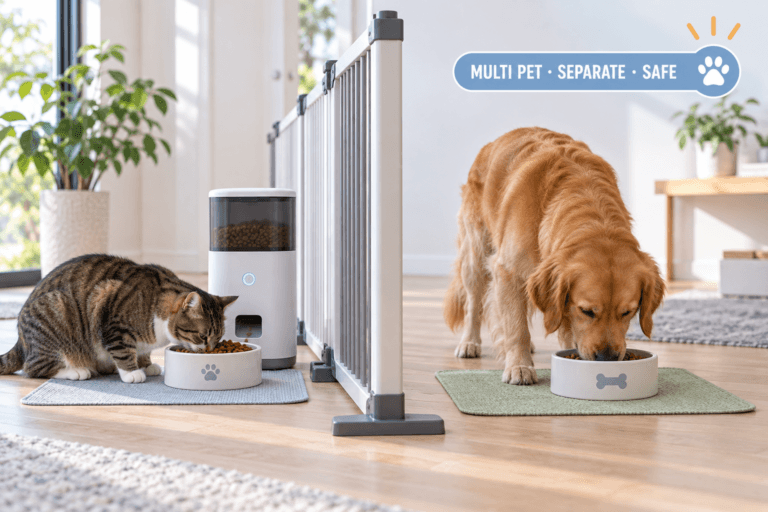
Multi-Pet Support: In homes with multiple animals, use feeders for multiple pets to ensure the dog with reflux doesn’t have to compete for food, which is a major stress trigger.
Conclusion: Better Timing, Calmer Stomach
An automatic feeder for dogs with acid reflux isn’t just a convenience—it’s a therapeutic tool. By supporting consistent micro-meals and preventing the empty-stomach syndrome, you can drastically reduce your dog’s vomiting and discomfort. Remember, a proper pet hydration routine alongside your feeder will further support a healthy esophagus.
Is your dog ready for a pain-free mealtime?
Explore our Smart Pet Feeders today and automate your dog’s journey to better digestion!