It is 6:00 AM, and your cat is already screaming for food, despite having a full bowl just hours ago. You ask yourself, “Why is my cat always hungry even after eating?” This is one of the most common and stressful frustrations for cat owners.
While it might seem like your cat is just “greedy,” constant hunger is usually a complex mix of biological instincts, learned behaviors, or underlying medical conditions. In this guide, we’ll dive into exactly why is my cat always hungry even after eating and provide 3 actionable solutions to restore peace to your kitchen.
💡 Quick Summary: How to Stop Constant Begging
Rule out health issues: Consult a vet if hunger is paired with sudden weight loss.
Stop “Free Feeding”: Switch to 4–6 micro-meals a day to regulate blood sugar levels.
Automate the Routine: Use a Smart WiFi Pet Feeder to break the “Human = Food” connection.
1. Medical Causes vs. Behavioral Reasons
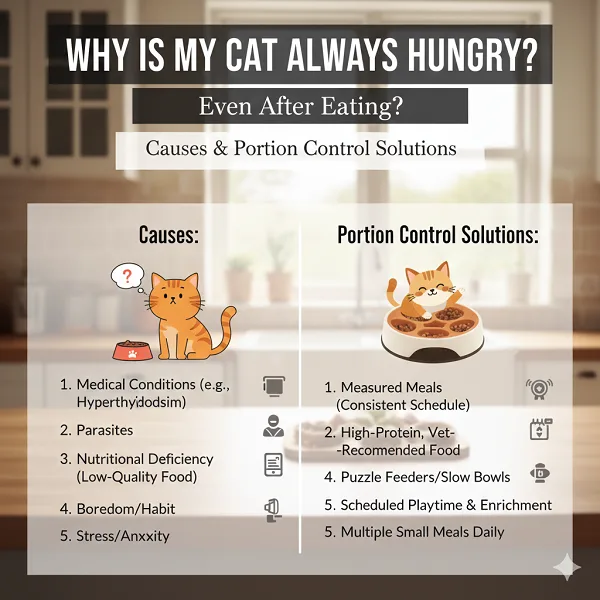
Before assuming it’s just a personality trait, you must know why is my cat always hungry even after eating from a medical perspective. several health conditions can trigger extreme hunger:
Hyperthyroidism: Common in senior cats; it revs up the metabolism, burning calories faster than they can consume them.
Diabetes: The body can’t process glucose, leaving the cat feeling “starving” at a cellular level.
Intestinal Parasites: Internal worms may be stealing nutrients, which explains why is my cat always hungry even after eating but still losing weight.
2. Why Eating Too Fast Triggers False Hunger
If your cat “inhales” their kibble, the stomach stretches too fast, but the brain doesn’t get the “I’m full” signal in time. This results in the cat still feeling always hungry even after eating.
The Solution: Slow down the meal. Using a Slow Feeding Strategy (proven effective for both cats and dogs) forces your pet to take smaller bites, which helps the body register satiety correctly.
3. The Power of “Micro-Meals” and App Monitoring
In nature, cats eat 10–20 tiny meals a day. Feeding just once or twice a day is a major reason why is my cat always hungry even after eating—their blood sugar drops between those long gaps.
Why Data Observation is the Solution
This is where our Smart WiFi Pet Feeder with Camera changes everything:
Program 6-8 Meals: Keep their energy stable all day long.
Monitor via App: Check if they are actually hungry or just seeking attention while you’re away.
Prevent Food Stealing: In multi-pet homes, one cat’s hunger is often caused by another cat stealing their share.
4. How to Portion Control for a Greedy Cat
Portion control isn’t about starvation; it’s about strategy.
- Calculate Calories: Don’t guess. Use our guide on How Many Calories Should My Cat Eat to find the “Magic Number.”
- Consistency is Key: Cats have a highly developed internal clock. If the feeder goes off at 8:00 AM every day, they stop bothering you and start waiting for the machine.
- Separate Food from Attention: Play with your cat before mealtime. This mimics the “Hunt-Catch-Kill-Eat” cycle recommended by feline behaviorists like Jackson Galaxy.
5. Sample Feeding Strategy for “Always Hungry” Cats
| Time | Action | Goal |
| 07:00 AM | 15g via Smart Feeder | Morning energy boost |
| 11:00 AM | 10g via Smart Feeder | Prevents midday boredom begging |
| 03:00 PM | 10g via Smart Feeder | Stabilizes blood sugar |
| 07:00 PM | 15g via Smart Feeder | Main evening meal |
| 11:00 PM | 5g “Midnight Snack” | Prevents 4:00 AM wake-up calls |
Note: This structure is part of a proven Feeding Schedule for Overweight Indoor Cats.
FAQ: Solving the “Always Hungry” Mystery
Q1: Why is my cat still hungry after a big meal?
It’s likely due to “Scarf and Barf” or learned behavior. Try breaking the meal into smaller portions using our Automatic Pet Feeders.
Q2: Should I give in when my cat begs?
No. Giving in rewards the behavior, making them act always hungry even when their calorie needs are met.
Q3: Can a “hungry” cat be a sign of worms?
Yes. Parasites are a common medical reason why is my cat always hungry even after eating. Consult your vet for a deworming schedule.
Final Thoughts
Understanding why is my cat always hungry even after eating is the first step toward a healthier pet. By combining veterinary advice with a structured feeding schedule for overweight cats, you can turn a food-obsessed feline into a satisfied, happy companion.
Ready to stop the begging? Browse our Best-Selling Smart Feeders and take control of mealtime today.