
Feeding Schedule for Overweight Indoor Cats: 5 Vet-Inspired Tips for 2026
Indoor cats are significantly more prone to obesity than their outdoor counterparts due to sedentary lifestyles and constant access to food. Unfortunately, a “chubby” cat faces high risks of feline diabetes, painful joint issues, and heart disease. Implementing a structured feeding schedule for overweight indoor cats is the most effective way to reverse these risks and extend your pet’s lifespan.
Transitioning from “free feeding”—where kibble is available all day—to a timed routine is crucial for successful weight management. In this guide, we’ll provide a professional feeding schedule for overweight indoor cats and explain how smart technology can make portion control effortless.

1. Why You Must Switch from Free Feeding to Scheduled Feeding
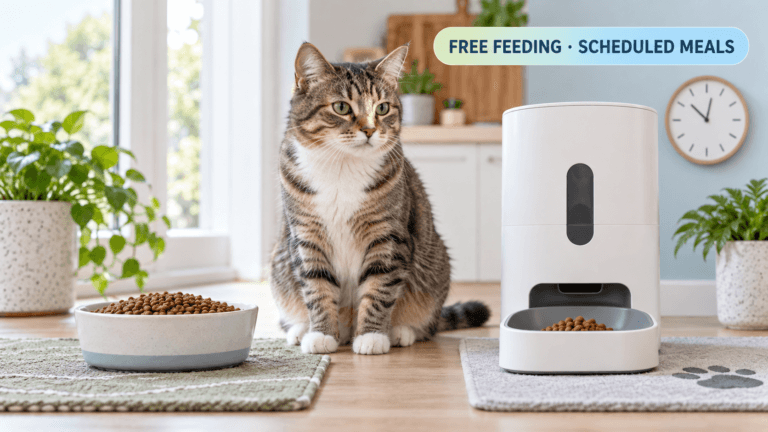
Free feeding is the leading cause of the “feline obesity epidemic.” When food is always available, cats eat out of boredom rather than hunger, leading to insulin resistance.
Stable Blood Sugar: A strict feeding schedule for overweight indoor cats helps maintain steady glucose levels, which is essential for managing cat diabetes.
Metabolic Boost: Scheduled meals trigger a healthy metabolic response, encouraging the body to burn stored fat between sessions.
Veterinary Support: According to the American Veterinary Medical Association (AVMA), moving to scheduled meals is the #1 recommendation for weight loss.
2. Calculating the Right Portions for Weight Loss
A feeding schedule for overweight indoor cats is only effective if the calorie count is accurate. Before you set your timer, you need to know exactly how much to serve.
Use a Calorie Guide: Refer to our Cat Calorie Guide for Weight Loss to calculate your cat’s specific RER (Resting Energy Requirement).
Avoid the “Hungry Cat” Trap: If your cat is always hungry during the transition, consider feeding smaller amounts more frequently (e.g., 4–5 times a day) instead of two large meals.
3. How to Implement a Portion Control Cat Bowl
Precision is the enemy of obesity. Traditional bowls make it too easy to “over-scoop,” but a portion control cat bowl or an Automatic Cat Feeder removes the guesswork.
Gram-Level Accuracy: Our Smart Pet Feeders allow you to dispense food in 5g–10g increments, ensuring your feeding schedule for overweight indoor cats stays 100% accurate.
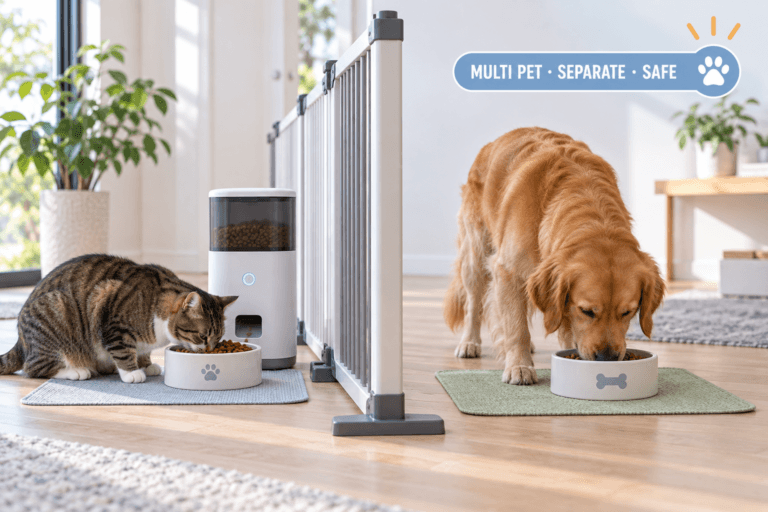
Prevent Food Stealing: In multi-cat homes, weight loss fails when the “diet cat” steals food. Use feeders for multiple pets to lock out the wrong animals.
4. Managing Diabetic Cats with Structured Mealtimes
If your cat has already developed health issues, a feeding schedule for overweight indoor cats is no longer optional—it’s life-saving.
Insulin Coordination: Diabetic cats require food at specific times to align with their insulin injections.
Stable Routine: Following the WSAVA Pet Nutrition Guidelines, a predictable routine prevents dangerous hypoglycemic episodes and supports long-term remission.
5. Sample Feeding Schedule for Overweight Indoor Cats
Here is a vet-inspired template you can program into your WiFi-enabled smart feeder:
| Time | Portion | Notes |
| 7:00 AM | 25% of Daily Calories | Morning energy boost |
| 1:00 PM | 25% of Daily Calories | Mid-day “snack” meal |
| 7:00 PM | 25% of Daily Calories | Evening meal |
| 11:00 PM | 25% of Daily Calories | Prevents late-night begging |
Tip: Dividing the daily intake into four smaller meals keeps the metabolism active and reduces begging behavior.
Conclusion: Consistency is the Key to Feline Wellness
Switching to a feeding schedule for overweight indoor cats is a journey that requires patience. By using a portion control cat bowl, tracking calories, and maintaining proper pet hydration, you are giving your cat the best chance at a disease-free life.
Is your indoor cat ready to shed the extra weight?
Explore our Smart Pet Feeders today and automate your portion control for a healthier tomorrow!