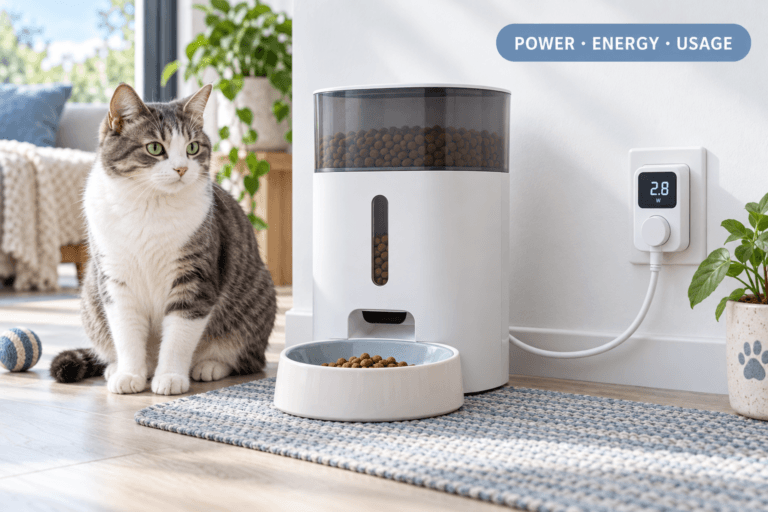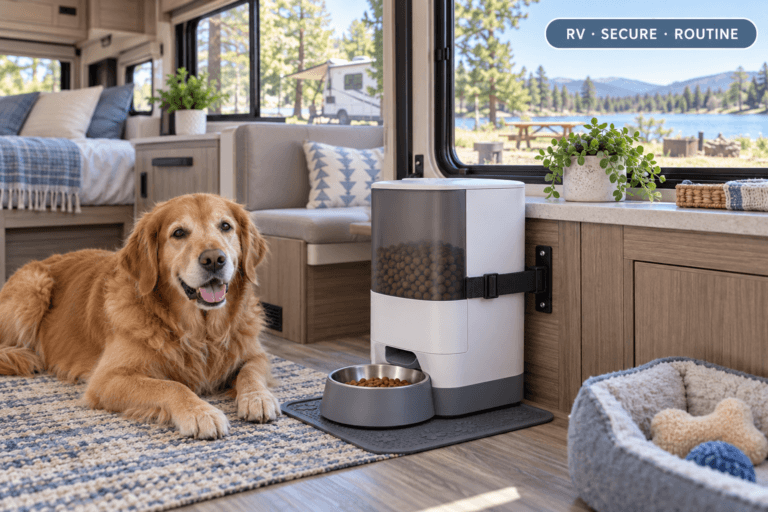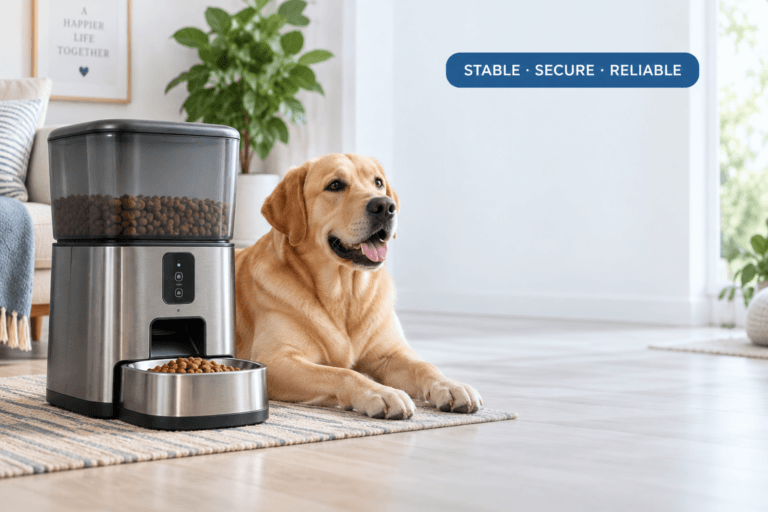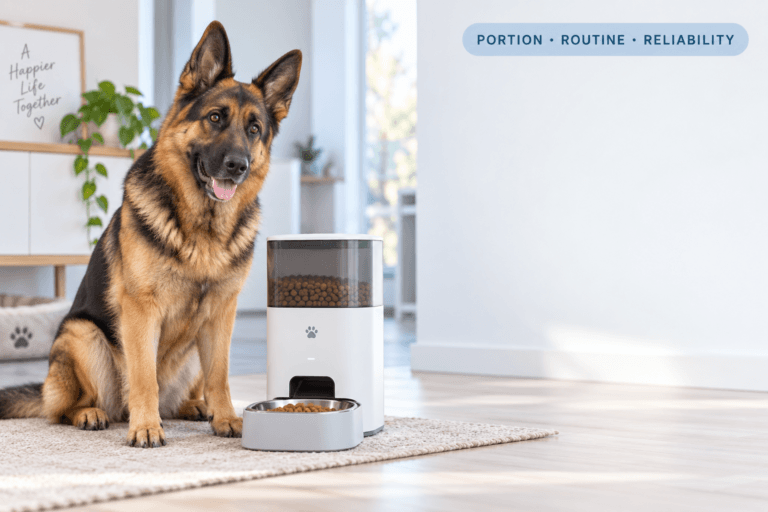

An outdoor automatic pet feeder can protect meal timing, but it also creates risks that an indoor feeder does not face. Weather, insects, rodents, raccoons, moisture, heat, weak WiFi, unstable power, and food spoilage all become part of the feeding system. The goal is not to place a smart feeder outside and hope it works. The goal is to build a protected outdoor feeding station with clear limits.
For owners who need scheduled dry-food meals, a smart automatic pet feeder with app control gives strong timing and portion control. For outdoor use, the feeder still needs shelter, stable placement, pest protection, and a daily inspection routine.
Direct Answer: Outdoor Automatic Pet Feeder
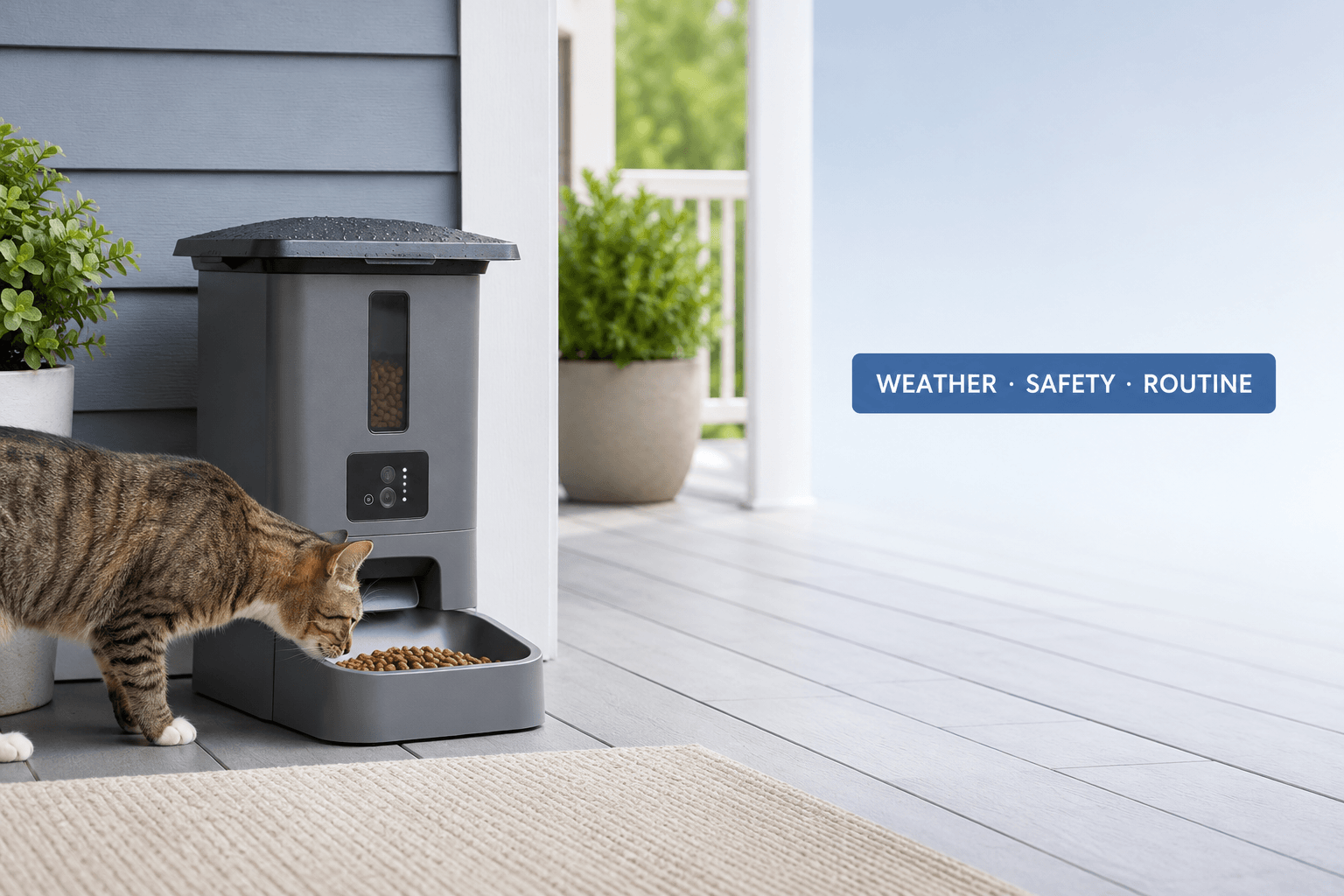
The best outdoor automatic pet feeder setup uses a timed dry-food feeder inside a covered, dry, shaded, elevated, pest-resistant feeding station. The feeder should stay away from rain, direct sun, mud, trash, wildlife paths, and areas where other animals can steal food. Outdoor feeding works only when the owner controls weather exposure, food hygiene, power reliability, and access.
An outdoor automatic pet feeder should not be treated as a set-and-forget device. Outdoor conditions change quickly. A clean bowl in the morning can attract insects by afternoon. A dry corner can become wet after wind-driven rain. A feeder with good WiFi indoors can lose signal on a porch or shed. Strong outdoor feeding depends on repeated checks, not blind automation.
Why This Happens
Outdoor feeding is harder because the feeder is exposed to more variables. Indoors, the owner controls temperature, pests, flooring, lighting, and access. Outdoors, food smell travels, moisture enters, insects find residue, and wildlife learns the schedule. A pet feeder becomes a food source for the entire environment unless the station is controlled.
The FDA safe handling guidance for pet food and treats emphasizes clean handling, safe storage, and washing practices. That principle matters more outside because dirt, heat, moisture, and pests can reach the feeding area faster.
An outdoor automatic pet feeder also changes pet behavior. A cat can begin waiting outside for food instead of returning indoors. A dog can start guarding the porch. Multiple animals can learn the dispensing sound. If the feeder is visible and easy to raid, the pet’s routine becomes a competition point instead of a controlled meal system.
What To Do
Start with the location. Put the feeder under a roof, inside a sheltered porch, covered patio, enclosed kennel zone, weather-protected catio, shed feeding corner, or purpose-built feeding box. The station must stay dry from above and from the sides. Rain rarely falls straight down in real outdoor conditions, so side protection matters.
A practical outdoor automatic pet feeder needs five controls: shelter, elevation, shade, pest defense, and daily cleaning. Shelter blocks rain. Elevation keeps the feeder off wet ground. Shade reduces heat stress on stored food. Pest defense prevents insects and wildlife from treating the feeder as a buffet. Cleaning removes the scent trail that attracts more animals.
Before choosing the outdoor station, use the smart feeder placement guide to confirm floor stability, power access, WiFi signal, bowl access, and cleaning space. Outdoor placement follows the same rules as indoor placement, then adds weather and pest control.
The Feeding Loop Behind This Problem
The feeding loop starts when the owner uses an outdoor automatic pet feeder to solve an irregular schedule. The feeder dispenses food outside. The pet eats some of it. Leftover kibble stays in the bowl. Insects, birds, rodents, or raccoons learn the pattern. The owner then increases portions because the pet still looks hungry.
That loop destroys portion accuracy. The feeder dispensed the right amount, but the intended pet did not eat all of it. Another animal consumed part of the meal. The owner cannot tell whether the pet is underfed, whether wildlife is stealing food, or whether food is being wasted.
The fix is station control. Use scheduled portions, remove leftovers, place the feeder where the intended pet can access it safely, and inspect the station daily. An outdoor automatic pet feeder works only when the owner knows who is eating the dispensed food.
The Emotional Trigger Owners Miss
The emotional trigger is convenience mixed with guilt. Owners want pets to eat reliably when they are at work, asleep, traveling between shifts, or managing an outdoor routine. Automation feels like care because food appears on time. The hidden problem is that food outside is not protected just because it is scheduled.
That guilt often leads to overfilling the tank, adding extra meals, or leaving backup food beside the feeder. These choices feel safe, but they attract pests and make intake invisible. The pet receives less control, not more.
A better response is measured reliability. Use an outdoor automatic pet feeder for planned dry-food meals only. Keep the daily amount controlled. Do not place extra bowls outside as insurance. If work hours are the main problem, the automatic feeder for shift workers routine gives a better structure than outdoor overfeeding.
The Addiction Mechanism
The addiction mechanism is schedule chasing. When food appears outdoors at the same sound or time every day, pets and other animals learn the cue. The pet can start waiting near the feeder long before mealtime. Wildlife can also learn the pattern if food odor and leftovers remain available.
This creates a weak routine. The pet begins guarding the outdoor station, another animal approaches the feeding area, and the owner sees more tension around meals. The machine did not create the conflict alone. The exposed food source trained the environment.
A controlled outdoor automatic pet feeder reduces that pattern by limiting odor, leftovers, and access. Use smaller scheduled meals, clean the bowl, keep the station enclosed, and avoid dispensing more food than the pet finishes promptly.
Weather Protection Rules
Weather protection is the first pass-or-fail test. A feeder sitting directly in rain, snow, direct summer sun, or wind-driven moisture is the wrong setup. Dry food absorbs moisture, clumps, and can jam the dispensing system. Moist food residue also attracts insects faster outside.
The feeder should sit on a raised, level, washable surface. Do not place it directly on grass, soil, gravel, or an uneven porch edge. Use a covered station with enough ventilation and enough space for the pet to approach without knocking the device over.
For homes with unstable power or outdoor outlets, use the logic in pet feeder with battery backup. Outdoor feeding fails quickly when power interruptions stop scheduled meals and the owner does not notice.
Food Hygiene Rules
Food hygiene controls whether an outdoor automatic pet feeder stays safe enough for daily use. The tank should hold only the amount of dry food the pet uses within a reasonable cycle. Overfilling creates stale food, odor, and pest attraction.
The AVMA pet nutrition guidance connects feeding decisions with overall health. Outdoor feeding adds another layer: the food must be suitable, measured, and protected from contamination before it reaches the pet.
Clean the bowl, chute area, lid, and surrounding floor on a fixed schedule. Remove leftover food after meals when the feeder sits in an exposed area. Keep the food bag sealed indoors. Do not store backup food outside beside the feeder, because that creates a stronger scent target for pests.
Wildlife and Pest Control
An outdoor feeder attracts more than the intended pet. Ants, flies, birds, squirrels, rodents, raccoons, and neighborhood animals can learn where food appears. Once that pattern starts, the feeder becomes harder to protect.
Use a sheltered station with limited access. Place the feeder away from trash bins, compost, fence gaps, dense shrubs, and wildlife travel paths. Do not leave food out overnight in open areas. For pets that need outdoor access but not open access to every animal, controlled feeding windows are stronger than continuous availability.
Multi-pet and shared-yard homes need extra discipline. If one animal steals another’s food, the feeder’s portion accuracy collapses. Use the principles in how to stop one cat from eating the other’s food when access control matters more than tank capacity.
Common Failure Pattern
The common failure pattern is placing an outdoor automatic pet feeder on a porch because the outlet is convenient. The feeder stays dry during light weather, then side rain wets the bowl. Kibble clumps. Ants arrive. The pet skips food. The owner assumes the feeder is faulty and increases the portion.
The second failure is using an outdoor feeder for wet food without strict cleaning. Wet food spoils faster, smells stronger, and attracts insects quickly in outdoor conditions. Dry-food feeders are easier to control outside, but they still require cleaning and shelter.
The third failure is treating camera or app features as a substitute for physical inspection. A camera can show whether the pet visited, but it cannot fully replace checking moisture, residue, insects, blocked chutes, tank seal, or food theft.
Real-World Impact
The real-world impact of weak outdoor setup is missed meals, inaccurate portions, food waste, pest problems, device jams, and territorial behavior. Owners often blame the feeder when the real problem is the feeding station.
A strong outdoor automatic pet feeder makes the routine easier to verify. The owner knows when the food dispensed, where it landed, whether the pet ate, whether leftovers remained, and whether the station stayed dry. That is the difference between automation and abandonment.
Hydration still needs a separate plan. Outdoor pets need clean, reachable water, and a feeder does not solve water access. Use pet hydration tips to build a water routine that does not depend on a dry-food dispenser.
Can This Be Fixed?
Yes, an outdoor feeder setup can be fixed when the owner treats the station as a controlled feeding zone. Move the feeder under real cover. Raise it off the ground. Confirm WiFi and power. Reduce food exposure. Clean the bowl. Watch for theft. Stop leaving backup food outside.
Run a seven-day reset. Program small measured meals. Inspect the station after each feeding window. Record leftover food, pests, weather exposure, pet behavior, and feeder errors. If the pet does not finish outdoor meals promptly, reduce exposure time instead of increasing the portion.
For setup and programming, use how to use a smart pet feeder. For product comparison, start from the smart feeders collection and choose based on portion accuracy, tank seal, bowl access, cleaning, power plan, and station fit.
Who Should Walk Away and Who Should Use This
Walk away from an outdoor automatic pet feeder if the only available location is exposed to rain, direct heat, wildlife, theft, or poor cleaning access. Also walk away from outdoor feeding when the pet needs strict diet control but other animals can reach the bowl.
Use an outdoor automatic pet feeder when the station is covered, secure, dry, easy to clean, and limited to the intended pet. It works best for dry food, controlled feeding windows, porch feeding, protected patio feeding, catio setups, kennel areas, and homes that need consistent timing without leaving open food outside all day.
For cat-specific setups, begin with the cat feeders collection. For larger outdoor dog routines, use the dog feeders collection to match bowl size, kibble volume, and eating speed.
Mini FAQ
Can I use an outdoor automatic pet feeder?
You can use an outdoor automatic pet feeder when it is protected from rain, heat, pests, wildlife, and unstable power. Place it in a covered, dry, shaded, level station and inspect it daily.
Is an outdoor automatic pet feeder waterproof?
Most automatic feeders should not be treated as fully waterproof unless the product specifically says so. Even then, the food bowl and dry kibble still need protection from wind-driven rain, moisture, and insects.
Where should I place an outdoor automatic pet feeder?
Place it under a roof, inside a covered porch, protected patio, catio, shed corner, or sheltered kennel area. Keep it off wet ground, away from trash, away from wildlife paths, and close enough for daily cleaning.
How do I keep pests away from an outdoor feeder?
Keep pests away by reducing leftovers, cleaning the bowl, sealing stored food indoors, and placing the feeder in a controlled station. Do not leave backup food outside, and do not use open bowls overnight.
Can an outdoor feeder work for cats?
An outdoor feeder can work for cats when access is controlled and the station is protected. It is strongest in a catio, covered porch, or enclosed feeding area. Open-yard feeding invites food theft and wildlife competition.
Can an outdoor feeder work for dogs?
An outdoor feeder can work for dogs when the feeder is stable, shaded, secure, and matched to the dog’s meal size. Large dogs need a setup that prevents tipping, pushing, chewing, and food theft from other animals.
A smart WiFi pet feeder with camera helps owners check feeding visits, but it does not replace shelter and cleaning. The final rule is direct: an outdoor automatic pet feeder should protect food from weather, pests, wildlife, and routine failure before it protects owner convenience.