
An automatic feeder for shift workers is not just a convenience device. It is a routine-control tool for homes where work hours change, meals are missed, and pets begin to connect hunger with human inconsistency. When a cat or dog depends on a person who works nights, rotating shifts, long hospital hours, warehouse shifts, delivery routes, or emergency schedules, feeding needs a system instead of memory.
For predictable dry-food meals, a smart automatic pet feeder with app control gives owners a practical way to separate feeding time from work time. The goal is not to remove the owner from care. The goal is to make the routine stable when the owner’s schedule is not.

Direct Answer: Automatic Feeder for Shift Workers
The best automatic feeder for shift workers is a timed, portion-controlled dry-food feeder that keeps meals consistent even when the owner works irregular hours. It should support scheduled feeding, measured portions, easy cleaning, and a backup plan for missed app access, power issues, or late returns home.
An automatic feeder for shift workers works because pets do not understand rotating schedules. They understand repetition. If breakfast happens at 7 a.m. one week, 11 a.m. the next week, and 4 p.m. after a night shift, the feeding pattern becomes unstable. The pet starts begging earlier, eating faster, waking the owner, or guarding the food area because the system feels unpredictable.
Why This Happens
Shift work breaks ordinary pet routines because the owner’s body clock and the pet’s feeding clock stop matching. A nurse, factory worker, security worker, driver, server, warehouse employee, or first responder can leave before normal meal time and return after the pet has waited too long. The result is not only hunger. It is routine stress.
The AVMA pet nutrition guidance emphasizes that nutrition is part of overall pet health. In a shift-work home, nutrition is not only the food brand. It is also whether the meal appears at a reliable time and in a controlled amount.
An automatic feeder for shift workers solves the timing gap. It gives the pet meals at fixed windows, even when the owner is sleeping after a night shift or stuck at work after overtime. This stability matters most for pets that beg, eat too fast, wake people early, or become anxious around the feeding area.
What To Do
Start with the pet’s normal feeding requirement, then convert it into a schedule that does not depend on the owner being home. For cats, this often means smaller measured meals across the day. For dogs, this usually means scheduled portions that match the household’s walking and bathroom routine. The feeder should support the routine that already works, not create a random snack machine.
A practical automatic feeder for shift workers should have programmable meal times, portion control, a secure food tank, a removable bowl, and simple cleaning access. App control is useful for schedule changes, but the core schedule should still run without constant manual tapping. A feeder that requires the owner to remember every meal does not solve the shift-work problem.
Use the scientific pet feeding schedule framework to decide the daily rhythm before choosing the feeder. Then match the device to the pet. Cat owners can compare options in the cat feeders collection, while dog owners should start with the dog feeders collection for larger bowls and stronger portion capacity.
The Feeding Loop Behind This Problem
The feeding loop starts when the owner’s shift changes. The pet waits longer than usual, becomes hungry, and then acts intensely when the owner comes home. The owner feels guilty and gives extra food. The next time the schedule shifts, the pet demands earlier and louder because the previous delay produced a bigger reward.
That loop trains pressure behavior. The pet learns that meowing, barking, pawing, staring, or waking the owner can move food forward. The owner learns to use food as an apology for being late. Over time, the pet is not simply eating meals. The pet is negotiating with the owner’s schedule.
An automatic feeder for shift workers breaks this loop by making food less emotional. Meals arrive at set times. The owner can still give affection, play, walks, and grooming, but the base meal no longer depends on guilt after a difficult shift.
The Emotional Trigger Owners Miss
The emotional trigger is guilt. Shift workers often leave before sunrise, come home late, sleep during the day, or miss the feeding moment other pet owners take for granted. When the pet looks hungry, the owner wants to compensate immediately.
That compensation usually takes the form of extra food, treats, hand-feeding, or letting the pet graze from a full bowl. These choices feel caring, but they weaken the feeding routine. A pet that receives random extras after every long shift learns that owner absence leads to upgraded food.
The correction is simple: separate care from calories. Use an automatic feeder for shift workers for the base meals. Use attention, play, brushing, walks, and calm contact for emotional repair. For pets already gaining weight from repeated “sorry I was late” feeding, the best cat feeder for weight loss guide explains why measured meals matter more than emotional refills.
The Addiction Mechanism
The addiction mechanism is unpredictable reward. When food appears sometimes on schedule, sometimes late, sometimes doubled, and sometimes after begging, the pet keeps testing the system. This is especially strong in cats that wake owners early and dogs that crowd the kitchen after work.
A weak schedule turns feeding into a slot machine. The pet does not know which behavior will work, so it repeats all of them: vocalizing, scratching, pacing, jumping, bowl pushing, and staring. The owner then thinks the pet is “always hungry,” even when the deeper problem is inconsistent reinforcement.
An automatic feeder for shift workers reduces this gambling pattern. The same portion appears at the same time. Begging does not change the result. The pet learns that meals are predictable, and the owner stops reinforcing pressure behavior during tired moments after work.
Common Failure Pattern
The most common failure pattern is buying a feeder and still feeding manually whenever the pet complains. This creates two feeding systems: the scheduled feeder and the emotional owner. The pet quickly learns to use both.
Another failure pattern is setting portions too large because the owner worries about being away. A feeder should not become a fear-based buffet. It should deliver the right amount at the right time. For cats that wake owners before early shifts, the timed cat feeder for early morning guide gives a specific routine for morning-demand behavior.
The better pattern is strict consistency. Put the daily food amount into the feeder plan. Count treats separately. Do not add a second meal because a shift ran late unless the normal schedule truly missed a planned feeding. The feeder should reduce improvisation, not add another layer of uncontrolled food.
Real-World Impact
The real-world impact is calmer feeding behavior. A pet with reliable meals has fewer reasons to panic around the bowl. The owner also gets better sleep, especially after night shifts, because the pet no longer depends on waking the human for breakfast.
Weight control is another practical impact. The AVMA healthy pet weight guidance explains why body condition matters for long-term health. In shift-work homes, weight drift often comes from small repeated errors: an extra scoop after overtime, a treat before sleep, another refill before leaving, and a second person feeding because nobody checked the schedule.
An automatic feeder for shift workers creates a recordable feeding structure. Even a simple written log helps. Track meal times, total daily food, treats, appetite, stool quality, and body condition. If the pet gains weight, the system needs tighter portions. If the pet begs constantly despite scheduled meals, the household needs stricter boundaries around treats and table scraps.
Can This Be Fixed?
Yes, shift-work feeding problems can be fixed when the owner uses a feeder as a schedule anchor instead of a food storage bin. The device solves timing. The owner still controls the food amount, cleaning, water, and behavior rules.
Start with a seven-day reset. Choose fixed meal times that work even on night shifts and rest days. Program the feeder. Measure the full daily amount. Remove casual top-offs. Keep water available. Clean the bowl before residue builds up. For setup details, use how to use a smart pet feeder before changing multiple feeding habits at once.
A strong automatic feeder for shift workers plan also includes a backup. If the home has power interruptions, long overtime, or poor WiFi, choose a routine that does not collapse when the owner cannot open the app. The pet feeder with battery backup guide is useful for owners who need more protection against missed meals.
Who Should Walk Away and Who Should Use This
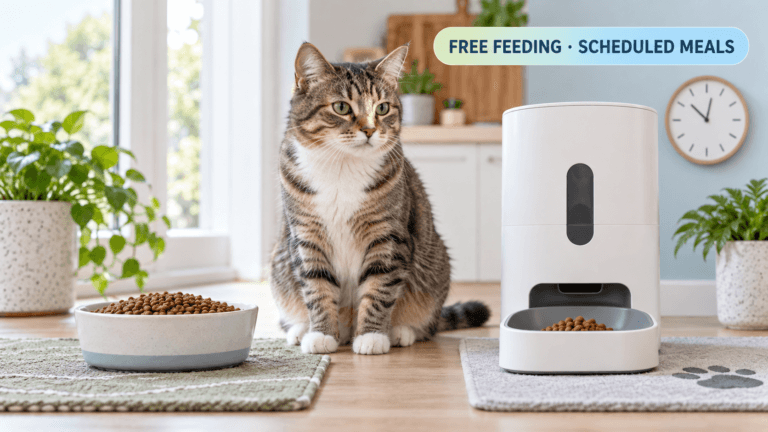
Walk away from free feeding if the pet gains weight, guards food, eats from boredom, vomits after fast eating, or wakes the owner for meals. Free feeding looks convenient, but it hides intake and makes shift-work feeding harder to measure.
Use an automatic feeder for shift workers if work hours change, overtime is common, sleep happens during the day, the pet wakes the owner for food, or multiple household members feed without coordination. It is especially useful for dry-food cats, small dogs on fixed meals, and pets that need portion control.
For broader selection, start with the smart feeders collection. Choose a feeder based on food type, kibble size, portion range, tank capacity, cleaning access, app reliability, and backup power needs. The right feeder is the one that makes the routine harder to break.
Mini FAQ
What is the best automatic feeder for shift workers?
The best automatic feeder for shift workers is a timed, portion-controlled dry-food feeder with reliable scheduling and easy cleaning. It should keep meals stable when the owner works nights, rotating shifts, overtime, or long days away from home.
Can an automatic feeder stop my cat from waking me after night shift?
An automatic feeder can reduce early waking when the cat is waking you for food. Program the meal before the usual wake-up behavior, keep the portion measured, and stop giving manual food when the cat complains.
Is an automatic feeder good for dogs with shift-worker owners?
An automatic feeder is useful for dogs when the feeding schedule matches walks, bathroom needs, and meal size. It should not replace exercise or supervision. Use it to protect timing and portion control during irregular work hours.
Should shift workers use app-controlled feeders?
App-controlled feeders are useful when the schedule changes often. They allow remote checks and schedule edits, but the main meal plan should still be programmed in advance. Do not rely on memory during long shifts.
How many meals should I schedule in the feeder?
Schedule meals based on the pet’s normal daily food amount and behavior pattern. Cats often do well with smaller meals across the day. Dogs usually need feeding times coordinated with walks and rest. The total daily amount must stay measured.
What is the biggest mistake with automatic feeders?
The biggest mistake is using the feeder and still adding random manual food. That destroys portion control. Program the feeder, count treats, and stop using extra food as an apology for late shifts.
A 2L smart pet feeder for regular feeding is a practical option for owners who need stable dry-food meals without a complicated setup. The final rule is direct: an automatic feeder for shift workers should protect time, portion, and routine when the owner’s work schedule cannot.