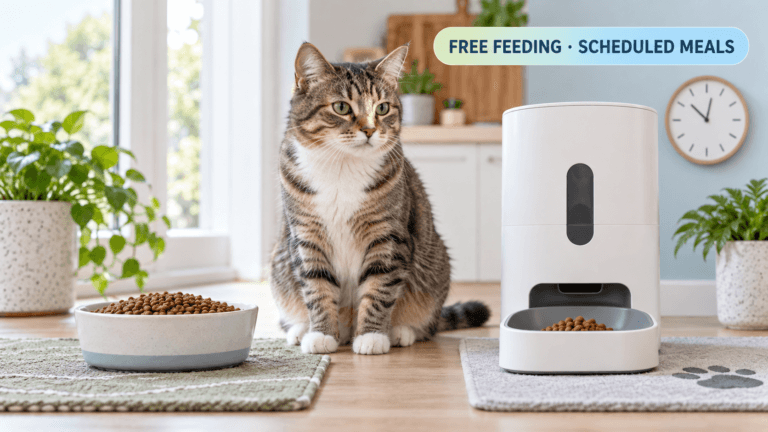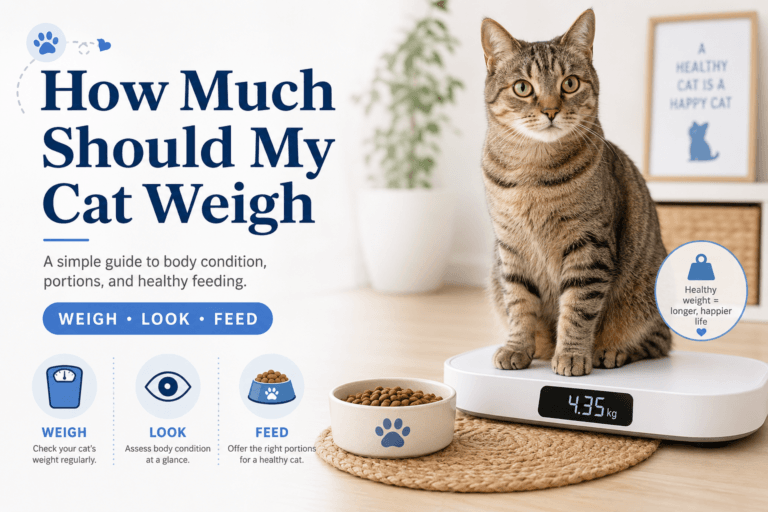

Feeding nursing cats is not the same as feeding a normal adult cat. A nursing queen is producing milk, recovering from birth, and supporting kittens that grow every day. The feeding system has to provide more energy without creating open-bowl chaos, dirty wet food, or random refills that hide real intake.
For homes that need reliable dry-food access through the day, a regular smart feeder for measured cat meals can support the routine. The feeder should create a stable base: food appears reliably, water stays available, and the owner stops guessing from memory.
Direct Answer: Feeding Nursing Cats
Feeding nursing cats requires high-energy food, frequent access, clean water, and a controlled transition as kittens move toward weaning. The strongest home plan uses food labeled for gestation/lactation, growth, or all life stages, then tracks what is offered, what is eaten, and what is removed.
The mistake is thinking that nursing only means “add more food.” That is too loose. The better system is controlled abundance: the mother cat has enough safe food to support milk production, but the owner still tracks bowls, water, hygiene, and kitten progress.
Why This Happens
Milk production is energy-expensive. VCA’s feeding the nursing cat guidance explains that a nursing queen can continue eating a diet formulated for gestation and lactation, or an all-life-stages diet, during nursing. Maintenance-only feeding is built for ordinary adult needs, not a lactation workload.
Merck’s small-animal feeding guidance states that queens require two to three times normal food intake during lactation depending on litter size. That explains why feeding nursing cats with a standard adult-cat schedule fails. The food need is not a small top-up. It is a temporary high-demand phase that requires a different feeding design.
The household problem starts when everyone improvises. One person adds wet food, another tops off dry food, and nobody knows the daily intake. The queen eats unevenly, bowls get dirty, and kittens keep nursing harder as they grow. Without a controlled routine, the owner cannot separate normal high appetite from poor access or hidden weight loss.
What To Do
Use food that matches the life stage. AAFCO’s life stage pet food guidance identifies gestation/lactation, growth, maintenance, and all life stages as recognized categories. For feeding nursing cats, the label should match the job: pregnancy and nursing, kitten growth, or all life stages with suitable feeding directions.
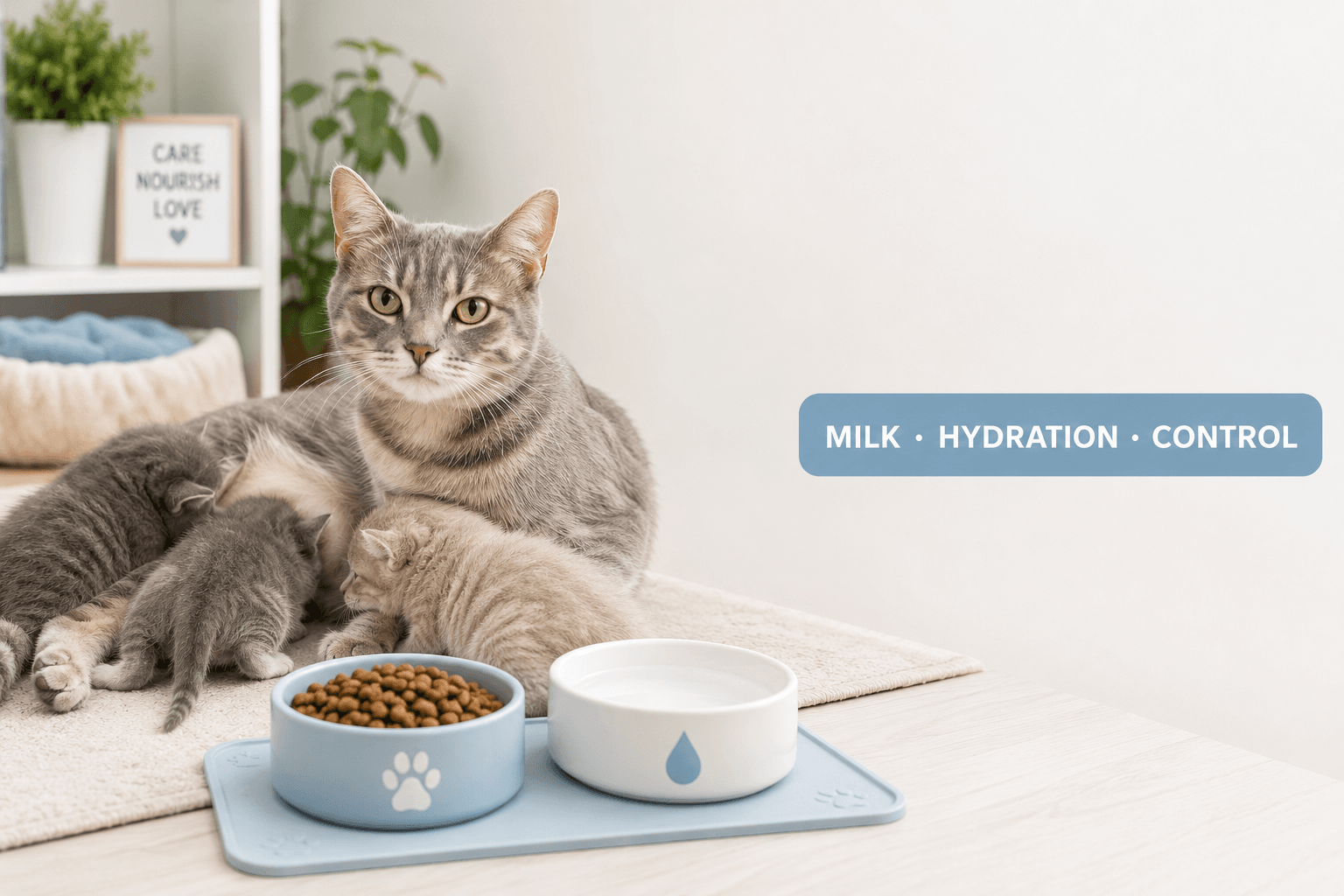
Place food and water close to the nesting area without putting bowls where kittens soil them. A nursing queen should not have to leave the litter for long. Keep one clean dry-food station, one wet-food station when wet food is used, and one stable water station that is refreshed often.
For feeding nursing cats, use timing rather than random top-offs. The scientific pet feeding schedule approach gives the owner a framework: set feeding windows, record intake, and adjust based on observed demand. During peak nursing, access can be frequent, but the owner still records the amount offered and removed.
Hydration is non-negotiable. Milk production requires fluid intake, and a dry bowl near a nursing queen is a system failure. Use the practical setup in pet hydration tips to keep water visible, clean, and reachable.
The Feeding Loop Behind This Problem
The feeding loop starts when the queen eats aggressively after nursing and the owner reads that as a reason to keep adding food without structure. The bowl stays full, wet food sits too long, dry food goes stale, and intake becomes invisible. Food is present, but the system is not controlled.
The opposite loop is also common. The owner keeps the mother on a normal adult-cat portion because she ate that amount before birth. The queen loses condition while kittens pull more milk. Then the owner reacts with treats, cow’s milk, or supplements instead of fixing the base diet and meal access.
A good plan for feeding nursing cats breaks both loops. Food is measured before it is offered. Leftovers are checked. Water is refreshed. Bowl hygiene is maintained. Kitten growth becomes part of the feeding system, not a separate worry.
The Emotional Trigger Owners Miss
The emotional trigger is urgency. A nursing mother looks hungry, protective, and tired. Owners respond by offering anything that feels comforting. Extra snacks feel useful. Warm human food feels caring. Random milk feels logical. The intention is good, but the routine becomes messy.
That reaction creates three problems. It displaces balanced food with untracked extras. It teaches the queen that owner attention is part of feeding. It also makes a real intake drop harder to see because the food history is scattered across bowls, treats, and scraps.
For feeding nursing cats, the correction is clean abundance. Keep the main food appropriate for nursing, keep water constant, and keep extras out of the routine unless they are measured. For broader nutrition structure, pet nutrition tips gives a stronger base than improvising with household foods.
The Addiction Mechanism
The addiction mechanism is reward escalation. When the queen receives richer food every time she vocalizes, leaves the nest, or looks restless, those behaviors become tied to food upgrades. The cat is not being difficult. The routine is training her to demand changes.
This matters because the nursing period is already intense. If every signal produces a different food, the queen becomes selective at the exact time she needs steady intake. The owner then keeps searching for the next upgrade, and the stable feeding base disappears.
A better system keeps the reward predictable. Meals are frequent enough, energy-dense enough, and easy to reach. Attention does not always arrive as food. Feeding nursing cats works better when the menu stays stable and the schedule stays visible.
Common Failure Pattern
A common failure pattern begins with a small bowl placed across the room from the nesting box. The mother leaves the kittens, eats quickly, returns, and demands food again because access is inconvenient. The owner adds more food in random places, and the feeding area spreads across the home.
The consequence is poor tracking and poor hygiene. Food amounts are unclear, wet food residue dries in bowls, and kittens encounter messy feeding zones before weaning. The fix is a dedicated feeding station near the nest, measured refills, clean bowls, and a clear shift toward kitten food access as weaning begins.
Real-World Impact
The real-world impact of weak structure in feeding nursing cats appears in the mother and the litter. The queen loses condition, the kittens nurse harder, the owner increases treats, and the feeding area becomes dirty. This is not a small organization problem. It is the point where poor routine starts competing with nutrition.
AVMA’s pet nutrition guidance emphasizes that nutrition affects overall health. In a nursing home setup, that means the owner needs suitable food, clean access, water, and a daily record of intake.
After weaning, the risk flips. If the owner keeps the same high-volume lactation routine after milk demand drops, the mother gains weight quickly. The best cat feeder for weight loss guide becomes relevant after weaning because the system has to move back toward controlled adult maintenance.
Can This Be Fixed?
Yes, feeding nursing cats can be fixed when the owner treats nursing as a temporary high-demand feeding system. The fix is not a bigger bowl alone. The fix is appropriate food, frequent access, clean water, measured tracking, and a clear weaning transition.
For feeding nursing cats, start with the food label. Then set the feeding station. Then track the amount offered and eaten. Then watch the litter’s nursing pressure and transition toward kitten food. If the queen stops eating, collapses, trembles, pants heavily, rejects the litter, or shows severe weakness, treat that as an urgent care situation, not a feeder problem.
For automated feeding, the device should support routine rather than replace observation. The smart pet feeder setup guide explains how to use scheduled feeding without turning the device into blind food storage.
Who Should Walk Away and Who Should Use This
Walk away from maintenance-only feeding, dirty shared bowls, cow’s milk as a default add-on, random supplements, and scattered food stations. These choices create false reassurance. They make food visible without proving that the queen is receiving the right nutrition in the right pattern.
Use this system if the mother cat is nursing a litter at home, eating more than usual, leaving the nest often for food, or approaching the weaning window. For product selection, the cat feeders collection is the right starting point when the setup needs cat-sized bowls, easy access, and routine control.
In multi-cat homes, protect the nursing queen from food theft. A housemate that steals high-energy food turns the queen’s feeding plan into a shared buffet. Use separation, monitored feeding, or the logic from how to stop one cat from eating the other’s food to keep the nursing station controlled.
Mini FAQ
What is the best approach to feeding nursing cats?
The best approach to feeding nursing cats is controlled high-energy access. Milk production raises food demand, and a normal adult-cat routine is too weak. Use food labeled for gestation/lactation, growth, or all life stages, and track daily intake.
Should a nursing cat eat kitten food?
Kitten food is a strong fit for many nursing routines because it is built for growth and higher demand. The label must support the life stage. Use it as the main structured diet instead of using treats as calorie patches.
How often should a nursing cat be fed?
A nursing cat needs frequent food access because milk production creates repeated energy demand. Long gaps make the queen leave the nest hungry and stressed. Use measured refills, fresh wet-food windows, and reliable dry-food access.
Why is my nursing cat always hungry?
A nursing cat is often hungry because the litter is pulling energy through milk production. Hunger becomes a problem when the owner responds with random extras. Increase planned access and record intake instead of improvising.
When should feeding change after kittens start weaning?
Feeding should shift as kittens move from nursing to solid food. The queen’s milk demand drops while kitten food demand rises. Reduce the mother’s high-volume routine gradually and move the kittens into their own clean feeding area.
Can an automatic feeder help with nursing cats?
An automatic feeder helps when it supports timing and tracking, not when it replaces observation. Nursing creates high demand and fast changes. Use the feeder for reliable dry-food access, then check water, wet food, intake, and kitten progress by hand.
A camera pet feeder for monitored routines can help owners observe feeding visits without disturbing the nest. The final rule is direct: feeding nursing cats works when food is appropriate, access is frequent, water is constant, and the household stops using random extras as a substitute for a real feeding system.