
A working dog feeding schedule is not a simple breakfast-and-dinner habit. It is a control system for energy, digestion, recovery, and behavior. Working dogs burn energy in uneven blocks, so loose feeding creates two common failures: the dog works with a heavy stomach, or the owner overfeeds after every hard session and slowly loses portion control.
For households that need repeatable timing, a smart automatic pet feeder with app control gives the routine a fixed structure. The feeder is not the full solution. It works only when meal size, work timing, and rest windows are controlled together.
Direct Answer: Working Dog Feeding Schedule
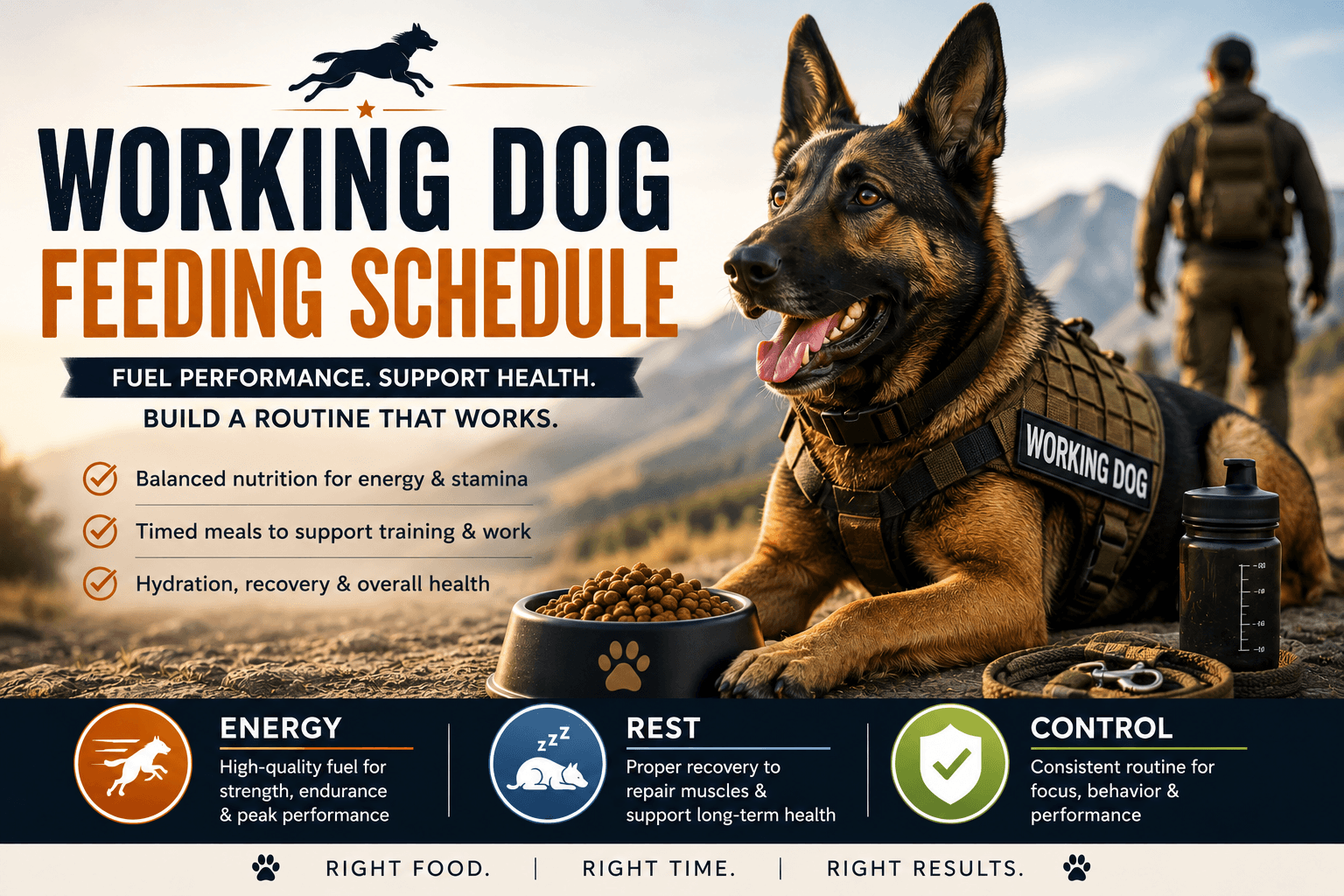
A working dog feeding schedule should place large meals away from intense work, use measured portions, and adjust food volume based on workload and body condition. The right schedule gives the dog usable fuel without turning every training session, patrol, hunt, farm task, or long outdoor day into an excuse for uncontrolled feeding.
The strongest routine uses two anchors: feed enough to support work, but keep heavy meals out of the hard-exercise window. A dog that eats a large meal immediately before intense activity has a poor setup. A dog that receives random refills after every active period also has a poor setup. The better path is planned timing, controlled speed, clear rest, and a weekly review of weight, appetite, stool, and performance.
Why This Happens
Working dogs fail on casual feeding plans because their energy output is not casual. A family companion often has a predictable day. A working dog can move from rest to high output in minutes. Herding, hunting, guarding, pulling, tracking, agility, search work, and long farm movement all create sharp energy demands. The feeding system has to absorb that change without becoming chaotic.
The problem is not hunger alone. The problem is timing plus reinforcement. When a dog works hard and then gets an oversized meal while still excited, the owner turns arousal into a feeding trigger. When a dog begs before work and receives food to “settle down,” the owner teaches the dog that pressure controls the schedule. Under stable routine conditions, food should follow the plan, not the dog’s loudest behavior.
A useful working dog feeding schedule also protects body condition. The AVMA pet nutrition guidance connects feeding decisions with overall health, and that principle matters more when a dog’s workload changes by season, job, and training cycle. Food volume should move with real output, not with guilt, pride, or habit.
What To Do
Start by separating the day into work blocks and rest blocks. Put the largest meal after the hardest work is finished and the dog is calm, or place it well before the next demanding session. Keep pre-work feeding small and intentional when food is needed. Do not let a full bowl sit available all day for a dog that works in bursts, because free feeding hides the true amount eaten.
A practical working dog feeding schedule uses measured meals, fixed windows, and one person responsible for final portion control. In multi-person homes, accidental double feeding is common. One person feeds before training, another person rewards after work, and a third person adds extra dinner because the dog looks hungry. That is not care. That is a broken system.
Use a feeder only as a boundary tool. The scientific pet feeding schedule approach gives the structure: time, portion, observation, and adjustment. For larger active dogs, the automatic dog feeder for large dogs guide helps match capacity and portion delivery to the dog’s size instead of forcing a high-output dog into a small-pet feeding setup.
The Feeding Loop Behind This Problem
The feeding loop starts with work. The dog finishes a demanding task, shows high appetite, and the owner reads that appetite as proof that the dog needs a large immediate meal. The dog eats fast, rests poorly, or returns to demanding food again later. The owner then adds another portion because the dog still looks driven.
That loop creates routine dependency. The dog learns that work, excitement, pacing, and staring all lead to food. The owner learns to respond to pressure instead of the schedule. Over time, the dog’s appetite becomes harder to interpret because it is mixed with learned demand behavior.
A controlled working dog feeding schedule breaks the loop by making food predictable. Work does not automatically mean a food dump. Begging does not move the meal forward. Recovery feeding happens after calm rest, and training rewards are counted inside the daily intake instead of floating outside the plan.
The Emotional Trigger Owners Miss
The emotional trigger is pride. A working dog performs, protects, retrieves, tracks, pulls, or trains with intensity, and the owner wants to reward that effort. Food becomes the easiest reward because it is immediate and visible. The owner feels responsible, so the portion grows.
This is where the routine breaks. Reward is not the same as recovery. A dog can deserve rest, water, calm handling, and measured food without receiving uncontrolled calories. If food becomes the only proof of care, the schedule turns into a negotiation.
The correction is firm but simple. Use praise, rest, structured play, grooming checks, and hydration as part of the recovery routine. Keep meal size measured. For dogs that eat too quickly after work, use the speed-control logic in how to stop a dog from inhaling food instead of letting fast eating decide the schedule.
The Addiction Mechanism
The addiction mechanism is reinforcement through unpredictable food. When a dog receives food after barking, pacing, jumping, whining, or crowding the kitchen, the behavior becomes useful. High-drive dogs learn this quickly because they already repeat actions that produce clear rewards.
A weak feeding plan makes the dog more persistent. Sometimes the owner feeds early. Sometimes the owner adds a topper. Sometimes the owner gives training treats and forgets to subtract them from dinner. This inconsistency creates stronger demand behavior because the dog keeps testing the system.
A working dog feeding schedule removes the gambling pattern. The dog stops receiving random food for pressure behaviors. Meals happen inside defined windows. Rewards stay small, purposeful, and counted. The feeder reinforces boundaries, and the owner stops turning every demand into another serving.
Micro Case
A farm dog works hard in the morning, gets a large bowl as soon as it returns, then paces again before dinner. The owner assumes the dog is still underfed and increases the evening portion. Within a month, the dog is heavier, slower in hot weather, and more demanding around the feed room.
The fix is not a bigger bowl. The fix is a cleaner working dog feeding schedule: main fuel the evening before heavy work, a calm rest window after the morning session, a measured recovery meal, and no extra food for pacing. The dog keeps energy support without learning that pressure creates more calories.
Real-World Impact
The real-world impact of poor timing is unstable performance. A dog can look energetic at the start, fade during work, eat too fast afterward, gain weight during lighter weeks, or become restless around every food cue. Owners often blame the food brand first, but the schedule is usually the easier system to repair.
Weight drift is the clearest warning sign. A working dog that gains weight during rest periods is not “well fueled.” It is overfed for the current workload. The healthy pet weight guidance explains why body condition matters for long-term health, and working dogs need that control because extra weight directly affects movement, heat tolerance, and recovery.
Hydration is the second warning sign. Active dogs need access to water, but a feeding routine that ignores hydration becomes incomplete. Use the practical habits in pet hydration tips to separate water management from food rewards. Water should support work and recovery; it should not become another excuse to feed outside the plan.
Can This Be Fixed?
Yes, a broken working dog feeding schedule can be fixed when timing, portion, and behavior rules change together. Changing only the food brand does not repair a loose routine. Buying a feeder does not repair a household that keeps adding extra meals. The fix starts when the owner stops treating appetite as the only data point.
Build a seven-day log. Track meal time, portion size, work intensity, rest window, stool quality, body condition, and demand behavior. Then adjust one variable at a time. If the dog gains weight, reduce intake or improve workload control. If the dog loses condition during heavy work, increase planned meals instead of adding random treats.
The AAFCO consumer resources help owners understand labels and feeding directions, but label numbers are starting points, not a complete schedule. A strong routine converts the label into a daily control system: measured food, timed work, rest after meals, and consistent boundaries.
Who Should Walk Away and Who Should Use This
Walk away from free feeding when the dog works hard, eats fast, gains weight, guards food, or lives in a home where multiple people feed without tracking. Walk away from one huge daily meal when the dog trains, hunts, herds, patrols, pulls, or performs long outdoor work. Those patterns hide intake and weaken control.
Use a working dog feeding schedule when the dog has real output and the owner needs predictable energy. This includes farm dogs, hunting dogs, service dogs, patrol dogs, agility dogs, working breeds in structured training, and active dogs with repeated high-output days. The plan should be strict enough to prevent chaos and flexible enough to follow workload.
For feeder selection, start with the dog feeders collection when the dog needs a dog-specific bowl size and portion setup. For homes that need broader timing control, the smart feeders collection is the better category because scheduled delivery supports consistency across busy workdays.
Mini FAQ
What is the best working dog feeding schedule?
The best working dog feeding schedule uses measured meals placed around work and rest. Large meals close to demanding activity create poor control. Feed the main portion after hard work and calm recovery, or well before the next work block.
Should a working dog eat before work?
A working dog should not start intense work on a large fresh meal. Heavy food plus hard movement is a weak setup. Use the previous planned meal as the main fuel source and keep any pre-work food small, measured, and intentional.
How many meals should a working dog have each day?
Two measured meals work well for many working routines when timing is controlled. The key is not the meal count alone; the key is placing food away from hard activity and adjusting total intake to workload. Split meals when fast eating or long work blocks create poor control.
Can an automatic feeder help a working dog?
An automatic feeder helps when it enforces timing and portion limits. It fails when owners use it as a food storage bin and still add random extras. Use scheduled portions, count training rewards, and keep the feeder aligned with work blocks.
How do I stop a working dog from eating too fast?
Fast eating needs speed control, not larger meals. A hungry working dog can inhale food after activity and turn recovery into a frantic routine. Use a slow-feed bowl, smaller measured portions, and a calm rest window before the main meal.
Does a working dog need more food on active days?
A working dog needs food matched to real workload, not begging behavior. Heavy work requires planned fuel, while lighter days require tighter control. Use body condition, work intensity, and weekly trend checks instead of feeding by noise.
A timed slow feed automatic feeder is useful when a working dog needs both scheduled meals and slower intake. The final rule is direct: a working dog feeding schedule should protect energy, rest, digestion, and portion control at the same time. If the schedule stays loose, the dog’s food behavior stays loud.