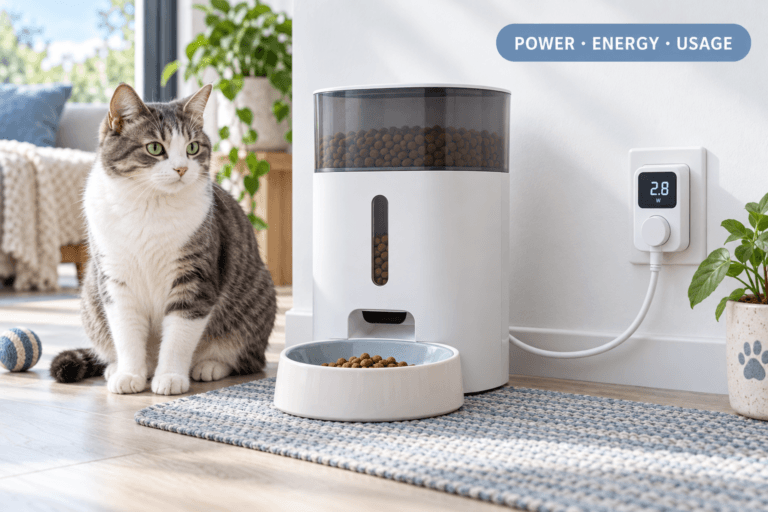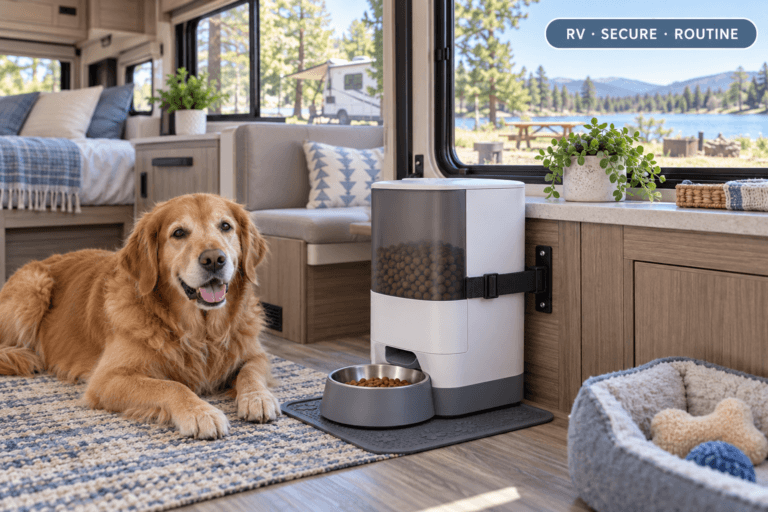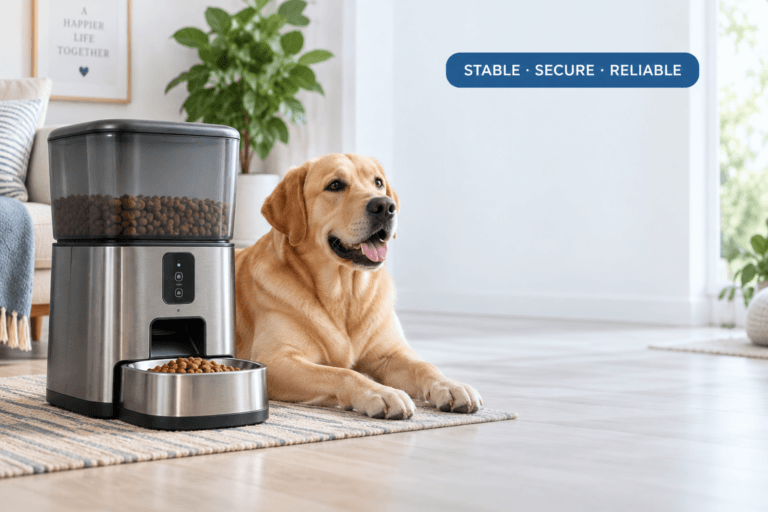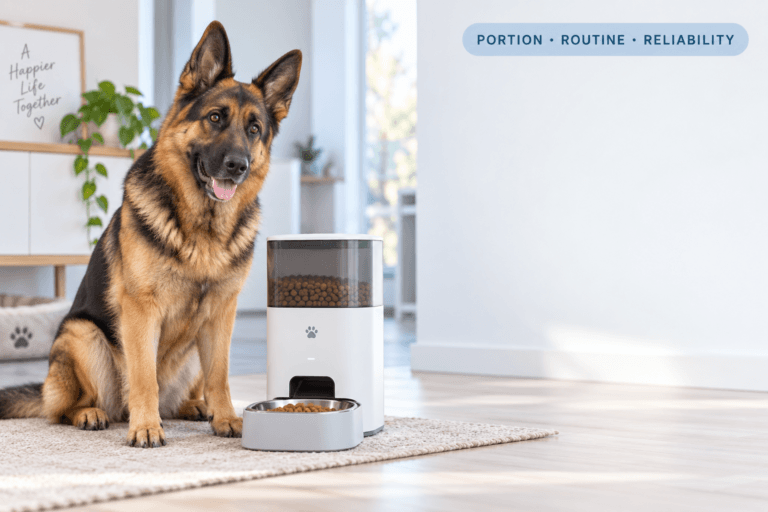

A small breed automatic dog feeder is useful when a small dog needs predictable meals, smaller portions, workday feeding support, or less owner-driven snacking. But small dogs are not just “large dogs with smaller bowls.” Their feeder must handle small kibble, accurate portions, low bowl access, stable placement, and a schedule that does not create missed meals or random extra feeding.
For owners who need compact app-based feeding, a 2L smart automatic pet feeder with app control is a practical starting point for small dry-food routines. The feeder should support the feeding plan, not replace judgment about body condition, appetite, age, or health.
Direct Answer: small breed automatic dog feeder
A small breed automatic dog feeder is best for healthy small adult dogs that eat dry food on a measured schedule. Choose one with accurate small portions, a low comfortable bowl, anti-jam food flow, easy cleaning, app or timer reliability, and backup power when missed meals are a real risk. For toy-breed puppies, diabetic dogs, dogs with appetite problems, or dogs prone to low blood sugar, use veterinary guidance before relying on automation alone.
Why This Happens
Small dog feeding problems often start with portion error. A little extra food may look harmless, but small dogs have less margin for random scoops. When the owner feeds by eye, gives extra treats, or responds to begging with “just a little,” the daily intake can drift without looking dramatic.
A small breed automatic dog feeder helps by turning feeding into a controlled routine. It can divide food into smaller scheduled meals, reduce missed meals during work hours, and make the household less reactive when the dog begs. The feeder’s value is not the motor. The value is the rule it enforces.
The wrong feeder creates the opposite problem. A large feeder may drop portions that are too big. A tall bowl may be awkward for a short dog. A feeder designed for larger kibble may jam with small food. A loud motor may scare a nervous dog. This is why the feeder must match the dog’s size, food, and behavior.
What To Do
Use seven checks before choosing a small breed automatic dog feeder. First, confirm the feeder can dispense small portions accurately. Second, test it with the dog’s actual kibble size. Third, choose a bowl height that small dogs can reach without stretching. Fourth, check whether the bowl is removable and easy to clean. Fifth, use a stable base so the dog cannot push or flip it. Sixth, confirm schedule memory, app reliability, and backup power. Seventh, decide when manual feeding is allowed so the feeder does not become one of several competing food sources.
Start with the feeding schedule, not the device. A fixed scientific pet feeding schedule helps define how many meals the dog receives, what portion each meal contains, and how the household avoids double feeding.
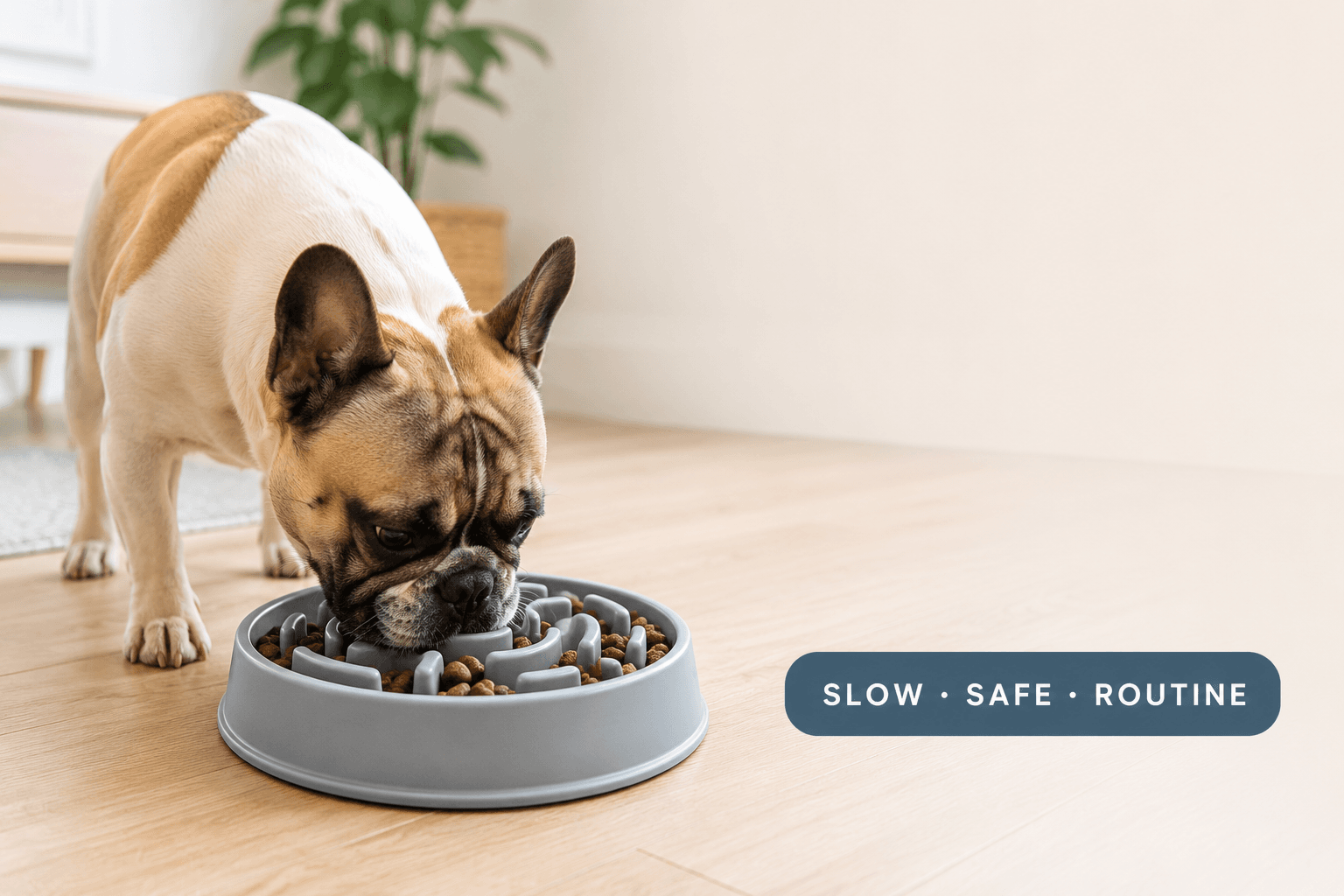
If the dog eats too fast, choose timing control plus speed control. A timed feeder controls when food arrives. A slow feeder controls how quickly the dog can eat it. For small dogs that gulp, an automatic timed slow feed bowl may be more relevant than a basic dispenser.
Small Breed Feeder Features That Matter
Portion accuracy matters more for small breeds than hopper size. A 5L feeder may look convenient, but it is not automatically better if the minimum serving size is too large or the bowl is awkward. For many small dogs, a compact 2L or small-capacity smart feeder is easier to place, refill, clean, and monitor.
Bowl design matters too. Short dogs should not need to reach upward or push their neck into a deep bowl. A shallow, removable, low-access bowl is usually better than a large deep dish. For flat-faced small breeds, bowl access and breathing comfort matter even more.
Power reliability matters when the feeder is used during work hours or travel. A small breed automatic dog feeder with battery backup, button backup, or local schedule memory gives the household a safer fallback than app-only feeding.
Puppies, Toy Breeds, and Missed Meal Risk
Small-breed puppies need more caution than healthy adult small dogs. Toy-breed puppies can be more vulnerable when they miss meals, eat poorly, or go too long without food. Automation can help with timing, but it should not be treated as a complete safety plan for a very young, underweight, sick, or fragile puppy.
If the dog is a tiny puppy, has a history of low blood sugar, refuses meals, vomits, seems weak, or acts abnormal after missing food, use veterinary guidance. A small breed automatic dog feeder can support frequent meals, but a feeder cannot confirm whether the puppy actually ate enough or whether a medical problem is developing.
The Feeding Loop Behind This Problem
The feeding loop is simple. The dog asks for food, the owner reacts, food appears, and the dog remembers what worked. In small dogs, this loop can become intense because they are often close to the owner, easy to hand-feed, and persuasive during kitchen routines.
A small breed automatic dog feeder breaks that loop by making food arrive from the schedule instead of the owner’s emotional response. The dog should learn that barking, pawing, staring, or following the owner does not change the meal time. The schedule does.
This only works when the owner protects the system. If the feeder gives breakfast but the owner still gives extra food after begging, the dog learns two systems: scheduled food and pressure food. That keeps the behavior loop alive.
The Emotional Trigger Owners Miss
The emotional trigger is size bias. Small dogs look easy to indulge. A tiny treat seems tiny. A small scoop seems harmless. But repeated extras can matter because the dog is small. The smaller the dog, the more important portion discipline becomes.
A feeder helps because it removes guesswork from the daily routine. The owner does not need to decide every meal in the moment. The portion is already defined, the time is already set, and the household has fewer chances to overfeed through sympathy or convenience.
The Addiction Mechanism
Food reward becomes powerful when it follows a behavior quickly. If a small dog barks, spins, jumps, or paws and then receives food, that behavior becomes useful. If food appears unpredictably, the dog may keep trying longer because pressure sometimes works.
A small breed automatic dog feeder reduces this mechanism only when manual feeding is restricted. The feeder should not become an extra snack machine. It should replace random owner feeding with measured scheduled meals.
For nutrition boundaries, use reliable feeding principles. Read the dog food label, monitor body condition, adjust slowly, and ask a veterinarian when the dog is growing, senior, overweight, underweight, diabetic, pregnant, or medically fragile. The feeder controls delivery; it does not choose the correct diet.
Common Failure Pattern
A common failure pattern is buying a smart feeder for convenience, setting several small meals, and still giving treats whenever the dog begs. The owner then thinks the feeder is not helping because the dog still demands food. In reality, the feeder is working, but the household is keeping a second reward system open.
The correction is direct. Measure the daily food. Decide how much of that daily amount goes into the feeder. Count treats. Stop manual top-ups after pressure behavior. Use the app log or timer record to confirm meals before anyone adds food by hand.
Real-World Impact
The right small breed automatic dog feeder can reduce missed meals, protect small portions, support workday routines, reduce early-morning begging, and make feeding responsibility clearer in multi-person homes. It can also help owners notice appetite changes because meals become more structured.
The wrong feeder can cause inaccurate portions, food jams, bowl avoidance, app anxiety, over-reliance, or double feeding. Small dogs need a feeder that is physically small enough, precise enough, and simple enough for daily use.
Owners comparing small-space feeding tools can also review compact smart pet feeder, while owners concerned about power failure should review pet feeder with battery backup. For broader product selection, start with dog feeders or smart feeders.
Can This Be Fixed?
Yes, most small dog feeding problems can be improved when portion size, schedule timing, feeder design, and owner behavior are controlled together. If the problem is missed meals, use timed feeding and backup power. If the problem is overeating, measure the daily amount and stop random treats. If the problem is fast eating, add slow-feed access. If the problem is bowl avoidance, change placement, sound exposure, or bowl height.
If the dog skips meals, loses weight, vomits, has diarrhea, drinks excessively, acts weak, or shows sudden appetite changes, do not solve the problem with automation alone. Use veterinary care. A small breed automatic dog feeder improves routine control; it does not diagnose health problems.
Who Should Walk Away and Who Should Use This
Walk away from a large-capacity feeder if the minimum portion is too big, the bowl is too high, or the device is designed for larger dogs. Walk away from app-only control if the household needs a fallback during WiFi or power failure. Walk away from automation-only planning if the dog is medically fragile or a tiny puppy that needs close intake monitoring.
Use a small breed automatic dog feeder if your dog is a healthy small adult, eats dry food, needs consistent meals, begs around feeding times, or benefits from smaller scheduled portions. Use a slow-feed model if the dog gulps. Use a camera feeder if you need visual confirmation. Use battery backup if missed meals during outages are realistic.
Mini FAQ
What is the best small breed automatic dog feeder?
The best small breed automatic dog feeder is compact, accurate with small portions, easy to clean, stable, and reliable during scheduled meals. It should match the dog’s kibble size, bowl height, appetite pattern, and daily feeding plan.
Can small dogs use automatic feeders?
Yes, small dogs can use automatic feeders when the portion range and bowl design fit their size. The feeder should dispense measured dry food accurately and be tested while the owner is home before workday or travel use.
Is a 2L automatic feeder enough for a small dog?
A 2L automatic feeder can be enough for many small dry-food routines, but capacity should be judged by daily intake and refill habits. Do not choose capacity by size alone. Check portion accuracy, refill frequency, and food freshness.
Should small-breed puppies use automatic feeders?
Small-breed puppies can use automatic feeders only with caution and supervision. Very small puppies may need close monitoring, frequent meals, and veterinary guidance. Do not rely on a feeder alone if the puppy is fragile, underweight, refusing food, or prone to low blood sugar.
Can an automatic feeder stop small dog begging?
It can reduce begging when the owner stops rewarding pressure behavior. The feeder makes meals time-based, but begging continues if the household still gives treats or manual food after barking, pawing, or staring.
What is the biggest mistake with a small breed automatic dog feeder?
The biggest mistake is choosing a feeder by capacity instead of portion accuracy. Small dogs need precise meals, low access, stable placement, and consistent rules. A large hopper is useless if the dog receives too much food or the bowl design is uncomfortable.
For compact daily feeding, a 2L smart automatic pet feeder with app control can support small-dog routines when the portions are tested. If speed control is the bigger issue, an automatic timed slow feed bowl may fit better. The clear conclusion is this: a small breed automatic dog feeder works when it protects small portions, stable timing, comfortable access, and owner discipline at the same time.